Hidden Folks: Scavenger Hunt
- 2.48K
- 4.9
- Installs
- 5.00M
- Price
- Free

Screenshots
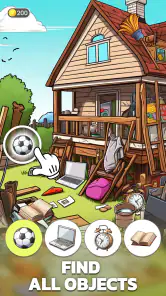
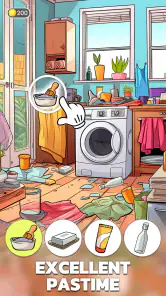
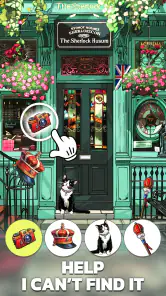
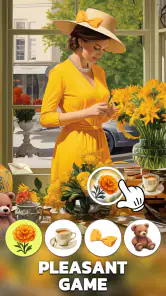

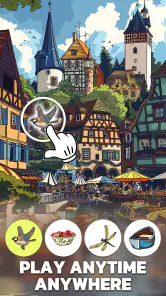
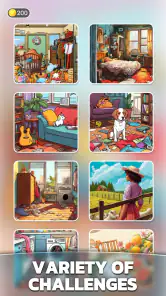
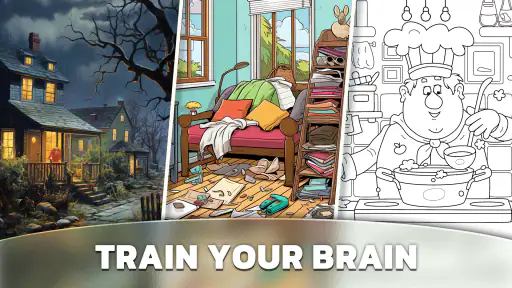
Analysis by Reviewed
I tend to enjoy search-and-find games most when they give me room to look around rather than rushing me from one task to another. Hidden Folks: Scavenger Hunt suits that slower mood: it’s a board-style puzzle game built around scanning busy scenes, interpreting clues, and solving a small mystery through careful observation. I’d reach for it during a quiet break, or when I want a game I can share with someone nearby without needing a long explanation.
Free to try, with a clear value question
The game is free, so there’s no purchase decision to make before you can see whether its search-and-find approach clicks with you. I still think it helps to judge value by the kind of play you want: this is for people who enjoy lingering over a scene and noticing details, not for anyone expecting a fast stream of action or a competitive challenge. Its Everyone age rating also makes it an easy suggestion for a family game session, though younger players may enjoy having someone read or interpret clues alongside them.
A World of Tiny Wonders
Imagine diving into a world that’s hand-drawn and bustling with life. The developers of Hidden Folks: Scavenger Hunt have created intricate black-and-white worlds that are not just visually appealing but also feel alive. Each scene is packed with tiny animations that bring a smile to your face. From waving plants to cheeky little characters hiding behind bushes, every detail is crafted with love.
Gameplay That’s Pure Joy
Okay, so here’s the deal: the game doesn’t just tell you what to find. Nope, it gives you little clues that are often wrapped in humor. It’s like the game is having a cheeky conversation with you. You’ll find yourself chuckling as you try to decipher what exactly you’re supposed to be looking for. It’s a refreshing break from the spoon-feeding many games tend to do these days.
And let’s talk about the sound effects. They’re not just background noise; they’re part of the experience. Each interaction in the game has a unique sound, making it even more immersive. It’s like the world of Hidden Folks is whispering secrets to you.
Small-scene habits that make searching easier
My practical tip is to resist tapping randomly when a target doesn’t jump out. First, read the clue again and translate it into a visual idea: a shape, a setting, or something that might be partly obscured. Then sweep the scene in sections, moving your eyes from one edge to the next. That simple routine helps avoid losing track of areas you have already checked, and it makes the joke in a clue easier to appreciate once you spot what it refers to.
For a realistic use case, imagine waiting for a meal to arrive or sitting with a friend during a quiet afternoon. One person can read the clue while the other scans, then you can switch roles when the next search begins. That turns a solo puzzle into a low-pressure shared activity without making it feel like a race. If you prefer to play alone, the same scene-by-scene sweep works well in short sessions: pause when you need to, then return with fresh eyes rather than tapping in frustration.
More From Our News Desk

Clash of Clans Is Won Between the Battles

Android Auto Makes the Case for Quieter Car Software

MobiOffice: Transforming Mobile Productivity with Seamless Integration

EA SPORTS FC™ Mobile Soccer: Redefining Mobile Sports Gaming

How Microsoft OneDrive Became a Mobile Productivity Giant

How Google Translate Breaks Language Barriers Effortlessly
Where it differs from other puzzle games
Compared with word puzzles or match-style board games, this asks more of your visual attention and patience than your vocabulary or reflexes. It’s a better fit when you want to inspect a picture and reason from an amusing clue; a quick match game is likely a better choice if you want immediate feedback and brisk rounds. The monochrome art keeps the scenes visually distinctive, but it can also make a crowded area harder to parse at a glance. I’d zoom in mentally by narrowing my search to one patch at a time instead of trying to take in the whole illustration at once.
Perfect for All Ages
One of the standout features of this game is that it’s perfect for everyone. Whether you’re a kid or just a kid at heart, there’s something in it for you. The lack of color doesn’t make it any less engaging. In fact, it adds to the charm, letting your imagination fill in the blanks. Plus, it’s a great way to bond with family or friends as you huddle together to spot the elusive hidden folks.
And if you’re worried about getting stuck, don’t be. The game has a hint system that’s there to nudge you in the right direction without giving too much away. I’d save hints for when I’ve properly searched the likely area; using one too quickly can rob a clue of its satisfying “aha” moment. If you’re playing with a child, try offering a smaller hint yourself first—such as suggesting which part of the scene to inspect—so they still get to make the discovery.
A Game That Keeps on Giving
What’s awesome about Hidden Folks: Scavenger Hunt is that it keeps getting better. The developers have been known to add new content, which means there’s always something fresh to look forward to. It’s like a gift that keeps on giving, ensuring you never run out of things to find.
Who will get the most from it?
I’d recommend it to patient players who enjoy visual riddles, families looking for a calm activity to share, and anyone who likes the small satisfaction of spotting a detail others missed. It may be less appealing if you want a plotted adventure, rapid levels, or a strong sense of progression; the pleasure here comes from interpreting clues and searching scenes, not from mastering complex controls. If that’s your preference, a more action-focused or story-led game will probably suit you better.
LifePulse Puzzle Game Studio is the developer, and the game’s 4.9 average rating from around 156,000 ratings, alongside over 5 million installs, suggests that its slow, observant style has found a substantial audience. The current version is 1.1.5, and it runs on Android 5.0 or later. Those details make it straightforward to assess whether it fits your device and tastes; the key question is still whether you enjoy careful looking more than quick reactions.
What to expect from a short session
This is the kind of game I’d open when I have a few unhurried minutes, rather than when I’m trying to fill a commute with something that demands constant input. A clue can be read quickly, but finding the answer depends on looking carefully, so the pace is naturally set by your attention. If a scene feels dense, I’d rather stop and return later than turn the search into a chore. A fresh look can make a previously overlooked shape or gesture stand out.
That rhythm also makes it easy to share control informally. With a friend or family member, one person can interpret the wording while the other scans, and you can trade off without needing a score or elaborate rules. The useful trick is to describe what you are considering aloud—“something near the edge,” for example—rather than both searching silently. It helps coordinate attention and turns a missed detail into a joint puzzle instead of a frustrating moment.
Clues, hints, and the satisfaction of solving
The clue-writing is a meaningful part of the challenge, not just a label attached to an object. I’d read each line literally once, then ask what visual feature might make its wording playful: perhaps a distinctive pose, a nearby object, or an unexpected hiding place. That second interpretation is often more productive than scanning every inch with no plan. It also keeps the humor intact, because the answer makes more sense when you have connected the clue to the scene yourself.
Hints are useful when you have genuinely run out of ideas, but I wouldn’t treat them as a routine shortcut. Before using one, I’d review the clue and check the parts of the picture that fit its most obvious interpretation. If I still can’t make progress, a nudge can restore momentum without making the whole search feel solved for me. For children, letting them choose when to ask for help is a nice middle ground: they retain ownership of the find while avoiding a long stretch of guesswork.
When the visual style helps—and when it doesn’t
The black-and-white scenes give the game a consistent, hand-drawn identity, and small movements help the illustrations feel active rather than like static pages. That restrained look also asks you to notice outlines, positions, and relationships between objects instead of relying on bright color as a shortcut. I find that rewarding when I’m in the mood to inspect a picture patiently. It is less convenient if I want to identify targets instantly or if busy compositions make visual searching tiring.
For that reason, I would not recommend it as a universal family choice just because the age rating is Everyone. The subject matter is approachable, but younger players who are still building reading confidence may need clues read aloud or explained. Someone who has difficulty distinguishing fine details may also prefer a game with larger, simpler visual elements. Playing together can soften those barriers, but the central activity remains close looking, so it is worth matching the game to the group.
How its value compares with familiar alternatives
As a board-style game, it fills a different niche from a conventional board game built around turns, a score, or a win condition. Here, the main reward is the moment a hidden detail clicks into place. That makes it a good alternative when you want a shared activity without setting up pieces or asking everyone to learn a rulebook, while a traditional board game is better if your group wants strategy, competition, or a clear match ending.
It also differs from word searches and match-three puzzles. Those can be easier to dip into when you want a familiar pattern and quick progress; this asks you to interpret language and connect it to a particular illustrated scene. If you enjoy searching but dislike ambiguous clues, that distinction matters. I’d choose a word puzzle for a more systematic hunt or a match game for short bursts of rapid feedback, and keep this one for slower, more conversational play.
Who might want to pass
I’d skip it if your main goal is a deep narrative, a demanding tactical challenge, or a game that keeps changing its mechanics as you advance. The pleasure is concentrated in observing and interpreting, so players who find hidden-object searches repetitive may not be won over by the lively drawings alone. It can also be a poor fit when you are distracted: glancing at a crowded scene between other tasks may produce more annoyance than relaxation.
On the other hand, it suits people who enjoy noticing small details in illustrations, solving a clue at their own pace, or inviting someone else to help spot a target. The clearest test is whether you find yourself wanting to inspect one more corner after a near miss. If that sounds satisfying, the game’s calm format may be exactly what you want; if you prefer a timer, competition, or frequent action, another puzzle style will serve you better.
My verdict
For me, this is an easy recommendation if you want a free, gentle puzzle to dip into alone or share with someone, and you’re happy to take your time with each scene. I wouldn’t choose it as a substitute for a fast-paced game, and a crowded illustration can demand more patience than a casual player expects. But the playful clues, lively details, and restrained hinting give the searches personality. If you like finding order in a busy picture, it’s well worth trying; if you need constant motion, I’d skip it and pick something more immediate.
In conclusion, if you’re looking for a game that’s both relaxing and challenging, with a sprinkle of humor and a dash of creativity, then this is definitely worth checking out. It’s a delightful escape from the hustle and bustle, where you can lose yourself in a world of hidden wonders.
Hidden Folks: Scavenger Hunt Frequently Asked Questions
Can I play Hidden Folks: Scavenger Hunt in short sessions?
Yes. Its search-and-find format makes it easy to dip into a scene, look for the requested items, and return later when you have more time. The experience is built around careful observation rather than fast reactions, so you can take each puzzle at your own pace. It suits players looking for a casual game to enjoy during a quiet break.
Is Hidden Folks: Scavenger Hunt suitable for people who enjoy puzzle games?
It should appeal to players who like visual puzzles and searching for details. The main activity is exploring busy scenes to locate hidden characters and objects, while solving the mystery gives the hunt an added purpose. If you prefer puzzles that reward patience and close observation over quick reflexes, this kind of scavenger hunt may be a good fit.
Does the game require fast reactions or precise controls?
The central challenge is finding hidden items in illustrated scenes, not reacting quickly to opponents or timing complicated moves. That makes the game approachable for players who would rather inspect a picture carefully than master demanding controls. Taking a moment to scan different areas can help, and there is no need to rush through a search if you enjoy a more relaxed puzzle experience.
Is Hidden Folks: Scavenger Hunt a multiplayer game?
Hidden Folks: Scavenger Hunt is presented as a search-and-find puzzle game, so its appeal is in exploring scenes and solving the hunt yourself. It can be a pleasant choice for solo play when you want a quiet activity, or you can take turns looking at the screen with someone nearby. The focus remains on spotting items and enjoying the puzzle rather than competing in a multiplayer match.
Can children play Hidden Folks: Scavenger Hunt?
The game is rated for Everyone, and its hidden-object format is accessible to a broad audience. Children who enjoy picture puzzles may find searching the scenes engaging, while adults can enjoy the same careful exploration. As with any game, parents can decide whether the content and style are suitable for a particular child and whether the device is appropriate for their use.
Pros
- Engaging and interactive gameplay
- Unique hand-drawn art style
- Challenging puzzles to solve
- Multiple environments to explore
- Frequent content updates
Cons
- Limited replay value after completion
- No multiplayer or social features
- Some levels may feel repetitive
- Occasional minor bugs
- Requires a lot of screen tapping

- Category
- Board
- Version
- 1.1.5