Solitaire Game:Classic Card
- 721.00
- 4.6
- Installs
- 500.00K
- Price
- Free
Screenshots

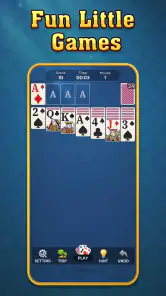

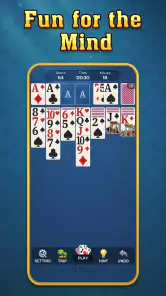

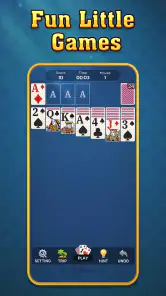
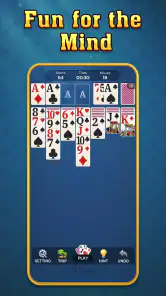

Analysis by Reviewed
I usually reach for a solitaire game when I want something quiet, familiar, and easy to leave after a few minutes. Solitaire Game:Classic Card takes that familiar idea and gives it a slightly more modern presentation without turning the experience into a complicated puzzle system. After spending time with it, I found the appeal is less about dramatic surprises and more about how quickly it gets me into a focused rhythm: make a move, see whether it opens the layout, collect a small sense of progress, and decide whether to continue or start again.
This is a free puzzle game from ECKERT GAMING, aimed at players who already understand the basic pleasure of arranging cards and uncovering possibilities. It is marked Teen, works on Android 8.0 and later, and its current version is 2.7.0. The game has built a solid audience, with over 500 thousand installs and a 4.6 average from around 3.7 thousand ratings. Those figures do not replace personal experience, but they do suggest that its straightforward card-game format has found plenty of people willing to keep it installed.
How the Solitaire Game Loop Feels in Practice
The first move is deliberately simple
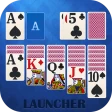
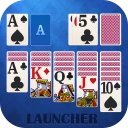
The strongest part of the opening is that I do not need to learn a new rule system before playing. Solitaire Game:Classic Card presents itself as a traditional solitaire experience, so the first action is immediately understandable: I look for a card that can be moved, reveal what is underneath, and check whether that creates another useful option. That familiar starting point matters because solitaire works best when the game gets out of the way and lets the player think.
There is a useful difference between a card game that feels simple and one that feels empty. Here, the simplicity comes from the decision-making rather than from a lack of interaction. A move can expose a hidden card, open a new column, or make a later sequence possible. Even when the action is small, it changes the shape of the board. That is enough to make each tap feel connected to the next decision.
I also like this format for short breaks because it does not demand a long tutorial or a large time commitment. If I have a few spare minutes, I can begin a round immediately. If I have more time, the same layout invites slower planning. That flexibility is more valuable than it sounds: the game can work as a quick distraction, but it can also become a calmer way to occupy an evening without the pressure found in faster puzzle games.
Why the feedback rhythm keeps me involved
The feedback in a solitaire round is mostly visual and logical rather than loud or theatrical. I make a move, the arrangement changes, and the next available choice becomes clearer or more restricted. That constant response gives the game its rhythm. A good move creates room; a poor move can leave me staring at a harder position. The board itself becomes the explanation.
This is where the game’s traditional design remains effective. I am not waiting for a character, story, or special effect to tell me that I made progress. The feedback is the newly exposed card, the completed sequence, or the fact that a previously blocked area is now usable. Those small changes are enough to make the next action feel earned.
One practical habit improved my results: I stopped treating every legal move as equally valuable. A move that is available now may be less useful than one that reveals a hidden card or preserves flexibility elsewhere. When I pause for a moment before tapping, I make fewer impulsive choices and keep more routes open. This is an important strength for a puzzle game because it rewards attention without requiring complicated rules.
The trade-off is that players who want constant stimulation may find the feedback too restrained. There is no need to expect an arcade-style rush from this type of solitaire. Its satisfaction comes from recognizing a useful pattern and watching the layout respond. If you prefer rapid challenges, timed pressure, or frequent unlocks, a more action-focused puzzle title will probably feel more energetic.
The reward is progress you can understand
Solitaire’s reward is not mysterious. I feel successful when a blocked area opens, when cards move into a more organized position, and especially when a sequence begins to resolve cleanly. The pleasure comes from turning a messy arrangement into something increasingly readable. That makes the game approachable for casual players while still giving experienced solitaire fans room to think ahead.
What I appreciate is that the reward is tied to my decisions rather than to a complicated progression structure. I can enjoy a round even when I do not finish it, because the interesting part is often the chain of choices that led there. A successful finish is satisfying, but the route toward it is what gives the game replay value.
For everyday use, this makes the game a good companion during a commute, a waiting room, or a quiet pause between tasks. I can play one round with full attention, or use it as a low-pressure way to settle my mind. I would not recommend it as a replacement for a deep strategy game, but I would recommend it to someone who wants a familiar mental exercise that does not require remembering a story or managing a large collection of systems.
My most useful playing tip is to protect future options. Before moving a card simply because it fits, I check whether that move will block a column or consume a card that could be more valuable elsewhere. I also try to reveal concealed cards before building a visually neat arrangement. The neatest board is not always the healthiest board; information and flexibility usually matter more than immediate tidiness.
Why another session begins after a reset
The reset is a central part of the appeal. When a round reaches a dead end or simply stops feeling promising, starting over is not a major commitment. I do not feel as though I have lost hours of progress. Instead, the next round becomes a fresh arrangement with a new set of decisions. That low cost of failure is precisely why solitaire can remain relaxing even when a particular layout does not work out.
There is also a useful psychological shift after a reset. I often notice the mistake that ended the previous round and carry that lesson into the next one. Perhaps I moved a card too quickly, failed to uncover a hidden option, or committed to a sequence before checking the rest of the board. The new round gives me an immediate chance to apply that insight. The loop is therefore not only random repetition; it is repetition with a little more awareness.
That said, the reset can feel less rewarding for players who need a strong sense of long-term advancement. Traditional solitaire is naturally built around individual rounds, not an elaborate campaign. If your ideal puzzle game gives you new worlds, collectible items, or increasingly complex objectives, this may seem limited. Its answer to “why play again?” is simply that the next layout offers another problem and another chance to make better choices.
Where it differs from ordinary solitaire alternatives
Compared with playing solitaire through a browser or using a basic preinstalled card app, this game feels more like a dedicated place for the activity. That matters when I want to open one game rather than search for a webpage or sort through a larger collection. The focused identity also makes it easier to settle into the card-game mindset.
On the other hand, players who already have a favorite solitaire application may not find enough novelty here to justify changing immediately. The store summary presents it as a rethinking of card games, but my experience is best described as a familiar solitaire loop presented as a focused puzzle game. The value is in accessibility and repeatability, not in replacing every other version of solitaire.
It is also different from competitive puzzle games that measure success through speed or constant score chasing. Here, I can choose a more thoughtful pace. That makes it better for winding down, but less suitable when I want a challenge that pushes my reflexes. The right choice depends on whether I want concentration without urgency or a more demanding test of quick reactions.
Small habits that make rounds more enjoyable
I found three habits especially useful. First, I scan the whole layout before making the first move instead of tapping the first obvious option. That brief pause often reveals a move with a better long-term effect. Second, I prioritize moves that increase information, especially those that expose cards or open blocked spaces. Third, when the position becomes unclear, I avoid forcing progress just to keep the board moving. Sometimes preserving a choice is more valuable than making an immediate change.
Another practical approach is to match the game to the kind of break I am taking. During a very short pause, I play decisively and accept that the round may remain unfinished. When I have more time, I slow down and treat the layout as a logic problem. This prevents the game from feeling frustrating simply because I approached a relaxed puzzle as if it were a timed task.
I would also advise new players not to judge the game after one unlucky round. Solitaire layouts can produce very different experiences, and a difficult opening does not necessarily mean the game is poorly designed. A few attempts give a better sense of whether you enjoy its central loop. If you dislike arranging cards and reconsidering moves, no amount of presentation will change that basic reaction.
Who should play it, and who should skip it
I think Solitaire Game:Classic Card is a good fit for someone who wants a free, familiar puzzle game with an easy entry point. It suits players who enjoy quiet concentration, people looking for a short activity between tasks, and anyone who likes the small satisfaction of improving a decision from one round to the next. The Teen content rating is also worth noticing for households choosing games for younger players, even though the core activity is a conventional card puzzle.
I would be more cautious about recommending it to players who need a strong story, social competition, deep customization, or a constantly expanding challenge. Those expectations belong to different kinds of games. This one works because it keeps returning to the same central question: which card should move now, and what will that choice make possible afterward?
The free price makes it easy to try without a financial commitment, which is helpful for casual players deciding whether this particular version feels comfortable. At the same time, free does not automatically mean it will suit everyone. The real test is whether the restrained pace and repeated round structure feel calming or repetitive to you.
My final view of the action-feedback-reward loop
After playing it, I see the game’s appeal as a clean cycle. I make a card move, the layout gives immediate feedback, a useful arrangement provides a small reward, and a dead end or completed round sends me back to a fresh start. That cycle is easy to understand but not completely mindless, because better choices preserve more possibilities.
The best reason to return is not a complicated feature list; it is the feeling that the next layout might reward a smarter first decision. That is a modest promise, but it is one Solitaire Game:Classic Card delivers well for the right audience. ECKERT GAMING has made a focused puzzle experience for people who want solitaire without unnecessary learning or pressure.
My recommendation is straightforward: try it if you want a dependable card puzzle for short, thoughtful sessions and enjoy improving through repetition. Skip it if you need dramatic progression, competitive intensity, or a completely new interpretation of card games. For me, its strength is the balance between immediate play and quiet decision-making. I can begin with one move, follow the board’s response, and often find myself starting another round because the next arrangement feels like a fresh question rather than a chore.
Pros
- Simple rules make it easy for beginners to start playing.
- Offline access lets you enjoy games without a data connection.
- Short rounds are convenient for quick breaks or commutes.
- Classic card design provides a familiar
- relaxing experience.
- Multiple difficulty options can keep regular players engaged.
Cons
- Frequent ads may interrupt play
- especially between rounds.
- Some features may require in-app purchases to unlock fully.
- Limited social options offer little interaction with other players.
- Random deals can occasionally feel repetitive over time.
- The interface may feel basic compared with newer solitaire apps.
- Category
- Puzzle
- Version
- 2.7.0