Solar Smash
- 38.06K
- 4.6
- Installs
- 100.00M
- Price
- Free

Screenshots
Analysis by Reviewed
When I open Solar Smash, I’m not looking for a campaign or a careful science lesson. I want a quick, tactile way to turn a planet into a spectacle, then try a different approach and see how the scene changes. That focused idea makes this simulation game easy to understand within moments, while leaving room to experiment. It suits short sessions especially well, though its appeal depends on enjoying destruction as a toy rather than expecting a deep, goal-driven game.
What free access does—and does not—tell you
The game is free to download, with in-app purchases listed at $2.49 to $2.99 per item. I see that as a low-friction way to find out whether the core experience clicks before spending anything. Those item prices are useful context, but they don’t tell me what each purchase contains or whether any particular item is essential, so I wouldn’t budget for extras until I had played and decided I wanted them.
Its reach is considerable: the game has over 100 million installs, a 4.6 average from around 1.6 million ratings, and about 38,000 written reviews. Those numbers suggest that the simple planet-wrecking premise has found a broad audience, but they’re not a promise that it will suit every player. Paradyme Games developed it, and its current version is 2.5.4.
Planetary Destruction at Your Fingertips
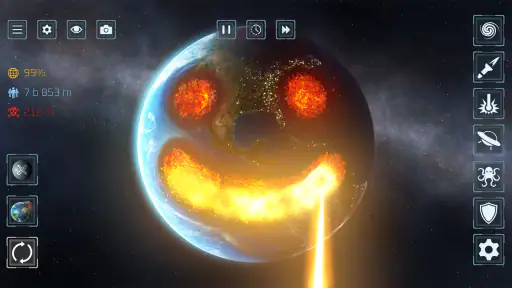
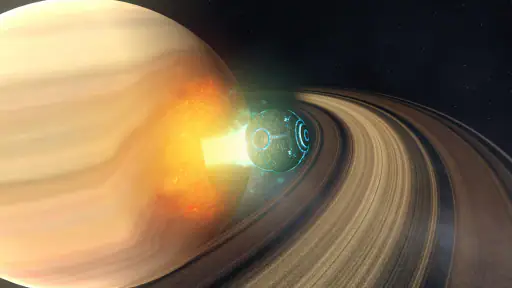
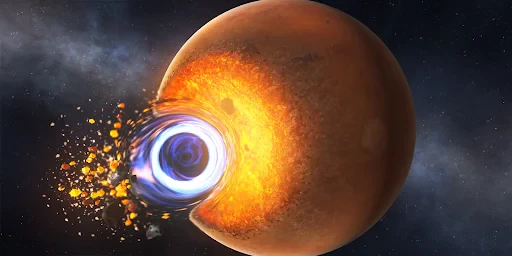
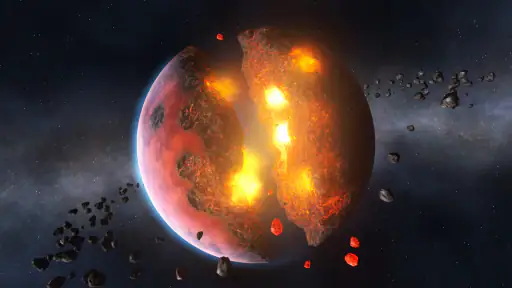
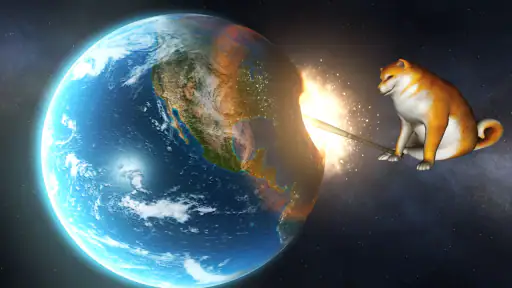
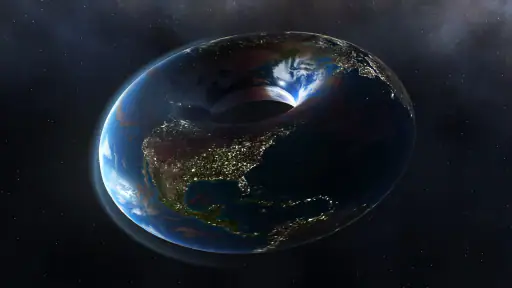
So, what's the deal with Solar Smash? Essentially, it's a planet destruction simulator. You start with a peaceful planet, and your job is to wreak as much havoc as your heart desires. From lasers and nuclear missiles to cosmic entities that devour worlds, the arsenal at your disposal is both impressive and, frankly, a bit terrifying. The graphics are surprisingly detailed, allowing you to see the impact of your destructive actions in real-time.
Features That Keep You Hooked
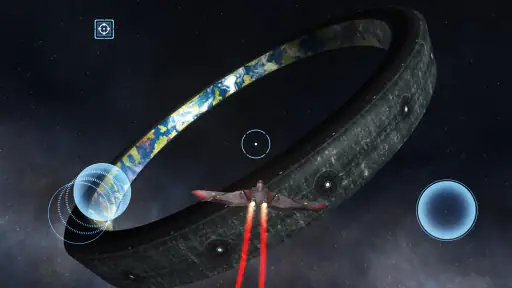
One of the best things about Solar Smash is its variety. It doesn’t just stop at blowing things up. You can customize your planets, choosing from different types—be it rocky, gas giants, or Earth-like. There's also a neat feature where you can simulate alien invasions or unleash a zombie apocalypse just for kicks.
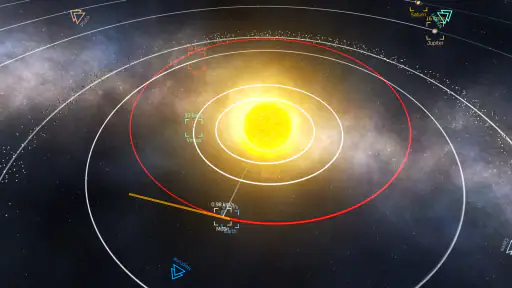
Another cool aspect is the ability to slow down or speed up time. This means you can watch the slow-motion obliteration of a planet or fast forward to see the aftermath of your actions. It’s a strangely satisfying experience, almost like a guilty pleasure you can’t quite put down.
Interactive and User-Friendly
What I appreciate about this app is its intuitive design. Whether you’re a first-time user or a seasoned destroyer of worlds, the interface is straightforward and easy to navigate. The controls are responsive, ensuring that your destructive whims are executed perfectly. Plus, the developers are continually updating the game, adding new features and weapons to keep things fresh and exciting.
More From Our News Desk

Weather by Xiaomi Review: Clear at a Glance, Less Clear Up Close

X Under Pressure: Can It Recover When Posting Goes Wrong?

Clash of Clans Is Won Between the Battles

Android Auto Makes the Case for Quieter Car Software

MobiOffice: Transforming Mobile Productivity with Seamless Integration

EA SPORTS FC™ Mobile Soccer: Redefining Mobile Sports Gaming
For those who love a bit of competition, there's a leaderboard to see how your destructive capabilities stack up against others. It's a fun addition that adds a bit of a challenge to the otherwise carefree destruction gameplay.
Use it like a tiny creative project
I get more out of a session when I set myself a small experiment instead of tapping every weapon at random. For example, I might choose one planet, make a single kind of attack, and use the time controls to watch what happens at different speeds. Then I reset the idea mentally by switching to another tool or planet type. That little bit of structure makes the destruction feel less repetitive and helps me notice the visual differences between choices.
It also works as a casual shared-screen game: one person can suggest the next attack while another handles the controls. That turns a few spare minutes into a simple back-and-forth without requiring anyone to learn a complicated ruleset. I wouldn’t treat it as a deep multiplayer competition, though; the appeal is the spectacle and experimentation, not a long-term contest.
Small experiments that make each session more useful
A practical way to get more from the sandbox is to decide what you want to observe before starting an attack. I might ask whether I prefer watching one dramatic impact unfold or building a scene from several different actions. Then I keep the rest of the setup as consistent as possible. This isn’t about finding a correct answer or achieving a hidden score; it’s a simple way to make the visual comparison more satisfying and avoid turning every session into the same blur of effects.
The time controls are especially helpful when an effect is visually busy. Slowing things down gives me a chance to follow the change as it happens, while speeding time up makes it easier to move on when I’m more interested in the final scene than the sequence. I’d use those controls deliberately rather than treating them as decoration: choose one pace for observing, another for clearing through the aftermath, and the brief session feels more intentional.
There’s also a useful distinction between a solo experiment and a shared-screen turn. Alone, I can take a few seconds to compare planet types and attack choices. With someone else nearby, I can let them pick the next action and see how their idea changes the scene. That kind of informal handoff is a better fit than expecting the leaderboard to turn the experience into a social game with ongoing teamwork or a deep competitive structure.
Where the sandbox has limits
The same freedom that makes the game approachable can leave it feeling aimless. If you need missions, a clear progression path, or a story that rewards careful play, the open-ended premise may not hold your attention for long. Repeatedly causing destruction can also become visually familiar once the novelty wears off. I’d approach it as a toy for brief bursts, not as a simulation that promises realistic planetary science or a campaign with a final objective.
One useful habit is to change only one part of an experiment at a time: keep the planet choice steady while switching the attack, or keep the attack steady while changing the planet. That makes it easier to judge what you actually enjoy, rather than producing a busy scene where every effect competes for attention. It’s a small way to get more intentional play from a game built around spectacle.
What to expect from the simulation
The word “simulation” here is best understood as an interactive visual playground, not a tool for learning astronomy. I’d come to it for the pleasure of choosing an action and watching a planet change, rather than for accurate predictions about how a real world would behave. That distinction matters if you are deciding between this and an educational app: the former gives you room to play with dramatic what-ifs, while the latter is the better choice when facts and guided explanations are the point.
It also helps to think of the available variety as different ways to create a scene, not as a promise that every option will feel like a wholly separate game. Swapping a planet or attack can refresh the visuals, but the central activity remains experimentation through destruction. If you enjoy comparing effects, that repeatable loop can be relaxing. If you need a steady stream of new goals and changing rules, the same loop may start to feel narrow.
Who is likely to enjoy it?
I’d recommend it to people who like visual sandboxes, playful what-if experiments, or games that are easy to pick up while waiting for a ride or taking a short break. A realistic everyday use is opening it for a few minutes after finishing a task, trying one quick planetary experiment, and closing it without needing to remember a story or manage a long session. The age rating is Everyone 10+, which is worth keeping in mind when deciding whether it fits a younger player in your household.
Compared with the usual simulation options, this is much less about building, managing resources, or maintaining a system over time. Its focus is immediate cause and effect: choose a planet, try an attack, and watch the result. If you want to nurture a world or solve a detailed management challenge, another kind of sim is a better fit. If you want a low-commitment visual sandbox, this narrow focus is a strength.
Who may be better off choosing another game
I would skip it if I were looking for a simulation where decisions accumulate across a long session. There’s no reason to approach the experience as a city builder, a survival challenge, or a strategy game about protecting a planet; those genres get their appeal from planning and consequences that continue to matter. Here, the pleasure comes from trying an action and seeing its immediate visual result. Someone who prefers a clear objective, unlock path, or story may find another simulation more rewarding.
It may also be a poor match for a player who quickly tires of repeated visual experimentation. The range of planets and destructive choices gives you different combinations to try, but variety does not change the basic premise. I’d treat that as the key decision before installing: if the central idea sounds entertaining in several small variations, the game has a clear audience; if it sounds like a novelty you’d exhaust in one sitting, a more structured alternative is likely a better use of your time.
Perfect for Those Quick Breaks
One of the major appeals of Solar Smash is how perfect it is for short bursts of gameplay. Whether you’re on a lunch break, waiting for a bus, or just need a quick escape from reality, this app provides the ideal distraction. It's like a digital stress ball, but instead of just squeezing it, you can blow up entire planets.
In summary, if you've ever fantasized about having god-like powers or just want a fun way to pass the time, Solar Smash is worth checking out. It's free on both Android and iOS, so there's really no reason not to give it a shot. Just remember, with great power comes great responsibility—or, in this case, the responsibility to obliterate responsibly!
My verdict on the value
For me, the clearest reason to try it is that free access lets you test the central idea without paying upfront. I’d skip it if I’m specifically shopping for a structured, strategic simulation, but I’d keep it around for occasional visual experimentation. The listed in-app purchases are a reason to pause before buying extras, not a reason to assume they are required. If the basic destruction loop is already entertaining, it delivers the kind of quick, self-directed diversion I’d want from a free game; if it isn’t, a purchase is unlikely to fix that mismatch.
How I’d decide whether to keep playing
I’d give the free experience enough time to answer one simple question: do I enjoy choosing an action and observing the result, even without a mission telling me what to do next? If the answer is yes, there is a good chance I’ll return for short sessions, especially when I want something visually engaging that asks little of my memory or attention. If I’m already wishing for objectives or more substantial consequences, I’d take that as a sign to move on rather than trying to make the game serve a different purpose.
For a first session, I’d avoid using every available option immediately. Pick one planet, try a single attack, and watch the change at a pace that lets you follow it. Then switch one variable and compare. That approach makes the initial exploration feel less chaotic and helps answer whether the different choices are interesting to you. It also gives you a better basis for deciding whether you want to return, without mistaking a crowded first attempt for the game’s usual rhythm.
Platform and household considerations
The game is available for Android and iOS, and the minimum Android requirement is version 7.0. That makes the Android requirement straightforward to check before downloading, while the Everyone 10+ age classification gives parents a clear point to consider for younger players. I’d still make the choice based on the person’s comfort with destructive fantasy, not merely on the fact that the actions take place in a fictional setting.
Because the core activity is easy to understand, it can be a simple game to pass around briefly, but I would set expectations: it is a shared-screen diversion rather than a substitute for a dedicated multiplayer game. A friend can call out a planet or suggest an attack, and the player at the controls can try it. That small social use works best when everyone is happy to improvise instead of expecting teams, elaborate rules, or a lasting shared campaign.
A clear recommendation, with the right expectations
My recommendation is to try it if you want an accessible, visual sandbox and are comfortable with a game whose satisfaction comes from self-directed experiments. Its free entry point makes that decision easy, and the listed purchases need not be part of it unless you personally decide an extra is worth paying for. I wouldn’t spend just because the option is there; first see whether the central loop earns a place in your routine.
For me, the best fit is someone who likes a few minutes of playful destruction and can make their own small goals, such as comparing an attack or watching an effect unfold at a different speed. The weaker fit is someone who expects careful planetary science, a structured progression system, or a management challenge. With that distinction in mind, it’s an easy game to sample and an equally easy one to leave behind if its particular kind of spectacle isn’t your thing.
Solar Smash Frequently Asked Questions
Can I play Solar Smash on both Android and iOS?
Solar Smash is available on Android and iOS, so you can look for it in the app store used by your device. Before downloading, check that your device meets the operating-system requirement for the version you plan to install. The game is a simulation focused on experimenting with planetary destruction, making it a straightforward choice if you want a casual sandbox experience rather than a story-led game.
Does Solar Smash offer a story or multiplayer mode?
Solar Smash is centered on a sandbox-style simulation: its main appeal is choosing destructive tools and seeing how planets respond. It is best approached as an open-ended experience rather than a game built around a traditional story campaign. If you are looking for a structured narrative or competition with other players, consider whether experimenting with planetary destruction on your own is the kind of play you want.
Is Solar Smash suitable for children, and what kind of content should parents expect?
Solar Smash is rated Everyone 10+ and focuses on fictional planetary destruction. Players use imaginative weapons and cosmic events to damage or destroy planets, so the central theme is destructive rather than educational or story-driven. Parents deciding whether it suits a child may want to consider how that theme fits their family’s preferences. The game is free, with optional in-app purchases.
What is Solar Smash and what can I do with it?
Solar Smash is an engaging simulation game available on Android and iOS platforms that allows you to unleash your destructive creativity on planets. As a player, you can wield a variety of weapons and catastrophes to obliterate celestial bodies, from lasers and nuclear missiles to cosmic events like asteroid impacts. The game offers a visually stunning and satisfying experience, letting you explore different scenarios of planetary destruction and witness the realistic aftermath in a sandbox environment.
Is Solar Smash free to play, and does it contain in-app purchases?
Yes, Solar Smash is free to download and play on both Android and iOS devices. However, it does include in-app purchases that provide additional content or features. While the basic gameplay is accessible without spending money, purchasing in-app items can enhance your experience by unlocking more weapons or scenarios. In-app purchase prices range from $2.49 to $2.99 per item, so check the purchase details before confirming anything.
Pros
- Highly realistic planet destruction simulator.
- Wide variety of weapons to choose from.
- Simple and intuitive user interface.
- Visually stunning graphics and effects.
- Frequent updates with new content.
Cons
- May become repetitive over time.
- Limited educational value.
- Requires a lot of device resources.
- Ads can be intrusive at times.
- In-app purchases can be expensive.
- Category
- Simulation
- Version
- 2.5.4