The Baby In Yellow
- 10.42K
- 4.1
- Installs
- 100.00M
- Price
- Free

Screenshots

Analysis by Reviewed
I’d choose The Baby In Yellow for a night when I want a horror game that is more mischievous than grim. Its central joke is easy to grasp: I’m meant to look after a baby, but the familiar routine keeps being interrupted by increasingly unsettling behavior. That contrast gives the game its identity. It can make a simple task feel strange without asking me to learn a complicated set of rules first.
Deciding what kind of scare you want
This is a simulation horror game, but the simulation is a playful setup, not an attempt to recreate real childcare. The appeal is in the gap between what the job seems to require and what the house and baby actually put me through. I’d recommend it to someone curious about horror who prefers absurdity and surprise to a lengthy, serious ordeal.
It is also a practical choice when I have a quiet stretch and want something I can understand quickly. I wouldn’t pick it for a distracted commute or while people nearby are trying to sleep: paying attention to the atmosphere matters, and sudden moments may be less fun if I’m half-listening. Lowering the volume or using headphones can help me keep the experience comfortable, especially if jump scares usually catch me off guard.
For a casual evening with a friend, it works well as a take-turns game: one person handles the controls while the other watches for odd details and reacts to the surprises. That makes its simple premise a social advantage, though it is not a substitute for a multiplayer game with shared objectives. If I’m playing alone, I get more from it by treating each task as a small scene rather than rushing just to see what happens next.
Choosing a pace and managing the surprises
The useful decision here is not how to build a perfect strategy, but how much attention to give the routine. I’d start by following the immediate chore, then take a moment to notice the room before moving on. That pace lets the humor and the tension work together. Charging straight from one objective to the next can make the experience feel like a checklist, while lingering over every corner may not suit someone who wants a brisk scare.
There is a small trade-off in that approach: the game’s odd events are part of the attraction, so trying to predict and control everything can take the fun out of being surprised. When I lose track of a task after an interruption, I find it more useful to reorient myself and return to what I was doing than to invent a complicated plan. The game’s appeal comes from adapting to the moment, not mastering a deep tactical system.
Where its risk and reward come from
The risk is mostly about taste and timing. If a sudden scare makes me uncomfortable, or if I want a consistently serious tone, the playful disruptions may not land. If I enjoy horror that can make me laugh at the same time it unsettles me, the contrast is the reward. The baby’s strange behavior turns mundane duties into punchlines, then uses that familiarity to make the next interruption more effective.
More From Our News Desk

Weather by Xiaomi Review: Clear at a Glance, Less Clear Up Close

X Under Pressure: Can It Recover When Posting Goes Wrong?

Clash of Clans Is Won Between the Battles

Android Auto Makes the Case for Quieter Car Software

MobiOffice: Transforming Mobile Productivity with Seamless Integration

EA SPORTS FC™ Mobile Soccer: Redefining Mobile Sports Gaming
Compared with horror games centered on combat, resource management, or navigating a large environment, this one keeps its focus narrow. That means less to learn and less pressure to keep track of complex systems, but also less room for players who want long-term character growth or a world to explore at length. I’d choose a more involved survival game for careful planning and sustained danger; I’d choose this one when I want a compact, accessible dose of weirdness.
A useful way to judge whether it suits me is to notice what I enjoy during the opening stretch. If the contrast between ordinary babysitting and supernatural interruptions makes me curious, the core idea is working. If I’m already wishing for combat, realistic childcare, or a larger world, that is a good sign that another game will serve me better. It is better to make that choice honestly than to expect this small, focused premise to turn into a different kind of experience.
The Enigmatic Infant
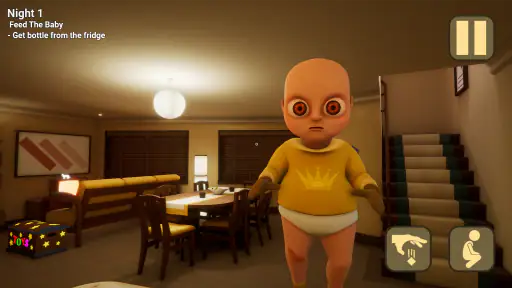
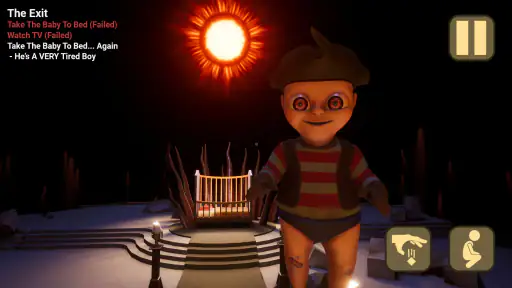
First things first, The Baby In Yellow is not your typical babysitting game. It’s a quirky horror game that cleverly combines the mundane task of babysitting with some supernatural twists. You, the babysitter, have one job: take care of the baby. Sounds simple, right? But this is no ordinary baby; it has a knack for teleporting, disappearing, and giving you the creeps with its eerie yellow eyes.
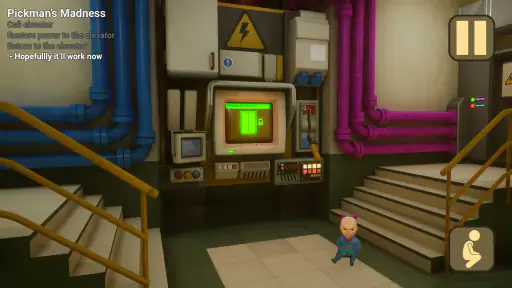
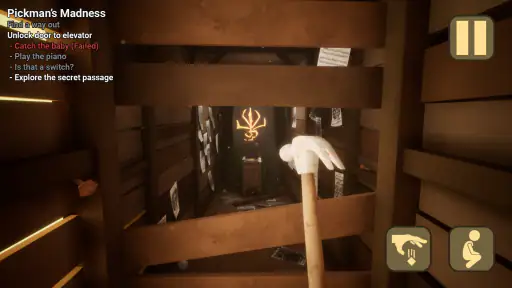
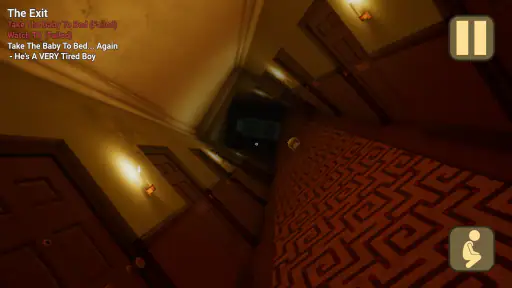
From the moment you start the game, the atmosphere is thick with suspense. The graphics are simplistic yet effective, giving off an unsettling vibe that keeps you on edge. The house, where all the action takes place, is dimly lit and eerily quiet, except for the occasional baby giggle that echoes through the halls.
Gameplay Mechanics
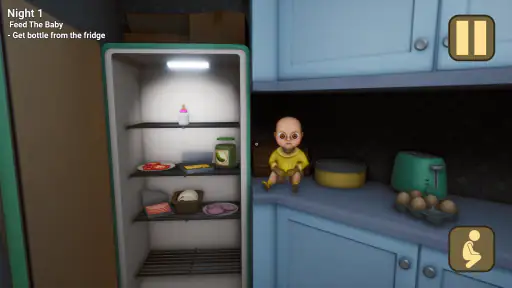
The gameplay is straightforward and easy to pick up. Your tasks are laid out for you—feed the baby, change its diaper, put it to bed—but completing them is where the fun and fright begin. The game does an excellent job of balancing humor with horror. One minute you’re laughing at the absurdity of a flying baby, and the next, you’re questioning if you’re alone in the house.
For a smoother first run, I’d treat the listed chores as the immediate objective and resist rushing through the rooms. A small pause to look around helps the comic details land and gives the sudden changes room to surprise you. This is not a strategy game built around elaborate planning; the useful skill is staying oriented when an ordinary task turns strange. If a scare makes you lose track of what you were doing, returning to the current chore is a better approach than trying to anticipate every twist.
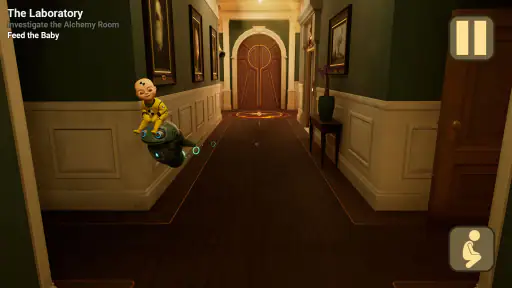
What makes this game particularly engaging is its clever use of jump scares and unexpected events. Just when you think you have a handle on things, bam! The baby’s head turns 360 degrees, or it vanishes into thin air. It’s this unpredictability that keeps you hooked and coming back for more.
Why It Works
So, what makes The Baby In Yellow stand out in the crowded genre of horror games? For one, it doesn’t take itself too seriously. The developers have managed to create a game that’s both creepy and comedic, a rare combination that works surprisingly well. The simplicity of the tasks juxtaposed with the bizarre occurrences keeps the player engaged without overwhelming them.
That balance also explains who is most likely to enjoy it: players who like horror with a silly edge, or friends who want to take turns reacting to the same bizarre babysitting routine. It is less suitable for someone seeking a serious, sustained sense of dread or a demanding challenge. Compared with conventional horror games that emphasize combat, resource management, or escaping a large environment, this one gets its tension from the clash between familiar chores and supernatural interruptions. If you prefer to plan routes and optimize a complex system, its straightforward setup may feel thin; if you want an accessible scare without learning a pile of rules, that simplicity is a strength.
Moreover, the game’s short playtime is a plus. You can complete it in one sitting, making it perfect for those who want a quick thrill without committing hours of their life. It’s a game that’s easy to pick up and hard to put down, mainly because you want to see what crazy thing happens next.
How it fits your phone and preferences
Team Terrible developed the game, and its broad audience is reflected in an average rating of 4.1 from around 603,000 ratings, alongside more than 100 million installs. It is free to download, carries a Teen age rating, and includes optional in-app purchases priced at $3.49 per item. The current version is 2.2.3, and it runs on Android 8.0 or later. Those details make it an easy game to consider if you want to try a horror-comedy without an upfront purchase, while the age rating is worth keeping in mind if you are choosing a game for a younger player.
I would not assume that a free download means every part of the experience is necessarily free of purchase prompts; the listed optional purchases are a reason to check what is being offered before spending. The game’s short-session appeal is also a trade-off: it suits a quick diversion, but it may not provide the long-term progression that keeps some simulation players invested. If your priority is a realistic childcare simulator, this is not the right fit—the babysitting setup is a comic frame for horror, not a practical guide to looking after a child.
Getting more from a short play session
One small but useful habit is to separate the task from the scare in my mind. I first ask, “What was I meant to do?” and then check what has changed around me. That keeps an interruption from turning into aimless wandering. It also helps me notice the game’s tonal shifts instead of treating every room as a route to sprint through. I wouldn’t call this a hidden mechanic; it is simply a way to make the straightforward objectives easier to follow while preserving the surprise.
If I’m introducing it to someone who rarely plays horror, I’d let them know that the premise is comic but the scares are still sudden. The Teen rating is a useful starting point for deciding whether it is appropriate, but I would also consider the individual player’s reaction to eerie imagery and jump scares. Someone who enjoys spooky humor may find it approachable; someone who avoids that kind of surprise may be happier watching a friend play rather than taking control.
The game’s free entry also makes it easier to test that preference without committing to a paid game up front. I’d still pause before any optional purchase and make sure I understand what is being offered. For a player who only wants to try the central idea, there is no need to treat a purchase as part of the decision to give it a first look.
How the experience holds up over time
Its strongest point is a clear, memorable premise, not a promise of endless progression. That distinction matters if I’m choosing a simulation game: some alternatives are built around managing systems over many sessions, while this one gets its energy from compact encounters and escalating oddness. I would not buy it expecting a long routine to optimize or a realistic childcare loop. I would choose it when a brief, unusual horror-comedy sounds more appealing than a sprawling campaign.
For repeat visits, I’d focus less on trying to force a high score or perfect route and more on whether the surprises still amuse me. A friend watching can make familiar moments entertaining again because their reactions become part of the evening, but that is a social use rather than a new game mode. If the joke has stopped landing for me, moving to a deeper horror title is a sensible choice, not a failure to understand this one.
Final Thoughts
In conclusion, The Baby In Yellow is a delightful mix of horror and humor. It’s a game that doesn’t demand too much from the player but offers plenty of entertainment in return. Whether you’re a seasoned horror fan or someone looking for a light-hearted scare, this game is worth a try. Just remember, next time you think babysitting is a breeze, this game will make you think twice!
My verdict is to try it when you want something playful, odd, and easy to understand, and to skip it if sudden scares or deliberately absurd scenes are not your thing. The best way to judge its appeal is to give the opening stretch your attention rather than expecting a deep simulation: the pleasure comes from seeing how far a familiar routine can be bent into a horror gag. For the right mood, that focused idea is enough to make this babysitting shift memorable.
The Baby In Yellow Frequently Asked Questions
Who developed The Baby In Yellow, and what kind of game is it?
The Baby In Yellow is a simulation game developed by Team Terrible. Its babysitting-horror premise gives routine childcare duties an unsettling twist, so it is quite different from a straightforward life simulator. If you enjoy games that combine an unusual role with a spooky atmosphere, this may suit you; if you prefer realistic or relaxing simulations, its horror focus is worth considering before downloading.
Does The Baby In Yellow work on older Android phones?
The Baby In Yellow requires Android 8.0 or later, so it can run on some older devices as long as they meet that minimum operating-system requirement. A phone running an earlier version of Android will not meet the listed requirement. Before downloading, check your device’s Android version in its settings, and keep in mind that meeting the minimum requirement does not guarantee identical performance on every phone.
Is The Baby In Yellow free to download, and what does it cost to play?
The Baby In Yellow is free to download, so you can try its babysitting-horror premise without paying upfront. It also offers in-app purchases priced at $3.49 per item. The game is listed as a simulation, and its unusual mix of childcare tasks and horror gives the free download a distinctly different feel from a conventional babysitting game.
What is The Baby In Yellow about, and what do you do in the game?
The Baby In Yellow is a babysitting horror game from Team Terrible. Its premise puts you in the role of a babysitter caring for a baby while strange events turn ordinary duties into unsettling situations. It is a simulation with a horror focus, so players looking for a calm, realistic childcare experience should expect a much stranger atmosphere.
What is the main objective of The Baby In Yellow game?
The primary objective of The Baby In Yellow is to portray the role of a babysitter who is tasked with taking care of an eerie and mischievous baby. Players must complete various tasks and challenges while unraveling the mystery behind the baby's unusual behavior. The game blends elements of horror and humor, providing an engaging experience for those who enjoy thrilling scenarios.
Pros
- Engaging horror atmosphere for thrill-seekers.
- Simple
- intuitive controls for easy gameplay.
- Free to download with no hidden costs.
- Regular updates with new content added.
- Offline play available
- no internet needed.
Cons
- Limited replay value after completion.
- Short gameplay duration
- under an hour.
- Might be too scary for young children.
- No multiplayer or co-op mode available.
- Graphics are basic
- not high-definition.
- Category
- Simulation
- Version
- 2.2.3