Sniper Battle: 3D War Shooter
- 4.08K
- 4.6
- Installs
- 1.00M
- Price
- Free

Screenshots
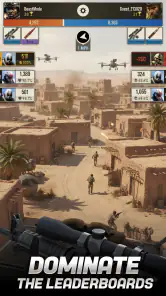
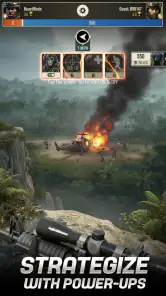
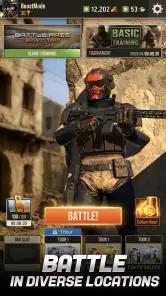
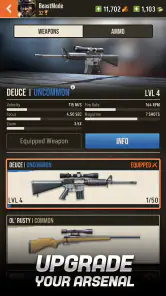
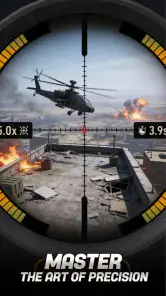
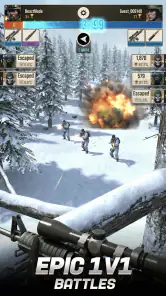
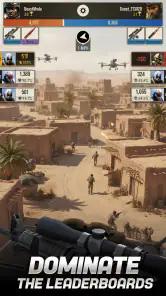
Analysis by Reviewed
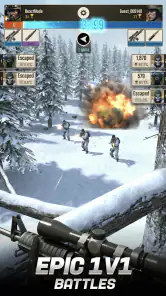
I can see the appeal of Sniper Battle: 3D War Shooter straight away: it turns a shooter into a compact contest of aim and nerve rather than a sprawling battlefield to manage. The game is built around one-on-one sniper duels, so the promise is easy to understand and the stakes feel personal. I’d consider it when I want a focused action game for a short break, not when I’m looking for a long campaign or a deep tactical simulation.
From first duel to a regular habit
Why the first sessions can click
The one-versus-one format gives each encounter a clear purpose. I’m not juggling a team or trying to follow a busy objective list; I’m watching for an opening and trying to make my shot count before the other player does. That narrow focus is a real strength on a phone, where a match that gets to the point is often more appealing than a shooter that asks for a long stretch of uninterrupted attention.
There is also an inviting learning curve in the basic idea. New players can grasp the central challenge quickly, while improving still depends on patience and timing. In a sniper duel, rushing is often a poor substitute for reading the situation. A useful habit is to resist firing simply because a target appears: taking a moment to settle your aim can be more valuable than reacting first. That small choice makes the game feel more deliberate than a typical run-and-gun shooter.
As an action game from HypGames, it sits in a particular lane: direct competition, a recognizable weapon fantasy, and an emphasis on individual performance. The game is free to start, which makes it easy to try without turning the decision into a purchase commitment. Its Teen age rating is another practical point for households deciding whether it suits a younger player; I’d still check the on-device store details and family settings before handing over a phone.
How to get more from a short play session
For a quick session, I’d treat each duel as a chance to practise one decision rather than as a reason to play indefinitely. For example, I might focus on staying calm before taking a shot, then pay attention to whether impatience or overthinking caused the miss. That kind of self-review makes even a brief run feel less disposable. It also helps separate a bad outcome from a bad habit: losing a duel doesn’t automatically mean the aim was the only problem.
This approach matters because the format can reward composure as much as quick reflexes. A player who likes watching for a moment and then acting with intent may find more satisfaction here than someone who expects constant movement and immediate action. If you prefer noisy firefights, frequent weapon changes, or several objectives unfolding at once, this focused rhythm may feel too restrained. The game’s central appeal is also its main limitation: it keeps returning attention to the same kind of head-to-head challenge.
Compared with larger mobile shooters, this is easier to approach when you have only a little time and don’t want to coordinate with a squad. Compared with casual aim games, the opponent gives each shot a competitive context. The trade-off is that a duel offers less variety than a broader shooter with different modes or a narrative campaign. I’d choose it for a direct contest, but choose a conventional multiplayer shooter when teamwork, map variety, or a more expansive session matters more.
You May Like

Clash of Clans Is Won Between the Battles

Android Auto Makes the Case for Quieter Car Software

MobiOffice: Transforming Mobile Productivity with Seamless Integration

EA SPORTS FC™ Mobile Soccer: Redefining Mobile Sports Gaming

How Microsoft OneDrive Became a Mobile Productivity Giant

How Google Translate Breaks Language Barriers Effortlessly
Making a place for it in an ordinary week
A realistic use for this game is a short break at home when I can give the screen my attention, rather than trying to squeeze a duel into every spare minute. For instance, after finishing a small task, I might play briefly and stop while I’m still enjoying the challenge. That keeps the game in the role it suits best: a focused change of pace, not background entertainment to tap through while doing something else.
If you’re deciding whether it belongs in a regular rotation, I’d look at the kind of break you usually want. Someone who likes a compact contest and can enjoy a narrow skill goal may find a reason to return. Someone who wants a game to fill a long evening, tell a story, or offer several kinds of activity will probably be better served by a larger action title. The distinction is useful because “short match” does not automatically mean “easy to play while distracted”; the aiming challenge still asks for attention.
One practical way to keep sessions satisfying is to choose a single focus before starting: patience, steadiness, or resisting a rushed shot. Afterward, consider whether that choice actually helped. This gives repeat play a small personal purpose without pretending each duel needs a grand progression system. It also makes it easier to notice when you’re no longer learning anything from the routine and are simply repeating it because the next match is available.
Does the value last beyond the novelty?
The first few encounters can make the simple premise feel fresh, but lasting value depends on whether I enjoy refining my decisions. That is a different kind of replay appeal from collecting a long list of missions. If I like trying to become steadier under pressure, the duel format gives me a reason to return and improve. If I mainly want new settings, story beats, or dramatically different match types, I’d be cautious about expecting this game to supply that kind of variety.
Its audience figures suggest that it has found a substantial group of players: it has a 4.6 average from around 31,000 ratings, and has passed a million installs. Those figures can be useful context when deciding whether a game has an active audience, but they don’t tell me whether its particular pace suits me. I’d use the free download as a low-commitment test: play enough to notice whether the tense pauses and precise shots feel satisfying or repetitive, rather than judging it only by the first exciting win.
There is a practical way to judge whether it deserves a place on your phone: notice what brings you back after the first session. If you’re returning because you want to improve your timing or enjoy the pressure of a close duel, that’s a good sign. If you’re opening it only out of habit and the matches are starting to feel interchangeable, it may be time to rotate it out. Not every game needs to become a daily routine; a focused title can still be worthwhile as an occasional change of pace.
Updates, upkeep, and spending choices
The current version is 1.04.00, and the game requires Android 7.0 or later. That makes checking device compatibility straightforward before installing, especially on an older phone. I’d also keep an eye on updates through the normal app store rather than assuming a game will remain unchanged: updates can affect how an app runs, and checking for them is a simple part of keeping a mobile game usable. I wouldn’t treat version numbers alone as evidence of a particular update schedule or future support.
There is little upkeep in the ordinary sense of maintaining a game: the main task is making sure it installs and runs comfortably on your device, then deciding whether it still earns your attention. The more important recurring burden is the temptation to turn a quick match into an extended session. Setting a personal stopping point before playing can help, especially if competitive losses make you want to keep going until you win. That’s a useful safeguard for any head-to-head game, and particularly for one built around repeated duels.
Optional in-app purchases range from $0.99 to $99.99 per item. I’d treat those as a reason to set a spending boundary before exploring the game, not as a cue that spending is necessary to enjoy it. A free starting point is helpful, but the presence of purchasable items can make it easier to spend more than intended if you browse impulsively. If you’re installing for a child or sharing a device, use the platform’s purchase controls and make expectations clear in advance.
For an older device, compatibility is only the first check: I’d also see whether aiming feels comfortable on its screen and whether the game runs smoothly enough for careful play. A technically supported phone may still be an awkward fit if the display is small, the touch response feels imprecise, or the device is being used in a distracting setting. Those are personal fit questions, not reasons to buy anything; a brief, no-spend trial is the sensible way to judge them.
When repeated duels start to wear thin
The biggest source of fatigue is repetition. A sharply defined duel is satisfying when I’m in the mood to concentrate, but the same focus can become monotonous if I want every session to feel different. The game is not the right choice for someone who needs a story to pull them forward or wants a broad set of activities to switch between when one mode gets stale. In that case, a larger action game may be a better long-term fit, even if it takes more time to learn or play.
Another possible friction point is the mental pressure of direct competition. Losing a duel can feel more personal than failing an objective against the game itself, because there is another player on the other side of the contest. I’d recommend approaching matches as practice rather than as a test of skill or self-worth. If competitive games tend to make you tense, angry, or unable to stop after a frustrating loss, this may not be the relaxing option you’re looking for.
It is also worth matching the game to your surroundings. A quiet moment when you can pay attention suits careful aiming better than a distracted commute or a conversation-filled room. If you only have a few seconds and can’t focus, the game’s central challenge may become frustrating rather than enjoyable. For those moments, a low-pressure casual game is likely a better choice. Sniper duels work best when I can give each encounter a little attention, even if the overall session is short.
There’s a further trade-off in the kind of satisfaction it offers. A close result can make a small improvement in composure feel meaningful, but that same narrow focus leaves little room to switch gears when concentration runs out. I wouldn’t use it as my only action game if I wanted variety across a week. It fits better beside a broader shooter or a relaxed puzzle game, so I can choose between competition, exploration, and low-pressure play rather than asking one title to do all three.
My long-term verdict
Sniper Battle: 3D War Shooter earns a place on my phone if I want compact, competitive action and enjoy the discipline of waiting for a clean shot. Its simple one-on-one premise makes it approachable, and its free entry gives curious players room to decide whether the tension is their kind of fun. HypGames has made a game with a clear identity rather than a broad collection of shooter activities, which is both the reason to try it and the reason some players will move on quickly.
I’d recommend it to players who like focused duels, short sessions, and gradual improvement in timing. I’d skip it if I wanted a campaign, teamwork, constant motion, or a wide range of match experiences. The most sensible test is to play a few sessions without spending, then ask whether I’m returning for the challenge itself or simply chasing a win. If the careful rhythm still feels rewarding after the novelty passes, it can be a satisfying regular option; if not, it works better as an occasional visit than a permanent fixture.
For a free action game, that is a fair proposition: try it, keep your purchases intentional, and let your own appetite for repeated sniper contests decide its staying power. Its 4.1 thousand reviews add another point of reference, but the best guide is whether you enjoy the pause before a shot as much as the shot itself. That small distinction separates a game that fits your habits from one that only seems exciting at first.
Sniper Battle: 3D War Shooter Frequently Asked Questions
What kind of game is Sniper Battle: 3D War Shooter?
Sniper Battle: 3D War Shooter is a mobile shooting game focused on aiming at targets and completing missions from a sniper’s perspective. Players typically use a scope to line up shots, account for target movement, and progress through increasingly challenging encounters. Before downloading, keep in mind that the exact missions, controls, and available modes can vary by game version and device.
Is Sniper Battle: 3D War Shooter free to download and play?
The game may be available to download without an upfront purchase, but that does not necessarily mean every feature is free. Mobile games commonly offer optional in-app purchases, such as currency, upgrades, or other items, and may include advertisements. Check the store listing on your device for current pricing, in-app purchase details, and regional availability before installing.
Does Sniper Battle: 3D War Shooter require an internet connection?
Whether you can play offline depends on the version and the specific mode you want to use. Some missions in mobile shooter games may work without a connection, while advertisements, cloud saves, updates, or online features can require internet access. If offline play matters to you, review the current app listing and test the game’s requirements before relying on it during travel.
Is Sniper Battle: 3D War Shooter suitable for children?
The game features firearm-based combat, so it may not be appropriate for every child. Age ratings and content descriptions can differ between the Android and iOS stores, as well as across regions or versions. Parents should check the rating, screenshots, and content guidance on the relevant store and consider whether the game’s shooting themes and any advertising or purchase options suit their child.
What should I check before downloading Sniper Battle: 3D War Shooter?
Check that your phone or tablet meets the game’s current operating-system and storage requirements, and download it only from a trusted app store or official source. Also review recent user ratings, the privacy information, and any listed permissions, advertisements, or in-app purchases. These details can change with updates, so confirm them on the store page for your device before installing.
Pros
- Quick missions make it easy to play in short sessions.
- Weapon upgrades add a sense of progression.
- 3D environments give targets and missions visual variety.
- Sniper-focused gameplay rewards careful aim and timing.
- A straightforward interface makes the core controls easy to learn.
Cons
- Precision aiming can feel difficult on a small touchscreen.
- Repeated mission objectives may become predictable over time.
- Progression may require substantial play to unlock better gear.
- Action can feel limited compared with games offering varied combat roles.
- Performance and visual quality may vary across older devices.
- Category
- Action
- Version
- 1.04.00