Smash Land!
- 231.00
- 4.6
- Installs
- 10.00K
- Price
- Free

Screenshots
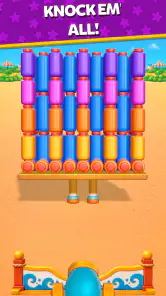
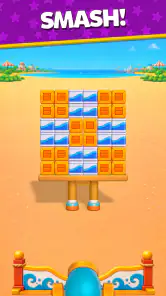
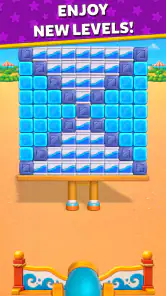
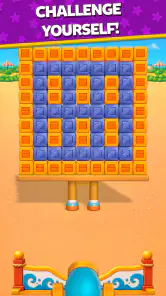
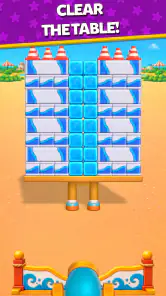
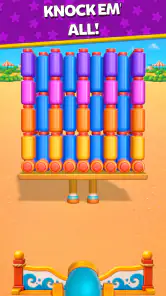
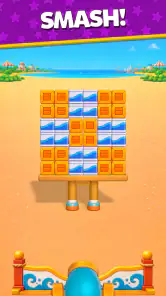
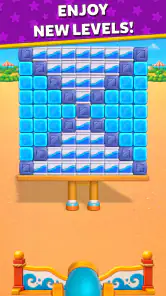
Analysis by Reviewed
I went into Smash Land! expecting a quick puzzle game built around simple aiming, and that is exactly where its appeal begins. The basic idea is easy to understand: line up a shot, fire, and break your way through the stage. What makes the experience worth discussing is not a complicated rule set, but how much attention the game asks for during those few seconds before each move.
As a free puzzle game from Flow Games A.S., it is designed for short sessions rather than a long explanation-heavy introduction. I could pick it up without studying a tutorial or learning a large collection of controls. That makes it a natural choice when I want something playable immediately, especially during a short break. At the same time, the simplicity means the quality of each puzzle matters more than the number of systems around it.
The game is listed for Everyone, and its presentation fits that broad audience. It is also available without an upfront purchase, although optional in-app purchases range from $1.99 to $99.99 per item. That price range is important to keep in mind before settling into longer sessions. I found the free entry point inviting, but anyone who dislikes purchase prompts or spending pressure should pay attention to how the game fits their habits.
How the early goals create momentum
The first useful goal is simply learning to read the space in front of me. Instead of treating every shot as a reflex test, I had to look at angles, surfaces, and the order in which objects could be hit. The act of aiming gives the game a physical feeling, while the puzzle structure asks for a little planning. That combination makes the opening moments more engaging than a basic tap-to-clear game.
I also like that the central action is immediately understandable. The store summary describes the experience as aiming, firing, and smashing, but in practice the satisfying part comes from deciding where a shot should begin and what it should accomplish afterward. A direct hit may solve one problem, while a carefully chosen angle can make the same shot do more work. That gives early stages a small but meaningful layer of experimentation.
For a new player, the best approach is not to rush every available shot. I found it more useful to pause briefly and identify the most crowded or awkward section of the layout. Clearing the obvious target first can sometimes leave a worse position later, while starting with a difficult angle may open the rest of the puzzle. This is a concrete habit that improves play without requiring advanced knowledge.
The early goals are therefore less about collecting a complicated set of abilities and more about building confidence with the aiming model. I could tell I was improving when I began planning a sequence instead of reacting to the first visible target. That is a good sign for a puzzle game: progress starts with better decisions, not merely faster tapping.
What progress feels like during ordinary play
Smash Land! communicates progress through the act of solving one puzzle after another. Each successful attempt gives me a clear sense of completion, and that matters in a game intended for brief sessions. I do not need to reserve a long block of time to feel that I have accomplished something. A single completed challenge can be enough for a quick stop-and-start play session.
The current version is 660, which suggests the game has reached a mature stage of ongoing development. I would not treat that number as a promise of a particular feature set, but it does make the app feel like an established release rather than an unfinished experiment. The public response is also encouraging: it holds a 4.6 average from around eleven thousand ratings, with more than two hundred written reviews. Those figures do not replace personal testing, but they indicate that the straightforward smashing-and-aiming loop has found an audience.
One of the more useful progress signals is my own growing consistency. At the beginning, a successful shot can feel accidental because the goal is so visible. Later, I started recognizing when a move was safe, when it was wasteful, and when a difficult angle was worth attempting. That personal improvement gives the game a stronger sense of advancement than a simple sequence of completed screens would provide.
There is also a practical advantage to this structure for people who play on a phone in unpredictable situations. If I am waiting for an appointment or taking a short break from work, I can focus on a puzzle without needing to remember a large story or a complicated inventory. The game’s progress is easy to re-enter because the core task remains familiar.
Still, players who want a deep narrative, character development, or a large strategic build may find these progress signals too light. The satisfaction comes from solving and smashing, not from shaping a long-term avatar or managing a detailed collection. That distinction is worth making before downloading it.
Reading the difficulty curve instead of blaming the controls
The challenge works best when I treat each level as a small logic problem rather than a test of speed. A failed attempt often tells me that my first idea was inefficient, not necessarily that the controls were unfair. I learned to adjust the starting angle, consider rebounds, and think about which target would create the most useful opening. This makes failure informative when I take the time to review what happened.
That said, the same simplicity can make difficulty feel uneven from one puzzle to the next. A stage with a clear path may be over quickly, while another can demand much more patience because one misplaced shot changes the entire setup. I appreciate that contrast when I am in a problem-solving mood, but it may frustrate players who expect a smooth, predictable rise in challenge.
My most reliable technique was to use the first attempt as reconnaissance whenever the layout looked unfamiliar. Rather than treating it as a must-win turn, I watched how the shot interacted with the available surfaces and targets. On the next try, I had a better idea of which route deserved commitment. This approach is especially helpful for players who become impatient after a miss.
Another useful trade-off is precision versus speed. Fast play feels exciting, but it encourages guesses. Slower aiming makes the game feel more deliberate and usually produces better results. I would recommend playing with a steady thumb and taking an extra moment before firing, particularly when a shot can affect several parts of the puzzle. The game rewards attention more consistently than frantic movement.
Players looking for a pure reflex challenge may therefore feel that Smash Land! is too thoughtful, while fans of casual physics-inspired puzzles may enjoy the need to predict outcomes. It sits closer to a compact aiming puzzle than to an arcade game where rapid reactions are the main skill.
Where the pacing succeeds and where it can lose energy
The pacing is strongest when a completed puzzle leads naturally into the desire to try one more. Short challenges create a clean rhythm: inspect the layout, choose a shot, see the result, and decide whether to continue. I found that rhythm well suited to mobile play because it offers regular stopping points instead of demanding uninterrupted attention.
The danger is that a simple loop can become repetitive if the layouts do not keep asking different questions. Since the game is built around the same essential action, variety has to come from the arrangement and the decisions required. When I was solving a layout that encouraged a new angle or a different order of attack, the formula felt fresh. When the solution seemed obvious, the session became more mechanical.
This is where the game’s early goals and later motivation need to work together. Learning to aim is satisfying at first, but experienced players need challenges that make familiar skills feel newly useful. I would recommend it most to people who enjoy refining a method and replaying a puzzle mentally, rather than to those who need constant new mechanics to remain interested.
The pacing also depends on how a player responds to optional spending. The game is free to start, which lowers the barrier to trying it, but in-app purchases can cost from $1.99 to $99.99 per item. I would set a personal spending limit before playing for long periods. That simple step keeps the puzzle loop enjoyable and prevents a moment of frustration from turning into an impulsive purchase.
For families, the Everyone age rating makes the game approachable, but I would still explain that free games can include optional purchases. That conversation is more useful than assuming the absence of an upfront price means there are no financial decisions involved.
Does the game create healthy retention or pressure?
The strongest reason to return is the desire to solve another layout more cleanly. I like retention that comes from curiosity and improving my own decisions, and this game can create that feeling when a failed shot leaves me convinced that a better angle is possible. The short format helps too: returning does not require reconstructing a complex storyline or remembering a long list of tasks.
However, not every player will experience that motivation in the same way. If the main appeal of a puzzle is discovering new rules, the familiar aiming-and-smashing loop may eventually feel narrow. The game is better suited to repeating a focused activity than to delivering a constantly expanding set of experiences. That is not a flaw by itself, but it defines the audience clearly.
I also noticed that frustration can become the wrong kind of retention pressure when I approach a difficult puzzle with the expectation of immediate success. The better routine is to stop after several unproductive attempts, return later, and try to view the layout differently. Because the game is easy to resume, taking a break does not feel like abandoning a large commitment. That makes it more comfortable than puzzle games that use long sessions to maintain momentum.
A practical everyday scenario shows where it fits. If I have ten minutes before a train arrives, I can play a few stages, stop at a natural break, and continue another day. If I am looking for a full evening of progression with a story, a large map, and many interconnected systems, I would choose a different puzzle game instead. Smash Land! works best as a focused pocket activity, not as a replacement for a substantial console-style adventure.
The install count is over ten thousand, so the game has already attracted a meaningful mobile audience without being presented as a massive mainstream platform. I see that as consistent with its focused identity: it is a compact puzzle experience for people who enjoy aiming carefully and watching a plan work.
Who should play it and who should pass
I would recommend Smash Land! to players who like simple controls with room for deliberate thinking. It is a good match for someone who enjoys testing angles, learning from failed attempts, and completing compact challenges during spare moments. It is also approachable for younger players and casual users because the central action is easy to understand.
I would be more cautious about recommending it to anyone who dislikes repeated attempts. Some puzzles may ask for patience, and a player who wants every move to succeed immediately could interpret that learning process as annoyance rather than challenge. The same applies to people who prefer rich progression systems, character customization, or a strong narrative reason to keep playing.
The free download makes trying it straightforward, but the optional purchase range means I would not hand it over to a child without discussing purchase controls first. Adults who are comfortable ignoring optional offers should be able to sample the core experience without committing to a purchase. Players who prefer a completely paid, ad-free-feeling structure may be happier with a premium puzzle alternative.
Compared with traditional match-three games, this feels less dependent on building combinations and more dependent on spatial judgment. Compared with physics puzzle games, it is more immediately action-oriented because aiming and firing are always at the center. Compared with arcade shooters, it is slower and more reflective. Those comparisons helped me understand its best position: it is a casual puzzle game with an arcade-like physical action, not a full shooter and not a conventional tile-matching game.
My progression verdict after spending time with it
Flow Games A.S. has built the experience around a clear progression idea: improve your aim, understand the layouts, and turn each successful shot into a more satisfying solution. The goals arrive quickly, the progress is easy to read through completed challenges and personal improvement, and the pacing suits short mobile sessions. The game does not need a large collection of systems to make that loop understandable.
Its main limitation is also its identity. Because the core action remains focused, long-term engagement depends on how much I enjoy solving variations on the same aiming problem. I would not choose it for a broad adventure or a constantly changing puzzle toolbox. I would choose it when I want a clean, accessible challenge that I can start immediately and leave without a complicated stopping point.
My advice is to play slowly at first, use early attempts to study the layout, and treat difficult shots as planning exercises rather than reflex tests. Keep an eye on optional purchases, especially if younger players use the device. With those expectations in place, the free entry point is easy to justify.
Overall, Smash Land! earns my recommendation for casual puzzle fans who enjoy the small satisfaction of finding a better angle. Its 4.6 average and around eleven thousand ratings reflect a positive reception, while the Everyone rating and simple controls make it approachable. I would skip it only if I need a deep story, a wide range of mechanics, or a progression system that constantly changes. For short, focused sessions built around aiming, firing, and breaking through a puzzle, it knows exactly what it wants to be.
Pros
- Quick matches are ideal for short gaming sessions.
- Simple controls make the game easy to learn.
- Bright visuals give the game a cheerful arcade feel.
- Unlockable content adds motivation to keep playing.
- Runs smoothly on most modern mobile devices.
Cons
- Gameplay can become repetitive after extended sessions.
- Progress may feel slow without frequent play.
- Some challenges rely heavily on timing and luck.
- Limited strategic depth may disappoint experienced players.
- Requires an internet connection for certain features.

- Category
- Puzzle
- Version
- 660