Screw Land 3D
- 884.00
- 4.8
- Installs
- 1.00M
- Price
- Free

Screenshots
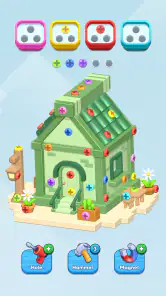


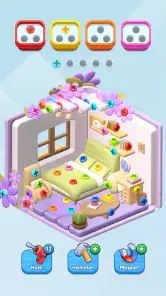
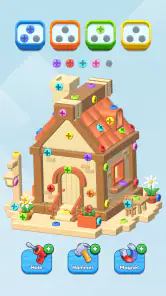
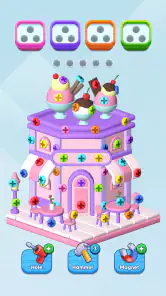
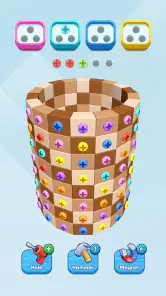
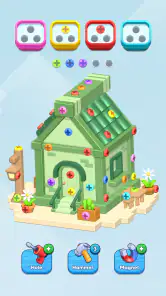
Analysis by Reviewed
I went into Screw Land 3D expecting a simple mobile puzzle and quickly found that its appeal comes from a very physical kind of thinking. The basic task is to manipulate screws, sort pieces, and work through three-dimensional arrangements until the board opens up. That sounds straightforward, but the challenge is in deciding which screw to touch first, which part is actually blocking progress, and when a seemingly useful move will leave the rest of the puzzle in a worse position.
That makes this a good fit for short bursts of focused play. I can start a puzzle while waiting for an appointment, complete a few decisions, and stop without feeling as if I have abandoned a long story or competitive match. At the same time, the levels ask for enough planning that I do not treat every move as background tapping. The game belongs firmly in the puzzle game category, but its appeal is more tactile than a traditional word, number, or match-three title.
How the screw puzzle loop feels in practice
The first move is already a decision
The opening action is usually less about speed and more about reading the structure. I look for screws that appear accessible, parts that are resting on other parts, and spaces that may become useful after a piece is moved. The three-dimensional presentation makes this first inspection important because the most visible object is not always the best place to begin. A move can look harmless while quietly removing the room needed for a later step.
I like that the game encourages me to pause before touching the screen. In many casual puzzles, the first interaction is obvious and the rest is repetition. Here, the first action establishes a small plan. I may remove a screw because it releases a panel, or leave it alone because it is holding a useful position. That choice gives the board a sense of cause and effect, even when the level itself is compact.
The controls are easy to understand, which matters in a puzzle built around precise interaction. I am not spending time learning a complicated interface before solving anything. The attention stays on the arrangement of parts. Still, ease of control does not mean every move is safe. The game rewards a deliberate finger more than a fast one, especially when several pieces overlap visually.
Feedback makes each move readable
The strongest part of the experience is the feedback rhythm. I make a move, see a piece shift or become available, and immediately reassess the board. That response creates a satisfying chain: action, visible consequence, new information, and another decision. When a screw releases the right section, the puzzle feels like it has answered my question. When the move creates a blockage, I understand the mistake without needing a long explanation.
This rhythm is also why the game can hold my attention longer than its simple premise suggests. I am not only chasing the final cleared board. I am watching how the arrangement changes after every interaction. A successful move exposes a new possibility, while an awkward move teaches me which dependency I misunderstood. The feedback is useful because it turns failure into information rather than making the puzzle feel random.
There is a subtle difference between a board that is difficult and one that is merely crowded. Screw Land 3D works best when I can identify the relationship between objects and then test a plan. The three-dimensional layout adds visual interference, so I sometimes need to inspect the board from more than one angle before committing. That extra reading is a genuine part of the challenge, not just decoration.
Why the reward feels earned
The reward is not only reaching the end. It is the moment when a sequence that looked tangled becomes understandable. I enjoy the small confirmation that follows a correct chain of actions because it validates the plan I formed a few moves earlier. The satisfaction is closer to untangling a physical object than to winning a fast arcade round.
That feeling is especially strong when I avoid an obvious move. The board may tempt me to remove the easiest-looking screw, but patience can reveal a better order. When that decision works, the reward comes from having read the puzzle correctly rather than simply trying every option. This is one of the game’s more valuable qualities for players who enjoy spatial reasoning and controlled experimentation.
The free entry point also makes it easy to try without making a commitment. The game is free to download, while optional in-app purchases range from $1.99 to $99.99 per item. I would approach those purchases carefully. A player who enjoys solving through observation may prefer to keep the process self-directed, while someone who wants help moving through difficult sections may see value in optional assistance. The important trade-off is that spending can change how much of the puzzle-solving pressure the player experiences.
The reset is part of the appeal
When a plan goes wrong, resetting is not merely an escape from failure. It gives me a clean chance to apply what I learned about the board’s order. I may restart because I used a space too early, released the wrong panel, or made a move that left no practical route forward. The second attempt is usually more informed, and that is what makes another session feel worthwhile.
This reset loop suits mobile play particularly well. A level can become a small mental project: inspect it, try a sequence, recognize the mistake, and begin again with a clearer idea. I do not need to remember a large story or maintain a complicated build between sessions. The puzzle itself supplies the reason to return, because an unfinished arrangement remains a question I want to answer.
There is a possible frustration here for players who dislike trial and error. Even when the board teaches through feedback, a failed sequence can still feel like lost time if I wanted a purely logical solution from the beginning. I would not recommend the game to someone looking for a completely relaxing activity with no wrong turns. Its calm presentation hides a requirement for patience.
What makes the three-dimensional view useful
The 3D perspective is not just a visual label. It affects how I plan because depth can hide the practical relationship between a screw and the piece it controls. I have to distinguish what is physically blocking something from what merely appears close on the screen. That makes rotation and visual inspection more important than in a flat sorting puzzle.
My most useful habit is to scan for future space before making a release. If a piece will need somewhere to go, I try to identify that destination first. I also avoid making several quick moves simply because each one appears valid. A valid move can still be strategically poor if it consumes the only open area needed later. Thinking one step beyond the immediate action prevents many unnecessary resets.
Another helpful approach is to separate observation from execution. I first identify the screws that seem connected to larger changes, then test the least risky option. This keeps the board readable and reduces the chance that I will create visual clutter through impulsive tapping. It is a small workflow, but it makes the game feel more like solving than guessing.
Who will get the most from it
I would recommend this game to people who enjoy compact spatial puzzles, especially those who like seeing a physical arrangement gradually come apart. It works well for a player who wants a focused distraction rather than a demanding long-form adventure. The combination of sorting, twisting, and releasing pieces gives the hands something simple to do while the mind works through order and consequence.
It is also suitable for family-friendly play. The content rating is Everyone, so the presentation is approachable for a broad audience. Younger players may enjoy the visible cause and effect, while older players can focus on planning and avoiding dead ends. I would still expect the difficulty of individual puzzles to matter more than the age label: a child may understand the controls quickly but need help thinking several moves ahead.
On the other hand, players who prefer wordplay, numerical deduction, or rapid matching may find the pace too measured. The game does not provide the same constant burst of activity as a match-three title. It asks for inspection, and that can feel slow if my preferred puzzle is about immediate recognition. A traditional logic-grid game may be a better choice when I want written clues and a single clearly stated deduction path.
How it compares with familiar puzzle alternatives
Compared with match-three games, this one gives me fewer automatic moments and more responsibility for the sequence. There is no comfort in simply spotting a color combination and watching the board react. I need to understand the physical arrangement and preserve room for later moves. That makes the experience less frantic but more deliberate.
Compared with classic sorting games, the screws and layered parts add a stronger sense of obstruction. In a flat sorting puzzle, the main question is often where an item belongs. Here, I also have to ask whether an item can be reached, what it is holding, and whether moving it will improve or damage the remaining layout. The extra dimension creates more visual reading, though it can also make the board harder to parse at a glance.
Compared with pure physics games, the challenge feels more structured. I am not relying mainly on unpredictable motion or timing. The important skill is choosing an order and recognizing dependencies. That makes it a better option for a quiet break than for someone seeking chaotic experimentation. The trade-off is that the experience may feel repetitive if the player does not enjoy repeating the same type of spatial decision.
Everyday use: a better waiting-room game
A realistic use case for me is a short wait when I want something more engaging than scrolling but less demanding than a full game session. I can open a puzzle, inspect the screws, make a few careful moves, and stop after a natural point. If I make a mistake, I can either reset immediately or leave the problem for later with a clearer plan in mind.
That makes it useful during breaks when concentration comes and goes. I do not have to invest in a long narrative arc, and I can return to the same style of challenge without remembering complicated controls. The best sessions are long enough to create momentum but short enough that the game does not take over the entire break.
Device expectations and practical details
The current version is 2.23.6, and the game supports devices running Android 6.0 or later. That broad compatibility makes it approachable for people who are not using a recent phone. I would still pay attention to how clearly the screen displays overlapping parts, because the quality of the experience depends on distinguishing depth and accessible screws. A smaller or lower-resolution display may make visual inspection less comfortable than it is on a larger screen.
PixOn Games has positioned this as a free puzzle game, and its reach is reflected in more than a million installs. It also holds a 4.8 average from around 29 thousand ratings, with 884 written reviews. Those figures suggest that the central loop is connecting with many players, but they do not remove the personal question of pace. A strong rating cannot make a deliberate puzzle feel fast for someone who wants constant action.
I also appreciate that the game can be judged quickly without buying anything. The free starting point lets me decide whether the screw-and-release format suits my taste. If I enjoy the feedback rhythm, optional purchases are available; if I do not, I have learned that before spending money. My advice is to treat purchases as a convenience choice rather than a requirement for understanding the basic appeal.
Where the friction shows
The biggest limitation is that visual complexity can sometimes compete with logical complexity. When several objects overlap, I may spend time working out what I am looking at before I can think about the solution. That is not always a flaw, because reading the board is part of the puzzle, but it can make a mistake feel caused by presentation rather than reasoning.
The game can also test my patience when I want a quick win. A move that looks productive may lead to a dead end, and the correct response is often to restart rather than force the board. Players who enjoy careful retries will see that as part of the design. Players who expect every tap to produce progress may find the reset cycle discouraging.
Another trade-off is repetition. The core pleasure comes from the same family of actions: inspect, twist, sort, release, and reassess. That focus gives the game a clear identity, but it also means variety depends heavily on how differently each arrangement asks me to think. If I need a wide range of puzzle types in one app, I would choose a collection that mixes mechanics instead.
My verdict on the complete loop
The loop works because every stage leads naturally to the next. I take an initial action, receive a clear change on the board, use that feedback to form a better plan, and feel rewarded when the structure finally gives way. If the plan fails, the reset is meaningful because I return with information rather than starting from nothing. That is the reason another session begins: the puzzle has shown me enough to make the next attempt smarter.
The best reason to try it is its balance between simple controls and surprisingly careful planning. I would choose it for focused breaks, spatial problem-solving, and tactile puzzle fans who enjoy learning from a failed sequence. I would skip it if I wanted rapid matching, story progression, or a puzzle experience with no visual ambiguity at all.
As a free game from PixOn Games, Screw Land 3D offers a clear idea and follows it consistently. Its 4.8 average and broad install base make sense to me because the action is easy to grasp while the consequences reward patience. It is not an endlessly varied puzzle collection, and its layered boards can occasionally create friction, but the central action-feedback-reward-reset cycle is strong enough to bring me back. For anyone who likes dismantling a problem one careful move at a time, this is a convincing mobile time-filler with more thought behind it than its compact premise first suggests.
Pros
- Simple controls make it easy for new players to start quickly.
- Short levels are convenient for quick gaming sessions.
- Colorful 3D visuals make the board and bolts easy to distinguish.
- Gradual difficulty increase keeps early gameplay approachable.
- Offline play is useful when no internet connection is available.
Cons
- Later puzzles can feel repetitive after extended play sessions.
- Some levels depend heavily on trial and error.
- Small pieces may be difficult to identify on smaller screens.
- Progress can feel slow without optional boosts or extra moves.
- Ads may interrupt the gameplay experience between levels.

- Category
- Puzzle
- Version
- 2.23.6