Riddle Test: Brain Teaser Game
- 580.00
- 4.2
- Installs
- 5.00M
- Price
- Free

Screenshots
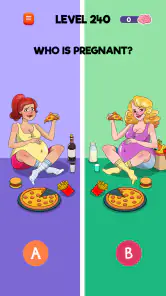
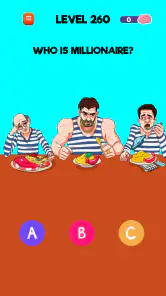
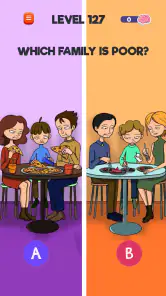
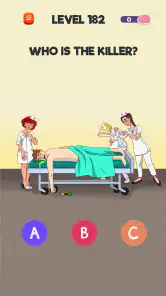
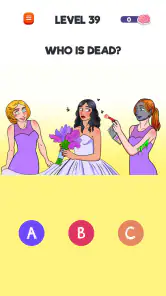
Analysis by Reviewed
I like word puzzles most when they make me pause and reconsider what a question is really asking, rather than simply testing how quickly I can spot a familiar pattern. That is the appeal of Riddle Test: Brain Teaser Game: it gives a short break a little mental friction. The core idea is easy to understand, but a riddle can still send me down the wrong path before its answer clicks.
Why the riddles are the main attraction
As a word game from Kidding Box Studio, Riddle Test is built around questions that ask for more than straightforward recall. Its store description points to thinking challenges, quizzes and IQ-style puzzles, and that mix sets expectations better than treating it as a conventional word-search or vocabulary exercise. I’d choose it when I want to turn a spare moment into a small reasoning challenge, not when I’m looking for a long story or a competitive match.
The useful distinction is that “brain training” here is best approached as entertainment, not as a promise of measurable improvement. Solving a tricky prompt can feel satisfying and encourage flexible thinking, but I wouldn’t use a game like this as a substitute for a structured course or a serious assessment. Its strength is the immediate puzzle-solving experience: read, form a guess, rethink it, and enjoy the reveal when the answer makes sense.
How it fits into an ordinary day
For example, I can imagine opening it while waiting for a coffee or sitting through a short commute. One riddle gives me a natural stopping point, so I can put the phone away without needing to remember where I left off in a complicated narrative. If I’m playing with someone nearby, the same question can become a quick conversation: we can compare interpretations before settling on an answer. That makes it more sociable than silently working through a standard word search, though it is still a casual game rather than a dedicated multiplayer experience.
A practical tip is to read each question twice before reaching for a hint. With riddles, a small wording detail can matter more than a large vocabulary, and the first interpretation is often the trap. If I’m still stuck, I’d rather take a short pause than spend hints just to keep moving; coming back with fresh eyes can make the intended angle clearer. That approach helps preserve the satisfaction of solving the puzzle myself.
Where it differs from other word games
Compared with crosswords, word searches and anagram games, Riddle Test puts less emphasis on filling a grid or rearranging letters and more on interpreting a prompt. That is a welcome change when those familiar formats feel repetitive, but it also means players who prefer clear rules and unambiguous clues may find some riddles frustrating. A riddle’s answer can feel obvious after the reveal while remaining hard to infer beforehand, so patience matters more here than a broad vocabulary.
The hint system offers a way through a sticking point, and the game is free to download with optional in-app purchases priced from $0.99 to $29.99 per item. I’d treat hints as a convenience rather than a requirement: use one when a puzzle has stopped being fun, not simply because the answer hasn’t arrived immediately. The trade-off is familiar for free mobile games—players who want every answer quickly may be tempted to spend, while patient players can take the slower route.
More From Our News Desk

Clash of Clans Is Won Between the Battles

Android Auto Makes the Case for Quieter Car Software

MobiOffice: Transforming Mobile Productivity with Seamless Integration

EA SPORTS FC™ Mobile Soccer: Redefining Mobile Sports Gaming

How Microsoft OneDrive Became a Mobile Productivity Giant

How Google Translate Breaks Language Barriers Effortlessly
Engaging Gameplay and Intriguing Puzzles
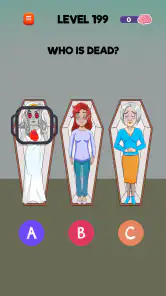
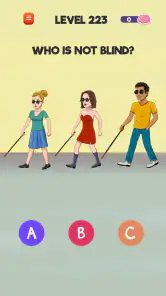
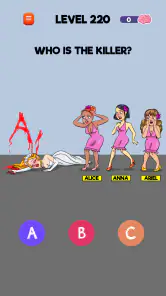
Let’s talk about the heart of the game - the riddles. Riddle Test: Brain Teaser Game is packed with a wide variety of puzzles that are sure to test your gray matter. From logic puzzles to lateral thinking challenges, it’s got it all. I found myself scratching my head more than once, trying to solve some of the more advanced levels. And trust me, when you finally figure out the answer, it feels like you’ve cracked the Da Vinci Code.
Intuitive Interface
One of the things I absolutely love about this app is its user-friendly interface. Navigating through the different sections is a breeze, and the design is sleek and modern without being overwhelming. Each puzzle is presented clearly, so you can focus on solving the challenge rather than figuring out how to play the game.
Great for All Ages
This game is not just for adults looking to kill time on their commute. It’s also a fantastic way for kids to develop critical thinking skills. The levels are designed to gradually increase in difficulty, making it accessible for players of all ages. Plus, it’s always a good feeling to know that while you’re having fun, you’re also giving your brain a workout.
And did I mention the hint system? It’s a lifesaver for those moments when you’re completely stumped. You can earn hints by completing levels or opt for the in-app purchases if you’re in a hurry. It’s a fair system that doesn’t force you to spend money to enjoy the game.
A Few Words on Design
Visually, the game is a treat. The colors are vibrant without being too flashy, and the animations are smooth. It’s clear that a lot of thought has been put into making the game not only challenging but also pleasing to the eye.
That balance of clear presentation and puzzling questions is why I’d recommend it for someone who wants a low-pressure word game, rather than a demanding daily routine. The title has an average rating of 4.2 from around 36,000 ratings, and more than five million installs; that scale suggests it has found an audience, though personal tolerance for lateral-thinking riddles still matters more than popularity. It is rated Teen, so I’d check that age guidance before handing it to a younger player, even if the simple format may look family-friendly at first glance.
Who will enjoy it—and who may not
I think the best fit is someone who enjoys talking through odd questions, likes a quick “wait, what?” moment, and doesn’t mind being wrong before finding the intended reading. It can also work for a parent and older child taking turns, provided the Teen rating suits the child and an adult is comfortable with the content. I would skip it if I mainly wanted a calm word-search, a precise vocabulary challenge, or puzzles with one transparently signposted method; this game’s appeal depends on accepting a degree of lateral interpretation.
One small way to get more from a session is to say your reasoning aloud before answering. That makes it easier to spot when you’re assuming a meaning the question never actually states, and it turns a solitary level into a light conversation without needing extra game modes. If a clue still feels arbitrary after you see its answer, I’d move on rather than let one frustrating riddle define the whole session.
What to expect before installing
The game was released on November 18, 2021, and its current version is 2.0.2. It requires Android 7.0 or later, which is useful to check if you’re installing it on an older device. The free entry point makes it easy to try, but optional purchases mean I’d keep an eye on spending if a child is playing or if hints are tempting during a difficult streak. You can enjoy the basic puzzle appeal without treating purchases as the point of the game.
A practical way to approach a tricky streak
When I’m stuck, I find it useful to separate the literal question from the assumptions I’ve added to it. I might ask myself what each key word could mean outside its most obvious sense, then test one alternative interpretation at a time. That is more productive than cycling through random answers, and it can help me decide whether the puzzle is still enjoyable or whether it is time to use a hint and move on.
There’s also a small social use that suits this format particularly well: pass the same prompt around without immediately sharing your first guess. Each person can explain their reading before anyone reveals an answer. The fun comes from noticing how differently people parse a short sentence, not from turning it into a contest. It works best in a relaxed moment, since a player who dislikes being corrected may enjoy solving alone more.
Choosing it over a familiar puzzle app
If I’m deciding between this and a crossword, I’d ask whether I want to build an answer from intersecting clues or interpret one compact question. Crosswords give more structure and often let a partly completed grid guide the next move; Riddle Test is a better fit when I want one self-contained prompt and a quick shift in perspective. A word-search is gentler and more visual, while an anagram game puts the focus on letter rearrangement. Those alternatives are better when I want a predictable task, but they don’t scratch the same lateral-thinking itch.
It is also different from a quiz built around knowledge. When I open Riddle Test, I shouldn’t expect a reliable test of what I know about a subject; the pleasure is in interpreting the wording. That distinction matters if I’m playing with someone who treats every question as a factual test. I’d frame it as a playful puzzle, where trying an unusual interpretation is part of the point rather than evidence that someone lacks knowledge.
Managing hints and expectations
Hints are most useful when they restore momentum, not when they replace the attempt to reason through a clue. I’d first make one or two deliberate guesses, then pause and reread the wording before deciding whether help is worthwhile. Since optional purchases are available, that habit also gives me a natural spending boundary: a stubborn question does not have to become a reason to buy anything. Players who prefer instant progress may find that restraint less appealing, while those who enjoy sitting with a puzzle can take their time.
A related trade-off is that a reveal can feel less satisfying when the intended answer depends on a reading I would not naturally consider. That is part of the genre, but it is still a matter of taste. I don’t judge every riddle by whether I solved it; I judge the experience by whether the wording gives me a fair chance to see the logic afterward. If the explanation makes the answer click, the detour can be fun. If it still feels arbitrary, I treat that level as a miss and continue rather than getting bogged down.
Who gets the most from it
I’d recommend giving it a try if you want short, self-contained challenges that can fit between other tasks, and if you enjoy discussing interpretations instead of racing a timer or filling a large puzzle grid. It can be an easy shared activity during a quiet break, especially for people who like to explain how they reached an answer. Someone seeking a long campaign, a competitive ladder, a rigorous learning tool, or consistently precise clues would be better served by a different kind of game.
For a younger player, I would take the Teen age guidance seriously rather than assuming that a simple-looking riddle game automatically suits every child. For anyone watching spending, the free download makes it possible to try the basic experience while keeping purchases in mind; I’d be particularly deliberate about hint use if a child has access to the device. These are ordinary considerations, but they make the difference between a pleasant casual game and one that does not fit a household’s preferences.
To wrap it up, Riddle Test: Brain Teaser Game is a delightful addition to the puzzle genre on mobile. It’s a fantastic game for those who love a good challenge and want to boost their brainpower while having fun. Whether you’re a seasoned puzzle solver or just starting out, this game has something for everyone. So, give it a go and see if you can outsmart the riddles!
Riddle Test: Brain Teaser Game Frequently Asked Questions
Is Riddle Test: Brain Teaser Game free to download?
Yes. Riddle Test: Brain Teaser Game is free to download, so you can try its riddles and brain teasers without paying upfront. It also offers optional in-app purchases, priced from $0.99 to $29.99 per item. If you prefer not to spend money in the game, check purchase prompts carefully and make sure any purchases require your approval.
Can I play Riddle Test: Brain Teaser Game in short sessions?
Its focus on thinking games, mind puzzles, quizzes, and IQ tests makes it a natural option for a quick mental challenge during a break. Riddles invite you to pause and consider different answers, so you can play at your own pace rather than needing the reflexes or extended sessions associated with action games. The experience may appeal to anyone who enjoys bite-sized reasoning challenges.
Is the game intended for players who enjoy word puzzles?
Yes. Riddle Test: Brain Teaser Game is categorized as a word game, and its riddles and quizzes are designed to make you think through questions rather than simply react quickly. The challenges may call for logic, creative interpretation, or looking beyond an obvious answer. If you enjoy language-based brain teasers and testing your reasoning, its central idea should feel familiar.
Who developed Riddle Test: Brain Teaser Game, and what kind of game is it?
Riddle Test: Brain Teaser Game is a word game from Kidding Box Studio, built around thinking games, mind puzzles, quizzes, and IQ tests. Its focus is on short challenges that ask players to look beyond an obvious answer and use logic or creative thinking. It may suit players who enjoy testing their reasoning with riddles rather than playing a conventional action game.
What is Riddle Test: Brain Teaser Game?
Riddle Test: Brain Teaser Game is an engaging and challenging mobile app designed to test your problem-solving skills and critical thinking with a series of brain teasers and puzzles. It offers a variety of riddles, from simple to complex, that require creative thinking and logic to solve. Ideal for users looking to improve their mental agility or enjoy a good mental workout.
Pros
- Engaging puzzles enhance critical thinking.
- Variety of riddles keeps gameplay fresh.
- User-friendly interface and smooth navigation.
- Offline mode available for on-the-go play.
- Regular updates with new riddles included.
Cons
- In-app ads can be quite intrusive.
- Some riddles may be too challenging.
- Limited hints available without purchase.
- Occasional lag on older devices.
- Requires frequent internet connection for updates.

- Category
- Word
- Version
- 2.0.2