One Line: Drawing Puzzle Game
- 808.00
- 4.7
- Installs
- 10.00M
- Price
- Free

Screenshots





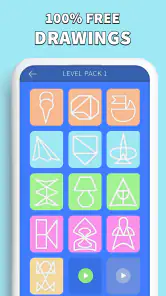
Analysis by Reviewed
I like this kind of puzzle best when its rules are easy to grasp but the answer still takes a moment to see. One Line: Drawing Puzzle Game builds each challenge around tracing a shape in one continuous stroke, so the task is less about quick fingers than noticing how the lines connect. It suits a short break, a quiet wait, or a few minutes when I want to focus on something small rather than scroll without thinking.
Small goals make it easy to begin
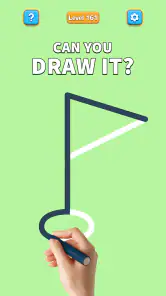
The first goal is clear: work out a route that covers the drawing without lifting your finger or retracing a line. That immediate clarity is useful on a phone, where I may only have a minute to spare. I can look at the pattern, try a route, and learn from a mistake without needing to remember a complicated set of rules.
A practical tip is to pause before drawing and check which points seem to have an odd number of connections. In many one-stroke puzzles, those points help narrow down where a path can start and finish. It is a way to think through a board rather than simply trace random possibilities, and it can make a tricky layout feel more manageable.
What a quick session actually looks like
For a realistic short session, I’d open the game while waiting for a takeaway order, study one board for a few seconds, and try to identify a route before touching the screen. If the first attempt fails, I can use the mistake as information: the point where the route becomes impossible often shows which branch I should have saved for later. That makes even a failed try useful, provided I resist the urge to swipe randomly.
This is also a handy choice when I want a screen activity that does not demand a long stretch of attention. A one-line board has a natural stopping point, so I can finish a puzzle and put my phone away without losing my place in a story or leaving a match halfway through. The trade-off is that a quick puzzle can turn into several more; if I’m trying to keep a break short, deciding in advance to solve one board is more effective than expecting the game itself to make me stop.
I would skip it if my usual idea of relaxing is watching something unfold or making progress through a plot. The appeal here comes from figuring out a route, not from characters, collecting, or a changing world. It is best for people who enjoy the small satisfaction of spotting a pattern and are comfortable repeating the same basic kind of reasoning across different layouts.
How the challenge develops
When I first downloaded One Line: Drawing Puzzle Game, I wasn't entirely sure what to expect. However, as soon as I started playing, I was hooked. The premise is simple: connect all the dots in a single line without retracing your steps. But don’t be fooled by its simplicity! As you progress, the levels become increasingly complex and require more strategic thinking. It’s a perfect balance of relaxation and mental exercise.
More From Our News Desk

Clash of Clans Is Won Between the Battles

Android Auto Makes the Case for Quieter Car Software

MobiOffice: Transforming Mobile Productivity with Seamless Integration

EA SPORTS FC™ Mobile Soccer: Redefining Mobile Sports Gaming

How Microsoft OneDrive Became a Mobile Productivity Giant

How Google Translate Breaks Language Barriers Effortlessly
Levels of Fun and Challenge
The game offers a variety of levels, each designed to test your creativity and problem-solving skills. Some levels are straightforward and can be solved in a few seconds, while others require you to pause and ponder before making a move. The diversity in level design ensures that the game never feels repetitive or boring.
One of the things I love most about this game is its ability to cater to different skill levels. Whether you’re a casual player looking for something to pass the time or an avid puzzle enthusiast seeking a challenge, there’s something here for everyone. The game gradually increases in difficulty, which keeps you motivated to improve your skills and master each level.
Why the learning curve works for some players
The gradual increase in challenge is useful because it gives a newcomer time to internalize the one-stroke idea before layouts demand more careful planning. I would not judge the game by whether the opening puzzles are difficult: the point of an early board is partly to make the rule feel natural. The more meaningful test is whether I can still reason through a layout once several branches compete for the same route.
There is a limit to that appeal. The core action remains tracing a single continuous line, so difficulty comes from how I read the connections rather than from learning a different puzzle system. Players who enjoy mastering one mechanic can find that consistency satisfying. If I want each new stage to introduce a distinctly different activity, a collection of varied logic games would be a better match.
A useful habit is to plan the constrained parts first. I look for a point with few exits or a branch that would be hard to reach again, then consider whether leaving it until the end would strand another section. This is more reliable than starting at whichever end looks visually obvious. It also gives me a way to test a possible path in my head before committing a full swipe.
Progress feels best when you slow down
The satisfying signal of progress here is solving a board by understanding its structure, not merely getting through it quickly. If I hit a snag, I find it more useful to trace a possible route mentally, starting from an endpoint and checking whether the remaining branches can still be covered. That small planning habit keeps retries purposeful and helps the game remain a puzzle rather than a reflex test.
For an everyday example, I might open it while waiting for a drink or sitting through a short break, solve one pattern, and put the phone away. It works well in these scattered sessions because each board gives me a self-contained goal. If I want a story, a long campaign, or a competitive score chase, though, this is not the right fit; a narrative puzzle or a timed brain game would offer a different kind of motivation.
There is a quiet kind of progress in getting better at judging a board before drawing. At first, I may treat every visible branch as equally important; with practice, I start noticing which sections have limited ways in or out. That improvement is more personal than a big reward screen: I can feel my approach becoming less haphazard, even when a particular puzzle still takes a few attempts.
Clean presentation, with a useful nudge
Visually, the game is crisp and clean, with a minimalist design that doesn’t overwhelm the senses. The soothing color palette and smooth animations add to the overall relaxing experience. The user interface is intuitive and easy to navigate, allowing you to focus on what matters most – solving the puzzles!
Another standout feature is the hint system, which provides assistance without giving away the solution. This feature is a lifesaver when you find yourself stuck on a particularly tricky level. It’s like having a helpful friend by your side, gently nudging you in the right direction.
I would use a hint after making a deliberate attempt, not as the first move. That keeps the puzzle-solving satisfying while preventing one stubborn board from ending a session. The trade-off is that anyone who likes to crack every challenge entirely unaided may prefer to save hints for rare dead ends; players who want quick reassurance may find the nudge more appealing.
When to use a hint, and when to keep working
My rule of thumb would be to give a board a focused attempt, then step back and inspect the connections again before asking for help. A short pause can reveal that I have committed to the wrong starting point or used a narrow branch too soon. If I am still stuck after reconsidering the route, a hint can keep the session moving without turning every puzzle into trial and error.
Hints change the feel of the game depending on how I use them. Reaching for one immediately can reduce the satisfaction of discovering the route myself; refusing one at all costs can make a casual break feel like homework. I would treat it as a tool for getting past a genuine block, not as a score of how good I am at puzzles. That balance is especially useful for younger or less experienced players who may enjoy the clear goal but not want to spend a long time on one layout.
Where it fits among puzzle games
Compared with match-three games, word puzzles, or jigsaws, this is a more spatial, single-rule exercise: there are no words to recall or picture pieces to sort, just a route to reason through. That makes it easy to pick up, but the repeated focus on one-line paths may feel narrow if you want several puzzle mechanics in one app. I’d recommend it to people who enjoy visual logic and short, focused challenges, and less to anyone seeking a social mode or a large change of pace between levels.
Compared with a timed brain teaser, the pleasure here is less about answering quickly and more about finding a route that holds together. Compared with a jigsaw, there is no picture to assemble gradually; the whole task is in the relationships between the lines. That difference makes it a good alternative when I want a compact logic problem, but it will not replace a varied puzzle collection for someone who gets restless with one central mechanic.
The game is free to start and is rated Everyone, which makes it approachable for a broad range of players. It is made by Kidding Box Studio, has a 4.7 average from around 118,000 ratings, and has been installed over 10 million times. Those figures suggest a substantial audience, but they don’t tell me whether its particular style will click for you; the one-line rule is the better guide.
For families, the simple objective is easy to explain, and the Everyone age rating makes the game broadly accessible. I would still expect younger players to benefit from taking turns talking through a possible route rather than rushing to draw it. That turns a solo puzzle into a small shared reasoning exercise without needing a separate mode, while also making it clear that the challenge is about planning, not speed.
Steady play, not a reason to rush
One Line is a puzzle game from Kidding Box Studio, released on April 5, 2024. Version 1.1.2 is listed for devices running Android 7.0 or later. I’d check that your device meets the requirement before downloading, especially if you use an older phone. The game includes optional in-app purchases priced from $1.99 to $7.99 per item, so the free-to-start model is worth keeping in mind if you prefer to avoid spending inside games.
The purchase range is worth bearing in mind if I am choosing a game for someone who does not want to spend within an app. I can approach the puzzles as a free experience and decide for myself whether anything beyond that matters to my play. If I prefer to keep spending tightly controlled, I would check purchase settings on the device before handing it to a child; that is a sensible precaution for any game with in-app purchases.
Its progression is strongest when I treat it as a small daily mental exercise rather than a checklist to race through. The simple rule makes returning easy, while harder layouts offer a reason to pause and plan. I wouldn’t choose it for deep variety or a strong sense of narrative advancement, but for a focused drawing puzzle it has a clear purpose and a comfortable pace.
That pacing also answers a practical question: does it suit a longer session? It can, if I enjoy solving one compact route after another, but I would not choose it expecting a campaign with a dramatic finish or a broad sequence of changing activities. The game’s main reason to continue is the next pattern and the chance to read it more efficiently. For me, that is enough for a few minutes at a time; whether it carries an evening depends on how much I enjoy this particular style of spatial logic.
Final Thoughts
In conclusion, One Line: Drawing Puzzle Game is a delightful blend of simplicity and challenge, making it a must-try for anyone who enjoys puzzle games. Its engaging gameplay, appealing visuals, and user-friendly interface make it a standout choice on any app store. Whether you’re playing for a few minutes or a few hours, this game promises to entertain and challenge you every step of the way. So why not give it a try? You might just find yourself pleasantly surprised by how addictive drawing a single line can be!
One Line: Drawing Puzzle Game Frequently Asked Questions
Can I play One Line: Drawing Puzzle Game in short sessions?
Yes. One Line: Drawing Puzzle Game is built around a simple drawing puzzle that can fit into a brief break: you work out how to complete a figure using one continuous line. Its straightforward premise makes it easy to pick up when you have a little free time, while the logic challenge gives each puzzle more to consider than simply tracing a shape.
Is One Line: Drawing Puzzle Game suitable for beginners who are new to puzzle games?
The basic idea is easy to understand: draw everything with only one line. That makes the game approachable even if you do not usually play puzzle games. The challenge comes from figuring out a route that follows the puzzle’s rules, so you can start with the central mechanic and see whether this kind of visual problem-solving appeals to you.
Does One Line: Drawing Puzzle Game have a story or focus mainly on puzzles?
The game’s focus is on its drawing-based puzzles rather than a story. Its central appeal is working out how to complete each challenge with one continuous line, giving you a direct brain-teasing activity without requiring you to follow a narrative. If you are looking for a casual game centered on logic and drawing, this straightforward format may be a good fit.
Is One Line: Drawing Puzzle Game free to download?
Yes. One Line: Drawing Puzzle Game is free to download, though it includes optional in-app purchases. Individual purchases range from $1.99 to $7.99, so it is worth considering whether you are comfortable with spending inside a mobile game. You can start with the free download and decide whether its one-line puzzles suit you before making any optional purchase.
What kind of challenge does One Line: Drawing Puzzle Game offer?
It is a puzzle game built around completing drawings with one continuous line. The challenge is to think through the route rather than simply sketch freely, which exercises logic and spatial thinking. Its premise is easy to grasp, but finding a valid path can make a puzzle more engaging than its simple appearance first suggests.
Pros
- Simple and addictive gameplay.
- Enhances creativity and problem-solving.
- No internet connection needed.
- Suitable for all ages.
- Minimalistic design with soothing colors.
Cons
- Limited levels in free version.
- Ads can interrupt gameplay.
- Requires precision in touch control.
- No multiplayer option.
- Some puzzles can feel repetitive.

- Category
- Puzzle
- Version
- 1.1.2