Prodigy Math: Kids Game
- 24.64K
- 4.7
- Installs
- 5.00M
- Price
- Free

Screenshots




Analysis by Reviewed
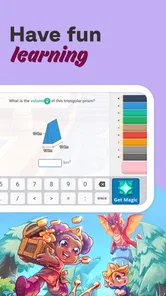
I like the idea behind Prodigy Math: Kids Game most when I think of it not as a worksheet replacement, but as a reason for a child to choose a few math questions voluntarily. Its central rhythm is easy to understand: take an action in a fantasy adventure, answer a math problem to move through a challenge, receive feedback, and earn a reason to continue. That can make practice feel less like a chore, though it works best when an adult still has a clear sense of what the child is practicing.
Who will get the most from the adventure
I’d consider it for children who enjoy fantasy settings and are more willing to engage with a game than a page of sums. A parent can use it as a short after-school activity, or as a gentle warm-up before sitting down to more focused homework. For example, a child who resists starting math might play for a little while after a snack, then talk through one question that felt tricky before moving on to schoolwork. The game can help open that door; it shouldn’t be treated as proof that every topic has been mastered.
It is less suited to a child who dislikes game-like rewards, wants quiet exercises without battles, or needs a carefully sequenced lesson on one specific skill. In those cases, a workbook or a more direct teaching app may be easier to tailor. I’d also keep an eye on whether the child is rushing through questions just to get back to the adventure. If that happens, a short session with a parent asking how they reached an answer can make the practice more thoughtful without turning playtime into a test.
How I’d fit it into a real routine
A useful approach is to agree on a stopping point before opening the game: finish a quest, complete a small stretch of play, or stop when attention starts to wander. That gives the child a clear endpoint rather than letting the reward loop decide when the session ends. Afterward, ask what kind of problem came up and whether anything felt confusing. This quick conversation is a practical way to connect the game’s activity with math outside the screen, and it can reveal when another form of help is needed.
Compared with standard math drills, Prodigy wraps practice in a larger fantasy journey, which may make repetition more inviting for children who respond to characters and goals. A plain worksheet is often better when you need to assign a specific set of questions or see every written step. I wouldn’t expect either format to do everything: the game can encourage a child to return to practice, while direct instruction and discussion are still useful for explaining why an answer works.
Turning Math into an Adventure
One of the standout features of Prodigy Math: Kids Game is its ability to transform math practice into an epic adventure. The game immerses kids in a fantasy world where they embark on quests, battle monsters, and solve puzzles—all by answering math questions. It's like sneaking vegetables into a meal; they don't even realize they're doing math because they're having so much fun!
Engaging Storyline and Characters
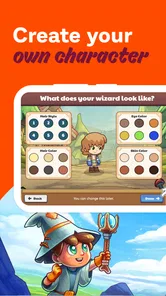
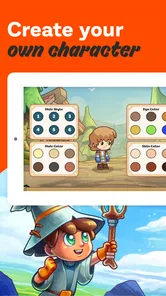
The app boasts a colorful and captivating storyline that keeps kids coming back for more. They create their own characters, which adds a personal touch and invests them in the narrative. As they progress, they encounter a variety of characters and challenges that require them to use their math skills creatively. It's a clever way to keep young minds engaged without them feeling like they're just doing homework.
More From Our News Desk

Weather by Xiaomi Review: Clear at a Glance, Less Clear Up Close

X Under Pressure: Can It Recover When Posting Goes Wrong?

Clash of Clans Is Won Between the Battles

Android Auto Makes the Case for Quieter Car Software

MobiOffice: Transforming Mobile Productivity with Seamless Integration

EA SPORTS FC™ Mobile Soccer: Redefining Mobile Sports Gaming
Adaptive Learning
One of the most impressive aspects of Prodigy Math is its adaptive learning feature. The game adjusts the difficulty of the math problems based on the child's skill level. This means that it's suitable for a wide range of ages and abilities, from those who are just starting to learn basic arithmetic to those tackling more complex concepts. It ensures that every child is challenged just enough to keep them learning without feeling overwhelmed.
The app provides detailed feedback and reports for parents, so you can track your child's progress and see where they might need a little extra help. It's like having a personal math tutor right in your pocket.
Free to Play, but with Subscriptions
The app is free to download and play, which is a huge plus for parents. However, there are in-app purchases and subscription options that unlock additional features, such as more in-depth progress reports and extra customization options for characters. While the free version is perfectly adequate, the subscription might be worth considering if your child is particularly engaged with the app.
Before installing, I’d check that the child’s device can run it: the game supports Android 5.0 and newer. It is an educational game from Prodigy Education Inc., rated for Everyone, and its current version is 4.8.9. It has a 4.7 average from around 59,000 ratings and more than 5 million installs, which suggests many families have tried it, though popularity alone can’t tell you whether its style fits your child.
What to expect from the reward loop
The adventure gives practice a purpose beyond getting a score: a math answer is tied to what the child is trying to do next in the game. That link is the main reason another session may sound appealing. It is also the trade-off. A child who is eager to advance can focus on the quest more than the reasoning, so I’d occasionally ask them to explain a solution rather than judge the session only by how long they played.
For a more useful first try, I’d let the child handle the controls and read the questions aloud only if they ask. That makes it easier to notice whether the challenge is understanding the math, reading the prompt, or navigating the game. If they stall, a calm hint about the problem is more helpful than giving the answer, since the goal is to keep the child doing the thinking. This is a small adjustment, but it helps the game serve as practice rather than background entertainment.
Prodigy Math is free to play, with optional in-app purchases priced from $64.99 to $359.99 per item. I’d start with the free experience and decide whether any paid extras solve a real need for your family before spending. The game is free, but that does not mean every feature is included at no cost; it’s worth setting expectations with a child before they encounter purchase prompts. Its content rating is Everyone, a helpful starting point for families, while a parent’s own judgment about screen time and the child’s preferences still matters.
When another approach is better
If your main goal is to practice a particular method, prepare for a classroom test, or work through mistakes slowly on paper, I’d pair the game with teacher-assigned exercises or choose a more lesson-focused resource. Prodigy’s appeal is that it gives math a playful context, not that it replaces explanation or guarantees progress in every area. Children who are easily pulled into game rewards may also benefit from a timer and a clear stopping rule, while a child who finds the fantasy layer distracting may simply learn more comfortably from direct problems.
A parent’s role in the first few sessions
I wouldn’t hover over every answer, but I would stay nearby at the start. A child may understand the arithmetic and still get stuck on wording, or may guess quickly because the adventure makes forward motion feel urgent. Watching one or two rounds helps me tell those situations apart. If the child can explain a choice in their own words, that is more reassuring than seeing them move through several challenges without pausing.
It also helps to make the game one part of a small practice routine rather than the whole plan. A few minutes of play followed by one example written out on paper can show whether the idea transfers beyond the screen. If the written version is confusing, that points to a useful question to revisit together or with a teacher. This approach keeps the game enjoyable while making its learning value easier to judge.
Choosing the right fit for a child
The strongest fit is a child who likes exploring a fantasy setting and needs a nudge to begin math practice. It can also suit families looking for an activity that feels lighter than a formal lesson but still brings questions into the day. It is not automatically a fit for every child in the broad Everyone age category: younger players may need help reading prompts, while older children who want a focused explanation may prefer a lesson-first resource. I’d base the choice on the child’s confidence and attention, not just age.
One practical test is to ask what the child remembers after playing. If they can describe a problem they solved or a strategy they tried, the session likely involved more than tapping through to the next reward. If they remember only the battle or the pet, that does not make the play useless, but it is a sign to shorten the session and add a little conversation about the math. The point is not to turn every game into a quiz; it is to check that the educational part has room to register.
Making sense of the paid extras
The free starting point is useful for judging whether the basic adventure holds a child’s interest before a family considers spending. I’d make that decision around a specific need, such as whether a parent wants the additional reports or character options, rather than assuming a purchase is necessary for learning. In-app items range from $64.99 to $359.99 each, so those prices deserve a calm conversation and a clear boundary. A child who is enjoying the core play may not need an upgrade at all.
That distinction matters because the most important adult contribution is often not a paid feature but a little attention to how the child approaches questions. A brief check-in can reveal if the difficulty feels comfortable, too easy, or frustrating. If the family needs detailed teaching on a narrow topic, spending on extras may not solve that problem; a teacher’s guidance or targeted practice could be a better use of time and money.
The game was released on June 8, 2018, and the current version is 4.8.9. Those details give a sense of its history and the version available, but I’d still make the decision based on the experience the child has now: whether the questions are approachable, the fantasy layer holds attention, and stopping is manageable. Its average rating of 4.7 reflects strong overall approval, but the more useful test for a family is whether the child returns to math with a little more willingness.
How the session earns a restart
The loop works because the child’s answer changes what happens next, then the adventure offers another small goal. That is more compelling than a row of disconnected questions for a player who likes quests, but it can also blur the line between practice and simply wanting to continue. I’d treat enthusiasm as an opening rather than a measure of learning: let the child enjoy the next objective, then occasionally pause to ask what the problem asked and how they decided on the answer.
For an everyday use case, this can fit into the gap between getting home and starting homework. Rather than handing over a device for an open-ended stretch, I’d agree on one short play window and a simple follow-up: name one question that was easy and one that took thought. If that turns into a useful conversation, the game has helped make math approachable. If it turns into bargaining for more play, the stopping rule matters more than the promise of another quest.
Overall, Prodigy Math: Kids Game is a fantastic tool for making math fun and accessible for kids. It's a game that kids will want to play, and parents can feel good about letting them. Plus, the peace of mind knowing that they're learning while they play is priceless. So, if you're looking for a way to boost your child's math skills while keeping them entertained, give Prodigy Math a try. You might just find that it's a game-changer for your family's approach to learning.
Prodigy Math: Kids Game Frequently Asked Questions
Does Prodigy Math: Kids Game need an internet connection?
Before downloading, it is worth considering how your child will access the game during play. Prodigy Math: Kids Game is an online-style learning experience built around quests, battles, and math activities, so a reliable connection is useful for getting into the game and using its features. Families can check their device’s connection and app-store requirements before installing.
Who develops Prodigy Math: Kids Game?
Prodigy Math: Kids Game is developed by Prodigy Education Inc. It is an educational game that brings math practice into a fantasy adventure, with interactive quests, battles, and exotic pets. That combination may appeal to children who are more motivated by playful exploration than by a conventional set of practice questions, while parents can consider whether this style fits their family’s learning needs.
Can Prodigy Math: Kids Game be played on both Android and iOS?
Prodigy Math: Kids Game is available for Android and iOS, so families can look for it in the relevant app store for their device. On Android, it requires version 5.0 or later. It is an educational game built around math practice, with adventure elements intended to make answering questions feel more engaging than working through a list of exercises.
What does gameplay in Prodigy Math: Kids Game involve?
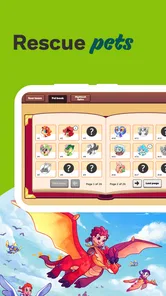
The game combines math questions with fantasy-style adventure. Its store summary highlights epic battles, interactive quests, and exotic pets, giving children reasons to explore as they practise. The math challenges are part of the gameplay rather than a separate worksheet section, so progress involves both answering questions and taking part in the game’s adventures.
What is Prodigy Math: Kids Game?
Prodigy Math: Kids Game is an educational app designed to make learning mathematics fun and engaging for children. It combines adventure-based gameplay with curriculum-aligned math challenges, providing a unique platform for kids to enhance their math skills. The game is suitable for children in grades 1 through 8 and is available on both Android and iOS devices.
Pros
- Engaging math challenges for kids.
- Adaptive learning for personalized pace.
- Rewards system motivates continued play.
- Colorful graphics enhance learning.
- Parental controls ensure safe use.
Cons
- Requires internet for full features.
- In-app purchases for premium content.
- Limited offline functionality.
- May be too easy for advanced kids.
- Subscription model can be costly.