Poppy Playtime Chapter 1
- 3.12K
- 4.4
- Installs
- 500.00K
- Price
- $2.99

Screenshots
Analysis by Reviewed
My main advice before entering Playtime Co. is to treat each room as a little problem, not as a corridor to sprint through. Poppy Playtime Chapter 1 works best when I give its spaces a careful look, connect what I see to the tool in my hands, and let the uneasy setting do its work. That approach makes the goals easier to read and helps the changes in tension feel earned rather than abrupt.
Why its small goals keep the opening moving
The first tasks establish a useful rhythm: explore, notice what is out of reach, and figure out how the GrabPack can help. Instead of sending me through a long checklist, the game makes the immediate room the focus. I like that because I can understand what I am trying to do without needing a map full of markers, while the factory itself supplies enough visual clues to keep me curious.
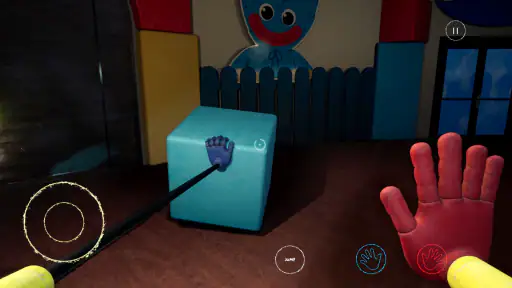
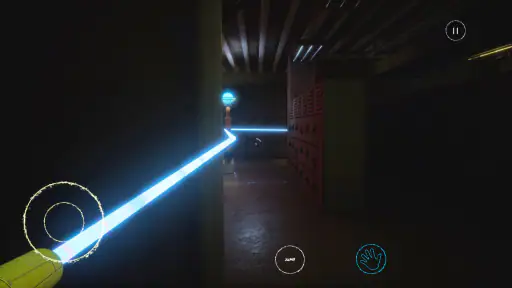
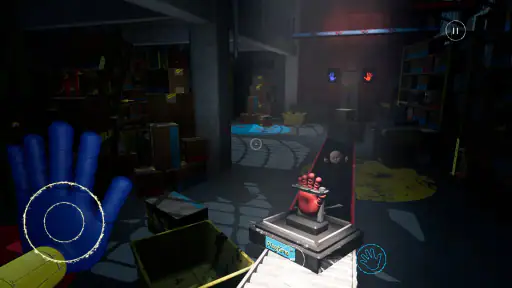
A practical tip is to pause at a puzzle and look across the whole space before trying random interactions. The GrabPack encourages experimentation, but it is more satisfying when I first identify which objects seem relevant and then test a deliberate route. This also helps on a phone, where imprecise movement can make an unfocused attempt feel harder than the puzzle actually is. The tool is central to the experience, so players who enjoy spatial reasoning will get more from it than those who want the story to carry them through mostly hands-off.
The early objectives are modest, but that is part of their value: they teach the basic language of the factory without asking me to learn a stack of unrelated systems. I would not mistake that simplicity for a deep progression tree. The reward is a clearer path and a better grasp of the setting, not a growing collection of abilities or a build to optimize. If that kind of direct, room-by-room momentum sounds appealing, the opening makes a good case for continuing.
Progress you can read in the environment
There is no need for an elaborate progress screen to understand that I am moving forward. Solved obstacles change where I can go, while recordings and environmental details gradually give the abandoned factory more meaning. That makes progress feel tied to attention: I am advancing both through the space and through my understanding of what may have happened there.
The tapes are easy to treat as optional flavor, but they are also a useful way to deepen the mystery. I would listen when the immediate area feels calm, rather than stopping in the middle of a tense stretch to chase every clue. That small choice preserves the pacing: I still get context, but I do not turn an ominous sequence into a stop-start tour. Players who enjoy assembling a story from fragments may find this especially rewarding; anyone who wants every plot point explained directly may prefer a more linear, dialogue-led adventure.
Progress here is deliberately narrow. New access and information matter more than collecting items for their own sake, and the story’s chapter format leaves room for mystery instead of tying every question up at once. I see that as a good fit for a short horror episode, though not for someone buying a game mainly to unlock an extensive range of content. The factory gives each step a purpose, but it does not promise a sprawling checklist.
More From Our News Desk

Weather by Xiaomi Review: Clear at a Glance, Less Clear Up Close

X Under Pressure: Can It Recover When Posting Goes Wrong?

Clash of Clans Is Won Between the Battles

Android Auto Makes the Case for Quieter Car Software

MobiOffice: Transforming Mobile Productivity with Seamless Integration

EA SPORTS FC™ Mobile Soccer: Redefining Mobile Sports Gaming
How the challenge changes with the mood
Most of the challenge comes from observation and composure, not from complicated controls. A puzzle can feel opaque if I miss a clue, but I rarely get the sense that success depends on mastering a long sequence of inputs. When I am stuck, I find it more useful to revisit the room and check what the GrabPack can reach than to keep repeating the same action. The design rewards a calm second look.
That measured puzzle pace changes once Huggy Wuggy becomes part of the danger. The contrast between thinking through a room and reacting to a threat is one of the chapter’s strongest tools: I have to adjust from careful inspection to urgency. It also means this is not a gentle puzzle game with a spooky coat of paint. If chase tension makes you uncomfortable, or if you prefer to play horror only when you can pause freely, the shifts in pressure may be a poor match.
On a touchscreen, it is worth choosing a comfortable grip and avoiding a cramped position before a tense section. I would not recommend trying to play while walking, riding in a busy setting, or glancing away repeatedly; the spatial puzzles need attention, and sudden danger is less enjoyable when I am distracted. A controller or keyboard may feel more precise to players who have access to those options, but the mobile format is still appealing if portability is more important than perfect aiming.
What may bring you back—and what may not
The chapter’s strongest reason to continue is curiosity: each solved obstacle takes me further into a distinctive place, and the tapes make the mystery feel larger than the room I am standing in. That creates forward pull without relying on daily tasks, endless upgrades, or a competitive ladder. I appreciate the restraint. The trade-off is that this is a focused adventure rather than a system designed to occupy a player indefinitely.
For an everyday example, I would save it for a quiet evening when I can give it a proper stretch of attention. If I have only a brief break between errands, I might solve one part and then lose the mood before the next tense sequence. It can be a good choice when I want a contained horror experience instead of committing to a huge open-world game, but it is less suited to quick, casual play sessions that depend on frequent interruptions.
Compared with typical adventure games built around broad exploration, combat, or a large inventory of side activities, this one stays close to the factory, its puzzles, and its horror premise. That focus makes the setting memorable, while limiting the variety of things to do. I would choose a more open-ended adventure if I wanted optional quests and many routes, or a calmer puzzle game if I mainly wanted a relaxed mental challenge. Here, suspense is part of the point, not a decorative extra.
Step into the World of Playtime Co.
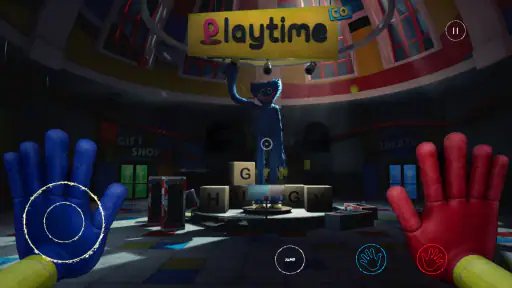
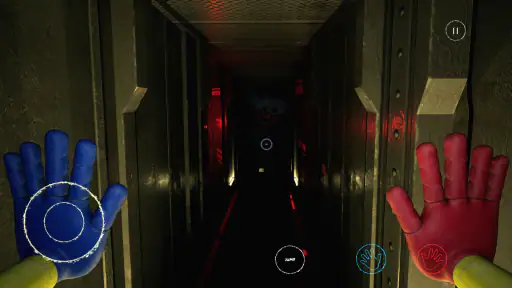
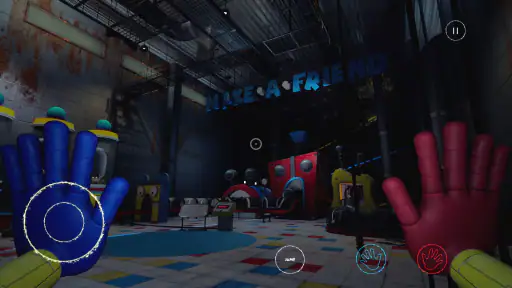
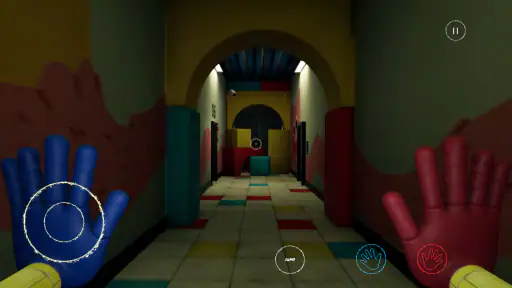
So, here's the deal: you start off in an abandoned toy factory. Sounds fun, right? But hold on, it’s not just any toy factory, it's the legendary Playtime Co. where the toys are not just for playing. You play as an ex-employee who decides to explore the factory after a mysterious letter invites you back. Nostalgic? Maybe a bit, but mostly eerie. The atmosphere is thick with suspense, and let me tell you, the graphics make it feel like you're really there. The developers did a fantastic job bringing the spooky factory to life, complete with flickering lights and the echo of your footsteps.
The Gameplay
One of the things I love about Poppy Playtime Chapter 1 is the puzzle-solving aspect. You’re not just wandering around aimlessly; you've got to use your noggin to figure out how to navigate through this maze of a factory. The puzzles are just the right amount of challenging, making you feel like a genius when you finally solve them without having to break a sweat. Plus, you’ve got this cool GrabPack tool that lets you interact with objects from a distance. It's like having superpowers, but for a toy factory.
Now, let's talk about the spook factor. There are moments in this game that will make you jump out of your seat. Huggy Wuggy, the larger-than-life toy, will haunt your dreams for sure. The developers have nailed the horror elements without going overboard, keeping it thrilling yet manageable for those who aren't hardcore horror fans.
The Storyline
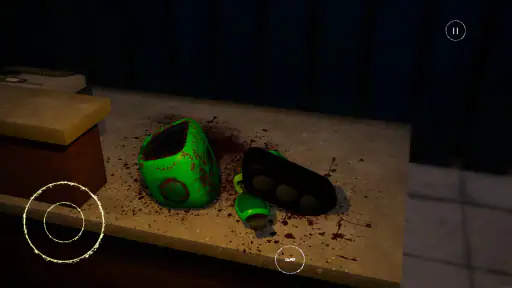
The storyline is intriguing, to say the least. It pulls you in from the get-go, as you uncover bits and pieces of the factory's dark past. The narrative is delivered through tapes scattered throughout the game, giving it a unique touch. It's like piecing together a mystery, and each tape you find makes you hungry for more. What happened to the employees? Why did the toys become sentient? These are the questions that drive you to keep playing.
The story also gives the exploration a useful sense of direction: I’m not just solving puzzles for their own sake, but trying to understand why the factory was abandoned and what its recordings reveal. A good approach is to pause in safe-feeling stretches and take in the tapes, then keep moving when the tension rises. That way, the clues add atmosphere without making the game feel like a scavenger hunt. The mystery is a reason to continue, though players who need a complete resolution in every installment may find a chapter-based story less satisfying than a self-contained adventure.
Who should give it a try?
I’d recommend this to players who like compact horror adventures, readable environmental puzzles, and a creepy setting built around one memorable threat. It can work well for an evening when you have enough time to play attentively rather than squeezing it between notifications. For example, I’d choose it after dinner with headphones and a little uninterrupted time: quiet details and sudden changes in mood land better when I’m not splitting my attention.
On the other hand, the Teen content rating is worth considering for younger players and anyone sensitive to chase sequences or unsettling toy imagery. The horror is not presented as nonstop brutality, but the factory’s atmosphere and Huggy Wuggy are meant to unsettle. If you want a calm puzzle game, a bright family adventure, or a sprawling exploration game with many different activities, I’d choose something else. This experience gets much of its impact from a narrow focus on one place, a small set of puzzles, and mounting suspense.
Mobile trade-offs and value
On a phone, the main question is whether you enjoy exploring and solving spatial puzzles on a touchscreen. The GrabPack’s reach-based interactions are a distinctive fit for the setting, but mobile play can make careful aiming and movement feel less natural than using a controller or keyboard. I’d play somewhere comfortable, keep the screen clear of distractions, and avoid starting when I only have a few minutes; that makes it easier to follow the environment and react when danger interrupts the puzzle-solving.
Compared with the usual adventure options, this is more focused on suspense and a single connected location than on collecting a broad inventory of activities or exploring a huge world. That concentration is a strength when you want a memorable horror premise without committing to a large open-ended game. It is also a limitation if you expect lots of optional routes or a long progression ladder. The store identifies Mob Entertainment as the developer, and the mobile release is version 1.0.18, with Android 5.0 as its minimum OS requirement.
It costs $2.99, so I’d treat it as a paid, focused adventure rather than an endless game meant to fill spare moments. The rating is Teen. The game has an average rating of 4.4 from around 37,000 ratings, alongside roughly 3,100 written reviews and over 500,000 installs. Those figures suggest a sizable audience, but they don’t change the practical question: do you want a tense puzzle story, and are you comfortable paying for this particular kind of experience? If you prefer free-to-start games or replayable systems, this may not be the best match.
Final Thoughts
Overall, Poppy Playtime Chapter 1 is a must-play for anyone who loves a good scare mixed with a bit of mystery. It's the kind of game that leaves you on the edge of your seat, eager to see what happens next. The graphics, the storyline, and the overall immersive experience make it a standout in the indie horror game scene. So, if you're looking for a game to get your heart racing, look no further. Just remember, in the world of Playtime Co., things are not always as they seem.
My lasting impression is that its small, clear goals carry the experience more effectively than a complicated progression system would. Solving a puzzle opens the way, the factory’s clues give exploration a purpose, and the threat makes forward movement feel risky. I’d pick it when I want a tightly themed horror adventure, but not when I’m in the mood for a broad, replay-focused game. For the right player, that focused design is exactly what makes the factory worth entering.
Poppy Playtime Chapter 1 Frequently Asked Questions
What is Poppy Playtime Chapter 1, and is it the official mobile game?
Poppy Playtime Chapter 1 is the official mobile game based on Poppy Playtime, developed by Mob Entertainment. It is an adventure game with a horror-puzzle approach, built around exploring an abandoned toy factory, solving challenges, and facing unsettling toys. If atmospheric adventures with suspense and hands-on puzzles appeal to you, its premise offers a clear idea of the experience before you decide to download it.
How does Poppy Playtime Chapter 1 play on a phone?
The mobile edition brings the factory adventure to handheld devices, where you explore rooms, work through puzzles, and react to threats as you progress. Its core appeal is a mix of investigation and suspense rather than straightforward action, so expect to pay attention to your surroundings and think through obstacles. If you prefer calm, casual play without frightening moments, the horror atmosphere may not be the right fit.
Does Poppy Playtime Chapter 1 need an internet connection?
Poppy Playtime Chapter 1 is a single-player adventure centered on exploring the factory, solving puzzles, and surviving encounters with eerie toys. The experience is focused on progressing through its story rather than competing with other players. Before travelling or planning to play somewhere with limited connectivity, check the download and launch requirements on your device, as those can depend on how the mobile version is distributed and configured.
What kind of game is Poppy Playtime Chapter 1, and who developed it?
Poppy Playtime Chapter 1 is an adventure game from Mob Entertainment and the official mobile game based on Poppy Playtime. Its horror-puzzle approach centers on exploring an abandoned toy factory, solving challenges, and facing unsettling toys. If you enjoy atmospheric adventures with suspense and hands-on puzzles, its premise offers a clear idea of the experience before you decide to download it.
What is the main objective of Poppy Playtime Chapter 1?
Poppy Playtime Chapter 1 is a horror-puzzle adventure game where players explore an abandoned toy factory. The main objective is to solve puzzles, uncover secrets, and survive while being chased by the mysterious and eerie toys that come to life. Players must use their wits and the GrabPack to navigate through the factory and unravel the story behind the abandoned facility.
Pros
- Immersive horror atmosphere captivates players.
- Challenging puzzles enhance engagement.
- Unique storyline keeps users intrigued.
- High-quality graphics elevate the experience.
- Engaging audio design heightens suspense.
Cons
- Short gameplay may disappoint some users.
- Limited replay value after completion.
- Occasional bugs can disrupt play.
- Not suitable for younger audiences.
- Requires a stable internet connection.
- Category
- Adventure
- Version
- 1.0.18