Pet Vet Care Wash Feed Animals
- 209.00
- 4.3
- Installs
- 10.00M
- Price
- Free
Screenshots



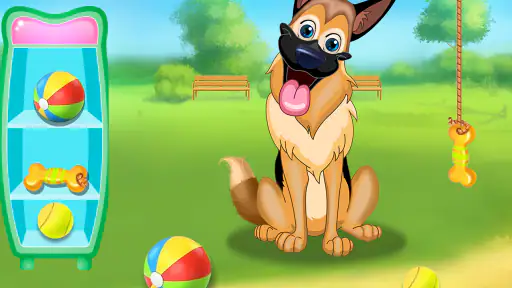
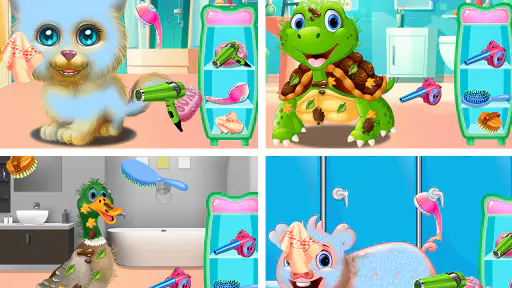
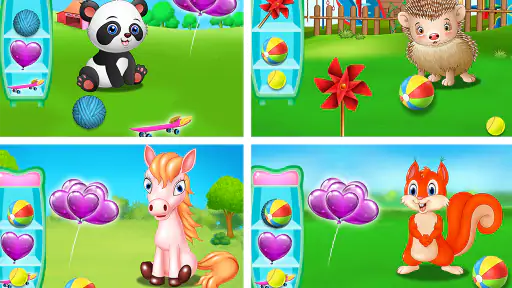
Analysis by Reviewed
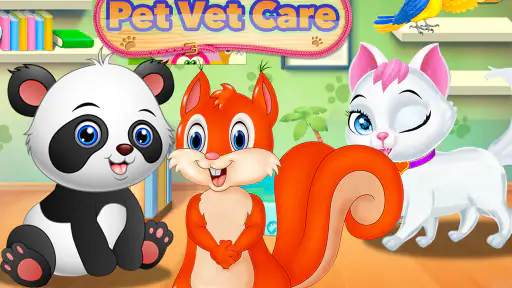
Pet Vet Care Wash Feed Animals is the kind of educational game I would hand to a child who enjoys caring for animals more than competing for a high score. I spent time with it as a simple virtual pet-care experience, and its appeal is easy to understand: the player takes on everyday doctor-like duties for a range of soft, friendly animals, using straightforward interactions rather than complicated rules. It feels designed for short, relaxed sessions, especially when the goal is to keep a young player engaged while encouraging attention, sequencing, and gentle care.
The game is free to download, carries an Everyone age rating, and comes from trochoi ltd co. It has built a sizeable audience, with over ten million installs and a 4.3 average from around eighteen thousand ratings. Those figures suggest that the basic idea works for many families, although popularity alone does not make it the right choice for every child. My own view is that this is best treated as a light animal-care activity, not as a serious medical simulation or a deep management game.
How the everyday care routine works
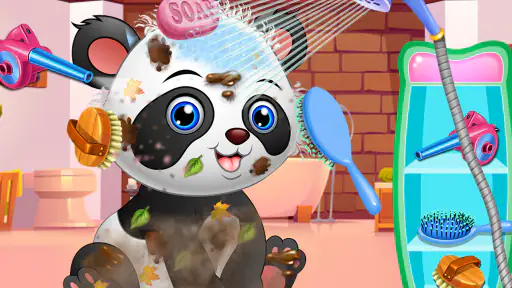
The baseline workflow is deliberately easy to grasp. A child chooses an animal, looks at what kind of attention it needs, and then works through care actions such as washing, feeding, or helping it feel better. The important part is not technical accuracy; it is recognizing that different situations call for different responses. That makes the game approachable even for children who are still learning to follow a sequence of instructions.
I found the strongest part of the experience to be its immediate feedback. The animals are presented as lovable patients rather than as abstract tasks, so a child can understand the purpose of each action without reading a long explanation. If the player is already comfortable with touch controls, the basic loop should feel natural. Younger children may still need an adult nearby at first, mainly to explain what each icon or activity is asking them to do.
A realistic use case is a short session after school. A child can play for a few minutes while waiting for dinner, complete a care routine, and stop without needing to remember a complicated story or a large map. That makes it more practical than many educational games that require a longer uninterrupted commitment. I would not use it as a substitute for a lesson, but it can work as a calm activity that reinforces observation and simple decision-making.
The animal-care theme also gives parents an easy conversation starter. After a session, I would ask the child why a particular animal needed washing or feeding, or what order they chose for the tasks. The game itself does not need to carry the entire educational value. Used this way, it becomes a prompt for talking about responsibility, hygiene, food, and the fact that real pets need consistent care rather than occasional attention.
One useful habit is to encourage the player to pause and look before tapping rapidly. Children often want to touch every visible object immediately, but asking them to identify the animal’s need first turns the same activity into a small exercise in observation. This is a better way to get educational value from the game than simply letting the player rush through each screen.
Who will enjoy it most
I think the best audience is younger children who like animals and benefit from clear, visual tasks. It is also suitable for a parent looking for an uncomplicated first care game, particularly when the child is not ready for complex controls, reading-heavy instructions, or competitive pressure. The Everyone rating supports that broad family positioning, but an age label should never replace a parent’s judgement about a particular child’s attention span or comfort with the medical-care theme.
Children who enjoy pretend play may get more from it than children who want constant challenge. The pleasure comes from helping the animals and completing the routine, not from mastering a difficult system. If your child prefers racing, puzzles with strict solutions, or games built around collecting and upgrading, this may feel too gentle. I would also skip it for a child who quickly becomes bored unless a game offers deeper progression or a strong narrative.
It is worth remembering that “educational” does not mean the game teaches professional veterinary knowledge. I would not expect accurate treatment guidance, diagnostic training, or a realistic representation of an animal clinic. Its educational value is closer to guided role-play: it encourages the player to notice needs, choose a suitable action, and complete a small care sequence.
Settings and purchase points worth checking
Before giving the device to a child, I would check the game’s available settings and the device’s wider purchase controls. The game is free, but it includes in-app purchases ranging from $0.99 to $7.99 per item. That does not automatically make the experience unsuitable for children, yet it does make parental supervision sensible. I would avoid assuming that “free” means every part of the experience is separated from optional spending.
The practical approach is to install it yourself first, open the main screens, and see how clearly optional purchases are presented. Then decide whether the child should play independently or only with an adult nearby. If the device is shared, account-level purchase protections are just as important as anything inside the game. This simple preparation prevents a pleasant animal-care session from turning into an unwanted billing surprise.
I would also check sound, notifications, and general device behaviour before settling on a routine. Some children concentrate better with audio, while others find repeated sounds distracting. If the game is being used during a quiet period, lowering the volume may make it easier to keep the activity calm. These are not advanced game settings, but they matter more in a family setting than they do when an adult is playing alone.
The technical entry point is fairly broad. The current version is 1.0.28 and requires Android 4.4 or later, so it can suit some older devices that cannot run newer games. That is useful for families using a hand-me-down phone or tablet. At the same time, older hardware may affect loading, touch response, or general smoothness, so I would test the actual device rather than assuming the minimum operating-system requirement guarantees an identical experience everywhere.
One setting-related trade-off is independence. If a child cannot read yet, icons and visual cues may be enough for some actions but not all situations. I found that a short explanation at the beginning can make the rest of the session much smoother. After that, the child can often repeat the routine with less help, which is a more useful outcome than an adult taking over every step.
Faster patterns for repeat play
Experienced users can make sessions more efficient without pretending that the game contains hidden shortcuts. The first repeatable pattern is to scan the whole care screen before beginning. Instead of tapping the first highlighted object, I would identify the animal, notice its immediate need, and then follow the visible sequence. This reduces random tapping and helps a child understand that actions have a purpose.
The second pattern is to use the same verbal checklist each time: look, choose, complete, check. It sounds simple, but it gives younger players a structure they can remember. In a family setting, an adult can say the checklist once and gradually stop prompting. That turns a short game loop into a small practice in independent task completion.
A third useful habit is to keep sessions focused on one complete care routine rather than stretching play until the child loses interest. Because the game is built around approachable animal activities, it works well in small intervals. Stopping after a satisfying completed task can leave the child with a clearer sense of achievement than continuing through repetitive taps.
I also recommend alternating who explains the action. One round, the adult can ask what the animal needs; the next round, the child can explain the choice. This makes the game more interactive without adding invented rules or turning it into a test. It is especially helpful when the child understands the pictures but has not yet connected them to words such as clean, feed, or care.
For children who rush, I would introduce a “gentle hands” rule: touch only the item that belongs to the current task, then wait for the response. This is not a feature of the game, but it is an effective way to make the controls feel more deliberate. It also helps reveal whether a child understands the activity or is simply exploring every button.
There is another practical advantage to this approach. If the game is played on a shared family device, a consistent routine makes it easier for different children to take turns. Each player knows where to begin and what a finished session looks like. That prevents the game from becoming an argument over who gets to control the screen and keeps the focus on caring for the virtual animals.
Where the simple design reaches its limits
The same simplicity that makes Pet Vet Care Wash Feed Animals approachable can limit its long-term appeal. I did not come away expecting a detailed clinic, a complicated progression system, or a substitute for a science app. The activities are valuable as guided pretend play, but children looking for open-ended experimentation may eventually want more variety than this format provides.
There is also a difference between repetition that supports learning and repetition that feels thin. Repeating a care sequence can help a young child build confidence, especially when the controls are new. Older children may notice the limited depth sooner. If your main goal is to teach animal biology, responsible ownership, or real first aid, a book, supervised activity, or more information-rich educational tool would be a better companion.
The purchase model is another consideration. Even though the game is free to start, optional items mean I would not leave a young child alone with an unrestricted payment setup. Families who want a completely purchase-free environment may find that extra preparation inconvenient. This is not a reason to reject the game outright, but it is an important part of deciding whether it fits your household.
Parents should also keep the boundary between the game and real animal care clear. A child may learn that a virtual animal becomes happy after a simple action, while real pets need time, patience, proper food, safe handling, and professional help when they are ill. I would present the game as imaginative practice, never as instructions for treating an actual animal.
Another limitation is that the experience may depend heavily on the child’s existing comfort with touchscreens. A child who struggles with small targets or does not understand visual symbols could need support. In that situation, playing together is more effective than assuming the game will teach every control by itself. The game is accessible, but accessibility is not identical for every child or every device.
For adults, the main limitation is that there may not be enough depth to make repeated solo play interesting. I would not choose it for myself as a conventional game. Its value appears when it is matched with the right player: a child who enjoys animals, likes clear goals, and is happy with a gentle care routine. That distinction is important because a family-friendly title can still be a poor fit for a child seeking challenge.
My verdict after building a practical routine
After looking at the complete experience, I see Pet Vet Care Wash Feed Animals as a friendly starter game rather than an advanced educational tool. Its strongest qualities are the approachable animal theme, the clear care-focused loop, and the ability to fit into short everyday sessions. The developer, trochoi ltd co, has positioned it in a space where ease of use matters more than complexity, and that choice makes sense for its intended audience.
I would recommend it to parents who want a free animal-care game for a young child and are willing to spend a few minutes setting up sensible purchase controls. I would introduce it with a simple routine, encourage the child to observe before tapping, and use the animal actions as a chance to talk about real responsibility. Those habits add meaningful value without claiming that the game does more than it actually does.
I would choose a different option for children who need substantial reading practice, realistic veterinary information, deep progression, or a challenge that grows over time. I would also avoid presenting it as a replacement for caring for a real pet. Its purpose is lighter and more specific: it lets children rehearse the idea of helping animals through friendly, manageable activities.
Overall, Pet Vet Care Wash Feed Animals works best when treated as a short, supervised learning-and-play break. It is easy to approach, gentle in tone, and suitable for the broad audience suggested by its Everyone rating. The free entry point is attractive, while the optional purchases and limited depth deserve attention. For the right child, especially one fascinated by fluffy animals and simple routines, it is a pleasant first step into educational animal-care games; for everyone else, its modest scope will be clear fairly quickly.
Pros
- Simple controls make it suitable for young children.
- Covers basic pet-care tasks in a fun
- interactive way.
- Cute animal animations keep the experience engaging.
- Short activities are convenient for quick play sessions.
- Helps introduce responsibility and kindness toward animals.
Cons
- Gameplay may feel repetitive after several playthroughs.
- Limited challenge may not appeal to older children.
- Some features may require watching ads or purchases.
- The app can take up considerable storage on some devices.
- Progression and activities may feel too shallow for long-term use.

- Category
- Educational
- Version
- 1.0.28