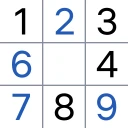
Number Match - Merge Puzzle
- 276.00
- 4.7
- Installs
- 1.00M
- Price
- Free
Screenshots
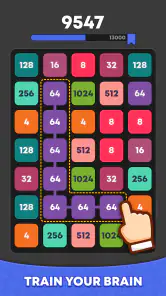
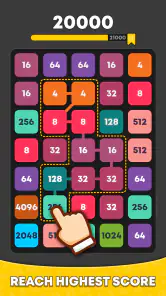
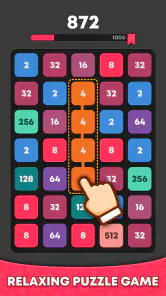
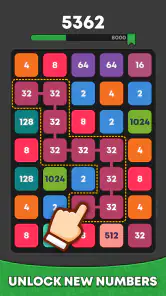
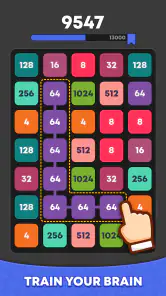
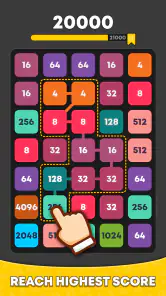
Analysis by Reviewed
I like Number Match - Merge Puzzle most when I treat it as a small, deliberate puzzle rather than a game to rush through. It gives me a clear task—scan the board, find useful number pairs, and decide what to clear—but the real interest comes from thinking about how each choice affects the space left behind. That makes it an easy game to pick up during a quiet moment, though its central loop may feel repetitive if you want a steady stream of new mechanics.
For a practical test, I’d play a few boards without spending and notice whether I enjoy planning ahead as much as making matches. If I do, the game has a satisfying rhythm: look, compare, choose, and see what the board becomes. If I mainly want speed, a story, or a broad range of puzzle types, I’d look elsewhere. Its strengths and limits both grow out of that focused design.
Getting Hooked on the Gameplay
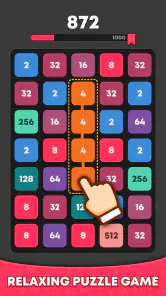
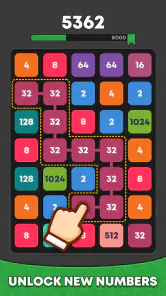
So, let’s dive right into the gameplay. Number Match - Merge Puzzle is essentially about matching and merging numbers to clear the board. It's like if Sudoku and Tetris had a baby, and that baby was a lot of fun to play with. You start with a grid filled with numbers, and your task is to find pairs of the same number, merge them, and watch them transform into a new number. It sounds simple, right? Well, it is, but it’s also incredibly addictive!
The game starts off easy, just to get you warmed up, but trust me, it ramps up in difficulty as you progress. The strategic planning required to clear the board gets more intense, and that’s where it gets really interesting. Each move you make could either lead to a triumphant win or leave you scratching your head, wondering where you went wrong.
One practical way I approach a tricky board is to pause before making an obvious match. I scan for pairs that might open up useful routes through the grid, rather than clearing whichever pair catches my eye first. That small habit makes the game feel less like tapping at random and more like managing limited space. If I am playing while distracted, I stick to simpler decisions; when I can give it my attention, planning several moves ahead is much more satisfying.
Features That Keep You Coming Back
One of the standout features of this app is its sleek and colorful design. The developers have done a great job keeping it visually appealing without overwhelming the player. The interface is intuitive, making it easy for anyone to pick up and start playing right away. Plus, the app runs smoothly, so you won't be plagued by any annoying lags or crashes.
Another feature worth mentioning is the daily challenges. These are a fantastic way to keep players engaged, offering new puzzles every day that challenge different skills. Not to mention, completing these challenges gives you rewards that can help you out in tougher levels. It’s little touches like these that make the game feel fresh and exciting every time you open it up.
More From Our News Desk

Weather by Xiaomi Review: Clear at a Glance, Less Clear Up Close

X Under Pressure: Can It Recover When Posting Goes Wrong?

Clash of Clans Is Won Between the Battles

Android Auto Makes the Case for Quieter Car Software

MobiOffice: Transforming Mobile Productivity with Seamless Integration

EA SPORTS FC™ Mobile Soccer: Redefining Mobile Sports Gaming
That daily format works especially well as a short routine: I can open the game during a coffee break, focus on one challenge, and stop when I need to get back to what I was doing. I would not treat the rewards as a reason to rush, though. The useful part is having a fresh puzzle to return to; the extra incentive matters less if I am not in the mood to think through the board.
Making Each Board Count
A useful habit is to choose a goal for the next few moves before tapping. I might look for a pair that clears a cramped part of the grid, or avoid a match that leaves awkward numbers separated from their partners. I do not need to map out the whole puzzle; even a brief check of what a move exposes can prevent a satisfying-looking match from making the rest of the board harder.
This is also why I would not play every round in the same way. When I have only a moment, I make the clearest safe matches and accept that I may not solve the board perfectly. When I have time to concentrate, I try to preserve options and look for sequences rather than isolated pairs. That distinction makes the game easier to fit into ordinary breaks without turning each session into a test of concentration.
If I get stuck, I take a breath and inspect the board again instead of tapping faster. The puzzle asks for attention to relationships between numbers and the available space, so speed is not automatically helpful. A pause can reveal a pair I overlooked or show that my first instinct would have narrowed my choices. That simple reset is a better approach than treating every difficult board as a reason to quit.
Where It Fits Among Puzzle Games
Compared with Sudoku, this is less about filling a grid according to a fixed set of rules and more about spotting number pairs and making choices that affect the remaining board. Compared with falling-block puzzles, it gives me time to inspect the layout instead of reacting under pressure. That makes it a gentler choice for a quiet break, but players who want fast action or a deep logic puzzle may prefer those alternatives.
It also suits people who enjoy a simple premise that becomes more demanding through the decisions it asks them to make. If you like working through a board methodically, the increasing challenge can be compelling. If repeating a core matching loop soon feels familiar to you, the daily puzzles may provide variety, but they do not change the basic appeal of the game.
Practical Details and the Right Player
Loop Games A.S. is the developer, and the game is free to download, with in-app purchases ranging from $0.99 to $99.99 per item. I would start without spending: the central puzzle loop is what makes the game worthwhile, and purchases are optional rather than a prerequisite for deciding whether you enjoy it. The audience rating is Everyone, and it runs on Android 6.0 or later.
It has a 4.7 average from around 15 thousand ratings, with more than 1 million installs. The game was released on March 27, 2023, and its current version is 247. Those details make it an established option in the casual puzzle space, though the deciding question for me is simpler: do you enjoy scanning a board and weighing one move against another?
I would recommend it to someone who wants a colorful number puzzle for short breaks, or who likes the satisfaction of gradually improving at a clear, repeatable task. I would skip it if I were looking for a narrative campaign, competitive play, or a puzzle experience built around lots of different systems. It is best when I treat it as a focused little brain exercise rather than expecting it to be an all-purpose game.
What a Normal Session Feels Like
Picture a short wait before an appointment: I have a few minutes, but not enough time to settle into a long story or remember where I left off in a complicated game. A number board is easy to understand at a glance, so I can make a little progress and put the phone away when my turn comes. That is a better fit for this game than opening it while I am walking, in a hurry, or trying to listen closely to someone. The puzzle is calm, but useful decisions still need attention.
For someone new to this style, I would begin by checking whether matching pairs and merging them feels naturally satisfying, rather than assuming the word “puzzle” means a Sudoku-like deduction challenge. The two experiences overlap in number recognition, but the moment-to-moment task is different. If you want fixed clues and a clearly provable solution, a conventional logic puzzle may suit you better. If you like making local choices and adapting as a board changes, this one is more likely to click.
Another trade-off is how much variety you need. Daily challenges can give a session a fresh prompt, but they do not transform the underlying matching routine into a collection of unrelated games. I see that consistency as a benefit when I want to improve at one kind of decision-making; it is a limitation when I want each session to introduce a new rule or surprise. Knowing which side matters more to you is a quick way to decide whether to keep it installed.
Who Will Enjoy It—and Who May Not
I would put this in front of a casual player who enjoys tidy boards, visual number patterns, and small choices with consequences. It also makes sense for someone who wants a puzzle they can revisit without needing a long setup or a complicated control scheme. The colorful presentation helps the grid feel approachable, while the planning gives experienced puzzle fans something to think about beyond simply spotting identical values.
On the other hand, I would not choose it as my main game if I wanted a campaign, character progression, head-to-head competition, or a constantly changing challenge structure. Nor is it ideal if I find repeated matching loops dull after a few sessions. A dedicated Sudoku app is a better pick for strict logic and rule-based deduction; a fast falling-block game is better when I want reflexes and urgency. This game occupies the more measured middle ground.
The purchase range is worth keeping in perspective before deciding to spend. Since the basic appeal is the board itself, I would first see whether I enjoy solving several puzzles and whether the daily format fits my routine. If I do not like the core decisions, buying something is unlikely to change that. If I do, I can decide for myself whether any optional purchase feels worthwhile rather than treating it as part of the price of entry.
Why You Should Download It
If you’re still on the fence about downloading Number Match - Merge Puzzle, let me give you a few more nudges in the right direction. This game is perfect for those moments when you need a quick mental workout or when you’re looking to kill time while waiting for your coffee. It’s free to download, which is always a plus, and offers in-app purchases if you want to enhance your experience further.
Overall, this app is a delightful addition to any puzzle lover’s collection. It’s challenging enough to keep you engaged but not so difficult that you end up frustrated and throwing your phone across the room. So, if you’re ready to put your puzzle-solving skills to the test, give this game a shot and see how many numbers you can match and merge!
My Take Before You Install
My recommendation is specific: try it if a calm, repeatable number puzzle sounds appealing, and give yourself a few sessions to see whether the planning becomes part of the fun. The first impression is easy to grasp, but the satisfying part is learning to look past the most obvious pair and consider what it does to the remaining board. That is where a simple premise earns its time on my phone.
I would pass if I needed a game that keeps reinventing itself, or if I prefer puzzles with formal clues and one clearly defined route to a solution. For everyone else, Number Match is an approachable option for short, focused breaks: not an all-purpose puzzle collection, but a pleasant game with a clear identity and enough decision-making to reward patience.
Number Match - Merge Puzzle Frequently Asked Questions
Is Number Match - Merge Puzzle appropriate for children and families?
Number Match - Merge Puzzle has an Everyone age rating, so it is intended for a broad audience, including families looking for a number-focused puzzle. Its colorful presentation and familiar number theme are easy to understand, while working through combinations gives players a chance to exercise logical thinking. As with any game, parents can decide whether its play style is right for their child.
Who makes Number Match - Merge Puzzle, and can it be installed on older Android devices?
The game is developed by Loop Games A.S. and is available for Android devices running Android 6.0 or later. That minimum requirement can help you check compatibility before downloading. If your device meets it, you can consider trying this puzzle game, which focuses on number blocks and merging. The game is free to download, with optional in-app purchases available.
Is Number Match - Merge Puzzle suitable for casual play sessions?
Yes. Number Match - Merge Puzzle is a puzzle game built around matching and merging numbers, so it can suit players who want a focused logic challenge in a casual format. Its colorful, entertaining style makes the idea approachable, while the number puzzles still call for thoughtful choices. It is rated Everyone, making it suitable for a broad audience.
What is Number Match - Merge Puzzle?
Number Match - Merge Puzzle is an engaging logic-based puzzle game where players must match and merge numbers on a grid to achieve a specific target. The game challenges users to strategically plan their moves to combine numbers, increasing complexity and difficulty as they progress through levels. With its intuitive interface and addictive gameplay, it's a brain-teasing experience designed for puzzle enthusiasts.
How do you play Number Match - Merge Puzzle?
In Number Match - Merge Puzzle, players start with a grid filled with numbers. The goal is to match and merge numbers of the same value to form higher numbers, clearing space for new numbers. This involves sliding or tapping numbers to make combinations, aiming to reach a target score or clear the board within a set number of moves. The game requires strategic thinking and planning to succeed.
Pros
- Engaging and addictive gameplay
- Simple and intuitive interface
- Improves problem-solving skills
- Suitable for all ages
- Regular updates with new features
Cons
- Contains in-app purchases
- Ads can be intrusive
- Requires internet connection
- Limited free levels
- May become repetitive over time
- Category
- Puzzle
- Version
- 247