My3Dify - Explore&Read Stories
- 430.00
- 4.3
- Installs
- 50.00K
- Price
- Free

Screenshots


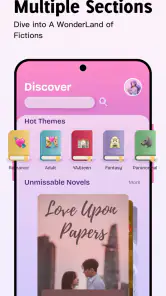
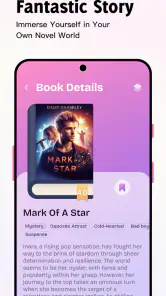
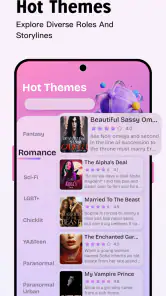
Analysis by Reviewed
I approached My3Dify as a quiet puzzle game rather than something to rush through. Its central idea is simple: stories are presented page by page, and each page opens into a three-dimensional scene to explore. That combination gives it a different rhythm from a conventional match-three puzzle or a standard illustrated reading app. I found myself slowing down, looking around, and treating each page as a small space instead of tapping through a book.
That slower pace is the main reason I can imagine recommending it to certain players. If you enjoy story-led puzzles, visual discovery, and games that feel closer to interactive reading than competitive challenge, this is an interesting free option. If you want constant action, deep strategy, or a large set of clearly explained game systems, it may feel too gentle and limited. My experience with it was strongest when I accepted its atmosphere and used it in short, focused sessions.
How the page-by-page workflow feels in everyday use
The best way to approach the game is to treat every page as a scene that deserves a moment of attention. Instead of assuming that the next tap is always obvious, I learned to scan the whole view first. I looked at the foreground, the edges of the scene, and anything that seemed visually out of place before interacting. That habit made the experience feel more like solving a visual observation puzzle than simply advancing dialogue.
The story format also affects how I used it during the day. It works well during a short break, before bed, or while waiting somewhere, because the page structure gives each session a natural stopping point. I did not need to reserve a long block of time to appreciate it. A few pages could provide a complete little moment, while a longer session allowed me to become more absorbed in the setting.
One practical tip is to avoid tapping rapidly through a page just because the first interaction seems clear. The three-dimensional presentation can make small details easier to notice after the initial action changes the scene. I found that pausing after each meaningful interaction helped me understand what had changed and reduced the feeling of randomly searching.
This is also where the game differs from ordinary puzzle alternatives. A typical mobile puzzle often gives immediate feedback through points, chains, timers, or lives. My3Dify places more weight on curiosity and visual context. The reward is not only solving something; it is seeing how the page behaves as a story space. Players who prefer explicit goals may need to adjust their expectations.
What I would do on a first session
On a first visit, I would begin without trying to optimize anything. I would read the page at a comfortable speed, inspect the scene, and test only the most natural interactions. This gives the visual language time to make sense. When a page feels unclear, I would revisit the whole scene rather than repeatedly pressing the same spot.
A useful repeatable routine is to divide each page into three passes. First, I read or observe the obvious story content. Second, I inspect the scene from one side to the other, looking for details that may be easy to overlook. Third, I try the interaction that best fits what the page appears to be communicating. This is not a secret technique, just a disciplined way to avoid turning a thoughtful puzzle into blind tapping.
That routine is especially useful for someone playing on a smaller phone. Three-dimensional scenes can feel visually busy when the display is compact, and quick gestures may obscure what is happening. Slowing down gives the presentation room to work. I also found that playing with a clean screen and a comfortable brightness level mattered more here than it does in a basic two-dimensional puzzle.
Settings and habits that improve the experience
I would check the available settings before settling into a longer session, particularly the options that affect sound, notifications, and the general comfort of play. Story-focused games depend heavily on mood, so sound can make the scenes feel more immersive, but it is not always convenient in public or at night. Being willing to adjust the audio rather than abandoning the game makes it easier to fit into ordinary routines.
The same applies to notifications. A page-based game is easy to pause, so I prefer keeping distractions low when I want to follow the story. On the other hand, I would not treat it as a game that requires constant attention. Its natural stopping points make it suitable for interrupted play, provided I remember what I was examining before putting the phone down.
Because the game is free to download, it is easy to test without making an immediate commitment. It does include optional purchases ranging from ninety-nine cents to ninety-nine dollars and ninety-nine cents per item, so I would be careful around any purchase prompts. My advice is to play enough of the free experience to decide whether the page-based format genuinely suits you before spending anything.
The age guidance is Teen, which is worth considering when choosing it for a younger player. I would not assume that a storybook-like presentation automatically makes it suitable for every child. Parents should check the experience themselves and consider the purchase controls on the device, especially if the phone or tablet is shared.
Faster patterns for experienced players
Once I became familiar with the game’s slower style, I started using a more efficient pattern. I first identified what the page was trying to draw my attention toward, then checked nearby details instead of examining every object with equal intensity. This kept the exploration focused without removing the sense of discovery.
Another helpful habit is to remember the scene’s layout before interacting. If an action changes the appearance of a page, I can compare the new state with the original instead of relying on memory from a fast sequence of taps. That makes visual changes easier to recognize and is more reliable than repeatedly testing unrelated areas.
I also recommend separating story reading from puzzle searching. When I mix the two too quickly, I tend to miss a detail because I am already thinking about the next action. Reading first and investigating second produces a cleaner rhythm. It is a small adjustment, but it makes the experience feel more intentional and can reduce frustration on pages that are not immediately clear.
For a realistic everyday example, imagine using it during a train ride with only ten minutes available. I would open one page, inspect it carefully, and stop at a natural transition rather than trying to force progress through several scenes. If the ride becomes noisy or the phone battery is low, the page structure makes it easy to leave and return later. That flexibility is one of the game’s practical strengths.
Another use case is winding down after work. I would keep the sound at a comfortable level, avoid rushing, and use the game as a visual activity rather than a test of speed. It is a better fit for that situation than a competitive puzzle that demands repeated attempts or punishes interruptions.
Where the design can feel limited
The same qualities that make the game distinctive can also create friction. Players who expect a clear progression system, increasingly demanding logic, or constant mechanical variety may find the experience restrained. The three-dimensional story presentation is the main attraction, but it also means that the game’s appeal depends heavily on whether you enjoy observing and interpreting scenes.
I would also avoid approaching it as a replacement for a full reading app. The interactive pages add atmosphere and involvement, but they do not offer the same flexibility as ordinary reading, where you can skim, search, bookmark, or move through text at your own pace. Likewise, it is not the best alternative to a traditional puzzle game if your priority is measurable performance or highly repeatable challenge.
There is a learning curve in understanding what counts as a meaningful interaction. In a conventional puzzle, the rules are often displayed through tiles, grids, or familiar symbols. Here, the visual presentation carries more of the explanation. That can be rewarding once the pattern becomes comfortable, but newcomers may need patience before they feel fully oriented.
Device compatibility is reasonably broad because the game supports Android seven point zero and later, but that does not guarantee an identical feel on every phone. Screen size, touch responsiveness, and general performance can influence how comfortable a three-dimensional page is to inspect. I would give it a short trial on the intended device before deciding whether it belongs in a regular rotation.
Who should try it, and who should skip it
I think it is a good match for players who like illustrated stories, visual puzzles, and exploratory scenes. It may also appeal to people who normally avoid demanding games but still want something interactive rather than purely passive. The free entry point makes it simple to find out whether that combination works for you.
I would be more cautious about recommending it to someone who wants fast rounds, competitive leaderboards, or a familiar puzzle loop that can be mastered through speed. Those players may be happier with a grid-based puzzle or a logic game built around explicit rules. My3Dify asks for attention to presentation, not just problem-solving efficiency.
It is also not my first choice for someone seeking a long, highly customizable adventure. The experience is better understood as a collection of story moments connected through interactive pages. That can be satisfying, but it is a narrower promise than an expansive role-playing game or a large narrative adventure.
What the current release tells me about its place
The game was released on December twentieth, two thousand twenty-three, and the current version is one point two point seven. It comes from Mi Sike and has built a modest audience, with more than fifty thousand installs and an average rating of four point three from roughly one point eight thousand ratings. Those figures suggest that it has found a receptive group, although I would still judge it by whether its unusual format matches your taste rather than by popularity alone.
Its rating is understandable from my perspective: the concept is easy to recognize, the presentation gives the pages personality, and the free download lowers the barrier to trying it. At the same time, the experience is specialized. A positive response from someone who loves storybook exploration does not necessarily translate to someone looking for a conventional puzzle challenge.
The purchase range deserves a second look before committing to the game as a family activity. Optional items can be inexpensive at the lower end but substantially more costly at the upper end. I would use device-level purchase protection and avoid treating any prompt as part of the core reason to play. The strongest value here comes from deciding whether the scenes and story hold your attention, not from buying more quickly.
My final assessment after settling into the rhythm
After spending time with it, I see My3Dify as a calm, visually led puzzle experience with a clear identity. Its page-based worlds are more interesting when I explore them deliberately, and its best moments come from noticing how a scene communicates rather than from chasing a score. That makes it easy to recommend to a friend who enjoys gentle discovery and interactive storytelling.
My recommendation comes with a condition: give it time to show what it is. If you rush through the pages expecting the immediate feedback of a standard mobile puzzle, you may miss the point. Use a simple scan-and-pause routine, check the comfort settings, and play in short sessions until the visual language becomes familiar. Those habits make the experience more coherent without pretending that it offers systems it does not have.
The key trade-off is atmosphere over mechanical depth. That is a strength for readers who want to step into a small world, but a limitation for players who need complex rules and constant escalation. I would choose it for a quiet break, a short evening session, or a change from repetitive puzzle grids. I would skip it when I want competition, speed, or a large strategic playground.
Overall, the free version is worth trying for anyone curious about story pages that behave like explorable scenes. The Teen rating, optional purchases, and device requirements are practical points to keep in mind, but they do not define the experience. What defines it is the invitation to slow down and look closely. For the right player, that is exactly what makes My3Dify memorable.
Pros
- Turns written stories into engaging 3D visual experiences.
- Interactive scenes can make reading more appealing to younger users.
- Offers a creative way to explore narrative content beyond plain text.
- May encourage imagination and interest in storytelling.
- Suitable for users looking for a more immersive reading format.
Cons
- 3D effects may feel distracting for readers who prefer traditional books.
- Performance can vary depending on the device’s graphics capabilities.
- The available story selection may be limited compared with major reading apps.
- Interactive content may require more storage than standard e-books.
- Some features may be less useful without a stable internet connection.

- Category
- Puzzle
- Version
- 1.2.7