Mutiny: Pirate Survival RPG
- 1.87K
- 4.3
- Installs
- 1.00M
- Price
- Free

Screenshots
Analysis by Reviewed
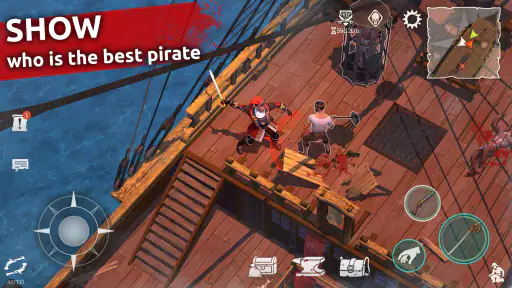
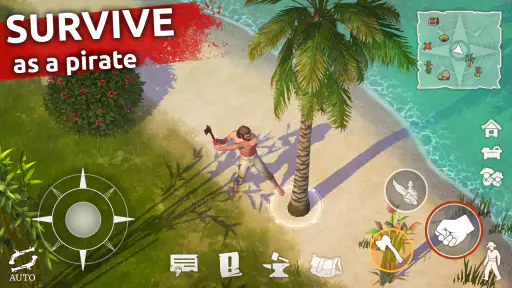
I spent time with Mutiny: Pirate Survival RPG as a mobile adventure game built around the pressure of staying alive in a dangerous pirate world. Its central appeal is easy to understand: I had to pay attention to basic survival needs while dealing with wildlife and hostile pirates, rather than simply moving from one scripted scene to the next. That combination gives each outing a practical purpose, because even a short session can become a decision about whether to gather supplies, explore farther, or return before the situation gets worse.
What makes the game worth considering is not a complicated premise but the way its survival goals shape the rhythm. Thirst and hunger are not background details I could ignore forever, and danger from animals or pirates makes careless exploration costly. I found myself thinking in small priorities: secure what I needed first, avoid unnecessary fights, then take a bigger risk when I was better prepared. This is a survival adventure for players who enjoy making imperfect choices under pressure, not for anyone looking for a relaxed pirate story with no resource concerns.
How the early goals create a playable routine
The opening appeal comes from having clear immediate problems. Food, water, shelter from danger, and a safe route through the environment are more useful goals than a vague instruction to “explore.” In my experience, that gave the first sessions a natural shape. I was not wandering only to see what the map contained; I was looking for the next thing that would keep the character functioning long enough to continue.
That structure also makes small discoveries feel meaningful. A supply is valuable because it answers an urgent need, while a safer path matters because it reduces the chance of losing time and resources. The pirate setting supports this nicely: the world feels less like a sightseeing tour and more like a place where every trip has a cost. The game’s adventure category is therefore a good fit, but it is filtered through survival decisions rather than pure story progression.
One useful habit is to treat each departure as a short expedition instead of assuming that every journey should end with a major discovery. I had better results when I set a modest objective, gathered enough to justify the trip, and kept an exit plan in mind. That approach is especially practical on a phone, where a session may be interrupted. The game works better when I accept that returning safely can count as progress.
The early loop is also where the game makes its first important demand: I had to learn which risks were optional. Fighting every hostile creature is tempting, but combat is not automatically the smartest answer when the real goal is reaching a location or preserving supplies. Avoiding trouble can be more efficient than proving that I can win every encounter. That is a small but important distinction between a survival game and a straightforward action adventure.
Progress feels strongest when preparation changes the plan
My sense of advancement came less from a single dramatic moment and more from being able to approach familiar problems with better judgment. A route that seemed too dangerous during an early attempt could become manageable once I understood the need to prepare first. That kind of progress is satisfying because it belongs partly to the player, not just to an automatic reward track.
More From Our News Desk

Weather by Xiaomi Review: Clear at a Glance, Less Clear Up Close

X Under Pressure: Can It Recover When Posting Goes Wrong?

Clash of Clans Is Won Between the Battles

Android Auto Makes the Case for Quieter Car Software

MobiOffice: Transforming Mobile Productivity with Seamless Integration

EA SPORTS FC™ Mobile Soccer: Redefining Mobile Sports Gaming
The game’s long-term motivation depends on these repeated improvements. I wanted to see what was beyond the next obstacle, but I also wanted to make the trip more efficient. When a return journey felt less desperate than the previous one, the game communicated growth without needing to turn every step into a celebration. For me, this is where the survival role-playing angle earns its place: the character’s situation and my own knowledge improve together.
There is a practical trade-off, though. Players who need frequent, obvious unlocks may find this style of progress less immediately rewarding. The game asks for patience and attention to routine. If you prefer a constant stream of new abilities, rapid equipment upgrades, or a clearly signposted chain of victories, the survival structure may feel slower than expected. I enjoyed the gradual learning, but I can see why another player might interpret the same pacing as repetition.
A second useful insight is to separate “can I do this?” from “should I do this now?” Survival games often punish the first question when it is asked without the second. I could sometimes push into a dangerous area, but that did not mean the potential gain justified the risk. Keeping a reserve of supplies and choosing a safer return route made later attempts more consistent. That is the kind of decision-making the game rewards more than reckless confidence.
The challenge curve rewards caution, but can test patience
The difficulty is most interesting when several pressures overlap. Hunger or thirst alone would be manageable, and a wild animal alone would be a simple combat problem. Together, they create situations where I had to decide whether to fight, retreat, search for resources, or abandon the original goal. Pirates add another layer because they make the world feel actively contested rather than merely hazardous.
I appreciated that the danger encouraged planning instead of making exploration feel pointless. A failed attempt could teach me that I had travelled too far without enough preparation or spent resources on a fight that did not matter. The lesson was usually understandable, which is important in a game built around setbacks. When a loss feels connected to a decision, I am more willing to try again.
Still, this is not a frictionless experience. The same pressures that create tension can become tiring when I wanted a calm session. A player who opens a game mainly to relax after work may not enjoy having to monitor survival needs while also watching for enemies. The Teen content rating is a useful signal that the tone and danger are aimed at older children and adults rather than very young players, but the bigger question is temperament: do you enjoy being interrupted by urgent problems, or would you rather explore at your own pace?
I also found that the best way to handle difficulty was to avoid treating every setback as wasted time. A failed expedition can reveal a safer order of tasks, a better moment to turn back, or a reason to conserve resources. That mindset makes the challenge curve feel more manageable. Without it, repeated preparation may seem like busywork. The game is asking the player to learn its priorities, and that learning is part of the experience.
Compared with a conventional pirate action game, this title gives up some immediate spectacle in exchange for logistical tension. A typical action alternative may make combat the main attraction, with exploration serving as a route between battles. Here, combat is only one answer to a larger survival problem. Compared with a relaxed crafting or exploration game, it is more demanding because the environment and enemies can turn an ordinary trip into a serious decision. The right comparison depends on what you want from the pirate theme.
Why the survival loop can keep pulling me back
The retention comes from unfinished plans. I might return because I had almost reached a destination, because a previous attempt exposed a weakness in my preparation, or because I wanted to test whether a different approach would work. That is a stronger reason to continue than simply collecting rewards, since the next session has a concrete question attached to it.
There is also a useful tension between short-term survival and longer-term ambition. Spending supplies now may make the current expedition safer, but leaving with too little reserve can create trouble later. Saving everything, on the other hand, can make progress painfully slow. I liked that the game made resource decisions feel consequential without requiring a huge amount of explanation. The pirate setting gives those choices character: every excursion feels like a gamble against the island and its inhabitants.
The free price makes it easy to test this loop without committing money at the start. The game does include in-app purchases, with individual items ranging from under a dollar to well over a hundred dollars, so I would advise checking the purchase flow carefully before handing the phone to a child. That wide range is a genuine consideration for families. I would personally begin as a free player and decide whether the core routine holds my attention before spending anything.
Another non-obvious point is that the game’s pacing suits players who enjoy returning to a project over several sessions, but it may not satisfy someone seeking a complete adventure in one sitting. The survival pressures naturally slow down progress because preparation matters. I found that beneficial when I wanted a game with a continuing routine, yet it could feel restrictive if I had only a few minutes and wanted a quick, self-contained challenge.
The game’s audience is also reflected in its reach. It has passed a million installs, carries an average rating of 4.3 from around seventy thousand ratings, and includes roughly 1.9 thousand written reviews. Those figures suggest that the survival-pirate formula has found a substantial mobile audience, though they do not remove the need to judge whether the pacing suits you. Popularity is encouraging, but the important question is whether you enjoy managing pressure rather than merely watching a pirate story unfold.
What the developer’s approach means for everyday play
Helio Games has positioned this as a game where survival problems are central rather than decorative. That focus is clear in ordinary use. I could pick it up during a break, choose a manageable objective, and feel that the session had a purpose even without reaching a major milestone. The design is at its best when I play with a plan but remain ready to change it.
A realistic example is a short evening session after a busy day. I might start intending to collect supplies, notice that my route is becoming more dangerous, and decide to return instead of forcing a fight. That sounds modest, but it is exactly the kind of decision that gives the game its identity. The session is not wasted because I did not uncover something spectacular; I preserved the ability to make a better attempt later.
On the other hand, this approach can expose the game’s limitations. Survival loops rely on repetition, and repeated gathering or cautious travel will not appeal to everyone. If you dislike revisiting familiar tasks, the gradual pace may wear thin. A more combat-focused pirate game would probably be a better choice for someone who wants constant action, while a story-led adventure would suit a player who values dialogue and set pieces above resource management.
The current version is 0.71.0, and the game supports devices running Android 7.1 or later. That makes it accessible to many Android users, although actual comfort will still depend on the device and personal tolerance for a demanding survival routine. I would give it a fair trial rather than judging it from the pirate theme alone, because the important feature is the pressure system underneath that theme.
Who should play, and who should skip it
I would recommend this game to players who like preparing for expeditions, weighing risk against reward, and learning from a failed attempt. It is particularly suitable for someone who enjoys mobile games that can be played in repeated sessions, where a small improvement in judgment matters as much as a visible unlock. The adventure setting adds motivation, but the real attraction is the survival decision-making.
I would be more cautious about recommending it to players who want a simple pick-up-and-play experience with no maintenance. If hunger and thirst management sounds like an interruption rather than a challenge, the central loop may become annoying quickly. The same applies to anyone who dislikes retreating. In this game, going back with unfinished business is often sensible, and players who equate retreat with failure may fight the design instead of enjoying it.
Parents should also remember the Teen age rating and the presence of in-app purchases. I would use the device’s purchase protections and make sure younger players understand that the game is free to start but not free of optional spending. That is not a reason to reject it outright, but it is part of making an informed choice, especially when the listed price range reaches $149.99 for an individual item.
My progression verdict
After playing through its survival rhythm, I think Mutiny: Pirate Survival RPG succeeds when I treat it as a careful expedition game rather than a nonstop pirate brawler. Its goals are clear, its dangers give exploration meaning, and its best moments come from turning a bad situation into a better plan. The progress is not always loud or fast, but it can feel earned because preparation and player knowledge both matter.
My main reservation is pacing. The game asks for patience, repeated routines, and a willingness to accept that the safest decision may be to stop short of the original goal. That will be a strength for survival fans and a weakness for players who want immediate rewards. The free entry point makes the choice easy: try the basic loop, see whether the pressure feels engaging, and only then consider optional purchases.
For me, the final verdict is positive with a clear condition: choose it for the survival decisions, not just for the pirate label. Helio Games has made an adventure where thirst, hunger, wildlife, and pirates work together to shape each outing. It is a good fit for thoughtful mobile players who like gradual progress and practical risk management, while action-first or story-first players will probably be happier elsewhere. The strongest reason to stay is the feeling that a smarter next expedition is always within reach.
Mutiny: Pirate Survival RPG Frequently Asked Questions
What is the current version of Mutiny: Pirate Survival RPG, and what operating system does it require?
The current version is 0.71.0, and the minimum operating-system requirement is Android 7.1. Check that your device meets this requirement before downloading, and keep the game updated to access its current features. If you are using an iPhone or iPad, check the App Store’s compatibility details for your device before installing.
Does Mutiny: Pirate Survival RPG have in-app purchases?
Yes. Mutiny: Pirate Survival RPG is free to download, and optional in-app purchases range from $0.99 to $149.99 per item. These purchases may appeal to players who want extra convenience or progression support, but spending is not required to begin playing. If a child will use the device, consider setting purchase controls before downloading so that any transactions require permission.
Is Mutiny: Pirate Survival RPG suitable for younger players?
Mutiny: Pirate Survival RPG is rated Teen, so it is aimed at a teen audience rather than very young children. Its pirate survival setting includes combat with hostile creatures and rival survivors, alongside the ongoing pressure of managing basic needs. Parents and guardians may want to consider whether that adventure style suits their child and use device settings to manage downloads and purchases.
Who developed Mutiny: Pirate Survival RPG, and what kind of game is it?
Mutiny: Pirate Survival RPG is an adventure game developed by Helio Games. It puts players in a pirate-themed survival setting, where exploration, resource gathering, crafting, and combat shape the experience. The game’s central challenge is to stay alive while dealing with threats and building up your position, making it a fit for players who enjoy survival systems alongside role-playing and adventure.
What is Mutiny: Pirate Survival RPG?
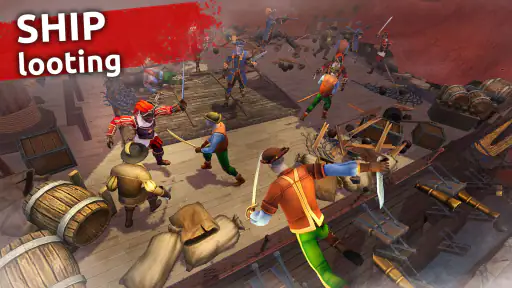
Mutiny: Pirate Survival RPG is a survival adventure game set in a dangerous pirate world. You explore islands, gather resources, craft tools and weapons, build and upgrade a personal base, recruit or interact with other characters, and fight hostile creatures and rival survivors. Its gameplay combines role-playing progression, survival management, exploration, and pirate-themed combat, making it suitable for players who enjoy longer, resource-focused adventures.
Pros
- Open-ended survival gameplay encourages different strategies and playstyles.
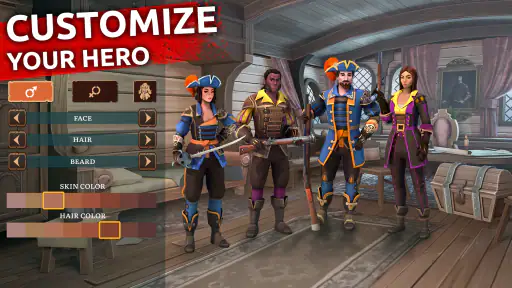
- Ship customization lets you adapt your vessel to combat and exploration.
- A rich pirate setting gives the world a distinctive atmosphere.
- Resource gathering and crafting add meaningful progression between battles.
- Offline-friendly gameplay makes it convenient for short sessions on the go.
Cons
- Survival mechanics can feel repetitive after extended play sessions.
- Limited guidance may leave new players unsure what to prioritize.
- Progress can slow noticeably when resources become harder to obtain.
- Combat encounters may become predictable once enemy patterns are learned.
- The pirate theme and interface may appeal less to players seeking fast action.
- Category
- Adventure
- Version
- 0.71.0