Musical Princess Car phone Toy
- 7.00
- 3.5
- Installs
- 5.00M
- Price
- Free

Screenshots
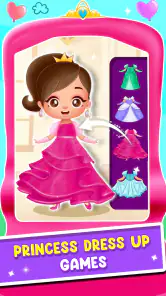

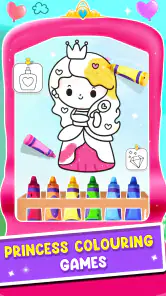

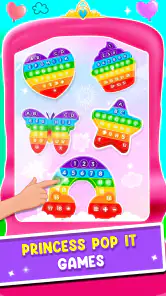
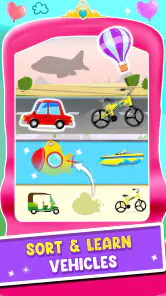
Analysis by Reviewed
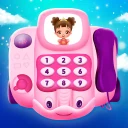
I spent time with Musical Princess Car phone Toy as a light educational game aimed at young children, especially those who enjoy princess themes, pink vehicles, pretend phones, and simple musical play. My first impression was that it is designed less like a traditional level-based game and more like a colorful collection of playful activities. That distinction matters: the appeal comes from quick interaction and familiar pretend-play ideas rather than from a deep campaign, demanding puzzles, or a long-term competitive challenge.
The game is free to download, carries an Everyone age rating, and comes from developer himanshu shah. It has reached over five million installs, which suggests that its bright theme and accessible format have found a sizeable audience. Its average rating is around three and a half, so I approached it with realistic expectations. This is not the sort of title I would choose for a child looking for a complex adventure. I would consider it for short, supervised play sessions where a child can explore sounds, colors, and simple interactions without needing to read much.
How the first few minutes establish the game
The early goals are intentionally simple. A child is encouraged to tap, listen, look, and try again, with the princess and car-phone presentation providing an immediate reason to explore. There is no need to explain a complicated control scheme before starting. That low barrier is one of the strongest parts of the experience because younger players can begin experimenting almost immediately, while an adult can understand the basic idea without a long tutorial.
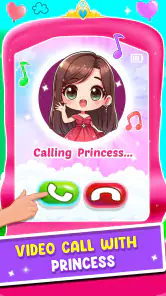
I found the pink princess styling important to the overall experience rather than a superficial decoration. It gives the activities a recognizable identity and helps children who already enjoy pretend phones or princess toys understand what kind of play the app offers. The musical element also makes each interaction feel more noticeable than a silent tap would. Even when the activity itself is straightforward, sound and animation can turn a small action into a moment of discovery.
At the same time, the opening does not create a strong narrative objective. There is no clear story arc pulling the player toward a major destination, and I would not describe the early play as a quest. The goal is closer to “see what happens when I interact with this” than “complete a difficult task.” That works well for preschool-style exploration, but older children may quickly ask what comes next.
For an everyday example, I can imagine a parent handing over the game during a short wait at a clinic or while preparing dinner. A child can open it, explore a few musical interactions, and put it down without losing a complicated position. That convenience is useful. It also means the game is better suited to brief bursts than to a planned hour of focused play.
What counts as progress here
The progress signals are modest and mostly immediate. Children receive feedback through what appears on screen and what they hear after an interaction, rather than through a sophisticated advancement structure. For this audience, that can be enough. A sound, visual response, or successful completion gives a child a reason to try another action, and the loop stays understandable without text-heavy instructions.
I think this is where parents should set expectations carefully. If you are looking for visible chapters, collectible rewards, character upgrades, or a clearly expanding map, this game may feel limited. Its sense of progress comes from becoming familiar with the activities and learning how the interactions respond. That is a valid form of early learning, but it is not the same as unlocking a large amount of new content.
One useful way to get more value from it is to turn the feedback into a conversation. Instead of letting the child tap randomly for a few minutes, I would ask them to identify a sound, describe a color, or predict what a button might do before touching it. That makes the app more educational than passive screen time and gives the child a small goal beyond simply repeating the same action.
The musical format can also support simple turn-taking. A parent or older sibling can invite the child to choose one interaction, then choose another, comparing the sounds or visual responses. This is a practical use that is easy to miss because the game presents itself as solo entertainment. It does not require a separate lesson plan, but it does require an adult to participate occasionally.
Challenge and the shape of the difficulty curve
The difficulty curve is gentle, and that is clearly deliberate. I did not experience the kind of escalating challenge found in spelling games, timed puzzles, or educational titles that gradually introduce harder questions. Instead, the game emphasizes recognition and experimentation. That makes it approachable for younger children, children who are still developing hand control, or players who become frustrated when an app demands fast and precise responses.
The trade-off is that the challenge may flatten out quickly. Once a child understands the main interaction pattern, repeating it may not provide much additional mental effort. This is not necessarily a flaw if the goal is relaxed pretend play, but it limits the app’s usefulness as a structured learning tool. I would not rely on it alone to teach a specific academic skill or to provide measurable practice over a long period.
For children who are easily discouraged, the soft difficulty is a real advantage. There is less pressure to get an answer right and less chance of a difficult stage stopping play altogether. For children who already handle educational puzzles comfortably, another app with clearer exercises and increasing complexity will probably hold attention better. The right choice depends on whether the child needs confidence-building exploration or a more demanding challenge.
I also noticed that the theme does some of the motivational work that a conventional game would assign to levels and enemies. The princess setting, pink car, and phone-like play pattern encourage the child to return to familiar actions. That can be effective at the beginning, but it is not an unlimited source of variety. Once the novelty fades, the absence of stronger challenges becomes more visible.
Does it keep children playing for the right reasons?
The retention pressure is relatively light compared with games built around constant rewards, competition, or urgent timers. I see that as a positive for a young audience. The app can be opened for a few minutes without demanding a long commitment, and there is no need to chase a difficult streak or remain online to keep up with other players. Its appeal is based mainly on immediate sensory feedback and the familiar princess-car-phone fantasy.
Still, light pressure does not automatically mean lasting engagement. A child may enjoy the first few sessions and then move on once every activity feels familiar. The game’s ability to retain attention depends heavily on the individual child’s interest in music and pretend play. I would expect stronger repeat use from a child who enjoys making sounds and role-playing with a phone than from one who wants puzzles, stories, or action.
Parents should also be aware that the game includes in-app purchases priced at forty-nine cents per item. That is a small price point, but it still makes it sensible to review purchase controls on the device before handing the phone to a child. I would treat the free version as the starting point and only consider an extra purchase if the child has already used the available activities enough to show genuine interest.
Another practical limitation is that a phone-sized screen can encourage very close viewing, particularly when a child is absorbed in bright colors and music. I would use it as a short activity rather than an automatic distraction for long stretches. The game works best when it complements other play, such as drawing a princess car, singing along, or using a toy phone, instead of replacing those activities.
Where it fits among educational games
Compared with a standard early-learning app, this game feels more like themed sensory play. Many educational alternatives focus on letters, numbers, matching, memory, or guided questions. Those are better choices when a parent wants a clear lesson objective or a visible sense of mastery. Musical Princess Car phone Toy is more suitable when the child’s motivation starts with the theme and the learning comes through listening, observing, choosing, and interacting.
Compared with a digital version of a toy phone, it has the convenience of being available on a device and can combine several playful responses in one place. The downside is that it may not provide the same open-ended physical experience as a real toy, where a child can carry it, press buttons without a screen, and invent a longer pretend conversation. I see the app as a companion to pretend play, not a complete replacement for it.
It also differs from story-driven princess games. A story game usually gives the player characters to help, scenes to visit, and a reason to continue. Here, the princess theme creates atmosphere, but the main attraction is direct interaction. That makes it easier to pick up and put down, while also making it less satisfying for children who want a continuing adventure.
For families choosing between this and a more academic title, I would ask one question: does the child currently need practice, or does the child need a friendly way to explore? If the answer is practice with a specific skill, I would choose a focused learning app. If the answer is a short, colorful activity that encourages curiosity without much frustration, this one makes more sense.
Small details that improve the experience
My first tip is to use the game as a prompt rather than leaving it entirely on autopilot. Ask the child to describe what they see, imitate a sound, or choose an action for a reason. This adds language and observation practice without pretending that the app is a full lesson. It also helps prevent the play loop from becoming mindless tapping.
My second tip is to introduce a simple stopping point before opening it. For example, a child might explore a few activities and then put the device away to draw the princess car they imagined. Because the game is easy to resume, there is little benefit in stretching one session until the child becomes bored. Short boundaries make the bright, repetitive format feel more intentional.
My third tip is to test it alongside the child before allowing independent use. You can see which interactions hold attention, whether the musical feedback is comfortable in your environment, and whether the child understands what to do without help. This is especially useful when deciding whether an in-app purchase is worthwhile. A low-cost item may seem harmless, but it should still correspond to something the child actually uses.
A fourth insight is that the app can work well as a transition activity. Because it does not appear to demand a long chain of missions, it can fill a small gap between errands or activities. I would avoid using it as a reward for every routine task, though, since that can make the screen more important than the play itself. Used occasionally, its quick-start design is genuinely convenient.
Device fit, access, and practical expectations
The game runs on Android devices using version eight or later, and the current version is 2.5. For a family with an older compatible phone or tablet, that requirement should be manageable, but the experience will still depend on screen size, speaker volume, and how comfortably a child can hold the device. A larger screen may make the pretend-phone visuals easier to see, while a small phone can encourage closer viewing.
Because it is free, the initial decision is relatively easy: install it, try the activities with the child, and judge whether the theme matches their interests. The Everyone rating also makes its intended audience broad from a content standpoint, although I would still supervise younger children because age ratings do not replace a parent’s judgment about screen habits or purchases.
The developer is himanshu shah, and the game’s large install count shows that it is not an obscure experiment with no audience. However, popularity should not be confused with depth. The moderate average rating is a useful reminder that some players will find the experience charming and accessible, while others will want more variety, stronger educational structure, or a clearer progression path.
My progression verdict
Musical Princess Car phone Toy succeeds when its goals remain small: tap, listen, explore, and enjoy a princess-themed pretend phone. Its progress signals are immediate rather than long-term, its difficulty curve is forgiving, and its retention comes from theme and sensory feedback instead of heavy pressure. For a young child who likes pink cars, music, and princess play, that can be enough for enjoyable short sessions.
My honest reservation is that the progression has a low ceiling. I would not buy it expecting a substantial campaign, a carefully staged curriculum, or a challenge that keeps increasing over weeks. Children who need more demanding educational practice will outgrow it quickly, and children who prefer stories may find the interactions too loose. The in-app purchases also deserve adult attention, even though each item costs only forty-nine cents.
Overall, I would recommend it as a simple, free educational game for occasional use, especially when a child is drawn to pretend-phone play and musical responses. I would pair it with real-world conversation, drawing, singing, or a physical toy so that the screen activity leads somewhere else. Its best quality is not deep progression but approachable exploration, and that makes it a reasonable choice for the right child rather than a universal replacement for more structured learning games.
If you want a gentle activity that a child can understand quickly and revisit without pressure, this is worth trying. If your priority is clear academic outcomes, increasingly difficult tasks, or a rich princess adventure, I would choose a more specialized alternative. In my experience, the game is most successful when treated as a colorful musical play corner: useful in small doses, friendly for beginners, and enjoyable precisely because it does not demand too much.
Pros
- Simple controls make it suitable for toddlers.
- Bright visuals and sounds help keep children engaged.
- Playable without reading skills or complex instructions.
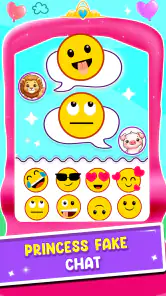
- Includes pretend-call interactions for imaginative play.
- Lightweight app that runs well on many mobile devices.
Cons
- Frequent sounds may become repetitive during longer sessions.
- Limited activities can reduce replay value for older children.
- Some features may require device audio to be enabled.
- Bright animations could be distracting for sensitive children.
- May include ads or in-app prompts depending on the version.
- Category
- Educational
- Version
- 2.5