Mormon Trail
- 38.00
- 3.7
- Installs
- 1.00K
- Price
- $1.99

Screenshots
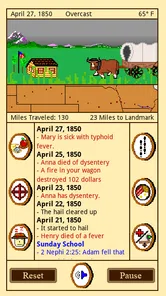


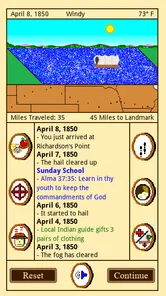

Analysis by Reviewed
I judge a history game by what it gives me after the first burst of curiosity: a reason to return, a useful way to think about the subject, or a small routine that fits real life. Mormon Trail has a clear focus, which makes it easy to approach, but also sets a limit on how long its appeal may last. I see it as a compact educational game for people drawn to this particular migration, not as an all-purpose history course or an endlessly replayable pastime.
A quick first-week hook
For a student encountering the westward migration for the first time, or a parent looking for a short educational activity to share, the trail theme offers a useful starting point. I’d use it as a conversation prompt: play together, pause when a decision or historical detail catches someone’s attention, then talk about what travel demanded of people at the time. That kind of shared use can make a compact game more memorable than simply reading a paragraph of background.
The game comes from Guinea Pig Games LLC and is listed as an educational title for everyone. It costs $1.99, so I’d treat it as a modest one-time purchase rather than assume it will become a long-running hobby. Its 3.7 average from around 56 ratings suggests a mixed but not unusually large response; I would weigh that alongside whether this particular historical subject interests you, rather than expecting the rating to predict your own experience.
What makes it worth revisiting?
The strongest reason to come back is the specific lens: this isn’t a broad survey of American history, but a game built around the Mormon Trail. That focus can be valuable if you’re studying migration, religious history, or the challenges of crossing the continent. It can also make the game a useful change of pace from flash-card apps and conventional educational quizzes, which often ask you to memorize facts without giving the subject a journey-shaped frame.
For repeat visits, I’d give each session a small purpose instead of expecting endless variety. A short play session after class, a family discussion about what the trail represents, or a return visit to recall details can all make sense. If you’re an educator, it works best as a supplement to a lesson rather than the lesson itself: use it to spark questions, then bring in maps, primary sources, or wider historical context. That approach keeps the game’s narrow subject from being mistaken for the whole story.
Exploring the Trail
Upon launching the Mormon Trail app, I was immediately drawn in by its inviting interface. The home screen presents a map dotted with significant points along the trail, from Nauvoo, Illinois, to Salt Lake City, Utah. Each dot is a gateway to stories from the past, with rich narratives and visuals that bring history to life. As someone who loves a good story, I found myself immersed in tales of perseverance and faith as I navigated through the app.
Features and Functionality
The app is packed with features that enhance the learning experience. There’s an interactive timeline that allows you to scroll through key events, providing context and depth to the journey. Additionally, the app includes audio guides, which I found particularly engaging. It's like having a personal historian narrating the trek while you explore at your own pace.
More From Our News Desk

Weather by Xiaomi Review: Clear at a Glance, Less Clear Up Close

X Under Pressure: Can It Recover When Posting Goes Wrong?

Clash of Clans Is Won Between the Battles

Android Auto Makes the Case for Quieter Car Software

MobiOffice: Transforming Mobile Productivity with Seamless Integration

EA SPORTS FC™ Mobile Soccer: Redefining Mobile Sports Gaming
One of my favorite features is the collection of personal accounts and journals from the pioneers themselves. These firsthand narratives add a personal touch that textbooks simply can't match. It's fascinating to read about the daily struggles and triumphs of these travelers through their own words.
Learning and Engagement
The app doesn’t just throw information at you; it encourages active learning through quizzes and challenges. I found myself testing my knowledge on various aspects of the trail, from geography to historical figures. It's a fun way to reinforce what you've learned and discover new tidbits of information. Plus, it’s a great way to engage younger audiences who might need a more interactive approach to history.
For educators, the app offers a treasure trove of resources that can be integrated into lesson plans. It provides a dynamic way to teach students about this pivotal chapter in American history, making it more relatable and engaging.
Keeping expectations grounded
The main limitation is also part of the design: the subject is quite specific. If you want a broad history course, a deep simulation, or a game whose appeal comes from constant new content, this is probably not the right fit. A general history app may be better for exploring many eras, while a conventional strategy game may offer more systems to master. Here, the value depends on whether this particular journey and its historical perspective hold your attention.
For a practical routine, I’d keep it as an occasional ten-minute activity rather than a daily habit. A learner could revisit it before a class discussion; a family could use a short session on a quiet afternoon and follow it with a map or book. Because the experience combines reading, listening, and answering questions, switching modes can help maintain attention—but it also means someone who prefers fast, uninterrupted action may find the pace too measured.
If you’re deciding whether to spend the $1.99, ask yourself whether you want a focused history game or a broader learning tool. The game has over a thousand installs and is on version nineteen, with support for Android 4.4 and newer. That makes it accessible to many older Android devices, though I’d still check that your device and current software are compatible before buying. It was released on November 9, 2021, so I would approach it as a defined, focused experience rather than a service built around frequent new material.
Making a session useful
A useful way to fit the game into a busy day is to give it a stopping point before you begin. I’d choose one short stretch of play, then write down or discuss a question that came up rather than trying to turn every session into a complete lesson. For example, if a younger player asks why a journey was difficult, pause there and look for a map or another historical source together. The game can provide a starting frame, while that follow-up helps prevent a single perspective from standing in for a much larger history.
It can also work as a low-pressure change of activity for a child who resists a block of assigned reading. The interactive format gives the subject a more immediate shape, but I would not assume that answering a quiz automatically means the history has stuck. Asking the player to explain one event or choice in their own words is a better check of understanding than simply replaying questions. That small adjustment makes the game more useful without demanding a formal lesson plan.
Maintenance, fatigue, and fit
There is little ongoing commitment in the basic idea: this is a paid educational game, not something I’d choose because I expect a daily stream of fresh activities. That is a plus if you want to pick it up when the subject fits your needs and leave it alone between sessions. The trade-off is that once you have explored the material that interests you, the same trail and learning format may feel familiar. A parent should also expect to guide younger players through the historical context instead of relying on a game alone to explain every nuance.
One practical question is whether it suits a quick, shared moment or needs a longer stretch of concentration. I’d choose it for a quiet break at home, a study period, or a conversation with a child when there is time to stop and explain an unfamiliar idea. I would not make it my choice for keeping someone occupied in a rushed queue if they are likely to want rapid action or constant novelty. Its educational value comes from attention and follow-up, so interruptions can make the experience less satisfying.
Another trade-off is how to use it alongside other learning material. A standard quiz app is usually the better pick when the goal is quick recall across many subjects; a documentary or history book is better when you want sustained context and careful explanation. This game occupies a narrower middle ground: it gives a historical journey a playable structure, while leaving the learner or adult to connect that experience to a broader account. I’d pair it with a map or reading when accuracy and perspective matter more than a brisk activity alone.
I’d recommend it most to learners who are curious about the Mormon migration, families who enjoy discussing history together, and teachers looking for a change of format alongside other sources. I’d skip it if you want a broad curriculum, a competitive game, or a deep management simulation. Its 38 reviews give prospective buyers more written feedback to consider than the rating alone, but the most useful test is still whether the narrow subject sounds engaging to you.
Long-term verdict
For me, this earns a place as an occasional, subject-specific learning tool rather than a permanent fixture in a daily app routine. The strongest lasting value comes when it supports a particular need—a class topic, a family’s curiosity, or a learner’s interest in migration—and prompts a conversation or a bit of further reading. If the subject is not already appealing, the focused scope is unlikely to create a durable habit by itself. That is not a flaw so much as a sensible expectation to set before paying.
Before buying, I’d ask whether you want a short interactive route into this history or a resource you can use across many topics. If it is the former, its combination of game structure and historical material makes a reasonable fit. If you need a reusable curriculum, extensive ongoing variety, or a detailed simulation, a broader educational app, book, or strategy game will serve you better. The key is to treat this as one tool in a learner’s collection, not the entire collection.
Final Thoughts
In a world where history can sometimes feel distant and disconnected, the Mormon Trail app bridges the gap beautifully. It’s not just about learning history; it’s about experiencing it. Whether you're a student, teacher, or just someone with a thirst for knowledge, this app offers a comprehensive and engaging way to explore the past.
So, if you're ready to embark on a virtual adventure that’s both educational and entertaining, give the Mormon Trail app a try. It's more than just an app; it’s a journey through time that you won’t want to miss!
Mormon Trail Frequently Asked Questions
How much does Mormon Trail cost, and what kind of game is it?
Mormon Trail is an educational game with an Old School Oregon Trail feel and a Mormon twist. It costs $1.99, so it is a paid download rather than a free game with optional purchases. If you enjoy learning through games and historical themes, its premise may appeal to you; the cost is worth considering before you decide whether it fits your interests.
Will Mormon Trail run on my Android device?
The Android version requires Android 4.4 or later, which makes it compatible with many older as well as newer devices. Before downloading, check the Android version on your phone or tablet against this requirement. The game is rated Everyone, making it suitable for a broad audience, though parents may still wish to review the game themselves before handing a device to a child.
What do players think of Mormon Trail?
Mormon Trail has an average rating of 3.7 from 56 ratings, alongside 38 written reviews. Those figures give prospective players a quick sense of how it has been received, but individual experiences can differ. The game has reached over 1,000 installs, so it has found an audience among players interested in its educational theme and Oregon Trail-style premise.
What is the main objective of the Mormon Trail app?
The Mormon Trail app is designed to provide an interactive and educational experience about the historic journey of the Mormon pioneers. Users can explore detailed maps, learn about key events, and engage with immersive stories and multimedia content that highlight the challenges and triumphs of the trek from Illinois to Utah in the mid-1800s.
Is the Mormon Trail app suitable for educational purposes?
Yes, the Mormon Trail app is an excellent educational tool. It offers a wealth of historical information and resources, making it suitable for students, teachers, and history enthusiasts. The app's interactive features and engaging content help users deepen their understanding of this significant period in American history in a captivating way.
Pros
- Engaging historical storyline
- Educational gameplay
- User-friendly interface
- Rich visual graphics
- Interactive challenges
Cons
- Requires stable internet
- Limited offline features
- In-app purchases
- Occasional bugs
- High battery usage