Monument Valley
- 13.95K
- 4.8
- Installs
- 5.00M
- Price
- $3.99

Screenshots


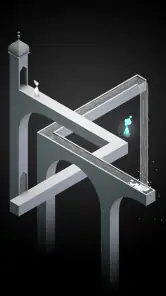


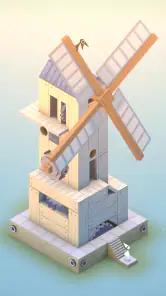

Analysis by Reviewed
I came to Monument Valley expecting a clever puzzle, but what stayed with me was how calmly it asks me to look at a scene before acting. It is a paid puzzle game from ustwo games, and its appeal is less about racing through challenges than learning to read impossible architecture. If you enjoy thoughtful play and striking visual design, it has a distinct personality; if you mainly want speed, competition, or a long stream of demanding puzzles, its measured pace may not suit you.
What the purchase gets you—and what it doesn’t tell you
The game costs $3.99, with in-app purchases listed at $1.99 per item. That gives you a clear starting price, but it does not tell you what each optional item contains or whether you will want it, so I would check the purchase details on your device before paying for anything extra. I would not treat the extra-purchase figure as a reason to expect a particular advantage or progression system. The game is rated Everyone, and it was released on May 14, 2014; its current version is 3.8.112, with iOS 8.0 as the minimum operating system.
Its audience gives some useful context without settling whether it fits your taste: the average rating is 4.8, drawn from around 242,000 ratings, and it has over 5 million installs. Those figures suggest broad interest, not a guarantee that the quiet, compact puzzle style will click for everyone. I’d choose it for a deliberate break rather than as a substitute for a sprawling puzzle collection.
A Visual Feast
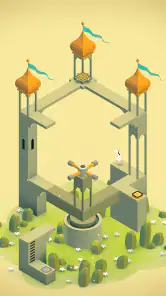
The first thing that struck me about Monument Valley is its breathtaking visuals. The game is a masterpiece of design, with every level offering a new and beautiful setting that looks like it jumped straight out of a dream. The vibrant colors and intricate architecture are not just pretty to look at; they play a crucial role in solving the puzzles. Every scene is like a piece of interactive art, and I found myself often pausing just to admire the stunning landscapes.
Gameplay That Twists Your Mind
Now, let's talk about the gameplay. The concept is simple yet incredibly satisfying. You guide a silent princess named Ida through a series of mazes filled with optical illusions and impossible objects. What I love about this game is the way it challenges your perception. Each level is a puzzle that requires you to twist and turn the environment, often flipping your understanding of space and perspective. It’s like an Escher painting come to life, and figuring out each puzzle feels like a mini-victory.
My practical tip is to pause before dragging anything: first scan the whole structure, then look for places where two paths appear to line up from your viewpoint. A small change in perspective can make an apparently disconnected route usable. If a move seems to lead nowhere, I find it more helpful to inspect the scene from another angle than to repeat the same gesture. This makes the puzzles rewarding for patient observation, but can frustrate anyone who prefers explicit clues or a steady increase in difficulty.
It also changes how I use it in ordinary life. On a short commute or during a quiet break, I can play a little, stop when I reach a puzzle that needs more attention, and return later without needing the game to be a competitive session. That makes it a good fit for someone who wants a calm, self-paced diversion. I would skip it if I wanted timed challenges, a score chase, or the kind of puzzle game built around lots of repeatable rounds; its distinctive appeal is spatial perspective, not frantic problem-solving.
More From Our News Desk

Weather by Xiaomi Review: Clear at a Glance, Less Clear Up Close

X Under Pressure: Can It Recover When Posting Goes Wrong?

Clash of Clans Is Won Between the Battles

Android Auto Makes the Case for Quieter Car Software

MobiOffice: Transforming Mobile Productivity with Seamless Integration

EA SPORTS FC™ Mobile Soccer: Redefining Mobile Sports Gaming
Compared with familiar match-and-clear puzzles or collections of logic grids, this is more like exploring a sequence of designed spaces. The environment itself is the main thing to interpret, so the pleasure comes from noticing how a structure can be read differently, not from building a high score. That is a useful distinction before buying: its visual approach is a strength if you enjoy atmosphere and discovery, but a less direct fit if you want a large variety of puzzle formats or a reason to replay the same challenge for competition.
There is also a trade-off in how much the game asks you to infer. Its touch controls feel straightforward, but ease of interaction does not mean every solution is immediately obvious. I sometimes need to slow down and test what a movable part changes in the larger layout. That deliberate pace is part of the experience, though anyone who dislikes visual ambiguity may find it more puzzling than relaxing. I would play with enough time to notice the architecture rather than squeezing it into a moment when I am distracted.
One question a buyer may have is whether the listed optional purchases are necessary to enjoy the core experience. The purchase information establishes that items are offered, but not their contents or role, so I would avoid assuming they unlock a specific feature or make progress easier. Another sensible check is device compatibility: the minimum OS is 8.0, so I would confirm that my device meets it before purchasing. Those are straightforward checks, but they matter more than guessing about what an optional item might do.
For competitive fairness, I see little reason to compare it with games where purchases might affect rankings or head-to-head play: the appeal here is solving the architecture at your own pace. I would not infer from that, however, that optional purchases have no effect on the available content; their precise role is not stated here. My buying advice is simple: pay for the game because its perspective puzzles and art appeal to you, and consider any extra purchase only after reading its own description.
One of my favorite features is the intuitive touch controls. It makes interacting with the game world a breeze, allowing you to focus on the puzzles without getting bogged down by complicated mechanics. It’s a game that’s easy to pick up, but difficult to put down. Trust me, once you start solving those mind-bending puzzles, you’ll be hooked.
The Soundtrack to Your Journey
No great game is complete without an amazing soundtrack, and Monument Valley doesn’t disappoint. The music is soothing and perfectly complements the ethereal visuals. It creates an immersive atmosphere that draws you into the game’s world, making each puzzle-solving moment feel like a serene escape from reality. The combination of visuals and sound is pure magic, and it’s one of the reasons why this game is so memorable.
Why You Should Download It
In conclusion, Monument Valley is not just a game; it’s an experience. Whether you’re a fan of puzzles, art, or just looking for something new to try, this app is a must-have. It’s a game that you’ll want to revisit time and time again, just to relive the magic of its world. So go ahead, download it, and let yourself be transported to a land of wonder and illusion. You won’t regret it!
My verdict on value and trust
I recommend it most confidently to people who like short, contemplative puzzle sessions and care about visual craft as much as solving. Its 4.8 average across around 242,000 ratings is reassuring context, but my recommendation rests on the game’s particular blend of spatial puzzles and atmosphere, not on popularity alone. The price and optional item price are visible before you buy; the useful next step is to inspect the item descriptions rather than assume what they provide. If that kind of measured, self-directed play sounds appealing, I think this is an easy game to consider. If you need constant novelty, explicit guidance, or competitive pressure, I’d choose a different puzzle game.
Making a short session work
I get the most from it when I treat a level as a small visual problem rather than something to clear as quickly as possible. In practice, that means giving a scene a few seconds before touching it, then making one deliberate move and checking what changed. This simple rhythm makes the architecture easier to read and helps me avoid tapping or dragging randomly. If I am interrupted, I can stop at a natural pause instead of feeling that I need to finish a long run of rounds.
That makes it a plausible choice for a quiet wait at a station, a pause between tasks, or an evening when I want something more attentive than scrolling but less demanding than a competitive game. It is not the best fit for every commute: if I am standing in a crowd or constantly checking the time, the visual details are easy to miss. I would save the more involved moments for somewhere I can look at the screen without rushing. The benefit is not simply that sessions can be brief; it is that the game rewards focused observation when I have it.
Who will enjoy its particular kind of puzzle
I would recommend it to someone who likes spatial reasoning, unusual architecture, and puzzles where noticing a visual relationship matters more than memorizing rules. It can also work well for a player who is new to puzzle games and wants interactions that are easy to understand, provided they are comfortable figuring out solutions without much explicit direction. Its presentation gives you a reason to linger, but the challenge still depends on interpreting what you see.
By contrast, I would steer away anyone who wants a substantial test of logic that keeps escalating, a daily routine of repeatable challenges, or a competitive ladder. Those expectations suit other puzzle formats better. A match-and-clear game is more appropriate when you want quick feedback and familiar goals; a logic-grid collection is a better choice if you want to work through written clues. Here, the pleasure is tied to the specific construction of each space, so players who prefer abstract rules may find the visual approach less satisfying.
Reading the scenes instead of guessing
A useful habit is to separate what looks connected from what is actually connected from your current viewpoint. I look for an edge, stair, or landing that might align with another part of the structure, then test whether changing the scene alters that relationship. The point is not to move every mechanism; it is to notice which movement could change the route I am trying to understand. That turns trial and error into a more intentional process without taking away the pleasure of discovery.
There is a small but meaningful trade-off here: visual ambiguity is the material the puzzles are made from, not a side effect that can always be removed with a clearer instruction. When I am tired, I may mistake a deliberate illusion for a confusing layout, and a puzzle that feels elegant in a focused moment can feel opaque when my attention is split. If I hit that point, stepping away and returning with fresh eyes is better than forcing progress. I would not call that a flaw for everyone, but it is a real consideration for anyone who expects a soothing game to require no effort.
What to check before spending
The purchase is easiest to judge if I keep the known costs separate from assumptions about what is included. The base price is $3.99, and optional in-app items are listed at $1.99 each. I would check the description of any item offered on my device before buying it, since the price alone does not explain its contents. That is a more reliable approach than deciding in advance that an extra purchase is either essential or irrelevant.
Likewise, I would not buy it expecting a particular amount of content or a specific replay structure based on the fact that it is a puzzle game. The strongest reason to choose it is the style of interaction: looking at an architectural scene, forming a theory about how it works, and testing that idea. If that cycle sounds appealing, the game has a clear identity. If I mainly want a large catalogue of unrelated puzzle types, I would look elsewhere rather than assume one carefully designed visual approach will provide that variety.
Compatibility is another practical check. The minimum operating system is 8.0, so I would verify that my device meets the requirement before paying. The game is rated Everyone, which is useful context when choosing something to play around other people, but it does not tell me whether each player will enjoy the slow, perception-led style. A broad age rating and a broadly positive audience are not substitutes for matching the game to the person holding the device.
A considered recommendation
For me, its lasting appeal is the way a small adjustment in viewpoint can change my understanding of an entire scene. That gives the puzzles a character that familiar score-driven alternatives do not share, while also making the experience narrower by design. I would choose it for a quiet stretch of time and for the pleasure of looking closely, not as an all-purpose answer to every puzzle mood.
The game has an average rating of 4.8 and around 14,000 written reviews, which gives a prospective buyer a sizeable pool of opinions to consult; I would still look for comments from players whose tastes resemble mine. ustwo games has kept the current version at 3.8.112, but version information by itself is not a promise about future changes or a reason to expect a particular feature. For the decision in front of me, the important point remains whether I want this distinctive, calm form of spatial puzzling.
My trust verdict is straightforward: the base price and optional-item price are clear enough to frame a purchase, while the role of each extra needs to be judged from its own description. I would not assume there is a competitive advantage to buy, nor assume optional items have no bearing on what is available. Buy it for its visual puzzles if those are exactly what you want; choose another game if you need a long, escalating challenge, frequent scores to chase, or several puzzle formats in one package.
Monument Valley Frequently Asked Questions
Does Monument Valley focus more on puzzles or action?
Monument Valley is a puzzle game built around exploring striking, impossible architecture and finding ways through each scene. Its appeal is in noticing visual details, testing how structures connect, and guiding the journey forward rather than relying on action-focused play. It may be a good fit if you prefer a measured, thoughtful game with a strong artistic atmosphere.
Is Monument Valley a good choice for a short play session?
The game’s puzzle format makes it easy to approach one scene at a time, so it can suit players looking for a focused mobile experience rather than a complicated game to manage. Its calm presentation and visual challenges encourage you to pause and think as you play. Whether you prefer brief sessions or longer stretches of exploration, the central experience is built around solving puzzles.
What devices can run Monument Valley?
Monument Valley is a puzzle game for Android and iOS, so it suits players who want a thoughtful experience on a phone or tablet. It requires Android 8.0 or later, and the current version is 3.8.112. Before downloading, check that your device meets the operating-system requirement so you can install and launch the game smoothly.
What is Monument Valley about?
Monument Valley is a puzzle game that takes players on an enchanting journey through stunningly beautiful and surreal landscapes. Players guide a silent princess named Ida through impossible architecture, uncovering hidden paths and solving intricate puzzles. The game is renowned for its artistic design and immersive, calming experience, making it a must-try for puzzle enthusiasts.
Is Monument Valley free to download and play?
Monument Valley is a premium game, meaning it requires a one-time purchase to download and play. Its listed price is $3.99, while in-app purchases are available at $1.99 per item. While it is not free, the cost is justified by its high-quality graphics, unique gameplay, and the overall experience it offers. Occasionally, it might be available at a discounted price during special promotions, so keep an eye out for such opportunities.
Pros
- Stunning and unique visual design.
- Engaging and challenging puzzles.
- Simple
- intuitive controls.
- Immersive atmospheric sound.
- No intrusive ads or pop-ups.
Cons
- Short gameplay duration.
- Limited replayability.
- Higher price point.
- Occasional performance lags.
- No multiplayer mode.
- Category
- Puzzle
- Version
- 3.8.112