Monument Valley 2
- 3.78K
- 4.7
- Installs
- 1.00M
- Price
- $3.99

Screenshots




Analysis by Reviewed
I tend to reach for Monument Valley 2 when I want a puzzle game that feels calm and considered rather than competitive. It is a paid mobile game from ustwo games, priced at $3.99, and that makes the main decision refreshingly straightforward: you are buying a complete game experience, not weighing a free download against a stream of optional purchases. Its 4.7 average from around 72,000 ratings suggests it has found a large audience, but what matters to me is whether its particular style suits the way you like to play.
What the purchase buys you
This is a puzzle game built around visual perspective and a quiet journey, not a daily checklist or a race against other players. I would choose it for a short break when I want to focus on a single clever scene, or for a slower evening when I can give the sound and story my attention. The game is rated Everyone, and the current version is 3.7.501; it requires Android 8.0 or later. It has passed one million installs, but popularity alone is not the reason I would recommend it: its strongest appeal is the way it makes spatial puzzles feel expressive.
That purchase model also sets expectations. The listed price is $3.99, so I would treat it as a one-time paid choice rather than assume it is free to try. I find that clearer than many puzzle games whose free entry can lead into ads, energy limits, or repeated prompts to spend. The trade-off is equally clear: if you are unsure whether this particular style will hold your attention, there is no free entry point indicated here to test it first. I would decide based on whether you enjoy slow, visual problem-solving, not on the rating alone.
The Art of Illusion
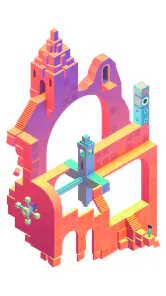
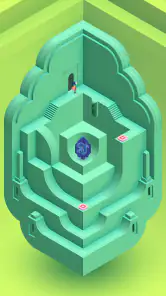
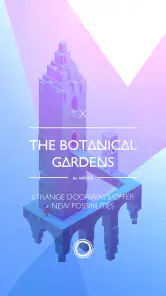
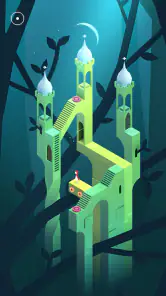
One of the first things you'll notice about Monument Valley 2 is its breathtaking art style. The game is like a living painting, with every level playing out as a beautiful piece of art. But it's not just about looks. The developers have masterfully crafted optical illusions that will have you twisting and turning your device, pulling your hair out in the best way possible.
Storytelling Through Gameplay
Unlike many mobile games that rely heavily on dialogue or text, Monument Valley 2 tells its story through its gameplay mechanics. You guide a mother and her child through a series of intricate puzzles, and it's this journey that forms the emotional core of the game. It's a tale of growth and letting go, and it resonates deeply without the need for words.
Each level is designed to challenge your perception, and the satisfaction of solving these puzzles is unparalleled. The game subtly teaches you how to play as you progress, without ever holding your hand. It's a testament to the clever design that makes you feel smart, rather than frustrated.
Soundscapes to Get Lost In
Let's not forget about the soundtrack. The audio in Monument Valley 2 is just as immersive as its visuals. The music ebbs and flows with your journey, enhancing the emotional weight of the story. I’d recommend playing with headphones to truly appreciate the care put into the sound design. The ambient noises and subtle melodies create an atmosphere that pulls you even deeper into the game’s world.
More From Our News Desk

Clash of Clans Is Won Between the Battles

Android Auto Makes the Case for Quieter Car Software

MobiOffice: Transforming Mobile Productivity with Seamless Integration

EA SPORTS FC™ Mobile Soccer: Redefining Mobile Sports Gaming

How Microsoft OneDrive Became a Mobile Productivity Giant

How Google Translate Breaks Language Barriers Effortlessly
The sound complements the visuals perfectly, making every moment in the game feel like a part of a grander narrative. It's a rare case where the audio feels just as important as the visual components.
Finding the right pace
The puzzles are best approached with a little patience. When a scene feels stuck, I pause and look at the whole structure before tapping again: an apparent dead end may be a visual cue to reconsider how the architecture connects. This small habit keeps the challenge enjoyable instead of turning it into random trial and error. The game is also a better fit for focused moments than for distracted play; if you are repeatedly switching away, its careful visual storytelling can lose some of its effect.
For a realistic use case, I would keep it for a commute with a seat or a quiet coffee break, rather than a walk or a situation where I need to react quickly. A level can give a brief pause in the day, while the composed presentation makes a longer session feel like a deliberate escape. If you mainly want endless replay, leaderboards, or a tough logic workout that keeps escalating, a more conventional puzzle app may suit you better. This game’s appeal is atmosphere and perspective, not a competitive score chase.
Who should choose it
I would recommend it to players who enjoy exploring how a space works, appreciate stories told through movement and imagery, and are happy to let a puzzle unfold at its own pace. It may be a poor match if you want extensive written narrative, constant new challenges, or a long-term game built around repeated progression. The gentle presentation should not be mistaken for a promise that every puzzle will be obvious; some scenes ask you to look past what seems physically possible and rethink the layout.
Compared with the usual match-three or word-puzzle options, this is less suited to playing on autopilot. Compared with a traditional brainteaser, it gives more weight to mood and visual composition than to accumulating difficulty. That distinction is useful before paying: choose it for a compact, authored-feeling adventure, not as a replacement for a puzzle game designed to occupy months of spare minutes.
Making the most of its visual puzzles
One practical way I approach a tricky scene is to separate what looks decorative from what seems interactive. Rather than tapping every surface in sequence, I scan for shapes and connections that could change the apparent route, then test one idea at a time. That makes the puzzles feel more like reading a visual design than guessing at hidden rules. It is especially useful when perspective makes two parts of a structure appear connected even though the route is not yet open.
I also find it helps to pause before rotating or moving anything. Take in the whole arrangement, notice where the characters are trying to go, and then make a deliberate adjustment. If a move changes the scene in an unexpected way, that is useful information, not a failure: the new view may reveal how the architecture is meant to be understood. This slower approach is a better fit for the game than tapping quickly while half-watching something else.
The experience is most rewarding when I let the visuals carry the story rather than expecting every moment to be explained. If you usually skip cutscenes or prefer a clear written plot, the understated approach may feel too quiet. On the other hand, if you enjoy noticing how a small change in a scene shifts both the route and the emotional tone, the restraint becomes part of the appeal.
Where it fits in an ordinary day
Imagine having ten calm minutes between appointments, with a place to sit and enough attention to focus on a screen. I would open the game, work through a scene without rushing, and stop when I need to leave rather than trying to turn the break into a score run. That is a more natural use for it than filling every spare second with quick taps. Its visual puzzles ask for attention, but the absence of a competitive race makes it easy to enjoy at a personal pace.
For a noisy bus ride, a crowded queue, or a moment when you might need to respond immediately, I would choose something less dependent on taking in a carefully composed image. Similarly, if you want a game that rewards frequent short check-ins with ongoing goals, this is not the obvious pick. I see it as a small pocket of focused play, not a habit tracker disguised as entertainment.
It can also work well as a shared screen experience. A friend or family member can suggest what to try next, and discussing the shape of a puzzle can make the perspective trick easier to spot. I would not treat that as a substitute for playing it yourself, though: the pleasure comes partly from making the visual connection on your own. If you want a social game with direct competition or shared online progress, look elsewhere.
How it differs from other puzzle games
Many familiar mobile puzzles are built around repetition: clear another board, beat a timer, or keep a streak alive. Here, the pleasure is more concentrated in noticing how a particular scene works and seeing it change as you interact with it. That makes it a stronger choice for someone who values a crafted sequence of ideas than for someone who wants an endlessly replenished puzzle feed.
Against a text-heavy logic game, it offers less emphasis on written clues and formal deduction, and more on spatial intuition. Against a sprawling adventure, it is more focused on compact visual puzzles than on a broad world to explore. Those are useful distinctions when deciding whether the purchase makes sense: I would pick it for its specific combination of perspective, atmosphere, and gentle narrative, not because it promises every kind of puzzle in one package.
The trade-off is that a carefully authored journey does not serve the same purpose as an open-ended challenge. Once you have experienced its scenes, you may not feel the same pull to return that a daily puzzle or competitive ladder provides. If replay value measured by repeated rounds is your priority, a free or regularly refreshed puzzle game may be the better fit. If you prefer a complete-feeling experience with a clear mood, this one is more persuasive.
Who may want a different game
I would skip it if your ideal puzzle is a demanding test of arithmetic, wordplay, or increasingly complex rules. Its challenges are visual and spatial, so a player who wants explicit instructions and a steadily rising difficulty curve may find the experience too gentle or too brief. The presentation can be serene, but that does not mean it will satisfy every kind of problem-solving appetite.
I would also look elsewhere if you need a free way to test a game before paying, want frequent new content to return to, or rely on competitive features for motivation. The purchase price is clear, but that alone cannot tell you whether the style is right for you. A safer decision is to ask whether you enjoy perspective-based puzzles and quiet storytelling enough to pay for that specific experience.
For parents considering it, the Everyone age rating makes the content suitable for a broad audience, and the story is conveyed visually rather than through lengthy dialogue. I would still think about whether the child enjoys patient observation: the gentle look does not turn every scene into an instantly solvable activity. It is a better choice for someone who likes to explore and notice details than for a player who needs constant action.
Purchase, progress, and fairness
The price gives the decision a useful boundary: you pay to get the game rather than entering through a free loop that may ask for repeated small purchases. I value that clarity, especially in a genre where timers, ads, and upgrade prompts can interrupt a puzzle. Still, a clear upfront cost is not proof of anything beyond the purchase terms I can see, so I would not use it to make assumptions about privacy, device permissions, or other policies.
There is no competitive ranking or score race at the heart of the experience described here, which means I would not approach it as a fairness contest between players. Its challenge is personal: notice the visual relationship, try a thoughtful move, and see whether the scene opens up. That makes it welcoming if you dislike pressure, but less motivating if competition and measurable improvement are what keep you playing.
It is also worth separating difficulty from pressure. Some puzzles may take a moment to read, but that is different from a timer pushing you to act before you have understood the layout. When I get stuck, I would rather step away and return with fresh eyes than tap faster. The game’s calm rhythm makes that a reasonable way to play, although anyone who wants constant urgency should choose a different kind of puzzle.
My trust verdict
On fairness, I find the upfront price easier to judge than a free-to-start puzzle game whose spending can build gradually. That is a statement about the listed purchase, not a guarantee about every aspect of how the game works. I would not infer extra payment systems, privacy practices, or other policies from the price alone. If those details matter to your decision, check the current store information before installing.
My recommendation is therefore specific: buy it if a self-contained-feeling, visually led puzzle journey is what you want, and skip it if you need a free trial, long-term replay loop, or hard competitive challenge. ustwo games’ 2017 release remains an easy game to recommend on its own terms, provided you value quiet craft over volume of content. That honest fit matters more to me than treating a strong rating as proof that it will suit everyone.
Monument Valley 2 Frequently Asked Questions
How much storage space should I have available before downloading Monument Valley 2?
Before downloading Monument Valley 2, make sure your device has enough free space for the game and its installation. The amount of space an app uses can vary between devices and may change as it is installed, so checking the download size shown on your device’s app store is the most practical way to plan. This is especially useful if your phone or tablet is nearly full.
Is Monument Valley 2 a good game to play in short sessions?
Monument Valley 2 is a puzzle game centered on exploring unusual architecture and working out how pathways connect, so it can suit a quiet break when you want to focus on a visual challenge. Its touch-based interaction makes it natural to play on a phone or tablet. If you prefer fast action or competitive matches, its thoughtful, unhurried style may feel different from what you are looking for.
Is Monument Valley 2 a paid game, and what should I know before purchasing it?
Monument Valley 2 is a paid puzzle game, priced at $3.99. Its focus is on exploring carefully designed environments and solving visual puzzles rather than competing against other players. If you enjoy calm, atmospheric games built around thoughtful observation, its style may suit you. The game is developed by ustwo games and is available for Android and iOS.
Will Monument Valley 2 run on my Android device?
On Android, Monument Valley 2 requires Android 8.0 or later. Check your device’s operating system before downloading so you can be confident it meets the minimum requirement. The game is designed for mobile play, with touch controls used to interact with its architectural puzzles. It is also available on iOS, so players can choose the platform that fits their device.
What is Monument Valley 2 about?
Monument Valley 2 is a visually stunning puzzle game that takes players on a journey through magical architecture and illusory pathways. The game follows a mother and her child as they embark on a quest to navigate intricate and mind-bending landscapes. With each level, players are challenged to manipulate the environment to create new paths and solve puzzles, making it a unique and immersive experience.
Pros
- Stunning visual design
- Engaging puzzle mechanics
- Captivating storyline
- Intuitive controls
- Suitable for all ages
Cons
- Short gameplay duration
- Limited replay value
- Higher price
- No difficulty settings
- Requires a lot of storage space

- Category
- Puzzle
- Version
- 3.7.501