MONOPOLY Match
- 2.78K
- 4.7
- Installs
- 100.00K
- Price
- Free
Screenshots



Analysis by Reviewed
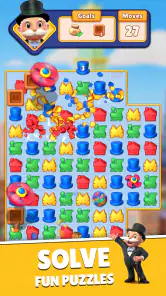
I went into MONOPOLY Match expecting a familiar board-game theme wrapped around a small puzzle, but its most important quality is the way those two ideas are joined. This is a free puzzle game from BeeMatch Ltd that uses the Monopoly setting as more than decoration: each short session feels like a compact attempt to make progress through a property-focused world. I found it easiest to enjoy when I treated it as a casual game for spare moments rather than a full replacement for a traditional Monopoly match.
That distinction matters. A classic Monopoly board game is built around negotiation, long turns, money management and the unpredictable behavior of several players. This mobile version points its attention toward quick puzzle decisions and steady advancement. The result is more approachable when I have only a few minutes, but it also gives up some of the social tension and strategic depth that make the tabletop original memorable. If you want a lightweight way to spend a break with a recognizable theme, it has a clear appeal. If you are looking for a complete digital board-game simulation, you may find it too focused and streamlined.
The puzzle capability that shapes the whole experience
A board-game identity without the usual long session
The central capability is the combination of a puzzle format with Monopoly-inspired progression. Instead of asking me to settle in for a lengthy board-game round, the game turns the familiar property-and-board identity into something I can approach in smaller pieces. That changes the rhythm completely. I am not waiting for other players to take turns, calculating a complete route around a board, or trying to recover from one unlucky roll. My attention stays on the immediate puzzle task and the sense that each successful step contributes to a larger journey.
In practice, this makes the game feel more suitable for a phone than a direct conversion would be. The Monopoly name gives the experience a recognizable personality, while the puzzle structure keeps the interaction focused. I noticed that the theme helped the game feel less anonymous than many quick puzzle titles. Even when I only had time for a brief visit, the setting gave the session a reason to continue beyond solving one isolated challenge.
The store presents it as a fresh take on Monopoly, and that is the right way to approach it. I would not install it expecting the same decisions as the physical game. The appeal comes from seeing a well-known board-game idea translated into a more compact puzzle routine. The biggest strength is not that it recreates Monopoly perfectly, but that it makes the theme workable for short mobile sessions.
Why the capability changes how I play
Because the experience is puzzle-led, I tend to think in terms of immediate efficiency rather than long-term table politics. I look at what the current challenge is asking me to do, consider the available choices, and try to avoid spending moves or resources carelessly. That makes the game easy to pick up, but it also means the most satisfying moments come from reading the situation well rather than from negotiating with another person.
This is a useful difference for players who enjoy the visual language of Monopoly but do not want the commitment of a full board-game session. It also makes the title more accessible to someone who has never played the original. The property theme provides context, but the game can still be approached as a casual puzzle experience rather than as a lesson in Monopoly rules.
There is a trade-off in that accessibility. The more the game concentrates on short puzzle decisions, the less room there is for the messy, human interaction associated with the tabletop version. I would recommend it to someone who wants a solo-friendly, mobile interpretation of the theme, while I would point a group of friends toward a proper multiplayer board-game alternative if conversation and competition are the main goals.
How I use it between other parts of the day
The strongest everyday use case for me is a short waiting period: sitting before an appointment, taking a break from work, or winding down without starting a game that demands a long uninterrupted block. I can open it with a simple goal in mind, play for a while, and put it aside without feeling that I have abandoned a complicated match. That low commitment is one of the reasons the puzzle-and-board combination works.
I also think it suits players who like a familiar theme but prefer solo concentration. A person who enjoys arranging, matching or planning small puzzle situations may appreciate the Monopoly presentation without needing to know every detail of the original board game. Conversely, a player who needs constant novelty, deep competitive interaction or a highly demanding strategic system may lose interest sooner.
One practical habit improved my sessions: I stopped treating every available action as something that had to be used immediately. In a puzzle game with a board-game presentation, it is tempting to make the first obvious move and keep going. I had better results when I paused briefly to scan the whole situation first. That small delay helped me recognize stronger combinations and avoid turning a manageable position into a frustrating one.
What playing it is like in practice
The first sessions are easy to understand
MONOPOLY Match is rated for Everyone, and its general presentation feels aimed at broad accessibility. I did not need a long period of study to understand the basic appeal. The Monopoly theme communicates the setting quickly, while the puzzle format gives the session a clear purpose. That makes it a reasonable choice for a family member who wants something less complicated than a full strategy game, provided they are comfortable with the usual free-to-play structure of a mobile title.
The current version is 0.3.14794, and the game requires Android 9 or later. For someone checking compatibility, that minimum operating-system requirement is worth looking at before installing, especially on an older device. On a supported phone, the important question is less about learning a complicated ruleset and more about whether this particular blend of casual puzzle play and Monopoly flavor matches your taste.
I found that the recognizable setting reduces the effort needed to decide whether to continue. In a completely unfamiliar puzzle game, I may need several sessions before the presentation feels meaningful. Here, the property-board identity provides an immediate frame. That does not automatically make every puzzle exciting, but it does give the progression a more distinctive character than a bare collection of levels.
A better workflow for puzzle decisions
My most useful approach was to divide each session into three small checks. First, I looked for the move that opened the most possibilities rather than the move that produced the quickest visible result. Second, I considered whether a short-term gain would leave the next position awkward. Third, I saved my attention for moments where several choices were competing, instead of overthinking an obvious move.
This sounds simple, but it changes the feel of a casual puzzle game. The title is easier to enjoy when I give each position a few seconds of deliberate thought. Rushing makes the experience feel like tapping through a routine; taking a measured approach makes the board-game theme feel more connected to decision-making. I would not call it a substitute for a deep strategy title, but it rewards more awareness than mindless tapping.
A second useful habit is to separate progress from perfection. When I am playing during a short break, I do not always need to squeeze the absolute best result from every attempt. Trying to optimize every move can turn a relaxing game into a chore. I save that more careful style for sessions when I actually want a puzzle challenge. This flexibility is one reason the game works better as a companion to daily routines than as a single all-purpose gaming experience.
Where the Monopoly theme helps and where it does not
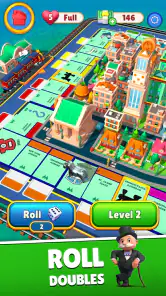
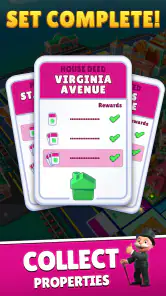
The theme helps most when it gives progress a sense of place. Properties, board imagery and the familiar visual identity make the game feel like a reinterpretation rather than a generic puzzle with a famous name attached. That recognition can be especially useful for new players: they have an immediate idea of the kind of world they are entering, even if the mobile rules are different from the tabletop ones.
However, the theme cannot replace mechanical variety. If someone installs the game mainly because they want buying, trading, bargaining and direct competition over a Monopoly board, the puzzle format may feel like a detour. I had to adjust my expectations before the game clicked. Its identity is strongest when I see it as a puzzle adventure wearing Monopoly clothing, not as a faithful digital board-game table.
That is also where it compares with ordinary alternatives. A conventional match-three or casual puzzle title may offer a cleaner focus on solving patterns, while a digital Monopoly adaptation may better preserve the original rules and social structure. MONOPOLY Match sits between those choices: it offers more thematic personality than an anonymous puzzle game, but less traditional Monopoly strategy than a board-focused alternative.
The best scenario for playing
Short breaks are its natural home
The best scenario is a player with several small gaps in the day and a preference for light, self-contained entertainment. Imagine waiting for a train that is delayed, opening the game for a few minutes, completing a puzzle-focused stretch, and closing it when the announcement arrives. The experience does not require me to organize other players or protect a long block of free time. That is a meaningful advantage over a full Monopoly session.
It also works well as a low-pressure evening game. I can play when I want some interaction but do not have the concentration for a complex strategy title. The familiar theme adds warmth, while the puzzle structure gives my attention something specific to do. For this use, the game feels more satisfying than endlessly scrolling through short videos because I am making decisions and seeing progress rather than only consuming content.
Families may also find the broad age rating inviting, although the ideal experience will still depend on each player’s patience with mobile puzzle design. Someone who enjoys the Monopoly brand but wants a simpler solo activity may be pleased. Someone hoping to sit around one screen and argue over property trades should choose the physical game or a multiplayer-focused alternative instead.
When I would choose something else
I would skip this game when my main goal is social play. The defining pleasure of traditional Monopoly comes from other people: the deals, rivalries, jokes, complaints and unexpected reversals. A puzzle interpretation cannot reproduce that atmosphere simply by using the same visual identity. For a family game night, this would be a poor substitute unless everyone specifically wants a solo-style puzzle experience.
I would also look elsewhere if I wanted a puzzle game with a strongly competitive ranking culture or an especially deep system to master. MONOPOLY Match is easier to approach because it does not demand that level of commitment, but that same accessibility may feel limited to expert puzzle players. Its ideal audience is not necessarily the person seeking the most intricate mechanics; it is the person who wants a recognizable theme and manageable decisions.
Another limitation is the free-to-play context. The game costs nothing to start, but optional purchases range from $0.99 to $99.99 per item. That wide range means I would recommend deciding on a personal spending boundary before getting invested. I prefer to play the early experience without assuming that every obstacle should be solved through a purchase. Anyone uncomfortable with in-app purchase pressure should be especially deliberate about checking the purchase flow before handing the phone to a child.
The trade-offs behind the free model
Free entry is convenient, but attention still has a cost
Being free makes the game easy to try. I do not need to justify a purchase before discovering whether the puzzle interpretation suits me, and that is valuable for a title whose appeal depends heavily on personal taste. The large range of optional item prices, however, changes how I think about long-term play. Even without spending, I need to be comfortable with the possibility that the free route may ask for more patience than a paid puzzle game.
My advice is to treat purchases as optional support for convenience rather than as part of the basic definition of success. I would first learn the normal rhythm of the game, notice which situations actually slow me down, and then decide whether spending improves my enjoyment. Buying impulsively after one frustrating moment is the least useful way to approach a free puzzle title.
This is also where a paid alternative can be better. A one-time purchase may offer a more predictable experience for someone who dislikes recurring prompts or variable spending. MONOPOLY Match has the advantage of a low barrier to entry, but the trade-off is that the player has to manage the boundaries of the free-to-play model personally.
Popularity suggests a healthy audience, not a guarantee of fit
The game has a 4.7 average from around 16 thousand ratings, with more than 2.8 thousand written reviews and over 100 thousand installs. Those figures tell me that it has attracted a substantial audience and that many players respond positively to the concept. They do not remove the need to consider the central trade-off: the experience is built around a specific interpretation of Monopoly, not the complete original game.
I read that response as encouraging for a casual player. It suggests the combination is understandable and appealing to many people. Still, popularity is not a substitute for matching the game to your habits. A player who wants short sessions and a friendly theme may find the audience’s enthusiasm reassuring, while a serious board-game fan may remain disappointed by the change in emphasis.
The release date, November 6, 2025, also places the game in a relatively early stage of its life compared with long-established mobile puzzle brands. I would keep expectations grounded and judge it by the quality of the current experience rather than by assumptions about how large or complete it may eventually become. The version available now is what matters when deciding whether it deserves space on your phone.
Who gains the most from this particular mix
Players who should give it a chance
I think the strongest audience is made up of casual puzzle players who already like Monopoly’s visual world but do not need the original rules reproduced exactly. The game gives them a familiar doorway into short solo sessions. It also suits people who enjoy making small tactical decisions and watching a themed journey develop over time, without committing to a demanding strategy game.
It is a good fit for someone who regularly has five or ten minutes to fill and wants more involvement than passive phone use. The broad age rating makes it approachable for a wide audience, and the free starting point makes experimentation simple. I would also recommend trying it to a player who has bounced off traditional Monopoly because matches felt too long or too dependent on other people’s choices.
For those players, one of the less obvious benefits is emotional pacing. A difficult board-game session can feel like a long sequence of setbacks, while a short puzzle attempt gives me a cleaner chance to reset. I can stop after a satisfying moment instead of waiting for a match to finish. That makes the game particularly useful as a small daily ritual rather than a centerpiece of a gaming collection.
Players who should be cautious
I would be cautious about recommending it to someone who sees the Monopoly name as a promise of exact board-game authenticity. The mobile puzzle structure is the defining idea, and the more strongly you value negotiation, property trading and face-to-face rivalry, the less likely this will satisfy you. A dedicated digital board-game version or the physical game would be a better choice for that purpose.
I would also hesitate for players who dislike in-app purchases on principle. The free price is attractive, but the optional items can reach $99.99 per item, so this is not the kind of game I would leave unrestricted on a child’s device. The Everyone rating describes the broad content audience, but it does not make spending decisions disappear. Setting device-level purchase controls and agreeing on a budget is sensible before regular play.
Finally, expert puzzle fans should try it with realistic expectations. The Monopoly presentation is a major part of the appeal, and that may matter more than mechanical complexity. If you want a demanding puzzle laboratory where every system is built around depth, another category specialist may be more rewarding. Here, the pleasure comes from the balance between recognizable theme, accessible play and short-session progress.
My final recommendation after settling into the rhythm
After spending time with MONOPOLY Match, I see it as a focused reinterpretation rather than a replacement for Monopoly. Its key capability—turning the board-game identity into a compact puzzle experience—works because it respects how people use phones. I can play alone, pause easily and return without needing a table full of players. That is the reason I would recommend it, not any claim that it reproduces the original perfectly.
The game is at its best when I approach it with a clear expectation: a themed puzzle for spare moments, supported by a free-to-start model and optional purchases. I like the way the Monopoly setting gives otherwise small decisions more personality, and I appreciate that the experience can fit around an ordinary day. At the same time, I would keep an eye on spending, avoid rushing through decisions, and choose another option when social competition or traditional board-game strategy is the real goal.
My honest verdict is positive for casual players who want a familiar world with a lighter, puzzle-centered routine. BeeMatch Ltd has made a version that is easy to try and simple to revisit, while still giving careful players reasons to think before tapping. If you want Monopoly atmosphere in short, solo puzzle sessions, this is worth installing; if you want the full table, the deals and the arguments, keep looking for a true board-game experience.
Pros
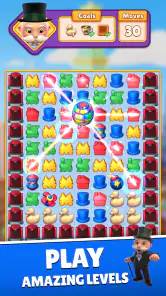
- Fun match-3 gameplay combined with familiar MONOPOLY characters and locations.
- Short levels make it easy to play during quick breaks.
- Regular events add variety and provide extra rewards.
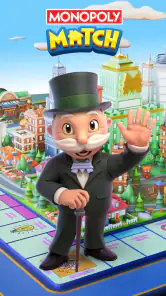
- Colorful visuals and animations give the board a lively feel.
- Progression unlocks new areas and keeps long-term goals engaging.
Cons
- Lives can run out quickly
- forcing pauses or encouraging purchases.
- Some later levels depend heavily on lucky tile combinations.
- Frequent events and offers may feel distracting during normal play.
- The game requires an internet connection for most features.
- Upgrades and boosters can become expensive as progression continues.
- Category
- Puzzle
- Version
- 0.3.14794