Monkey Wrench – Word Search
- 1.60K
- 4.7
- Installs
- 100.00K
- Price
- Free

Screenshots





Analysis by Reviewed
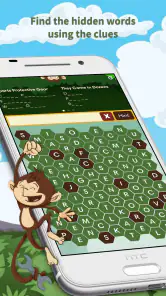
I approached Monkey Wrench as a small, family-friendly word search rather than a game built around spectacle, and that expectation helped me enjoy it. The basic idea is familiar: scan a letter grid, spot hidden words, and mark them as you go. What makes the experience worthwhile is the way the presentation keeps that simple activity approachable. It feels suited to a quiet break, a shared puzzle session, or a few minutes of casual play when I want something more focused than scrolling but less demanding than a competitive game.
This is a free word game from Blue Ox Family Games, Inc., available for Everyone. It has been around since Feb 17, 2016, and its reception remains notably strong, with a 4.7 average from around 5K ratings and roughly 1.6K written reviews. More than 100K people have installed it, which gives the game a useful sense of community without making it feel like a noisy, trend-driven release. Optional in-app purchases range from $0.99 to $9.99 per item, so the free starting point is clear, while anyone who wants to spend more should keep those extras in mind.
A calm first impression built around finding patterns
My first impression was that the game understands the appeal of word searches: the pleasure comes from gradually turning visual clutter into order. There is no need to learn a complicated control scheme. I can begin by looking across rows, then switch to columns, diagonals, or reverse directions as the grid reveals its tricks. That low barrier matters, especially for families, younger players, and anyone who wants a puzzle that explains itself through play.
The pacing is deliberately gentle. A round does not ask me to memorize rules, manage resources, or react instantly to an opponent. Instead, it gives my attention one job and lets me settle into it. That makes the game easy to pick up while waiting for an appointment, relaxing after work, or sharing a device with a child. The trade-off is equally clear: players who need constant novelty, dramatic progression, or a strong competitive layer may find the experience too restrained.
I also like that this kind of game can accommodate different levels of concentration. I can search carefully and treat each puzzle as a small visual challenge, or I can play more casually while chatting with someone nearby. For a family setting, that flexibility is more valuable than flashy presentation. A child can point out possible words, an adult can help trace difficult diagonals, and the puzzle becomes a cooperative activity without needing a formal multiplayer mode.
One practical habit improved my sessions: I stopped searching randomly and began dividing the board into zones. I scan the left side, then the center, then the right, checking each direction before moving on. This prevents me from repeatedly revisiting the same promising letters. It is a small method, but it makes the game feel less like guessing and more like solving, particularly when several words share similar letters.
The visual language keeps the puzzle readable
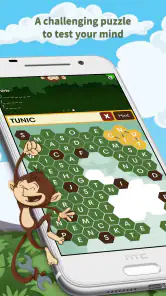
The most important artistic decision in a word search is not decoration; it is legibility. The letters need to remain distinct while the board still feels pleasant to look at. Monkey Wrench works best when I treat its visual style as a frame for the puzzle rather than the main attraction. The setting and artwork support the idea of a light family pastime, giving the search a friendlier identity than a bare grid of characters.
That balance is important because excessive decoration would work against the central mechanic. When I am looking for a word hidden diagonally or backward, I need the board to stay visually calm. The game’s approachable presentation helps maintain that focus. It does not turn every round into a dramatic event, and that restraint suits a title whose satisfaction comes from recognition rather than spectacle.
The setting also affects how I read the game’s personality. This is not a dark mystery, a high-pressure race, or a story-led adventure. Its world language is playful and domestic, closer to a puzzle book shared at a kitchen table than to a large fictional universe. That makes the game especially easy to recommend across age groups. I do not need to explain a complicated premise before handing it to someone else.
There is a useful design trade-off here. A more elaborate visual theme might make the game more memorable, but it could also distract from letter hunting. Monkey Wrench gains consistency by letting the word grid remain the star. I would not choose it for deep lore or rich character work; I would choose it because the presentation does not get in the way of the activity I opened it to enjoy.
For players with visual fatigue, my advice is to play in short sessions and avoid treating every puzzle as a test of endurance. Word searches naturally require repeated scanning, and even a clean presentation cannot remove that strain. The game is at its best when I pause between rounds rather than forcing myself to finish a difficult board while my attention is fading.
Sound and rhythm make the quiet moments work
The audio side of a word search has a difficult job. It should give feedback when I find something, but it should not overpower the calm rhythm that makes the genre appealing. Here, the overall mood is better understood as a gentle loop of searching, recognizing, marking, and moving on. The sound design supports that rhythm instead of trying to manufacture excitement that the mechanics do not need.
I found that the game’s quiet pacing makes it suitable for situations where I want a little stimulation without a demanding soundtrack. It can sit comfortably beside a relaxed evening or a short waiting period. That does not mean every player will prefer the same audio balance. Some people will want a more energetic score or stronger reward signals, while others will appreciate not being pushed from one moment to the next.
The rhythm also changes depending on how I play. At first, I move slowly, checking each candidate word and confirming its direction. Once I recognize common patterns, the pace becomes more fluid. I start at unusual letters, look for repeated clusters, and use the word list as a set of visual targets rather than reading every square equally. The game rewards this gradual improvement in attention without needing complicated tutorials.
A useful technique is to avoid tapping at every possibility. I first trace a suspected word with my eyes, then commit only when the full sequence makes sense. That reduces accidental selections and keeps the search deliberate. It is particularly helpful when a word appears close to another possible line, because rushing can make the board feel more confusing than it really is.
Still, the relaxed rhythm can become repetitive if I play for too long in one sitting. This is not a flaw unique to this title; it is part of the word-search format. The important question is whether the game makes short sessions satisfying, and in my experience it does. I would treat it as a repeatable casual activity rather than a game designed to occupy an entire afternoon.
Why the mechanics fit the family audience
The core mechanic is immediately understandable, but that simplicity should not be mistaken for a complete lack of skill. Good play depends on visual scanning, direction awareness, and patience. Words can hide in ways that encourage me to change my search pattern instead of staring at the same line. The best moments arrive when a word suddenly becomes visible after I stop looking for it in the obvious direction.
The controls suit touch screens because the main interaction is direct: identify a sequence and mark it. That connection between seeing the answer and selecting it makes the game feel natural on a phone or tablet. It also makes the title accessible to players who may not enjoy virtual buttons, timing controls, or complex menus. A parent can introduce the game quickly, and a child can understand the objective without reading a long explanation.
Where the game fits less well is with players who expect a strong sense of campaign progression. A conventional word search offers satisfaction through completion, not through a large narrative arc or a deep build system. If I want character upgrades, strategic combat, or a story that changes based on my decisions, I would look elsewhere. If I want a focused mental warm-up, this format is much more appropriate.
The family angle is one of its strongest practical qualities. The Everyone age rating reflects the approachable nature of the activity, and the game can work for mixed-age play because the adults do not need to dominate the session. A useful household routine is to let one person choose the next target while another searches the board. That turns a solitary puzzle into a small conversation exercise and can help younger players learn how to scan systematically.
There is also value for language learners, although I would use it as a supplement rather than a complete study tool. Finding a word in a grid may reinforce spelling and recognition, but the game’s main purpose is searching, not explaining definitions or teaching grammar. Someone looking for structured vocabulary lessons would be better served by a dedicated learning app. Someone who already knows the words and wants a relaxed way to practice recognition may enjoy it.
The optional purchases deserve a practical note. Since the game is free to start, I can evaluate its basic appeal without committing money. If I am considering an in-app item, I would first decide whether I am buying convenience, additional enjoyment, or simply removing a moment of frustration. The listed range of $0.99 to $9.99 per item makes that decision worth making consciously, especially when the core activity is intentionally simple.
Where it stands beside familiar word-search alternatives
Compared with a printed puzzle book, Monkey Wrench is more convenient because the board is always available on a phone and I do not need a pen. The digital format also makes it easier to play while traveling or during a short break. A book still has advantages: it offers a tactile experience, no screen fatigue, and a clear sense of physical progress. I would choose paper for a long offline session and this game for quick access.
Compared with crossword games, the experience is less dependent on clues, vocabulary recall, and general knowledge. That makes it more welcoming when I want to relax rather than prove that I know a particular fact. Crosswords offer more linguistic depth, though, and they are the better choice if I want wordplay, definitions, or layered reasoning. Monkey Wrench is about locating patterns, not constructing answers from clues.
Compared with timed word games, it is much less stressful. I can take a second look at a suspicious line without feeling that a countdown is forcing my hand. The cost of that calm is reduced urgency. Players who enjoy racing a clock or competing for a high score may find the game underpowered, while players who dislike pressure will likely see the slower approach as a major benefit.
Its strongest niche is therefore quite specific: a friendly, visually focused word search for casual individual play or informal family use. It does not need to replace every other word game. It succeeds when I want the familiar comfort of hidden words with the convenience of a mobile format and a presentation that keeps the mood light.
Small habits that make difficult boards less frustrating
When I get stuck, I do not keep staring at the whole grid. I narrow the task by choosing a longer target, locating its least common letter, and checking the surrounding directions. Longer words often provide a clearer structure than short ones, which can appear accidentally in many places. This approach turns an overwhelming board into a series of manageable searches.
I also check reverse reading earlier than I used to. It is easy to search left to right and top to bottom because that is how we normally read, but hidden words become harder when I assume they must follow familiar writing direction. Looking for the final letter first is a useful reset, particularly when the beginning of a word blends into several neighboring sequences.
Another effective workflow is to use completed selections as landmarks. Once I have marked a few words, I can let my eyes move around those areas with a fresh reference point instead of treating every square as equally important. This is not a shortcut that removes the puzzle; it is a way to manage attention. It also makes the game more comfortable during brief sessions when I do not want to spend several minutes rechecking the same corner.
For a shared session, I would avoid having everyone search the entire board at once. Giving each player a region or a different target keeps the activity organized and prevents arguments over who spotted a word first. The game’s simple rules make this kind of house rule easy to introduce, which is another reason it works well for families.
Who should play it and who should skip it
I would recommend Monkey Wrench to anyone who enjoys word searches, wants a low-pressure phone game, or needs an activity that can be explained in seconds. It is particularly suitable for families because the age rating is Everyone and the interaction does not depend on fast reflexes. It can also be a pleasant choice for players who prefer quiet concentration to competition.
I would be more cautious about recommending it to someone who needs constant progression, rich storytelling, or a large variety of mechanics. The game’s appeal comes from refining the same central activity, not from transforming it into something dramatically different. Players who quickly tire of scanning letter grids may enjoy the first sessions but should not expect the format alone to remain endlessly fresh.
I would also skip it when I want a serious vocabulary challenge. A crossword, an anagram game, or a language-learning tool would offer more demanding work with meanings and word formation. This title is better for recognizing hidden sequences than for expanding what I know. That distinction matters because the store summary presents a broad family appeal, but the actual pleasure is quite focused and visual.
My atmosphere verdict after spending time with it
Monkey Wrench creates a coherent mood by keeping its art direction, sound, and pacing subordinate to the act of searching. The result is not an ambitious adventure world, and it does not pretend to be one. Instead, it offers a comfortable digital puzzle space where the board remains readable, the rhythm stays calm, and the reward comes from noticing what was hidden in plain sight.
Blue Ox Family Games, Inc. has chosen a format that benefits from restraint. The game is free to begin, carries an Everyone rating, and has built a strong response with a 4.7 average and over 100K installs. Those figures are useful context, but my recommendation rests more on the experience itself: it is easy to understand, pleasant in short sessions, and flexible enough for solo or family play.
My honest recommendation is to try it when you want a calm word search rather than a full-scale game. I would keep expectations centered on visual discovery, not narrative depth or competitive intensity. For a quick break, a shared puzzle at home, or a gentle way to exercise attention, it fits naturally. For players who need constant novelty or a more substantial language challenge, a different word-game style will be the better match.
Pros
- Simple controls make it easy to start searching immediately.
- Helpful hints can assist when a word is difficult to spot.
- Short puzzles are convenient for quick breaks or casual play.
- Word themes add variety and keep rounds from feeling repetitive.
- Suitable for players who enjoy relaxed
- low-pressure puzzle sessions.
Cons
- Some puzzles may feel too easy for experienced word-search players.
- Repeated layouts can reduce the challenge over longer play sessions.
- Small word lists may make certain rounds feel brief.
- Ads may interrupt the experience
- depending on the version and device.
- Limited competitive features may disappoint players seeking leaderboards.

- Category
- Word
- Version
- Varies with device