Mist: Offline Zombie Survival
- 1.37K
- 4.4
- Installs
- 1.00M
- Price
- Free

Screenshots
Analysis by Reviewed
Mist: Offline Zombie Survival is the kind of role-playing game I open when I want a tense apocalypse without depending on a connection. Developed by Euphoria Horror Games, it puts survival ahead of comfort: the setting is hostile, resources feel important, and the mood constantly suggests that a careless decision can cost more than a few hit points. I found its strongest quality in the way its visual direction, sound, and pacing support the central survival idea instead of feeling like separate decorations.
This is a free game, but it is aimed at a mature audience with a 17+ content rating. It has reached over a million installs and holds a 4.4 average from roughly fifty-three thousand ratings, which gives it a substantial audience for a focused offline apocalypse experience. I would not describe it as a relaxed zombie-themed adventure. It is better suited to players who enjoy pressure, solitary exploration, and making do with limited options.
How Mist Builds Its Playable Mood
A first impression built around isolation
My first impression was shaped less by the promise of constant action and more by the feeling of being cut off. The game’s premise places me in a dead world where survival is personal rather than social. That choice matters because it changes how I read every area. A quiet stretch is not simply empty scenery; it becomes a warning that something may be waiting beyond the next piece of cover or inside the next abandoned space.
The presentation works best when it gives the environment room to create unease. Instead of making every moment loud, Mist lets uncertainty do part of the work. I pay attention to routes, nearby threats, and the value of what I am carrying. That makes even ordinary movement feel connected to the role-playing side of the game. I am not only moving from one encounter to another; I am trying to preserve enough control to handle whatever comes next.
That opening mood also tells me who should avoid the game. If you want a fast, cheerful zombie shooter with constant rewards and a clear power fantasy, this will probably feel too severe. The game is more convincing when approached as a survival-focused RPG in which atmosphere is part of the challenge. Players who enjoy horror games that leave space for anticipation will understand its appeal much faster.
A dead world communicated through visual choices
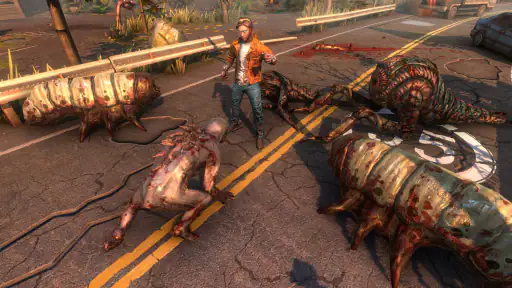
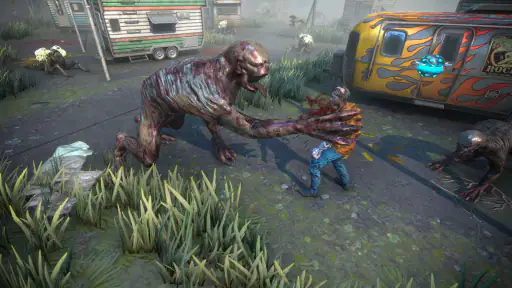
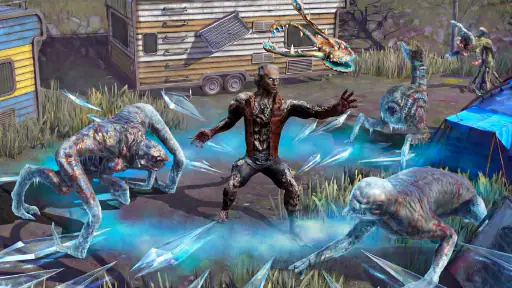
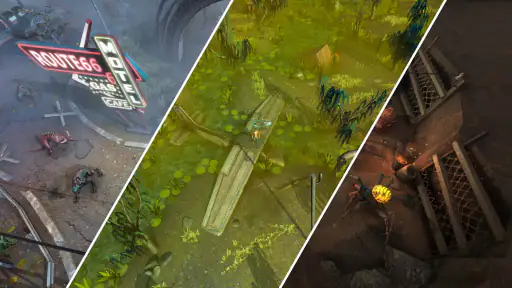
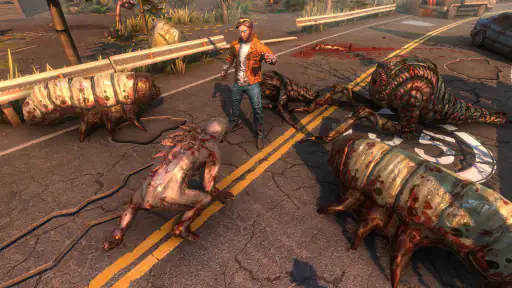
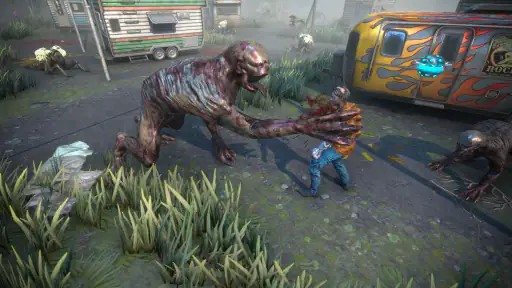
The setting has a useful visual language: bleak spaces, damaged surroundings, and a general sense that normal life has stopped. I like that the world does not need to explain its condition through long speeches every few minutes. The environment carries much of the story’s emotional weight. Its worn-down appearance makes supplies, shelter, and safe movement feel meaningful rather than decorative.
For me, the most effective art direction is not the individual image of a monster. It is the consistency between the surroundings and the decisions the game asks me to make. A threatening landscape supports cautious play. A sparse location encourages me to think about whether I should continue or prepare first. When the visual tone and the survival mechanics point in the same direction, the world feels more coherent.
There is a practical benefit to this approach during short sessions. I can return to the game after a break and understand the emotional situation quickly. The setting immediately puts me back into a defensive mindset. That is useful for someone playing on a phone during a quiet evening, because the game does not need a long warm-up before its mood becomes clear.
The role of sound in making empty spaces uncomfortable
Sound is especially important in a game built around isolation. Visuals can show a ruined location, but audio determines whether that location feels merely abandoned or actively unsafe. In my experience, the quieter stretches are valuable because they make every noticeable sound feel more significant. The absence of constant noise gives the world a nervous rhythm.
I recommend playing with audio enabled rather than treating it as optional background decoration. The atmosphere loses some of its force when I reduce the game to silent movement and visual checks. Sound helps me stay mentally present, particularly during exploration when the screen may not show an immediate threat. It also supports the feeling that danger is not always placed directly in front of me.
The trade-off is that this mood can become tiring if I am looking for a long, energetic session. Mist’s sound design serves tension more than celebration. It does not always provide the kind of upbeat feedback that makes repeated combat feel effortless. I see that as a deliberate fit for the setting, but it means the game works better in focused bursts than as a background activity while I watch something else.
Pacing that turns patience into a useful skill
The pacing is one of the clearest differences between this game and more conventional action RPGs. Mist does not need every minute to be packed with enemies to keep me engaged. Its slower sections create room for planning, and that planning gives the next encounter more weight. I am more likely to remember a fight when I had to decide whether to risk reaching it, rather than simply being pushed into a sequence of battles.
This rhythm also creates a realistic everyday use case. If I have a short break, I can use it to explore carefully, assess my position, or make a small amount of progress instead of needing to complete a long story chapter. On the other hand, a player who wants instant action may interpret the same pacing as a lack of momentum. The game asks for patience before it rewards confidence.
One practical habit improved my sessions: I stopped treating every visible route as an invitation. I first considered what I might need if the area became dangerous and whether continuing would leave me with enough options afterward. That small change made the game feel less like trial and error and more like survival role-playing. The environment became something to read, not just something to cross.
Where the role-playing mechanics fit the atmosphere
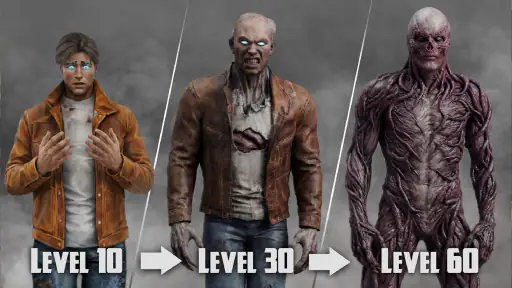
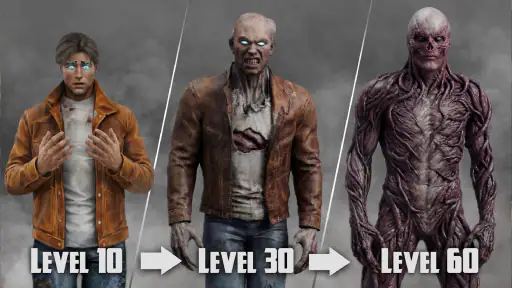
The role-playing framework makes sense because survival is rarely only about reflexes. I need to think about the condition of my character, the value of available resources, and the consequences of spending something too early. The mechanics are strongest when they reinforce the fiction of a lone survivor trying to remain capable in a world that offers very little certainty.
I found that the best way to approach progression is to value reliability over short-term excitement. A powerful option can be tempting, but preserving a dependable answer for a difficult situation is often more useful than using everything immediately. This is not a game I would play by grabbing every reward and pushing forward without looking back. Its systems encourage a more deliberate relationship with supplies and danger.
That design makes Mist a good fit for players who enjoy resource decisions, but it may frustrate people who dislike being asked to retreat or wait. The game’s tension depends partly on limits. If I always had an easy solution, the setting would lose much of its threat. The same limits that create atmosphere can therefore feel restrictive when I am tired or simply want a casual session.
Offline play and the value of a self-contained session
The ability to play without an internet connection is more than a line in the game’s identity; it changes when I can realistically use it. I can treat it as a travel companion, a game for unreliable service, or something to play away from notifications and online pressure. The solitary design supports this especially well because the experience does not feel like I am missing a social layer every time I play alone.
Offline access also makes the pacing easier to appreciate. I am not waiting for other players, managing a team schedule, or checking whether an event is active. I can enter the world, make a few careful decisions, and leave when I am done. For a player who wants a private survival game rather than a competitive service, that is a meaningful advantage.
There is still a difference between offline convenience and effortless accessibility. The mature tone, survival pressure, and slower rhythm may not suit every travel session. If I am looking for something to play with one hand for a minute or two, a simpler arcade game is likely a better choice. Mist is offline, but it is not mindless.
How it compares with familiar zombie RPG alternatives
Compared with online zombie RPGs, Mist feels more contained and personal. Online alternatives often focus on social progression, regular events, competitive rankings, or a steady stream of new rewards. This game’s appeal is almost the opposite: I am left with the world, its dangers, and my own decisions. That makes it less socially rich, but also less demanding in terms of connection and ongoing participation.
Compared with a pure action game, it gives atmosphere and preparation more influence over the experience. A fast shooter may deliver sharper immediate excitement, while Mist asks me to notice what happens before the fight. If I enjoy aiming, rapid reactions, and constant spectacle above all else, another genre may satisfy me more. If I like the tension created by uncertainty and limited resources, Mist has a stronger argument.
It also differs from lighter survival games that use a colorful presentation to soften the subject. Here, the mature rating is consistent with the darker direction. I would choose it over a playful zombie game when I want the setting to feel oppressive, but I would not recommend it to someone seeking a family-friendly adventure or a humorous take on the apocalypse.
Small decisions that improve the experience
My most useful approach was to separate exploration from panic. When something went wrong, rushing forward usually made the situation harder to understand. Pausing mentally, checking the surroundings, and deciding what mattered most produced better results than trying to react to every problem at the same speed. The game rewards composure because its atmosphere is designed to make me feel less composed.
I also learned to judge progress by stability rather than distance. Reaching a new place is not automatically a success if I arrive with no useful options left. A safer, smaller gain can be more valuable than a dramatic push into unknown territory. This is a non-obvious strength of the design: it turns retreat and preparation into meaningful choices instead of signs that I have failed.
Finally, I found it useful to play with a clear intention for each session. One session might focus on learning an area, another on improving my readiness, and another on taking a calculated risk. That keeps the slower pacing from feeling directionless. It also helps answer a common concern about offline games: yes, Mist can work in short sessions, but I enjoy it more when I give each session a purpose.
Monetization and practical expectations
Mist is free to start, with in-app purchases ranging from $0.99 to $134.99 per item. That range is important to keep in mind before committing to the game. I would approach the purchase system carefully and decide in advance whether I am comfortable spending money, especially because survival games can make convenience feel attractive when progress becomes demanding.
My advice is to first judge the core loop without treating purchases as part of the solution. Learn whether the atmosphere, pacing, and resource decisions are enjoyable on their own. If the game only feels comfortable after paying, that is a sign that it may not be the right fit for your preferences. A free entry point is useful, but it does not remove the need to think about spending.
The current version is 1.8.13, and the game supports devices running Android 7.0 or later. Those details make it accessible to a broad range of Android users, though the actual comfort of play will still depend on the device and on how well its controls suit you. I would test the experience during a calm session rather than deciding from a quick opening minute, because much of its appeal comes from the gradual combination of setting, sound, and risk.
Who should play it, and who should skip it
I recommend Mist to players who want a dark offline RPG with a solitary survival mood. It is a strong match for someone who enjoys exploring damaged environments, listening for danger, managing limited choices, and letting tension build instead of demanding nonstop combat. It is also a sensible pick for people who travel often or play where a stable connection is not guaranteed.
I would skip it if your priority is cooperative play, bright presentation, rapid rewards, or a gentle introduction to role-playing games. The mature tone is not just a label; it affects the emotional texture of the entire experience. Players who dislike resource pressure may also find its best qualities inconvenient, because the same restrictions that make the world believable can slow down progress.
Parents should pay attention to the 17+ rating before allowing younger players to access it. Adults who enjoy horror and survival themes will understand the intended audience more clearly. I would also suggest headphones only when you are comfortable with a tense atmosphere, since the sound is most effective when it has your full attention.
My atmosphere verdict
After spending time with Mist, I see it as a focused action RPG that understands the value of consistency. Its art direction makes the world feel damaged, its sound gives empty spaces a pulse, and its pacing lets uncertainty become part of play. The mechanics are not separate from that mood; resource decisions, cautious movement, and deliberate progress all help sell the idea of surviving alone.
It is not the right game for every zombie fan, and its slower, more demanding style can become a barrier if I want immediate entertainment. The purchase range also deserves a careful look before I spend anything. Still, the free entry point, offline design, and coherent mature atmosphere give it a clear identity rather than making it another interchangeable undead game.
My final recommendation is simple: try it if you want the apocalypse to feel quiet, hostile, and personal. Mist: Offline Zombie Survival is at its best when I stop chasing constant action and start treating every sound, route, and resource as part of the story. For the right player, that restraint creates a more memorable survival experience than a louder and busier alternative.
Pros
- Works without an internet connection after installation.
- Crafting and scavenging make each supply run feel meaningful.
- Dark atmosphere and sound design create genuine survival tension.
- Simple controls are well suited to touchscreen play.
- Exploration rewards careful planning rather than constant combat.
Cons
- Limited enemy variety can make encounters feel repetitive over time.
- Inventory space may feel restrictive during longer expeditions.
- Progress can become grind-heavy when upgrading equipment.
- The bleak visual style may reduce clarity on smaller screens.
- Some players may find the slow pace frustrating at first.

- Category
- Role Playing
- Version
- 1.8.13