Max Payne Mobile
- 4.18K
- 3.1
- Installs
- 500.00K
- Price
- $2.99

Screenshots
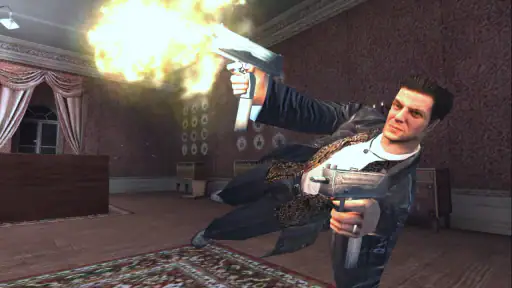


Analysis by Reviewed
Some games are easy to share around a household because anyone can pick them up for a few minutes. Max Payne Mobile is different. It is a story-driven arcade shooter built around a darker, more demanding mood, so I see it less as a casual family game and more as a personal game that happens to work well on a shared phone or tablet when everyone understands who it is for. I spent time with it as a mobile version of Rockstar Games’ well-known action title, and my overall impression is that it still has a strong identity, although its age and touch controls are impossible to ignore.
The first thing I noticed is how unusual its tone feels beside most mobile arcade games. This is not a bright score-chasing experience designed to be played silently while waiting in a queue. It asks for attention, follows a grim crime story, and uses slow-motion gunfights as its central hook. That makes it satisfying when I have a quiet stretch of time, but a poor fit for a child borrowing a device for a quick distraction. The Mature 17+ rating is important here, not a small label to overlook when several people use the same screen.
How Max Payne Mobile Works on a Shared Device
A household scenario where it makes sense
Imagine a shared tablet in the living room. One adult uses it for browsing, another person plays games after dinner, and a teenager occasionally asks to try whatever is installed. In that situation, this game can work well if the owner treats it as a single-player title with a clear personal boundary. I would install it for the person who actually wants a cinematic shooter, rather than presenting it as a general-purpose game for everyone in the home.
That distinction matters because the game’s appeal depends on concentration. When I am moving through a tense section, interruptions are more frustrating than they would be in a simple puzzle or endless runner. A short session can also end at an awkward point, especially if I am in the middle of a fight and someone needs the device. The best shared-device routine is to agree on a time window, finish a safe stopping point, and avoid treating the game like an always-available communal activity.
For a household with several players, I would also set expectations about progress before anyone starts. A story campaign feels personal: one person may want to discover the next scene without another player jumping ahead. If the same installation is used by different people, coordination becomes more important than it would be in an arcade game based only on high scores. Even without inventing a separate family system, a simple verbal rule—one player, one continuing run—prevents many arguments.
What the mobile format gets right
The mobile release preserves the basic reason people still remember this game: movement and shooting are tied to dramatic slow-motion action. On a touch screen, that idea remains immediately recognizable. I can move through a space, react to enemies, and use the slow-motion style to turn a dangerous encounter into a controlled sequence. It feels more deliberate than many mobile shooters, which often focus on rapid tapping and automatic assistance.
The advantage is strongest when I play in short, focused sessions with the device held steadily. The game has enough atmosphere to make headphones appealing, although I would be mindful of other people in the room. In a shared household, sound becomes part of the coordination problem: a late-night session with loud action can disturb someone even if the player is being careful with the screen.
More From Our News Desk

Clash of Clans Is Won Between the Battles

Android Auto Makes the Case for Quieter Car Software

MobiOffice: Transforming Mobile Productivity with Seamless Integration

EA SPORTS FC™ Mobile Soccer: Redefining Mobile Sports Gaming

How Microsoft OneDrive Became a Mobile Productivity Giant

How Google Translate Breaks Language Barriers Effortlessly
Rockstar Games is the developer, and the mobile adaptation carries the character of a traditional console and computer action game rather than trying to become a lightweight phone-only experience. That is a strength for players who want a substantial campaign on a mobile device. It is also the source of some friction, because older control ideas do not always feel as natural on glass as they do with physical buttons.
Setting boundaries before installation
The purchase decision deserves a little thought when a device is shared. The listed price is $2.99, and in-app purchases are shown at $2.99 per item. I would not assume that every household member understands who is responsible for a purchase simply because the game is already on the device. The cleanest approach is to decide in advance whether the owner or one named player is the person who manages the installation and any store activity.
I also recommend checking the device’s account situation before downloading. A shared tablet may have more than one person using the same store account, while a personal phone may be tied to one owner. That can affect who sees the game in the library and who expects to have access to it later. I would keep the conversation practical: identify the owner, identify the intended player, and avoid letting a child treat the device as permission to buy or install anything independently.
The game was released on June 13, 2012, so I would approach it as an older mobile adaptation rather than a new release designed around current phones. Its current version is 2.1.131, and the minimum operating-system requirement is iOS 9. That makes it accessible to some older Apple devices, but compatibility is not the same as comfort. A device may meet the basic system requirement and still offer a less pleasant experience if its screen is small, its battery is tired, or its touch response is inconsistent.
Control habits that make a real difference
My most useful adjustment was to stop treating the touch layout like a console controller and instead build a repeatable hand position. I keep the device supported rather than trying to play one-handed, and I avoid shifting my grip during a fight. That sounds obvious, but the game punishes small mistakes more than a relaxed arcade title does. If a thumb drifts over an action area at the wrong moment, the result can be a missed shot or an unnecessary hit.
I also prefer learning the rhythm of encounters instead of rushing forward. The slow-motion mechanic is not merely decoration; it gives me a way to manage pressure and create a brief advantage. On a shared screen, this is another reason to avoid handing the game to someone who has never played it and expecting instant fun. A new player may need a few attempts to understand movement, aiming, and timing, while an experienced player can make the same scene look much smoother.
One practical trade-off is screen size. A larger tablet gives my fingers more room and makes the action easier to read, but it is less convenient to hold for a long session. A phone is easier to carry and more private in a shared home, yet the controls can feel crowded. I would choose the device based on the player’s hands and patience, not simply on which device has the newest processor.
Coordinating progress without spoiling the campaign
When more than one person wants to play, I would establish a basic progress rule before the first session. Do not let one player continue the story while another assumes the game is waiting for them. A shared note or a quick message saying “I stopped after this section” is enough to preserve the experience. This is particularly useful when a parent and teenager alternate on the same tablet, because the game’s appeal includes discovering what happens next rather than only improving a score.
I would also avoid starting a session when the device is likely to be reclaimed suddenly. The action is not ideal for a player who must put the screen down every few minutes. If someone needs the tablet for homework, a video call, or navigation, the game should wait. This sounds like ordinary household etiquette, but it directly affects enjoyment because a campaign shooter loses momentum when every encounter is interrupted.
For a player who wants a quick, repeatable challenge, a conventional endless arcade game may be a better shared-device choice. Those games usually tolerate handoffs more gracefully. Max Payne Mobile is better for the person who wants to settle in, follow a narrative, and improve at a particular style of action. That is the key comparison I would make before installing it.
Age, trust, and the Mature 17+ label
The Mature 17+ content rating should shape the household decision from the beginning. I would not install this as a surprise on a device used by younger children, and I would not rely on the fact that the game is old or available on a phone to make it appropriate for everyone. The tone, violence, and adult subject matter are part of its identity, so removing the age context would give a misleading impression of what the experience is like.
There is also a trust issue beyond the content itself. A teenager may be allowed to play mature games, while a younger sibling may not, and a shared device makes that distinction harder to enforce through casual habits alone. I would explain the rule clearly and keep the game associated with the approved player’s time rather than leaving it open for anyone to explore. The goal is not to make the household feel heavily managed; it is to prevent an accidental mismatch between the game and the person using the screen.
The rating also affects where I would play. This is not the kind of title I would start in a room where younger children are watching over my shoulder. Even if the player is old enough, other people nearby may not want to see or hear mature action scenes. A private session with headphones, at a reasonable volume, is a more considerate setup than treating the game as living-room background entertainment.
Who will enjoy it, and who should skip it?
I think it suits players who enjoy focused single-player action, noir-influenced storytelling, and the satisfaction of mastering a demanding touch interface. It is especially appealing if you remember older action games and want to revisit that style on a mobile device without committing to a console session. The slow-motion gunplay gives it a recognizable personality, and the campaign structure makes it feel more substantial than a disposable arcade download.
I would skip it if you want a calm game, a child-friendly game, or something that works equally well for five-minute handoffs between family members. I would also hesitate if touch controls regularly annoy you. A Bluetooth controller might improve the physical feel for some players, but I would not buy extra hardware solely on the assumption that it will transform the experience. The game remains an older mobile adaptation, and a controller cannot change every design decision made for the original release.
The average rating is 3.1 from around 45 thousand ratings, with roughly 4.2 thousand written reviews. I read that as a sign to keep expectations measured rather than as a reason to dismiss the game. A lower average can reflect the gap between a respected older title and the realities of playing it on modern mobile hardware. I would judge it mainly by whether you value the campaign and atmosphere enough to accept occasional control friction.
Everyday use: a realistic session plan
My preferred household routine would be a planned evening session on the approved player’s device, with the game played for a defined stretch and the tablet returned afterward. Before beginning, I would make sure the battery is adequate, the room is not being used by younger viewers, and nobody else needs the screen immediately. During play, I would stop at a natural break rather than quitting in the middle of a tense encounter.
If I were sharing the device with another adult, I would agree that each person gets separate turns and that nobody advances the other person’s story without permission. If a teenager were using a parent’s phone, I would make the purchase and age expectation explicit. These small arrangements do more for the experience than pretending the game is naturally designed for communal play.
One less obvious benefit of this approach is that it protects the game’s pacing. Max Payne Mobile is more enjoyable when I remember what is happening and have enough uninterrupted attention to respond to its action. A household schedule may sound restrictive, but in practice it makes the game feel more rewarding because each session has a clear purpose instead of being repeatedly abandoned.
How it compares with other arcade choices
Compared with an endless runner, this game offers more narrative direction and less instant replayability. Compared with a casual shooter, it asks for more patience and gives greater weight to positioning and timing. Compared with a current console-style mobile release, its older design can feel less polished in the way controls and menus fit a touch screen. Those are not minor distinctions: they determine whether the game feels like a memorable campaign or an awkward relic.
Its strongest alternative is not necessarily another shooter. If your priority is shared use, quick turns, or broad age suitability, a puzzle or family arcade game will probably fit your household better. If your priority is a serious solo action story, this title has a clearer personality than many interchangeable mobile games. I would choose it for atmosphere and campaign focus, not because it is the easiest game to pick up.
My household verdict
After weighing the experience, I see Max Payne Mobile as a good personal purchase for an adult or suitably mature player who wants classic action on an Apple mobile device and is willing to adapt to touch controls. The developer’s name and the game’s reputation may attract attention, but the real question is whether you want an older, focused campaign rather than a frictionless modern mobile pastime.
For shared households, my recommendation comes with clear conditions: keep the intended player and account owner obvious, respect the Mature 17+ rating, coordinate progress, and choose a device that gives the controls enough room. I would not present it as a family game, and I would not leave age boundaries to chance. With those expectations in place, it can be a rewarding evening game rather than a source of confusion.
My final view is favorable but selective. The slow-motion action still gives the title a distinctive feel, and the mobile format makes that campaign convenient to revisit. At the same time, the rating, older release, touch-screen limitations, and shared-device complications are genuine considerations. Choose it when you want a mature solo arcade shooter with a strong identity; choose something else when convenience, child-friendly access, or effortless handoffs matter more.
Max Payne Mobile Frequently Asked Questions
Who developed Max Payne Mobile, and what kind of game is it?
Max Payne Mobile is an arcade game developed by Rockstar Games. It brings the award-winning Max Payne title to Android mobile devices, offering a mobile way to play this established action game. If you are deciding whether it suits you, consider that it is a mature-rated game and a paid download rather than a free arcade title.
What Android version do I need to play Max Payne Mobile?
The Android version requires Android 9 or later. Even if your phone meets that operating-system requirement, it is sensible to check the game’s compatibility on its Google Play page before buying, since support can depend on the device. Confirm that your operating system is up to date and that you have enough available storage for the download and installation.
What is the age rating for Max Payne Mobile?
Max Payne Mobile is rated Mature 17+, so it is intended for adult players rather than younger children. Its crime-focused story and action are part of a darker, more serious experience than a light arcade game. Check the age rating before downloading, especially if the game will be used on a shared family device.
How much does Max Payne Mobile cost, and are there in-app purchases?
Max Payne Mobile costs $2.99, making it a premium game rather than a free download. In-app purchases are listed at $2.99 per item, so review the purchase details shown on your device before confirming anything. The store price and purchase terms are worth checking at download time, particularly if more than one person uses the same account.
What is Max Payne Mobile?
Max Payne Mobile is the Android and iOS adaptation of Remedy Entertainment’s classic third-person action game. It follows Max Payne, a New York detective investigating a conspiracy involving organized crime, corruption, and a dangerous designer drug. The mobile version preserves the original cinematic storytelling, noir atmosphere, bullet-time shooting, and mission-based campaign in a format designed for touchscreen devices.
Pros
- Faithful recreation of the classic third-person shooter
- Excellent bullet-time mechanics make combat feel cinematic
- Strong noir atmosphere with memorable comic-style storytelling
- Supports external controllers for more comfortable aiming
- Works offline after the initial game download
Cons
- Touch controls can feel awkward during fast firefights
- The dated visuals may disappoint players expecting a modern remaster
- Requires substantial storage space for the full installation
- Some levels have repetitive shooting and backtracking
- May not run smoothly on older phones or tablets
- Category
- Arcade
- Version
- 2.1.131