GTA: Vice City - Definitive
- 277.00
- 3.7
- Installs
- 5.00M
- Price
- Free

Screenshots

Analysis by Reviewed
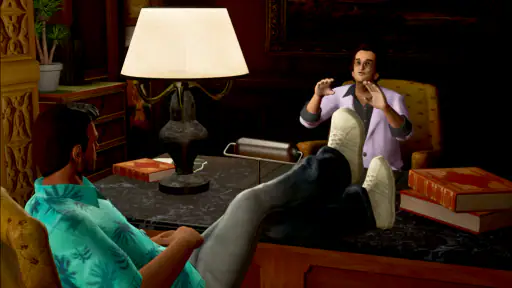
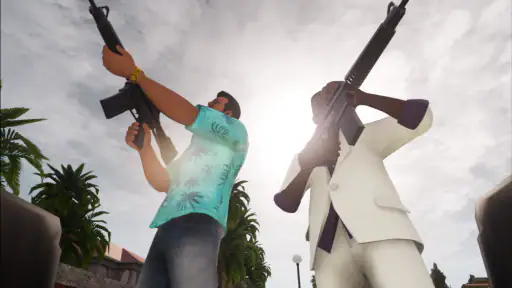
GTA: Vice City - Definitive is the kind of action game that makes a strong first impression before I have even settled into its missions. Rockstar Games places the adventure in a vividly stylized 1980s setting, and the result feels less like a neutral backdrop and more like a complete playable mood. Bright colors, fast cars, loud personalities, and a constant sense of movement give every trip across the city a recognizable identity.
I found the game most appealing when I stopped treating it as a straight line from one objective to the next. The missions are important, but the real pleasure comes from moving through Vice City, noticing how the different districts change the tone, and letting the soundtrack and visual design carry me between bursts of action. It is a free action game for mature players, although optional in-app purchases cost $19.99 per item.
My short version: this is a characterful open-world crime adventure whose atmosphere remains its greatest strength, while its older design habits can make the experience less comfortable than a modern action game.
A first drive through a city with a very clear personality
My first impression was shaped by the contrast between freedom and structure. I can wander, find a vehicle, explore a new street, or head directly toward the next mission. At the same time, the game constantly nudges me toward dramatic situations. That balance gives the opening hours an easy rhythm: a short drive becomes a chase, a simple objective becomes a shootout, and a routine journey can turn into an excuse to explore another part of town.
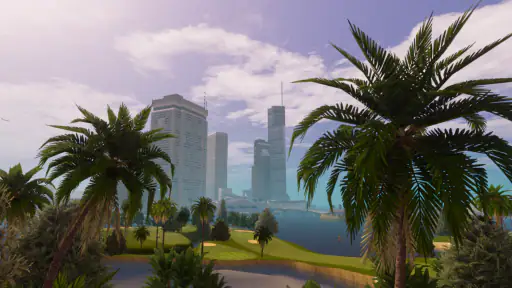
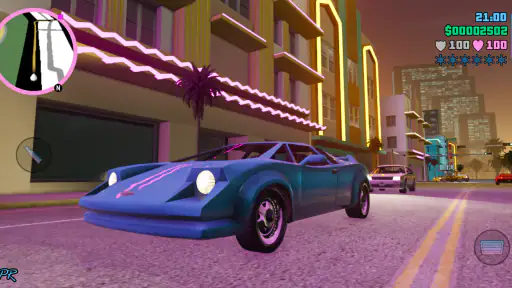
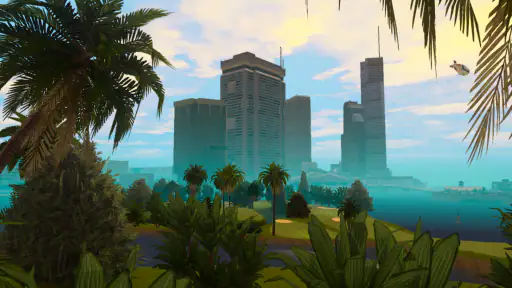
The city is not presented as a realistic simulation. It is designed as a heightened version of the 1980s, with visual choices that favor strong silhouettes, saturated color, and memorable locations. That exaggeration helps the world remain readable while I am driving quickly. I can usually tell when I have moved into a different part of Vice City because the architecture, roads, and surrounding activity shift the mood.
That clarity matters on a small screen. Action games can become visually tiring when every street looks alike, but this game gives its districts a strong visual language. Even when I am not paying close attention to the map, the surroundings help me understand where I am. The trade-off is that the stylization can feel dated to players who expect contemporary realism, especially in character animation and environmental detail.
The version I reviewed is 1.90.0 and requires iOS or Android 11 or newer. That requirement is worth checking before downloading, particularly if the game is intended for an older phone or tablet. On a compatible device, the main question is not whether Vice City has a recognizable identity; it clearly does. The question is whether I enjoy an older open-world structure that values experimentation over constant guidance.
More From Our News Desk

Clash of Clans Is Won Between the Battles

Android Auto Makes the Case for Quieter Car Software

MobiOffice: Transforming Mobile Productivity with Seamless Integration

EA SPORTS FC™ Mobile Soccer: Redefining Mobile Sports Gaming

How Microsoft OneDrive Became a Mobile Productivity Giant

How Google Translate Breaks Language Barriers Effortlessly
Why the setting does more work than the plot alone
Vice City succeeds because the setting gives ordinary actions a specific tone. Driving is not simply transportation. It becomes a way to absorb the color palette, the seaside atmosphere, the changing neighborhoods, and the feeling that the whole city is performing for me. The environment makes even a quiet stretch between missions feel connected to the game’s larger personality.
I also appreciate that the city encourages me to create my own small stories. A mission may end, but I might continue driving instead of immediately starting another objective. I can take a different route, experiment with a new vehicle, or simply see how long I can move through traffic without causing trouble. These moments are not separate from the game’s design; they are where its open-world structure feels most natural.
A realistic everyday scenario would be playing in short evening sessions. I might have twenty minutes, complete one mission, and spend the remaining time driving around a district I have not explored carefully. The game works well in that situation because progress and free roaming can coexist. It is less suitable if I want a compact experience where every minute leads to a clearly marked reward.
The visual language of Vice City keeps the world coherent
The art direction is deliberately loud, but it is not random. The colors, clothing, vehicles, buildings, and signage all support the same period-inspired mood. That consistency makes the city feel like a designed place rather than a collection of unrelated levels. I often notice the atmosphere first and the technical age second.
This is especially effective during transitions. A drive from one area to another can gradually change the visual emphasis without needing a long explanation. The city’s identity comes from accumulation: road layout, building shapes, traffic, pedestrians, and the way open spaces contrast with denser streets. Each element reinforces the idea that Vice City is both a real place for the characters and a theatrical stage for the player.
The art direction also helps the action remain legible. During a chase, I can read the broad shape of the road and identify important spaces quickly. During a shootout, the environment provides recognizable cover and routes, even though I still need to be careful about positioning. This is one of the game’s quieter strengths: the style is not only decorative; it supports navigation and pacing.
There is a useful trade-off here. The strong visual identity makes the game memorable, but it also means the experience is less flexible than a modern sandbox built around realism. If I prefer subdued environments, contemporary animation, and physically believable movement, the presentation may feel old-fashioned. If I enjoy bold world-building, the same qualities become the reason to keep playing.
Exploration rewards attention, not just speed
One tip I found useful is to slow down after completing a mission instead of immediately following the next marker. The game’s strongest environmental details are easier to appreciate when I am not rushing. I also get a better sense of how the districts connect, which makes later travel less dependent on blindly following directions.
Another practical habit is to treat the map as a planning tool rather than a command list. Before starting an objective, I can look at the surrounding streets and think about where I want to approach from or where I might escape. That small change makes driving and mission preparation feel more deliberate. It also reduces the frustration of arriving at an objective without understanding the nearby routes.
For players using a touch screen, this slower approach has an additional benefit. Fast turns and sudden corrections are harder to perform on virtual controls than with a physical controller. Planning a route and avoiding unnecessary chaos gives me more room to react. The game remains action-focused, but patience can make it feel much more manageable.
Sound gives every drive its own rhythm
The audio design is central to the game’s mood. Music and ambient sound make the city feel active even when I am doing nothing important. A vehicle ride has a different emotional weight from a mission on foot, and the soundscape helps bridge those two states. I never feel as though the action is happening in a silent container.
The soundtrack’s role is not limited to entertainment. It gives travel a pulse and helps establish the period-inspired personality of the setting. I can spend several minutes driving without a major objective because the journey itself has enough character. That is a valuable quality in an open-world game: movement does not feel like dead time.
Sound also affects pacing. A calm drive can make the next mission feel more dramatic, while a chaotic sequence gains energy from the contrast with quieter moments. The game understands that constant intensity becomes exhausting. It allows the atmosphere to breathe before asking me to react quickly again.
Headphones make this aspect easier to appreciate, especially when I am playing in a noisy room. I can better distinguish the difference between environmental activity, vehicle sound, and the musical layer. I would not call headphones essential, but they make the city feel more cohesive and help preserve the mood when the screen is small.
When the soundtrack helps and when it can distract
The audio can be a reason to play for longer than planned, but it can also compete with concentration during difficult action. When I am trying to line up a shot, escape through traffic, or understand a mission instruction quickly, the overall sensory load can feel busy. Lowering the volume slightly is a sensible adjustment if I find myself reacting late rather than enjoying the energy.
I also recommend separating “relaxed exploration” from “mission practice” in the way I play. During free roaming, I can let the sound and setting take the lead. During a demanding objective, I pay more attention to routes, cover, and timing. Switching between those mindsets prevents the atmosphere from becoming a distraction and makes the game’s changing rhythm easier to appreciate.
This is one of the more interesting tensions in Vice City. The same presentation that makes the world memorable can make the action feel more crowded. I prefer that over a lifeless environment, but players who want minimal distractions may find the style overwhelming at first.
Mechanics that fit the mood, with some old-school friction
At its core, this is an action game built around movement, driving, shooting, and mission-based escalation. Those mechanics fit the setting because they keep me moving through the city rather than leaving me in a series of disconnected arenas. The open structure gives me freedom, while the missions provide enough pressure to prevent the world from becoming a sightseeing tour.
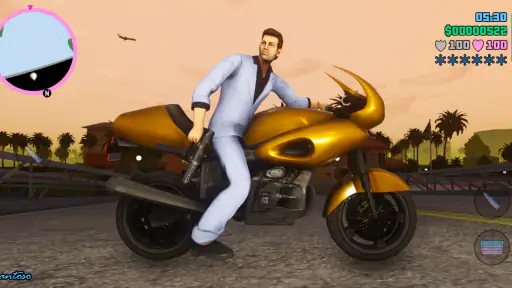
Driving is particularly important because it connects nearly every part of the experience. A vehicle is a practical way to cross the city, but it is also a source of risk and improvisation. I may choose a route for speed, change vehicles after an unexpected problem, or use the streets to create distance during a chase. The best moments happen when the driving system and the city layout work together.
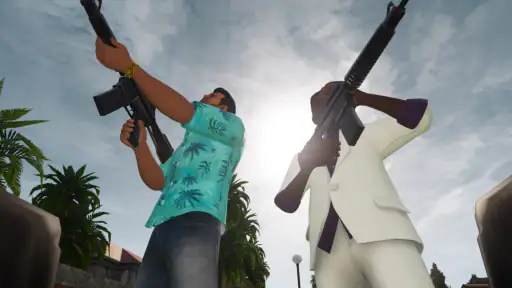
The shooting and combat are more functional than refined by current standards. I can enjoy the situations the game creates, but the controls may require adjustment, especially on a touch screen. A player accustomed to modern action games with highly assisted aiming and fluid movement may need time to accept the older feel.
That friction is not only a technical concern. It changes how I approach missions. I cannot always rely on quick reactions, so I pay more attention to positioning, escape routes, and the order in which I deal with threats. The game becomes more manageable when I prepare rather than charge forward. This is a concrete trade-off: the less polished control feel can encourage thoughtful play, but it can also turn a poorly planned attempt into a frustrating restart.
How I make missions less frustrating
I get better results when I treat the approach to a mission as part of the mission itself. I avoid arriving at full speed without checking the surrounding streets. If the objective allows it, I think about where I want to leave rather than focusing only on the entrance. That habit is especially useful in a city where a narrow turn or blocked road can change the outcome of a chase.
I also try not to judge a mission after one failed attempt. The first attempt often teaches me the layout, the likely direction of danger, and the point where I need to stop improvising. On the second attempt, I can make a small plan instead of repeating the same mistakes. This approach suits the game’s older design better than expecting every objective to explain itself perfectly.
Short sessions benefit from choosing one clear goal. I might complete a mission, explore one neighborhood, or practice driving through a difficult route. Trying to do everything at once makes the controls feel more demanding and weakens the atmosphere. The game is more enjoyable when I give each session a simple focus.
Players should also consider the device experience. The minimum operating system is Android or iOS 11, and the game’s action places more pressure on touch controls than a slower strategy title would. A larger screen can make buttons and visual information easier to read. If I already prefer a controller for action games, I would consider using a compatible setup rather than assuming touch input will feel perfect immediately.
Who will enjoy it and who should choose something else
I would recommend it to players who want a recognizable setting, mission-driven open-world action, and a strong sense of place. It is a good fit for someone who enjoys exploring between objectives and does not mind learning the habits of an older game. Fans of Rockstar Games’ style will likely understand its appeal quickly, but familiarity with the series is not required to enjoy the city’s atmosphere.
I would be more cautious recommending it to someone who wants a tightly controlled modern action experience. Players who dislike driving between missions, repeated attempts, or less forgiving movement may prefer a newer game with more streamlined controls. It is also not a good choice for children because the content rating is Mature 17+.
The free entry point makes trying it easier, but the in-app purchase price deserves attention before spending money. I would begin by deciding whether the core experience suits me rather than assuming optional purchases are necessary for enjoyment. The game’s value comes primarily from its world, missions, and atmosphere, so I would not treat extra spending as a solution to control frustration.
Its audience is also different from that of a competitive multiplayer action game. Vice City is better for solo immersion and self-directed exploration than for players seeking live competition, constant updates, or a social progression loop. Likewise, a linear action game may be a better alternative if I want every level to deliver a carefully controlled sequence with no travel in between.
An atmosphere-driven action game that still earns its place
After spending time with it, I see GTA: Vice City - Definitive as a game whose art direction and sound do much of the heavy lifting, but not in a superficial way. The visual design makes the city readable, the audio gives travel a distinctive rhythm, and the setting turns routine movement into part of the experience. The mechanics support that mood by continually sending me back into the streets.
The limitations are real. The control feel can be demanding on a touch screen, the mission structure may require patience, and the presentation will not satisfy everyone looking for modern realism. I also think the game is more enjoyable when I accept its older design instead of expecting it to behave like a newly built action title.
Its average rating is 3.7 from around seventeen thousand ratings, while the game has passed five million installs. Those figures suggest a broad audience, but they do not erase the personal nature of the decision. I would choose it for the setting and mood first, then for the action. If those qualities appeal to me, the rough edges become easier to work around.
Rockstar Games has created a city that remains easy to recognize and surprisingly easy to settle into. The best way to play is to alternate between focused missions and unhurried exploration, using the map to plan rather than simply obeying it. That approach reveals the connection between the setting and the mechanics, which is where the game feels most complete.
Released on December 8, 2023, this free action title is a worthwhile download for mature players with a compatible device who want a self-contained trip into a stylized 1980s world. I would recommend it to a friend with one qualification: give the controls time, keep expectations realistic, and let the city’s sound and color set the pace. Its atmosphere is not decoration around the action; it is the reason the action remains memorable.
GTA: Vice City - Definitive Frequently Asked Questions
How much space should I have available before downloading GTA: Vice City – Definitive Edition?
It is sensible to check your device’s available storage before starting the download and installation, especially if you keep many apps, photos, or videos on your phone. The game is a full open-world action experience, so leave room for the app and any installation files or updates. You can check the current store page on your device for its storage requirement.
Can I use a controller to play GTA: Vice City – Definitive Edition on mobile?
A controller can make driving, aiming, and moving through the city feel more familiar to players used to console games. Compatibility can depend on your device, operating system, and the way you downloaded the game, so check the game’s current store page and your controller’s supported-device information before buying or pairing one. Touch controls remain an option for mobile play.
What does “Welcome to the 1980s” mean for the game’s setting and atmosphere?
The game places its action in a fictional, Miami-inspired city during the 1980s, giving the story and surroundings a distinctly period-specific feel. Its store summary, “Welcome to the 1980s,” captures that setting in a few words. If you enjoy crime stories in a stylized city environment, the era is a central part of the experience rather than just a backdrop.
Who developed GTA: Vice City – Definitive Edition, and how is it categorized?
GTA: Vice City – Definitive Edition is an action game developed by Rockstar Games. It centers on an open-world crime story, with missions and activities built around Tommy Vercetti’s rise in Vice City. Players who are deciding whether the game suits their tastes should keep in mind that its action and mature themes are closely tied to the criminal world portrayed in the story.
What is GTA: Vice City – Definitive Edition?
GTA: Vice City – Definitive Edition is a remastered version of Rockstar Games’ classic open-world action game. It follows Tommy Vercetti as he builds a criminal empire in a fictional 1980s Miami-inspired city. The Definitive Edition includes updated character models, improved lighting, enhanced environments, modern controls, and quality-of-life changes while preserving the original story, missions, vehicles, weapons, and radio stations.
Pros
- Faithful recreation of Vice City’s iconic 1980s atmosphere
- Large open world with varied missions and activities
- Improved aiming and movement controls for mobile play
- Strong soundtrack featuring memorable licensed music
- Works offline after the initial download
Cons
- Requires significant storage space on your device
- High-end graphics may drain battery quickly
- Some touch controls feel awkward during driving
- Occasional visual glitches and performance drops can occur
- Licensed music may be removed in future updates
- Category
- Action
- Version
- 1.90.0