Grand Theft Auto: Vice City
- 18.61K
- 3.7
- Installs
- 1.00M
- Price
- $4.99

Screenshots
Analysis by Reviewed
On a phone, I find Grand Theft Auto: Vice City is less about whether its world still has character—it does—and more about whether its busy streets, story missions, and touch controls fit the way I want to play today. This is a paid arcade game from Rockstar Games, and its open-world crime story rewards curiosity. It also asks for patience with an older design and a screen that can feel crowded during action.
Reading the city and finding your way
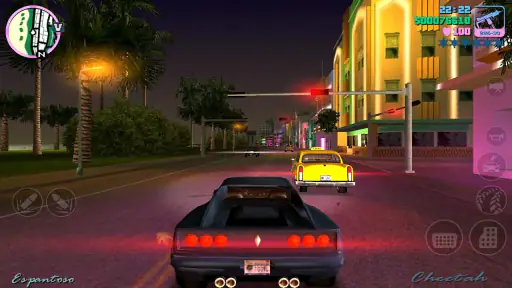
Vice City is built around recognizable landmarks, distinct neighborhoods, and a strong visual identity. That helps me orient myself through color and place rather than relying on a realistic-looking map of interchangeable streets. The bright palette and neon atmosphere make the setting memorable, though small details and on-screen prompts can be harder to pick out on a compact display. I find it easier to take in the surroundings when I’m moving at my own pace than when a mission is pushing me through a hectic sequence.
The story gives exploration a useful purpose: missions introduce characters and conflicts, while the wider city offers room to wander between objectives. If I only have a few minutes, I can spend them driving around or exploring instead of committing to a long story session. For a more focused visit, following the missions gives the city a clearer route and a sense of progress. That flexibility is a real strength, although the game’s older structure can feel less guided than modern open-world adventures.
For anyone who wonders whether the city is easy to learn, my answer is: gradually, and more through repetition than through constant hand-holding. I’d pick one familiar landmark as a mental anchor and use it to orient myself before branching into side streets. This works especially well if I’m returning after a break; retracing a known route can restore my sense of direction without making every outing feel like a navigation test. It’s a modest habit, but it makes free exploration less aimless and helps me notice how the neighborhoods differ.
Touch play, pace, and sensory load
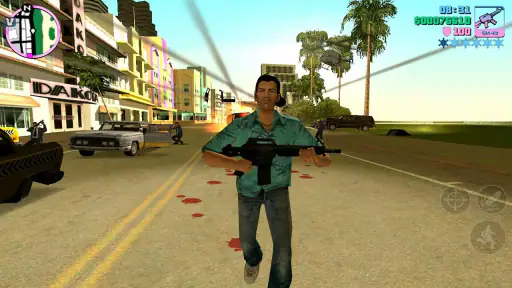
On a touchscreen, driving, aiming, and moving through busy scenes call for more attention than they would with physical controls. I’d avoid starting a demanding mission when I’m distracted or trying to play one-handed: several actions can compete for screen space and attention. A quiet stretch of driving or exploration is a better way to settle into the controls before the story asks for quicker reactions. The trade-off is clear: mobile access makes the city easy to carry around, but it doesn’t make every action equally comfortable on a phone.
The sound and visual style are a big part of the appeal. Radio stations, energetic scenes, and the city’s bright nighttime look create a lively atmosphere, but that can be a lot when I want a calm, low-stimulation game. I’d play with sound at a comfortable level and choose an unhurried activity if I needed a gentler session. Players who prefer quiet, minimal interfaces or consistently slow pacing may find other arcade games a better fit.
One practical distinction is between a session where I can give the screen my full attention and one where I’m sharing attention with a conversation, a noisy room, or a task. In the first situation, I’m more willing to try a mission that combines driving and quick reactions. In the second, I’d stick to exploring and let the radio and scenery provide the entertainment. This isn’t a special mode; it’s simply a way to choose activities that are less likely to become frustrating when my focus is limited.
More From Our News Desk

Clash of Clans Is Won Between the Battles

Android Auto Makes the Case for Quieter Car Software

MobiOffice: Transforming Mobile Productivity with Seamless Integration

EA SPORTS FC™ Mobile Soccer: Redefining Mobile Sports Gaming

How Microsoft OneDrive Became a Mobile Productivity Giant

How Google Translate Breaks Language Barriers Effortlessly
There’s also a useful trade-off in the game’s sound: the radio adds personality to ordinary drives, but it can compete with other sounds around me. If I’m in a shared space, I’d keep the volume considerate or play without relying on it for atmosphere. The city still has a recognizable look and layout, so a quieter session can work, even if it loses some of the soundtrack’s appeal. Players who need low visual or audio stimulation should know that the overall presentation remains busy, especially during action.
When it fits—and when it doesn’t
Vice City works best for someone who enjoys free-roaming games, a strong sense of place, and the option to switch between story and unscripted exploration. It is less suited to a player looking for a quick, neatly guided arcade round or a simple control scheme that never demands precision. The mature crime setting also makes it a poor choice for younger players; its content rating is Mature 17+.
It costs $4.99, so I’d think of it as a substantial single-player game to revisit over time rather than a casual download for a spare moment. Its average rating is 3.7 from around 200,000 ratings, which is a reminder that the mobile experience won’t suit everyone equally. More than a million installs show it has reached a broad audience. The current version is 1.12, and it requires Android 7.0 or later. I’d check that my device meets that requirement before buying, then consider whether I’m comfortable with a paid game whose appeal depends on its older style as much as its open world.
A realistic use case for me would be a quiet evening at home: I might spend one session following the story, then use another to roam around without a mission in mind. On a short wait in a public place, I’d avoid beginning an objective that needs concentration and choose an activity I can leave without feeling I’ve lost the thread. That distinction matters because the game’s open world invites long-term return, but its action doesn’t always break neatly into tiny, interruption-proof rounds.
Welcome to Vice City
Imagine the 80s – big hair, synth music, and pastel suits. Now imagine stepping into a world that encapsulates all of that with a dose of crime and chaos. That’s Grand Theft Auto: Vice City for you. Developed by Rockstar Games, this installment is set in a fictitious city inspired by the glamour of Miami. It’s a sprawling open-world game where you get to be Tommy Vercetti, a man with a mission and a penchant for causing mayhem in the most entertaining ways possible.
Gameplay and Features
The moment you fire up the game, you’re greeted with a soundtrack straight out of the 80s. I’m talking about tunes that can make even the most stoic person break into a dance. But don’t get too lost in the groove, because there are missions to complete and a city to explore.
Vice City offers a variety of missions that range from hilariously absurd to intensely thrilling. The story unfolds as you navigate through the criminal underworld, all the while acquiring properties, expanding your empire, and dealing with a colorful cast of characters. The game’s freedom is one of its most compelling features. You can choose to follow the storyline or take a break and cruise around the city causing chaos at every turn.
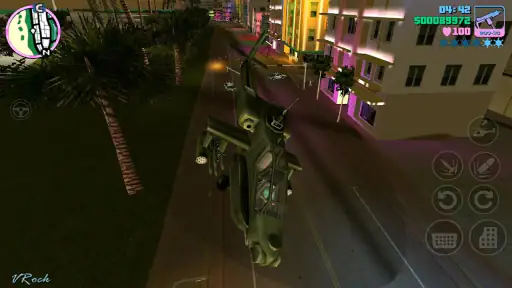
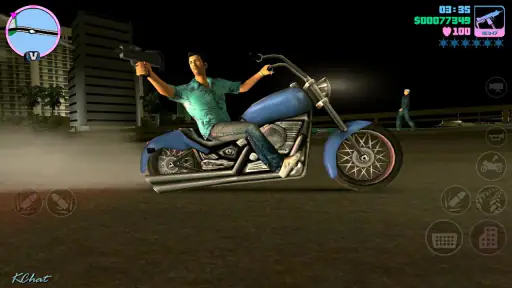
Moreover, the game is packed with vehicles – from speedboats to helicopters. And can we talk about the in-game radio stations? Flipping through them is like having a personal DJ who only plays the hits. It’s these little details that make Vice City a truly immersive experience.
That range of activities changes how I think about progress. A session doesn’t have to be judged only by whether I finished a mission: taking a different route, getting a feel for an area, or simply enjoying a drive can still make the time feel well spent. When I do want a more structured goal, the story is there to pull me forward. This makes the game easier to revisit in different moods than a linear arcade challenge, though it also means players who need a clear objective at all times may prefer something more tightly directed.
The vehicles add variety, but they also underline the control trade-off. I’d use relaxed driving to get comfortable before relying on a vehicle in a demanding situation; the same touch setup can feel forgiving on an open stretch and less dependable when timing matters. That’s one reason I wouldn’t treat every mission as an ideal quick-play task. If I’m buying it primarily for precise action on a small screen, I’d be cautious; if I value the freedom to choose my pace, the variety is a stronger selling point.
Visuals and Atmosphere
Even though it’s been years since its release, the graphics of Vice City still hold a charm. Sure, it doesn’t boast the hyper-realistic visuals of modern games, but its vibrant colors and distinct art style give it a unique flair. The city feels alive, with pedestrians going about their day, neon signs lighting up the streets, and the ocean glistening under the sun.
The atmosphere is further elevated by the game’s storyline and voice acting. With talents like Ray Liotta lending their voice, the characters jump out of the screen, adding depth and humor to the narrative.
I think the best comparison is not with a short-session arcade game, but with another open-world adventure: Vice City offers a place to inhabit, not just a sequence of rounds to clear. Against newer open-world games, it gives up some polish and ease of use, while keeping a distinctive mood and the appeal of choosing my own detours. If I want streamlined controls, modern presentation, or a calm interface, I’d look elsewhere. If I want a recognizable setting with story and room to roam, its age can feel like part of the character rather than a reason to dismiss it outright.
Final Thoughts
So, is Grand Theft Auto: Vice City worth revisiting or even experiencing for the first time? I’d say yes for adults who enjoy a colorful open world, a memorable story, and the freedom to spend time outside missions. It is less convincing as a pick for someone who wants a quiet game, precise touch controls, or a self-contained arcade round that fits any spare minute. The mature setting and the demands of mobile action are genuine reasons to be selective.
Before buying, I’d ask myself two practical questions: do I enjoy exploring without a constant marker of progress, and am I comfortable adapting to touch controls when a scene gets busy? If the answer to both is yes, the price may make sense for a game I can revisit in different ways. If not, a simpler arcade title or a game designed around more direct mobile controls would be a better match. For me, the deciding factor is not nostalgia alone, but whether the city’s freedom outweighs the friction of playing an older design on a touchscreen.
A practical way to fit it into the day
If I were playing during a commute or waiting for an appointment, I’d use that time for free exploration rather than beginning a mission with several precise actions. A sudden interruption is less frustrating when I’m simply learning a route or enjoying the radio than when I’m midway through a tense objective. At home, with a larger screen and a little uninterrupted time, I’d save story missions for a session when I can focus on driving and navigation together. This small choice of activity makes the mobile version feel more manageable without pretending every part of the game suits a short break.
One useful habit is to treat familiar landmarks as navigation cues: remembering a distinctive stretch of coast or a striking building can make returning to an area feel more natural than trying to rush through unfamiliar streets. I’d also alternate mission progress with relaxed exploration instead of treating every drive as wasted time. That approach suits Vice City’s strongest quality—the pleasure of inhabiting its setting—while reducing the pressure to perform well on touch controls from the outset.
How it compares with other arcade choices
Many mobile arcade games are designed around short rounds, immediate goals, and uncomplicated controls. Vice City offers a different bargain: a continuous city, a narrative, and several ways to spend time between missions. That makes it a better choice when I want a world to return to, but a weaker fit when I only want a quick challenge that starts and ends cleanly. Compared with newer open-world games, its appeal is less about visual realism or modern convenience and more about the personality of its setting and the freedom to make my own detours.
The rating is another reason I’d approach it with realistic expectations rather than assuming everyone will enjoy the mobile adaptation equally. The original design has plenty of charm, but touch play can make moments of driving and combat feel less direct than on a controller. If precise input matters more to me than portability, I’d choose a game or setup that better suits that preference. If atmosphere, exploration, and a memorable story matter more, the compromise may be worthwhile.
Who I’d recommend it to
I’d recommend it to adults who enjoy older open-world games and are happy to learn a city gradually, especially anyone who likes switching between a planned mission and an aimless drive. It also suits players who value a strong soundtrack and a place with a distinct visual mood. I’d skip it if I wanted a quiet experience, a very simple interface, or reliable one-handed play; those needs are at odds with the busy action and touch demands here. The mature setting is also a reason to be selective about who is playing and where.
My inclusive verdict is that Vice City offers freedom in what to do, but not equal ease in how to do it. The choice to explore at a slower pace can help, while crowded action and small-screen demands remain real barriers for some players and situations. I find it most rewarding when I can give it attention, adjust my expectations to its age, and enjoy the city rather than measuring it against a modern, streamlined mobile game.
Grand Theft Auto: Vice City Frequently Asked Questions
Can I play Grand Theft Auto: Vice City offline?
Grand Theft Auto: Vice City is a single-player game focused on its story and open-world activities, rather than online competition. That makes it a natural fit for players who want to explore Vice City at their own pace. Before downloading, check the app’s installation and launch requirements on your device so you can plan how you will access the game.
Who developed Grand Theft Auto: Vice City, and what is its general style?
Rockstar Games developed Grand Theft Auto: Vice City as an arcade game with an open-world action-adventure style. Its mix of driving, shooting, and exploration gives the story room to unfold while letting players spend time in the city between missions. The setting’s 1980s atmosphere is central to the experience, making it a distinctive choice for fans of classic crime games.
How much does Grand Theft Auto: Vice City cost, and what kind of game is it?
Grand Theft Auto: Vice City is a paid arcade game from Rockstar Games, priced at $4.99. It is a standalone purchase rather than a free-to-play title, so you can consider the upfront cost before downloading. Its classic open-world style combines driving, shooting, and exploration, giving players a story-focused experience in a city inspired by Miami.
What is Grand Theft Auto: Vice City about?
Grand Theft Auto: Vice City is an open-world action-adventure game set in the 1980s. Players take on the role of Tommy Vercetti, a gangster who navigates the criminal underworld of Vice City—a fictional city inspired by Miami. The game combines driving, shooting, and exploration, offering a blend of action and strategic gameplay.
What platforms is Grand Theft Auto: Vice City available on?
Originally released on PlayStation 2, Grand Theft Auto: Vice City is now available on multiple platforms, including Android and iOS. This allows players to enjoy the game on-the-go with mobile devices, as well as on PC, Xbox, and other gaming consoles. It's widely accessible to a broad audience of gamers.
Pros
- Immersive 80s-themed open world.
- Engaging storyline with memorable characters.
- Wide variety of vehicles to drive.
- Numerous side missions and activities.
- Impressive graphics for a mobile game.
Cons
- Controls can be challenging on touchscreens.
- Occasional bugs and glitches.
- Large file size requires significant storage.
- In-app purchases can be intrusive.
- Some missions can feel repetitive.
- Category
- Arcade
- Version
- 1.12













