Marvel Collect! by Topps®
- 2.88K
- 3.2
- Installs
- 1.00M
- Price
- Free

Screenshots
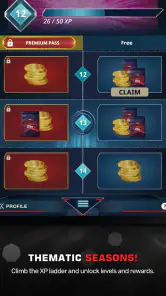
Analysis by Reviewed
I approached Marvel Collect! as a digital card game first and a collecting hobby second. That distinction matters. The appeal is not simply opening virtual packs and admiring familiar heroes; it is building a collection, making trades, and deciding which cards are worth keeping when your available resources are limited. After spending time with it, I found a game that can be relaxing in short sessions but also surprisingly demanding if you want to collect with a plan.
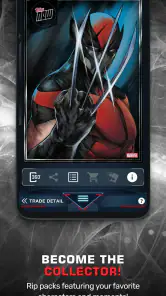
The basic idea is easy to understand. You gather Marvel-themed digital cards, organize your collection, and interact with other players through trading and card-focused activities. The game comes from The Topps Company, Inc., a developer with a clear connection to collectible-card culture, and that background shows in the way the experience emphasizes ownership, scarcity, and presentation. It feels closer to managing a living digital binder than playing a traditional battle-card game.
That makes it a good fit for someone who enjoys Marvel characters and the small decisions that come with collecting. It is less suitable if you want a deep strategy game with fast matches, a generous offline campaign, or a straightforward way to unlock everything without spending money. My overall impression is positive but cautious: the collecting loop is compelling, while the economy and long-term commitment require patience.
How the current version feels to use
A collection game rather than a conventional card battler
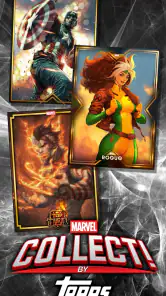
The most important thing to understand before installing is that this is not the same kind of card game as a head-to-head title built around decks, turns, and combat. The satisfaction here comes from finding cards, completing parts of a set, comparing designs, and negotiating trades. If your favorite part of a physical card hobby is sorting cards into sleeves and hunting for missing pieces, the digital format makes sense.
I particularly liked the way the collection can become personal. Two players may value the same card very differently: one may want a character they grew up with, while another may care more about finishing a themed group. That subjectivity gives trading a reason to exist beyond simple numerical optimization. It also means that patience and communication can be as important as luck.
For a quick everyday scenario, I can imagine opening the game during a commute or while waiting for an appointment, checking available items, and making one or two trade decisions without needing a long uninterrupted session. Later, when I have more time, I can review duplicates and decide whether to hold them for a future exchange. That rhythm suits mobile play better than a game that expects every session to be a complete match.
The first hours are about learning value
New players should resist the urge to treat every duplicate as useless. In a collecting game, duplicates are often the material that makes future trades possible. I found it more helpful to separate cards into three mental groups: pieces I genuinely want to keep, duplicates that might help complete a set, and items I can use as trade material. This simple habit prevents the collection from becoming a pile of attractive but poorly organized cards.
More From Our News Desk

Clash of Clans Is Won Between the Battles

Android Auto Makes the Case for Quieter Car Software

MobiOffice: Transforming Mobile Productivity with Seamless Integration

EA SPORTS FC™ Mobile Soccer: Redefining Mobile Sports Gaming

How Microsoft OneDrive Became a Mobile Productivity Giant

How Google Translate Breaks Language Barriers Effortlessly
I also recommend choosing a personal collecting goal early. You might focus on a favorite character, a visual style, or a particular set rather than trying to chase everything at once. The broader the goal, the more easily the game can turn into an endless search. A narrower target gives each new card a clearer purpose and makes progress easier to recognize.
This is one of the less obvious strengths of the format: it rewards organization. Players who casually open items without tracking what they already own may enjoy the surprise, but they can also lose sight of what they are building. Players who review their collection regularly are more likely to make useful trades and avoid giving away something they later need.
Trading changes the way progress works
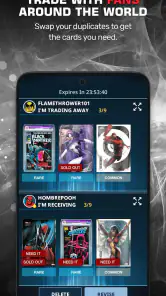
Trading is the feature that separates this experience from a simple digital album. It introduces another route toward a desired card, but it also introduces uncertainty. A trade is not automatically good just because it gives you a new card. You should consider whether the card you are offering has future value to you, whether it is a duplicate that could help complete another group, and whether the incoming card actually supports your collecting goal.
My practical advice is to avoid making large changes to your collection when you are still learning its structure. Keep a small reserve of duplicates and review your target sets before agreeing to anything. This is especially useful for players who enjoy the social side but do not want to spend time rebuilding their collection after an impulsive exchange.
Trading also makes the game less predictable than a solo card album. Your progress may depend on timing, what other players are looking for, and how willing you are to wait. That can be exciting for collectors who enjoy negotiation, but frustrating for anyone who expects a fixed checklist and a guaranteed path to completion.
Where the free entry helps and where it becomes complicated
The game is free to start, which lowers the barrier for Marvel fans who want to test the collecting loop before committing. That is important because the experience is not for everyone. You can discover whether you enjoy digital collecting, trading, and repeated set-building without paying at the beginning.
However, the presence of in-app purchases ranging from $0.99 to $99.99 per item means the free starting point should not be confused with a completely free collecting journey. Purchases can make the experience feel more immediate, while a patient player may prefer to progress more slowly. I would treat spending as optional entertainment rather than a requirement for proving that you are a serious collector.
My strongest recommendation is to set a personal limit before buying anything. Decide whether you are paying for a specific moment of enjoyment, such as opening a small amount of content, or whether you are chasing a collection goal that may keep moving. The second situation is where costs can become difficult to control, because completing one target can naturally create another.
What has changed and what that means for players
The current build gives the game a continuing identity
The current version is 40.2.0, and the game has been available since April 25, 2019. Those details place it in the category of an established live collecting product rather than a brand-new experiment. For me, that changes how I judge it. I expect a mature card collection to have a substantial sense of continuity, but I also know that long-running digital hobbies can feel intimidating to newcomers who are entering after other players have had more time to build their binders.
The version number is useful context, but it does not by itself guarantee that every part of the experience will suit a new player. A high version number suggests ongoing development, yet the real question for an existing user is whether each update makes daily collection management easier, keeps the trading environment active, and gives older cards a meaningful place. Those are the areas I would pay attention to rather than assuming that a newer build automatically solves every frustration.
For returning players, the impact of continued evolution is usually mixed. A refreshed experience can make the app feel alive and give collectors new reasons to check in. At the same time, changes in how content is presented or how players pursue cards may require people with established collections to rethink their routines. I prefer updates that improve clarity without making older progress feel irrelevant.
Why the large audience matters, but not as a guarantee
The game has passed one million installs, with an average rating of 3.2 from roughly twenty-four thousand ratings and around two thousand nine hundred written reviews. These figures suggest a sizeable audience and a broad range of reactions. I read that combination as a reason to try the game with realistic expectations, not as a simple verdict for or against it.
A large audience can help a trading-focused game because more players may mean more chances to find someone interested in the cards you need. Yet audience size does not guarantee that every desired exchange will be easy. A collector seeking a very specific card can still face waiting, uneven offers, or difficulty finding a fair match. The social ecosystem is part of the product, and its usefulness depends on how actively people participate in the areas you care about.
The average rating also reflects an important trade-off. Some users will love the collecting structure and Marvel presentation, while others may dislike the pace, purchase options, or the distance from traditional card-game combat. I would not recommend installing it solely because of the character license. The better question is whether you enjoy the behavior of a digital collector: checking, sorting, comparing, waiting, and trading.
Who will get the most from it
I think the strongest audience is a Marvel fan who already understands why a digital card can be satisfying even when it has no physical use. Someone who enjoys completing visual sets, keeping a themed collection, or negotiating with other collectors will probably find more depth here than a player who only wants a quick game.
It can also work for people who like flexible sessions. You do not need to reserve an entire evening to make progress. A few minutes can be enough to inspect the collection, think about a trade, or decide what to pursue next. That makes it a natural companion for small breaks, provided you are comfortable with progress that may feel gradual.
I would suggest skipping it if your priority is a campaign with a clear ending, competitive matches that depend mainly on tactical turns, or a card game where every important item can be earned through a predictable sequence. A conventional deck-builder may be a better choice in those cases. Physical Marvel cards may also be preferable if the act of owning, displaying, and exchanging tangible pieces is the main attraction.
Small habits that improve the experience
My first useful habit is to review the collection before opening anything new. Knowing what you already have reduces accidental duplication and helps you recognize whether a new card genuinely advances your goal. My second is to keep notes, even if they are simple, about the sets or characters that matter most to you. This makes trading decisions quicker when you are checking the game in a short session.
A third habit is to value flexibility. Do not lock your entire collection into one narrow objective if that makes every unwanted card feel worthless. Keeping a few alternative interests gives you more ways to enjoy new additions and can make trading less stressful. The best collection is not necessarily the largest one; it is the one that reflects what you actually like.
Finally, separate emotional value from exchange value. A card that looks ordinary to another player may be one of your favorites, and a visually impressive card may not matter to you at all. Making that distinction before trading is a practical way to avoid regret. It also helps you negotiate honestly instead of treating every card as a number.
Remaining friction for newcomers and veterans
The biggest limitation is the possibility of feeling behind. Established collectors may already have well-developed inventories, while a new player is still learning what deserves attention. That gap can make the early period feel less rewarding if you measure yourself against people with much larger collections. I found the experience more enjoyable when I treated my own goals as the standard.
The second issue is the tension between collecting and spending. Free access is welcoming, but purchase options can make the fastest route look more attractive than the patient route. Players who are prone to chasing completion may find that the game tests their discipline more than their card knowledge. That is not necessarily a flaw in a collecting product, but it is an important part of deciding whether the format suits you.
There is also a difference between collecting and playing in the usual sense. If you install it expecting constant action, you may mistake its slower pace for a lack of content. The game asks you to enjoy decisions that happen between moments of excitement. That is its identity, but it is also the reason some Marvel fans will prefer a more traditional action or strategy title.
What I would watch before committing long term
For current and returning users, I would watch how the game continues to balance new collecting opportunities with the value of existing cards. A healthy long-term experience should give newcomers a reasonable way to begin while still respecting the time that established collectors have invested. I would also pay attention to whether collection management stays understandable as the card library grows.
Trading deserves attention as well. The more central trading becomes to progress, the more important it is for the surrounding experience to remain clear and comfortable for ordinary players. Collectors should watch whether their preferred characters and themes remain enjoyable targets rather than feeling pressured to chase every new release.
These are expectations, not promises about future changes. The confirmed point is that the game has reached version 40.2.0 after being available since 2019. My advice is to judge each update by its practical effect on your routine: does it make finding, organizing, and exchanging cards more enjoyable, or does it simply give you more to manage?
My final recommendation
Marvel Collect! is worth trying if you want a Marvel digital collection with trading at its center. I like that it gives familiar characters a hobby-like context instead of forcing every interaction into a battle. The best moments come from setting a personal target, finding a card that fits it, and making a careful exchange rather than opening content without a plan.
At the same time, I would not call it a universal recommendation. The 3.2 average rating, the slow collecting rhythm, and the in-app purchase range from $0.99 to $99.99 per item all point to an experience that needs the right expectations. It is free to begin, but long-term enjoyment depends on patience, self-control, and genuine interest in digital collecting.
The Teen content rating also makes it sensible for players and families to consider whether the social and purchase elements fit their circumstances. On Android, it requires at least version 7.1 of the operating system, so compatibility is straightforward for many devices. My final view is simple: install it for the collecting loop, not merely for the Marvel name. If sorting, trading, and slowly shaping a personal card library sound satisfying, this game can become a pleasant daily hobby. If you want decisive matches and a clearly finished progression path, choose a conventional card game instead.
Marvel Collect! by Topps® Frequently Asked Questions
Can I enjoy Marvel Collect! if I’m not familiar with Marvel comics?
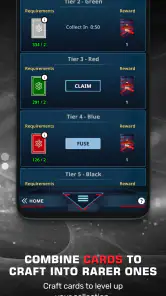
Yes. The game is centered on collecting digital cards, and you can approach it as a collector even if you do not know every character or storyline. Recognizing Marvel heroes and villains may make discovering cards more rewarding, but the main activities are building a collection, completing sets, opening packs, and trading. It is likely to appeal most to people who enjoy collecting and exploring character designs.
Who develops Marvel Collect!, and what type of game is it?
Marvel Collect! is a card game developed by The Topps Company, Inc. Its focus is on collecting and trading digital Marvel cards rather than controlling characters in action battles. Players can build a collection, work toward themed sets, and engage with other collectors. The app is free to download, while optional in-app purchases are available for users who want to spend on collection-related items.
What kind of gameplay does Marvel Collect! by Topps® offer?
Marvel Collect! is a card-collecting game, so its appeal is different from a typical combat-focused Marvel game. The main activities revolve around building a digital collection, opening packs, working toward themed sets, and trading cards with other players. If you enjoy discovering new designs and organizing a collection over time, the format may suit you; if you are looking for a story campaign or action battles, it may feel less engaging.
What should I know about the app’s age rating and content?
Marvel Collect! is rated Teen, and its subject matter centers on Marvel characters, including heroes and villains. The experience also involves online features such as trading and community interaction, so families may want to consider whether those activities are appropriate for younger players. Reviewing the age rating and discussing responsible online behavior before a child starts using the app can help set clear expectations.
What is Marvel Collect! by Topps®?
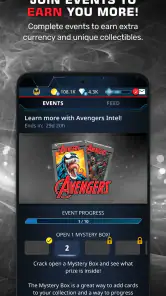
Marvel Collect! by Topps® is a digital trading-card app focused on Marvel characters, heroes, villains, teams, and storylines. After installing it, users can collect virtual cards, complete themed sets, open packs, and trade with other players. The experience is designed for collectors rather than traditional action gameplay, so most of the enjoyment comes from discovering cards, organizing a collection, and participating in limited-time events.
Pros
- Large roster of Marvel heroes
- villains
- and alternate card designs.
- Frequent themed releases keep collecting goals fresh.
- Simple card-trading system makes completing sets approachable.
- Cards include character details and appealing visual artwork.
- Playable on both Android and iOS devices.
Cons
- Duplicate cards can make completing popular sets frustrating.
- Progress may feel slow without regular play or purchases.
- Requires an internet connection for most features.
- Large updates may consume considerable storage and mobile data.
- The interface can feel busy for first-time collectors.

- Category
- Card
- Version
- 40.2.0