Loop Sort
- 2.08K
- 4.5
- Installs
- 5.00M
- Price
- Free

Screenshots



Analysis by Reviewed
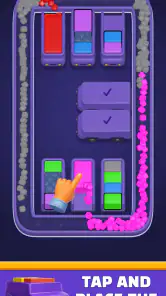
I like puzzle games that give me something to think about without demanding a long stretch of attention. Loop Sort is built around a simple action: moving cubes from a truck onto a conveyor so they can be sorted. That setup sounds straightforward, and it is—but the appeal is in watching a small task turn into a sequence of choices. A tap can keep things moving or leave the next move awkward, so even a compact play session asks me to pay attention.
VOODOO’s free puzzle game has reached an average rating of 4.5 from around 39,000 ratings, with more than five million installs. Those figures suggest it has found a broad audience, but they do not tell you whether its particular rhythm will suit you. My take is that it is best approached as a light, hands-on sorting challenge: satisfying when you want a quick mental reset, less compelling if you expect a deep strategy game or a carefully guided puzzle campaign.
One small action, several decisions
Why the truck-and-conveyor idea works
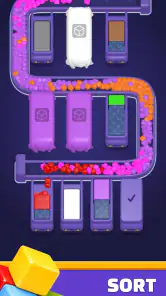
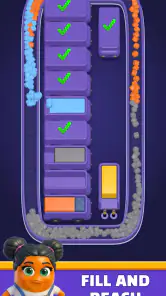
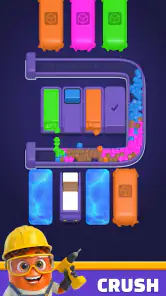
The central mechanic gives the game a clear visual job. Cubes begin in a truck; I send them toward a conveyor and sort them as they move through the puzzle. That physical-seeming flow makes it easier to understand what I am trying to do than in a puzzle built around abstract symbols. The objects and route provide a practical focus: look at what is coming, consider where it needs to go, then decide when to act.
The one-tap framing is important, but it does not mean every decision is automatic. A tap is easy to make; choosing the right moment is where the puzzle gets its bite. When I treat each cube as part of a moving sequence rather than an isolated object, I am more likely to notice how one choice can affect the space or options available next. That is the useful mental shift: do not just react to the cube in front of you, keep an eye on what your action sets up.
The strongest part of Loop Sort is the way a minimal control scheme makes timing and order feel like the actual puzzle. There is no elaborate control layout to learn before I can focus on sorting. That makes it approachable for someone opening a game during a short break, while still leaving room for the occasional “I should have planned that one step earlier” moment.
It also makes the game easy to pick up again after putting the phone down. I do not need to remember a complicated sequence of controls to understand what I was doing. For casual play, that low re-entry cost matters: the game’s basic idea is easy to hold in mind, even if the next decision still deserves a glance rather than a careless tap.
How I approach a run
In practice, I would start by scanning the visible cubes and their order before sending anything forward. That little pause is more useful than tapping as quickly as possible. If I can see that a later cube may constrain the route or complicate the sort, I can make the earlier move with that in mind. The game’s simplicity encourages quick reactions, but a calm look at the sequence is a better habit than treating every tap as harmless.
You May Like

Clash of Clans Is Won Between the Battles

Android Auto Makes the Case for Quieter Car Software

MobiOffice: Transforming Mobile Productivity with Seamless Integration

EA SPORTS FC™ Mobile Soccer: Redefining Mobile Sports Gaming

How Microsoft OneDrive Became a Mobile Productivity Giant

How Google Translate Breaks Language Barriers Effortlessly
A second helpful habit is to focus on the next decision, not just the current one. I try to ask, “What will this move leave me dealing with?” That question is especially useful when the conveyor is already carrying a sequence of cubes. It turns the mechanic from a reflex test into a small planning exercise, without making the game feel like homework.
There is a trade-off in that simplicity. A one-tap interaction is welcoming, but it can also make mistakes feel abrupt: if I act before understanding the situation, I may have to live with a poor setup rather than correct it through a more elaborate control scheme. I would not assume that every puzzle can be solved by tapping faster. A moment spent reading the flow is often the better move.
Because the core task is visual and direct, it is also a reasonable fit for brief, interrupted sessions. I can play a little while waiting for a drink or taking a pause between chores, then return without needing a long tutorial recap. If I want a game that occupies a whole evening with a detailed story or a large campaign, though, this is not the role I would choose it for.
A good fit for the in-between minutes
Picture a short wait at a bus stop: I have a few minutes, but not enough time to settle into a sprawling game. Loop Sort gives me a concrete task to focus on—send cubes onward and sort them—rather than asking me to track a plot or manage a long list of systems. I can use that small window to concentrate on a sequence, then stop when my ride arrives. That is a more convincing use case than expecting the game to become a major daily commitment.
The same quality can make it a handy change of pace after work or study. When I want to direct my attention toward something simple but not entirely mindless, sorting offers a modest challenge. It gives me a reason to slow down and inspect what is in front of me, rather than relying on the continuous rapid tapping common in some casual games. The appeal depends on enjoying that focused, repetitive kind of task.
Compared with many familiar mobile puzzles, Loop Sort is more about handling a stream of objects than arranging a static board or fitting pieces into a fixed grid. That difference is the point. A board-based puzzle may reward looking several moves ahead across a stable layout; here, the truck-to-conveyor flow encourages attention to order and timing. If you enjoy visual organization, the moving setup may feel refreshingly tangible. If you prefer a puzzle where you can survey the whole board and plan a long chain before acting, a traditional tile or grid game may suit you better.
It is also distinct from fast arcade games that mainly test reaction speed. The simple input could make it seem like a reflex game, but I find more value in reading the sequence and making deliberate choices. Anyone who enjoys puzzles should give the sorting idea a chance, but players who want constant novelty, elaborate mechanics, or a strong sense of narrative progression may find its narrow focus limiting.
Where the simplicity has limits
Loop Sort’s single central mechanic is both its strength and its main constraint. When sorting is clicking, the game can feel clean and immediately understandable. If that same action starts to feel repetitive, there is no reason to expect a completely different kind of activity to take over. I would choose it for a focused casual puzzle, not for a wide-ranging collection of modes or a deep strategy experience.
There is also a difference between “easy to start” and “right for everyone.” The game is rated for Everyone, so its presentation is intended for a broad age range, but that does not mean every player will enjoy its pace. Younger players may appreciate the direct visual task, while puzzle fans who want layered rules and long-term planning might prefer a more intricate alternative. The best match is someone who enjoys seeing a simple rule produce a sequence that needs attention.
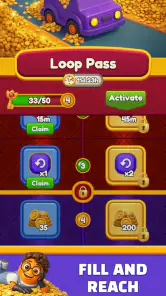
The game is free to download, with in-app purchases listed from $0.99 to $99.99 per item. I would keep that in mind if I were installing it for a child or trying to avoid optional spending: the free entry point does not mean every purchase is free. I would check the purchase controls on the device before handing it over, especially when the player is likely to tap quickly through menus. That is a practical precaution, not a reason to assume purchases are necessary to enjoy the core sorting idea.
For device compatibility, the current version is 4.3.0 and the minimum operating system is 8.0. If you are deciding whether to install it, that gives you a straightforward check to make before downloading. I would also make sure the device has enough general space and is up to date, as I would with any mobile game, rather than treating a low minimum OS requirement as a guarantee that every older device will feel equally smooth.
Who gets the most from it
I would recommend Loop Sort to someone who likes neat, readable puzzle tasks and wants something easy to return to between other parts of the day. It works especially well for players who enjoy organizing objects, spotting the consequences of order, and making quick decisions without learning a large set of rules. The best approach is to play attentively rather than tap on autopilot; that small change makes the conveyor sequence feel more like a puzzle and less like a repetitive gesture.
I would steer a different player toward another option if they want a substantial campaign, multiplayer competition, a broad set of puzzle types, or a complex system to master. Those expectations do not line up with Loop Sort’s focused premise. Likewise, if repetitive sorting quickly loses its charm for you, the straightforward mechanic may not have enough variation to hold your interest for long.
VOODOO has kept the concept accessible enough for a casual audience, and the game’s popularity—more than two thousand reviews alongside its wider rating base—shows that many players have chosen to try it. I would treat that reception as context, not a promise that it will be a personal favorite. A puzzle’s feel matters more than a crowd figure, especially when its whole identity rests on one central action.
My recommendation is to try Loop Sort when you want a low-friction sorting puzzle that rewards a brief pause before each move. Its most useful lesson is also its best tip: watch the order coming through the truck and conveyor, and consider what a tap will leave you with next. That makes the game more satisfying than hurriedly pressing through. If that kind of small, visual planning sounds pleasant, it is an easy game to fit into spare minutes; if you need bigger variety or deeper progression, I would look elsewhere.
A practical way to decide before installing
If you are choosing between this and another quick puzzle, think about what you want your attention to do. Here, the satisfying part is following the cubes through a clear route and making sense of their order. A word puzzle is a better fit when you want language to be the challenge; a grid puzzler is more suitable when you prefer a stable board you can inspect at your own pace. I would pick this one when the moving, hands-on sorting itself sounds appealing, not simply because it is easy to open.
For a parent considering it for a child, the Everyone age rating makes it broadly approachable, while the purchase range is a reason to review device purchase settings first. For an adult looking for a tiny break between tasks, I would use it as a focused diversion rather than something to play while walking or doing another activity: the useful part is noticing the sequence, and distracted tapping works against that.
One small but worthwhile adjustment is to treat a pause as part of the play, not as wasted time. Before a tap, identify the cube you are sending and what it may leave behind. This does not add complicated strategy or guarantee a perfect run; it simply helps you get more out of the game’s central decision. If that brief moment of sorting attention feels pleasant, this is a good match. If you would rather unlock a different mechanic or story as you continue, I would choose a broader puzzle game instead.
Loop Sort Frequently Asked Questions
What is Loop Sort, and how do you play it?
Loop Sort is a casual puzzle game built around organizing colored pieces into matching groups. You move or sort the pieces according to the rules shown in each level, aiming to complete the arrangement with as few mistakes or moves as possible. The opening puzzles are generally intended to teach the basic idea, while later stages can demand more planning. Check the in-game instructions, since controls and specific mechanics may vary by version.
Is Loop Sort suitable for children and casual players?
Its simple sorting concept and short puzzle rounds can make Loop Sort approachable for people who want a low-pressure game rather than a complicated adventure. Players who enjoy color-matching, organization, and logic challenges may find it appealing, and the basic premise is easy to understand. Difficulty can still rise as puzzles become more involved, so younger children may need help with harder stages. Review the age rating and store listing for the version you plan to install.
Can I play Loop Sort offline?
Offline availability depends on the particular Loop Sort release and how its features are implemented. Core puzzle levels may work without a connection in some versions, but advertisements, rewards, cloud saves, events, or other online features can require internet access. If offline play matters to you, test the game after installation with your connection disabled and check the app-store description for current requirements. Avoid assuming that every feature will remain available offline.
Does Loop Sort contain ads, in-app purchases, or other costs?
The cost and monetization model can differ between platforms, regions, and app versions. A free download may include advertising, optional purchases, or paid items, and some versions may offer rewards for watching ads. Before installing, inspect the Google Play or Apple App Store listing for pricing and in-app purchase disclosures. If a child will use the game, consider enabling purchase restrictions on the device and reviewing any available parental controls.
What should I check before downloading Loop Sort on Android or iOS?
Use the official Google Play or Apple App Store listing where possible, and confirm that the app is compatible with your device and operating-system version. Check the developer name, recent update date, user reviews, permissions, privacy information, and any stated internet or storage requirements. Store details can change over time, so verify them before downloading. If the game is unavailable in your region or for your device, avoid unofficial download files from unfamiliar websites.
Pros
- Easy-to-understand sorting rules make it approachable for new players.
- Short levels fit well into quick play sessions.
- Colorful visuals make loops easy to distinguish.
- Gradually increasing difficulty keeps the puzzles engaging.
- No complicated controls are needed to move loops between pegs.
Cons
- Later levels may feel repetitive if you want more varied mechanics.
- Some puzzles can require trial and error rather than clear deduction.
- Ads may interrupt play
- depending on the version and settings.
- Small pieces can be harder to select on compact screens.
- Players seeking a story or multiplayer mode may find it limited.

- Category
- Puzzle
- Version
- 4.3.0