Learn English w/ Grammar Games
- 10.00
- 4.3
- Installs
- 50.00K
- Price
- $6.49
Screenshots
Analysis by Reviewed
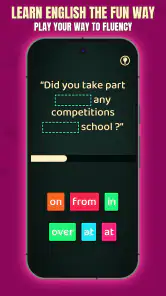
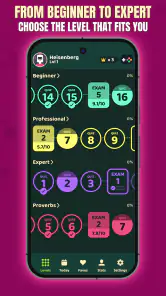
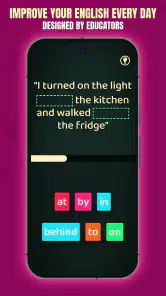
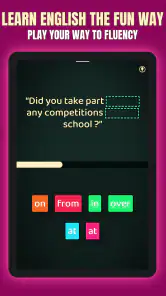
Learning English grammar can feel strangely difficult when the rule makes sense on paper but disappears the moment you need to build a sentence. Learn English w/ Grammar Games takes a narrower, more practical approach: it asks me to place prepositions correctly and use that decision to form complete English sentences. I found that focus useful because prepositions are small words with a large effect on meaning, and they are easy to overlook during ordinary study.
This is an educational game from Gamiak, aimed at people who want grammar practice to feel more active than reading explanations. It is available for Everyone, costs $6.49, and has reached over 50K installs with an average rating of 4.3 from around 475 ratings. Those figures suggest a modest but established audience rather than a huge mainstream learning platform. My overall impression is that it works best as a focused practice tool, not as a complete English course.
How the game feels during ordinary practice
The central idea is simple enough to understand immediately. Instead of beginning with a long grammar lesson, I work with sentences and decide where the preposition belongs. That makes the activity feel closer to solving a small language puzzle than completing a traditional worksheet. The game format gives the practice a clear target, which is helpful when I only have a few minutes and do not want to decide what topic to study.
Its strongest quality is the way it puts grammar into context. Memorizing a list such as “in,” “on,” “at,” or “to” is rarely enough, because the correct choice depends on the sentence. By building sentences, I have to think about the relationship between words rather than simply recognize a definition. That is a more useful mental habit for learners who understand basic vocabulary but still hesitate when writing or speaking.
I would not treat the game as a replacement for a textbook, teacher, conversation partner, or broad language app. Its scope is deliberately focused. Someone who needs pronunciation work, listening exercises, vocabulary expansion, or a complete beginner course will need other resources alongside it. The value here comes from repetition and attention to sentence structure.
What makes the focused format useful
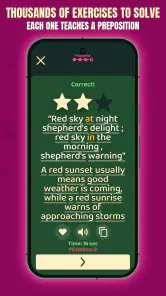
A useful way to approach the game is to stop treating each answer as a pass-or-fail moment. When I make a mistake, I try to say the full sentence aloud and ask what relationship the preposition expresses: place, time, direction, connection, or another meaning. That extra step turns a quick game round into a small lesson. It also exposes a common weakness in grammar practice: recognizing the right answer is easier than producing it independently.
Another practical method is to keep a short list of sentences that caused hesitation. I would not write down every item. I would save only the confusing patterns, such as sentences where two prepositions seem possible but change the meaning. Reviewing those examples later is more effective than replaying everything without reflection. The game supplies the prompt; the learner still has to create the lasting connection.
The format should appeal especially to learners who lose concentration during explanations. It is also suitable for a parent or tutor who wants a compact activity to use between more structured lessons. Because the content rating is Everyone, it can fit a family learning setting, although the learner’s actual English level matters more than the age label.
Speed, stability, and demanding study sessions
What to expect from everyday responsiveness
From a user’s perspective, this is the kind of game where responsiveness matters more than visual spectacle. The activity is based on sentence decisions, so delays would be noticeable mainly because they interrupt concentration. In normal use, I would expect the simple presentation to make it easy to move from one exercise to the next without the feeling of operating a large, complicated game. The current version is 2.1, and that gives the app a more settled impression than an unfinished first release.
Still, I would separate perceived speed from learning quality. Fast answers are not automatically productive answers. If I rush through the choices, I may remember the position of an answer without understanding why it works. The best pace is deliberate: read the entire sentence, identify the relationship being described, choose the preposition, and then repeat the completed sentence. That workflow makes the game feel slower, but the practice becomes more valuable.
The app’s educational design also means that heavy use is more likely to challenge my attention than my device. A long session can become repetitive because the same grammatical focus remains central. I would use short blocks rather than treating it like an endless arcade game. Ten focused minutes can be more useful than continuing after I stop thinking carefully.
Using it during a realistic daily routine
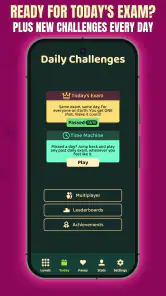
A realistic scenario would be a learner commuting, waiting for an appointment, or taking a short break after work. I could complete a few sentence exercises, note one or two errors, and then close the app before the activity becomes background noise. Later that day, I could try to use the same prepositions in a message or spoken sentence. This two-stage routine—game practice followed by real use—is where I see the greatest benefit.
For a student preparing for a grammar assignment, the app can serve as a warm-up. I would use it before opening notes because it quickly reveals which prepositions feel uncertain. However, I would not rely on it to explain every mistake in depth. If a learner needs a detailed rule, exceptions, or a comparison between similar constructions, a reference source or teacher may be the better next step.
For a more advanced learner, the trade-off is different. The basic exercise may feel too narrow if prepositions are already comfortable. In that case, the app could still help with occasional accuracy checks, but it is unlikely to provide enough variety for someone seeking advanced writing practice. Its focused design is a strength for targeted improvement and a limitation for broad progression.
Reliability in the way I would use it
Reliability is not only about whether an app opens. For a learning game, it also means that the activity remains understandable, consistent, and easy to return to. A stable routine matters because grammar improves through repeated exposure. If I use the game irregularly, I am less likely to notice patterns; if I use it in short, repeatable sessions, it becomes easier to build a habit.
The install history and rating give the app a reasonable level of public validation, with more than 50K people having installed it and a 4.3 average. I would interpret that as encouraging rather than conclusive. A rating cannot tell me whether the material matches my level, and a small educational game can suit one learner much better than another. I would judge it by the specific need for preposition practice rather than by popularity alone.
Recovery is also worth considering in practical terms. If I pause a session because I am interrupted, I would prefer to return with a clear sense of what I was doing rather than feeling lost. The straightforward exercise concept helps here: there are fewer moving parts to remember than in a large role-playing game or a multi-course language platform. That simplicity is useful when the app is part of a busy routine.
At the same time, I would avoid making it my only record of progress. I would keep personal notes of recurring errors, especially if I am studying toward an exam or trying to improve workplace writing. The game can provide repeated decisions, but my own examples show whether the lesson has transferred into real English.
Device limits and the cost of choosing a focused tool
The minimum operating-system requirement is Android 7.0, so people using very old Android devices should check compatibility before planning around it. For supported devices, the app’s compact educational purpose should be less demanding than a modern 3D game, although I would not choose it for graphics or entertainment value. Its role is to make grammar practice accessible and repeatable.
The $6.49 price changes how I evaluate it. I would be comfortable recommending the purchase to someone who specifically struggles with prepositions and prefers game-like drills, because a focused tool can be worthwhile when it gets used regularly. I would hesitate for someone who only wants a general introduction to English. That learner may receive better value from a broader course that combines vocabulary, listening, pronunciation, and grammar in one study path.
There is also a device-related trade-off in studying on a phone. A small screen is convenient for short sessions, but it may encourage quick tapping rather than careful reading. I would increase the text size if the device allows it, hold the phone at a comfortable distance, and avoid playing when tired. Grammar depends on noticing small differences, and eye strain or rushed input can make the activity less effective.
Resource demands should be judged by purpose rather than by comparison with demanding games. This is not an app I would install for visual immersion, sound design, or competitive play. The important question is whether it remains comfortable during repeated sentence work. Its narrow educational format suggests that the main limitation is likely to be the learner’s patience and level fit, not the need for a powerful gaming device.
Who should use it, and who should choose something else
I would recommend it to an English learner who knows a fair amount of vocabulary but repeatedly mixes up short connecting words. It also suits people who prefer learning by answering rather than reading a grammar chapter first. A teacher could use it as an independent exercise, while a self-directed learner could make it part of a daily correction routine.
I would skip it if my main goal were conversation fluency, accent improvement, listening comprehension, or advanced composition. The game’s sentence-building focus cannot cover those areas by itself. I would also look elsewhere if I needed a carefully sequenced course from the alphabet onward, progress tracking across many language skills, or extensive explanations of grammar exceptions.
Compared with a paper workbook, the game is more immediate and easier to use in a spare moment, but a workbook may offer fuller explanations and space for written production. Compared with a broad language-learning app, it is less comprehensive but potentially more concentrated. Compared with a teacher, it offers convenience and repetition but not personal diagnosis. That comparison explains its proper place: it is a practice companion, not a complete learning environment.
One of the less obvious trade-offs is that a correct answer can create false confidence. I may recognize the right preposition when the choices are visible but still choose incorrectly in free writing. To prevent that, I would close the app after a session and write three original sentences without looking back. If I cannot use the pattern independently, I know I have practiced recognition rather than mastery.
My performance verdict after weighing the experience
Gamiak has made a sensible educational game for a specific grammar problem. The experience is strongest when I use it in short, attentive sessions and connect each answer to a sentence I might actually say or write. The focused design keeps the task approachable, and the current 2.1 version, Everyone rating, and established install base make it feel like a practical option for supported Android devices.
My reservations are equally clear. The price is difficult to justify if I want a full English curriculum, and repeated preposition exercises may not hold the attention of learners who need more variety. The app also cannot replace production practice, listening, or explanations from a reliable teacher or reference. Those are not minor details; they determine whether the purchase fits the learner.
My recommendation is straightforward: choose it when prepositions are the specific weakness you want to attack. Use each exercise as a prompt, speak the completed sentence, record the patterns that cause trouble, and test them later in your own writing. Used that way, this small educational game can give focused grammar practice without demanding a large study session. If your needs are broader than sentence construction, spend the same attention on a more complete language course instead.
Pros
- Short grammar games make practice feel less repetitive.
- Covers common grammar topics for beginner and intermediate learners.
- Quick exercises fit easily into short daily study sessions.
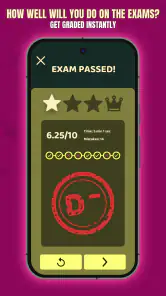
- Immediate feedback helps identify mistakes while practicing.
- Useful for learners who prefer interactive practice over textbooks.
Cons
- Some exercises may feel too basic for advanced English learners.
- Repeated question formats can become monotonous over time.
- Explanations may not provide enough detail for difficult grammar rules.
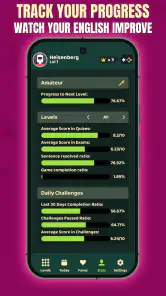
- Progress tracking may be limited compared with dedicated language courses.
- An internet connection may be required for some app features.
- Category
- Educational
- Version
- 2.1