Infinite Italian
- 58.00
- 4.7
- Installs
- 50.00K
- Price
- Free

Screenshots


Analysis by Reviewed
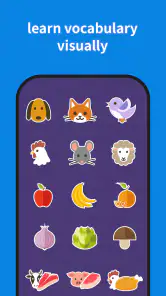
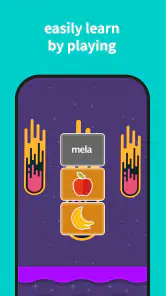
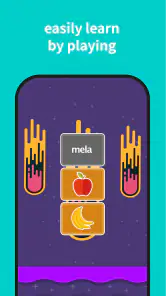
I approached Infinite Italian as a small daily learning game rather than as a replacement for a complete Italian course. That distinction matters. Its focus is vocabulary practice through interactive lessons, quizzes, and flashcards, so it makes the most sense when you want repeated contact with useful words without opening a heavy textbook or committing to a long study session.
My overall impression is positive. The game feels approachable, free to start, and easy to fit around ordinary routines. It is listed as an educational game from Jernung, and its average rating of 4.7 from nearly nine hundred ratings suggests that many learners find the format worthwhile. I can see why: turning vocabulary review into short challenges removes some of the resistance people feel when studying from a plain word list.
At the same time, I would not treat it as a complete path to speaking Italian. Vocabulary recognition is only one part of language learning. You still need listening, pronunciation, grammar, and real conversation elsewhere. The best way to use this app is as a focused practice tool, especially when your main problem is forgetting words between more serious study sessions.
Where the experience usually gets stuck
Starting with the wrong expectation
The first possible stumbling block is expecting a full course. Infinite Italian is built around vocabulary gaming, not around a broad curriculum that takes you from absolute beginner to comfortable conversation. The store summary highlights interactive lessons, quizzes, and flashcards, and that gives a fair picture of its role: it helps you encounter and revisit words in an active way.
If you open it expecting detailed explanations of verb forms, long speaking exercises, or extended dialogues, the experience may feel narrower than you hoped. I would use it to build a working word bank, then pair it with another resource for grammar and listening. That combination is more realistic than asking one lightweight game to cover every part of Italian.
Why a correct answer can still feel unfamiliar
Multiple-choice and flashcard practice can create a useful first layer of memory, but recognition is easier than recall. I might recognize an Italian word when I see four options and still fail to produce it during a conversation. That is not necessarily a flaw in the game; it is a reminder to change how I use the material.
A practical routine is to pause before selecting an answer and say the word aloud, even if the app only asks me to tap it. After a session, I can cover the translation and try to retrieve the Italian word without visual help. This turns a quick game round into a stronger memory exercise without requiring any special feature or extra setup.
The danger of playing without a review rhythm
Because the format is casual, it is easy to complete a few activities and then move on without returning to difficult vocabulary. That can create the pleasant feeling of progress while leaving weak words untouched. I found the app more useful when I treated mistakes as a to-do list rather than as something to dismiss immediately.
When a word repeatedly causes trouble, I would write it in a small personal note with one short example sentence. The important point is not to copy a huge list. Five troublesome words are enough for a later review. This workflow makes the game support long-term learning instead of becoming a series of disconnected taps.
Who benefits most from this format
This game is a good fit for a beginner who wants a gentle first contact with Italian vocabulary, a returning learner rebuilding confidence, or a student who needs a quick warm-up before a lesson. It can also suit someone who dislikes flashcard apps that feel purely mechanical, because the game framing gives each short session a clearer sense of activity.
I would be more cautious recommending it to an advanced learner seeking nuanced vocabulary, detailed grammar correction, or natural conversation practice. It is also not the best single choice for a person who learns mainly through audio or who needs a structured speaking course. In those cases, a dedicated listening or conversation app would probably deserve more of the study time.
Setup checks before blaming the game
Start with the device requirements
The current version is 4.6.0, and the game requires Android 7.0 or later. That is the first check I would make if installation or launching becomes a problem. A phone that is below the minimum operating system cannot be fixed by reinstalling the app, so checking compatibility first saves unnecessary troubleshooting.
The game is free to install and is marked for Everyone, which makes it easy to try in a family setting or on a spare device. There are in-app purchases priced at $6.99 per item, so I would also review the purchase controls on the device before handing it to a child. The age rating does not remove the need for ordinary account and payment awareness.
Give the first launch a clean start
For a smoother beginning, I would close other demanding apps, confirm that the device has enough free storage, and use a stable connection during installation or updates. These are simple checks, but they separate an app problem from a phone that is already struggling with storage, memory, or connectivity.
If the game opens but behaves strangely, I would first close it completely and reopen it. If that does not help, restarting the device is a sensible next step. I would avoid clearing app data immediately, because that can remove local progress or preferences. A reset should be a later option, not the first reaction to one failed session.
Keep the learning environment distraction-free
Setup is not only technical. The location and timing of practice affect whether the game becomes useful. I prefer using it in a quiet five-to-ten-minute gap, with notifications silenced, rather than opening it while switching between messages and other tasks. Vocabulary needs attention, even when the activity itself is light.
A helpful arrangement is to keep a notebook or note-taking app nearby for words that repeatedly cause mistakes. I would not try to record every item, because that turns a quick game into administrative work. Capturing only stubborn words creates a personal review layer while keeping the main experience fast.
Understand what “free” means in practice
Since the app is free but includes paid items, I would begin by exploring the freely available experience before deciding whether an optional purchase adds enough value for my routine. The right question is not simply whether an item costs money; it is whether it improves the specific practice I am missing.
For a casual learner, the free starting point may be enough to decide whether the lesson-and-quiz format fits. For someone using it every day, a purchase might be more reasonable if it removes a limitation that genuinely interrupts study. I would make that decision after several sessions, not during the excitement of the first launch.
Recovering a useful workflow after interruptions
What to do after missing several days
If I stop using the game for a week, I would not attempt to compensate with one unusually long session. That usually feels punishing and encourages another break. Instead, I would return with a short review, identify the words that have faded, and rebuild the habit with manageable sessions.
The strongest recovery method is to combine recognition with production. First, I can answer normally inside the game. Then I can close it and recall a handful of words from memory, saying them aloud or writing them down. This exposes the difference between “I know that when I see it” and “I can use that when I need it.”
A realistic daily scenario
Imagine that I am preparing for a trip and have a few minutes while waiting for a bus. I would play one short round, pay attention to the words I miss, and make a note of the most useful ones. Later that evening, I would review those words without looking at the choices and try to place each in a simple phrase.
The next day, I would use the game again but focus on accuracy rather than rushing through the activity. On the third day, I would test myself away from the screen. This three-step pattern—interactive recognition, personal notes, and independent recall—gets more value from the app than simply repeating the same quiz until every answer feels familiar.
When a session feels too easy
Easy rounds are not automatically wasted. They can help maintain momentum, especially for a beginner. However, if I answer everything through visual recognition without thinking, I would add a small challenge myself: hide the translation, pronounce the word before tapping, or create a sentence that connects it to something familiar.
Another useful adjustment is to group words by personal relevance. If a word relates to food, travel, work, or family, I can imagine a real situation where I would use it. This makes the practice less abstract and gives the vocabulary a retrieval cue that a bare list does not provide.
When mistakes keep repeating
Repeated errors deserve diagnosis rather than endless repetition. Sometimes I have confused two similar-looking words; sometimes I have forgotten the sound; sometimes I never understood the meaning clearly in the first place. I would write the troublesome pair separately and add a short contrast, such as “this one is used for...” and “that one is used for...”
I would also avoid assuming that a wrong answer means I need more speed. Slowing down can reveal whether the problem is memory, reading, or attention. If the game remains difficult because I am tired or distracted, a later session may teach more than forcing another round immediately.
Using it alongside traditional alternatives
Compared with a paper vocabulary list, the game offers more immediate interaction and makes it easier to test whether I recognize an item. Compared with a conventional flashcard app, its educational-game identity may feel less dry and more inviting for short sessions. Those are meaningful advantages when motivation is the main obstacle.
Traditional flashcards can still be better when I need complete control over the word list, custom examples, or a deliberate recall schedule. A structured language course is better for grammar progression, while podcasts and conversation practice are better for understanding Italian at natural speed. I would place Infinite Italian between these tools: more engaging than a static list, but less comprehensive than a full course.
When the app is not the cause
Separating technical trouble from learning difficulty
Not every frustrating session indicates a software problem. If the game launches normally but the words seem impossible, the issue may be level, fatigue, or missing background knowledge. I would test the same activity at a different time of day before deciding that the app is malfunctioning.
Likewise, if progress feels slow, I would examine the study method. Tapping answers without speaking, writing, or recalling them independently can make improvement look weaker than expected. The game can present practice, but I still have to convert recognition into usable memory.
Connection and update checks
If content does not load or an update appears stuck, I would check the connection with another ordinary app, switch between available networks when practical, and retry after restarting the game. If other apps also fail, the wider connection is the more likely source of trouble.
For installation problems, I would check operating-system compatibility, available storage, and whether the device’s app store is functioning normally. Reinstalling repeatedly is rarely the best first move. If the app works on another compatible device but not on one particular phone, that comparison can help identify a device-specific issue.
Managing expectations about pronunciation and conversation
I would not use vocabulary-game performance as proof that I am ready for a spoken Italian conversation. Recognizing a word on screen does not test listening under pressure, pronunciation, or the ability to build a sentence quickly. If those are my goals, I need to add speaking and audio work rather than blaming the game for not being a conversation partner.
This is also why I would avoid judging the app by standards meant for a different category. Its value is concentrated practice with vocabulary. It is successful when it helps me remember more words and return to study willingly, not when it tries to imitate every part of language education.
Privacy, purchases, and shared devices
On a shared phone or a child’s device, I would pay attention to the purchase setup because individual in-app items cost $6.99. I would make sure the person using the device understands which parts are free to try and which actions may involve a purchase. That small precaution prevents an otherwise harmless educational game from creating an avoidable billing surprise.
The Everyone rating makes the app broadly approachable, but suitability still depends on the learner. A young user may enjoy the game-like format, while an adult beginner may prefer a more explicit explanation of why a word is used. I would choose the companion materials around the learner’s needs rather than assuming the age rating describes the depth of instruction.
My practical verdict after using it as a study companion
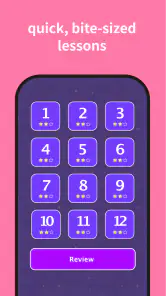
Infinite Italian is most convincing as a low-pressure vocabulary habit. I like it for filling small gaps in the day, refreshing words before a trip, and giving a reluctant learner an easier entry point than a dense coursebook. The combination of lessons, quizzes, and flashcards gives practice some variety, while the game format makes a short session feel less like homework.
Its limitations are just as important. It should not be my only Italian resource if I want to understand real conversations, master grammar, or speak with confidence. I also need to take responsibility for deeper recall, because selecting a correct answer is not the same as producing the word naturally. The app works best when I add a few seconds of speaking, writing, or independent testing around each session.
The developer is Jernung, and the game has passed fifty thousand installs, giving it a meaningful user base without making popularity the main reason to choose it. I would try the free experience first, confirm that my device meets the Android requirement, and use the first few sessions to see whether the pacing suits me. The current version is 4.6.0, and the game is available for Everyone, so the initial barrier is relatively low.
My recommendation is therefore specific: choose it if you want a friendly vocabulary refresher that you can open for a few minutes at a time. Skip it as your primary tool if you need a complete Italian syllabus, extensive audio training, or direct conversation feedback. Used in the right role, it is a practical supplement—especially when paired with a notebook, a listening source, and occasional real speaking practice.
For me, the deciding advantage is not that it makes Italian effortless. It is that it makes returning to vocabulary less intimidating. If I use the game deliberately, revisit difficult words, and recognize where its scope ends, it can turn otherwise empty moments into useful study without pretending to replace the rest of the language-learning process.
Pros
- Covers practical vocabulary for everyday Italian conversations.
- Short lessons make it easy to study during brief free moments.
- Includes listening practice to improve recognition of spoken Italian.
- Useful for learners building confidence with common phrases.
- Simple interface keeps the learning process focused and accessible.
Cons
- Limited depth for advanced learners seeking complex grammar practice.
- Some content may feel repetitive after extended use.
- Requires consistent practice to deliver noticeable progress.
- Pronunciation feedback may not replace guidance from a native speaker.
- Offline access and available features may vary by subscription plan.

- Category
- Educational
- Version
- 4.6.0