Hole Busters 3D
- 684.00
- 4.7
- Installs
- 100.00K
- Price
- Free

Screenshots
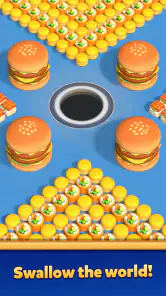

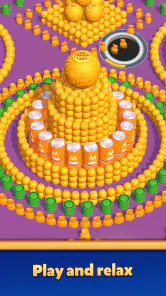

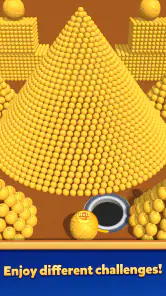
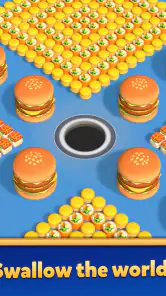

Analysis by Reviewed
I did not expect a game built around a black hole to hold my attention for long, but Hole Busters 3D quickly found a comfortable place in my short-break routine. It is a free puzzle game from DREAMPLAY in which the simple idea of guiding a hole through objects becomes a relaxed, tactile challenge. The appeal is immediate: you look at a crowded scene, decide what can be swallowed, and try to keep the hole moving without wasting opportunities.
That simplicity is also the reason I would not recommend it to everyone. If you want a deep puzzle system with elaborate planning, complex rules, or a strong story, this is not the right direction. If you want something easy to understand, visually satisfying, and suitable for a few minutes at a time, it makes a much stronger case. My experience with it was best when I treated each stage as a small exercise in observation rather than a serious test of logic.
How the basic play loop feels in everyday use
The baseline workflow is wonderfully clear. I start by scanning the scene, identify the objects that can be consumed, and guide the black hole toward them. The central decision is not simply “move toward the nearest item.” I have to consider the order of objects, the available space, and whether swallowing one piece will make the next target easier to reach. That gives the game more thought than its one-line concept might suggest.
What makes the experience relaxing is the low barrier to entry. I do not need a long tutorial session before understanding what to do. The visual feedback makes the main action obvious, and the 3D presentation gives movement a satisfying sense of depth. Even when I make a poor choice, the mistake feels understandable rather than mysterious. I can usually see whether I moved too early, approached from the wrong angle, or ignored a better sequence.
A realistic use case is a short wait at a bus stop or a few spare minutes after finishing a task. I can open the game, complete a small portion of play, and put the phone away without needing to remember a complicated story or rebuild a large strategy. That makes it more convenient than many traditional puzzle games, which often demand longer concentration before a level feels complete.
I also found that the game works better with a calm, deliberate rhythm than with constant swiping. Rushing toward the first visible object can leave the hole in an awkward position. My repeatable habit is to spend a moment reading the whole layout, then begin with the safest nearby target. Once the hole grows or the path opens, I can make more confident moves. This small pause saves more frustration than trying to correct every mistake through faster movement.
The game’s age rating of Everyone is consistent with its approachable presentation. I would be comfortable suggesting it to a broad audience looking for a light puzzle experience, although younger players may still benefit from understanding that optional purchases are available. The game itself is free to start, while individual in-app purchases range from $0.99 to $104.99. That difference matters: the download is easy to try, but families should review purchase settings before handing over a device.
Why the black-hole idea works better than a standard matching puzzle
Compared with match-three games, Hole Busters 3D is less about building combinations and more about spatial reading. There is no need to wait for a board to reshuffle or search for a chain of identical pieces. Compared with classic sliding puzzles, it feels less rigid because the action is continuous and visually direct. The result is not necessarily deeper, but it is more immediately physical.
That physical quality is the game’s strongest advantage. Watching objects disappear into the hole gives every successful move a clear reward. I can understand the state of the board without translating symbols or numbers into an abstract plan. For players who enjoy the feeling of clearing space, this is more inviting than a conventional grid-based puzzle.
The trade-off is that the game may feel lightweight to people who prefer puzzles with several possible solutions, long-term progression, or demanding deduction. Its satisfaction comes from the moment-to-moment interaction and the gradual improvement of timing and route choice. It is not the sort of game I would choose when I want a difficult mental workout comparable to a dedicated logic title.
Settings and habits that make short sessions smoother
Before settling into regular play, I recommend checking the device’s sound and notification behavior rather than assuming the default setup will suit you. A relaxing game can become less relaxing if effects interrupt music, a podcast, or a quiet room. I usually lower the game’s audio when I am playing alongside another activity, and I keep the phone’s general notification controls in mind so a short session does not become distracting.
It is also worth checking the game’s available options after installing an update. The current version is 1.6.3, and settings can be easy to overlook when the main attraction is the playfield itself. I look for controls related to audio, vibration, and other presentation choices, then adjust them to match the way I intend to play. I do not treat settings as a one-time chore: a configuration that feels good with headphones may be less comfortable in a quiet public place.
Another practical habit is to decide in advance whether I am playing for relaxation or for cleaner performance. When I am relaxing, I accept slower movements and focus on the satisfying visual response. When I want to improve, I restart my attention before each scene and avoid impulsive swipes. Mixing those goals can make the game feel inconsistent, because a casual mistake matters very little in one mood and feels annoying in the other.
I would also keep purchase protection active on any shared device. The free entry point is useful for testing whether the game fits your taste, but the presence of optional items means it should be treated like any other free-to-play title. I prefer to play without assuming that spending will make the basic loop more enjoyable. If the core movement does not appeal to me, buying extras would not solve that problem.
Faster patterns that improve control without rushing
The most useful technique I developed was to think in routes instead of individual objects. Rather than moving toward whatever is closest, I look for a sequence that keeps the hole in open space. A target that appears slightly farther away may be the better first choice if consuming it creates a clean line toward several other objects. This is a small but meaningful shift from reaction to planning.
I also try to approach objects from angles that leave room for the next move. A successful swallow is not always a good move if it pushes the hole against a boundary or into a crowded corner. When the scene allows it, I prefer a broad approach that lets me redirect immediately. This habit is especially helpful when several objects are close together and the visual effects make the board temporarily harder to read.
Another repeatable pattern is to separate safe targets from risky ones. I begin with objects that are easy to reach and unlikely to disrupt the route. Then I use the clearer space to judge whether the more awkward targets are worth pursuing. This reduces the temptation to gamble at the beginning of a stage, when I have the least information about how the layout will develop.
For players who want faster sessions, the best shortcut is not frantic input. It is a consistent opening routine: scan, choose a safe first target, preserve open movement, and reassess after the scene changes. Once that sequence becomes automatic, the game feels quicker without becoming careless. I found this more reliable than trying to memorize layouts, because the useful decision is usually about the current arrangement rather than a fixed script.
There is also a useful distinction between visual speed and actual efficiency. Moving quickly can make a stage feel energetic, but it does not necessarily reduce mistakes. In my experience, a controlled swipe followed by a brief visual check is better than several fast corrections. The game rewards awareness of position, so input discipline matters more than raw hand speed.
Where the relaxing design starts to show its limits
Hole Busters 3D is at its best when I want a simple, forgiving puzzle activity. Its limits become clearer when I ask it to provide long-term depth. The central action remains familiar, and players who need constantly changing rules may eventually want something more demanding. The game’s strength is approachability, not a large collection of systems that require study.
The 3D presentation can also create occasional visual uncertainty. Objects may overlap from the camera angle, and a route that looks open at first can feel less clear once movement begins. I learned to rely on the actual position of the hole rather than the apparent distance between objects. When a scene looks crowded, slowing down is more effective than trying to force a path through it.
Another limitation is that the game’s relaxing tone will not satisfy players who want pressure, competition, or a strong sense of consequence. Someone looking for timed rankings, elaborate strategic progression, or a story-driven reason to continue may find the experience too modest. In that case, a traditional logic puzzle, a competitive arcade title, or a more structured puzzle adventure would be a better choice.
I would also avoid presenting it as a replacement for every kind of puzzle game. Match-three games are often better when I want familiar pattern recognition and quick combo-building. Sudoku and similar number puzzles are better when I want sustained concentration without movement-based input. Hole Busters 3D occupies a narrower but pleasant space: it is a visual, spatial distraction with a gentle learning curve.
The free-to-play structure deserves a realistic look as well. The game is accessible without an upfront price, which lowers the risk of trying it, but optional purchases can change how different players experience the broader package. I would recommend deciding on a personal spending boundary before playing, especially on a family device. The core question should be whether guiding the hole is enjoyable on its own, not whether purchases might compensate for a lack of interest.
Who should install it, and who should skip it
I would recommend this game to anyone who enjoys short, visually clear puzzle sessions. It suits players who like clearing objects, making simple route decisions, and improving through small changes in timing. It is also a good fit for people who find dense menus and complicated tutorials tiring. The Everyone rating and free starting price make it easy to test without committing to a substantial purchase.
It is particularly useful as a transition game between activities. I can play it when I want something more engaging than scrolling but less demanding than a full strategy game. The stages give my attention a specific target, while the simple controls keep the mental overhead low. That balance is why I can imagine returning to it during short breaks rather than reserving it only for long evenings.
I would skip it if my main goal were deep deduction, competitive mastery, or a narrative campaign. Players who dislike repetitive interaction may also lose interest, because the pleasure depends heavily on the continued satisfaction of moving the hole through objects. If that action does not feel rewarding during the first few sessions, more time is unlikely to transform it into a completely different kind of game.
The developer, DREAMPLAY, has positioned the experience around a straightforward concept rather than an intimidating puzzle framework. That clarity is welcome, but it also means expectations should stay realistic. I see it as a polished casual diversion, not as a substitute for a serious logic-training app or a feature-heavy arcade game.
My verdict after building a repeatable play style
Hole Busters 3D succeeds because it understands the value of one strong interaction. Guiding a black hole through a 3D scene is easy to grasp, pleasant to watch, and flexible enough to support small improvements in planning. My best sessions came from using a steady routine: inspect the layout, choose a safe route, protect open space, and slow down whenever the camera made the scene unclear.
The public response is encouraging, with a 4.7 average from over 11K ratings and more than 100K installs. Those figures suggest that the accessible design is connecting with a substantial audience, while the game’s 684 reviews show that many players have taken the time to share their impressions. I would not use popularity as a substitute for personal taste, but it matches my view that the basic loop is easy to enjoy.
My recommendation is simple: try it when you want a calm spatial puzzle, but do not expect a deep strategy game. Keep purchase controls in place, adjust the sound and vibration to fit your surroundings, and use deliberate routes instead of frantic movement. With those habits, the game feels smoother and more rewarding. Without them, crowded scenes and the lightweight progression may become noticeable sooner.
For me, the final appeal is its honesty as a casual game. It does not need a complicated explanation to be fun, and it does not demand a large time commitment. If the idea of clearing a path with a growing hole sounds satisfying, this is an easy recommendation. If you need layered rules, competitive tension, or a substantial story, choose another puzzle format. For the right player, though, Hole Busters 3D is a pleasant little game to keep ready for those moments when a few quiet minutes are exactly what you need.
Pros
- Simple controls make it easy to start playing immediately.
- Short levels are convenient for quick gaming sessions.
- Colorful 3D visuals give the game a cheerful appearance.
- Progression gradually introduces new challenges and obstacles.
- Offline play is useful when you have no internet connection.
Cons
- Gameplay can become repetitive after extended sessions.
- Some levels may feel too easy for experienced players.
- Ads may interrupt the experience between levels.
- Limited customization reduces long-term personalization options.
- Performance may vary on older or less powerful devices.

- Category
- Puzzle
- Version
- 1.6.3