Fish Sort Puzzle
- 627.00
- 4.8
- Installs
- 1.00M
- Price
- Free
Screenshots


Analysis by Reviewed
I like puzzle games that give me a small, satisfying problem to solve without demanding a long session. Fish Sort Puzzle caught my attention for that reason: its premise brings fish and sorting together, but the real appeal is the familiar pleasure of looking at a crowded board and working out a sensible order of moves. My impression is that it suits short breaks best, especially when I want something more hands-on than a passive time-killer.
It is a free puzzle game from Shycheese, rated for Everyone, and its 4.8 average from around 66,000 ratings suggests that many players have found the format appealing. It has passed one million installs, so it is not an obscure experiment. Those figures are useful context, but they do not tell me whether every player will enjoy its rhythm; that depends on how much you like sorting puzzles and how patient you are when a board takes a few attempts.
What the sorting puzzle asks of you
A simple idea that rewards looking ahead
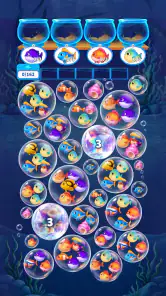
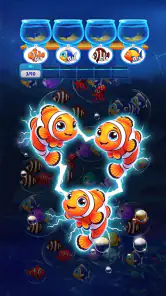
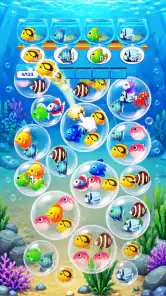
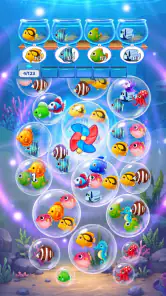
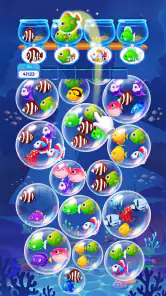
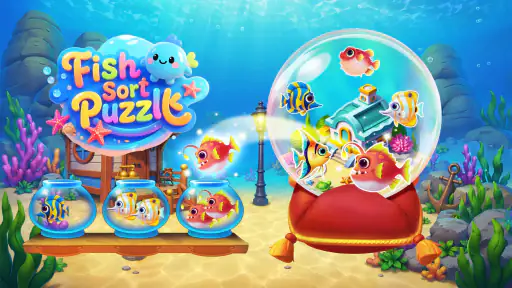
The central task is to sort fish, with the fishbowl setting giving the puzzle a lighter, more playful identity than a plain row of colored pieces. The basic appeal is easy to understand: inspect what is in front of you, choose a move, and try to bring order to the arrangement. That makes the game approachable even if you do not usually play puzzle games. You do not need a complicated story or a long tutorial to grasp why one move might help and another could make things harder.
Articles Related to Fish Sort Puzzle
That simplicity also puts the quality of your decisions in the foreground. A useful habit is to pause before moving a fish and ask what space the move will open up, not only what it will complete immediately. In sorting puzzles, a move that looks productive can leave awkward pieces trapped behind others. Thinking one or two steps ahead is a better strategy than tapping quickly, particularly when the board is already crowded.
I would treat each board as a small planning exercise rather than a reflex challenge. If a move seems to reduce your options, look for a different order instead of repeating the same sequence. This kind of deliberate play is one of the game’s strongest potential attractions: the satisfaction comes from seeing a route through the arrangement, not from speed alone.
Why short sessions make sense
The format is well suited to spare moments: a break between tasks, a quiet wait, or a few minutes before putting your phone away. A single puzzle gives your attention something definite to work on, and the fish theme keeps the presentation from feeling like a bare logic worksheet. I can imagine reaching for it when I want a modest mental reset rather than a game that requires remembering a plot or coordinating with other people.
There is a practical trade-off, though. A sorting puzzle can be easy to pick up but still demand concentration once the arrangement becomes difficult. If you are interrupted, you may need a moment to reconstruct which moves you had already considered. For the best experience, I would play when I can give a board a little uninterrupted attention, even if the session itself is brief.
You May Like

How Microsoft OneDrive Became a Mobile Productivity Giant

How Google Translate Breaks Language Barriers Effortlessly

Why Google Sheets Is the Ultimate Mobile Productivity Tool

Unveiling the Dynamic World of My Talking Tom Friends

Free Fire MAX: Dominating the Battle Royale Arena

Free Fire: Winterlands – The Ultimate Winter Gaming Adventure
Another helpful approach is to stop after a frustrating run instead of making increasingly impulsive moves. A short pause can make the arrangement easier to read when you return. That is not a special in-game feature; it is simply a sensible way to get more enjoyment from a puzzle whose challenge comes from careful choices.
Progress without turning every move into pressure
Some players want a puzzle game to be relaxing, while others enjoy the tension of trying to avoid a dead end. Fish sorting naturally sits between those moods. The same board can feel calm when you are testing possibilities slowly and stressful when you are determined to solve it immediately. I would recommend approaching it as a sequence of experiments: a failed attempt can still teach you which pieces are blocking useful routes.
That mindset matters because the available facts do not establish a particular progression system, a timer, a lives limit, or a penalty for mistakes. I would not assume that the game pressures you in any of those ways. Instead, judge the experience by how you respond to the sorting task itself. If you enjoy reconsidering a plan, the challenge may feel satisfying; if you strongly dislike restarting or revising moves, even a gentle puzzle can become irritating.
For a realistic everyday use, imagine having a few minutes while waiting for an appointment. I would open a board, make a couple of thoughtful moves, and stop if I had to leave rather than rush through the rest. This is a better fit for flexible downtime than for a situation where you need a guaranteed, precisely timed distraction.
How it compares with other puzzle choices
Compared with word puzzles, this game asks you to reason about arrangement rather than recall vocabulary. Compared with match-style games, its central interest is sorting and planning, not simply spotting a convenient match. That distinction makes it a good option if you like visual organization and prefer to work through a board at your own pace.
On the other hand, a conventional jigsaw puzzle may be more appealing if you want a larger picture to assemble, while a word game is a better choice if you want language practice. Players looking for a competitive puzzle with clearly described head-to-head rules should also compare alternatives before choosing this one; the available product details do not establish a competitive mode here. Fish Sort Puzzle is most compelling for someone who wants a compact, fish-themed sorting challenge, not a broad collection of puzzle formats.
The cartoon-fish framing gives the game a friendlier tone, but theme alone will not carry it for someone who dislikes sorting mechanics. I would decide based on the core action: if you enjoy organizing pieces and planning moves, the aquatic presentation is a pleasant bonus. If you need varied puzzle types to stay interested, a larger puzzle collection may be a better fit.
Spending, fairness, and what is clear
The game is free to download, with in-app purchase items listed in a range from $1.99 to $99.99 per item. That is the clearest spending context a prospective player should know before installing. The existence of purchases does not, by itself, show what they contain or whether they affect puzzle difficulty, progress, or convenience, so I would not treat them as proof that paying is necessary—or that the game is entirely free of purchase prompts.
If you are cautious about spending, my practical advice is to start without buying anything and see whether the basic sorting experience holds your interest. Before confirming a purchase, check the item description and the purchase screen carefully, and use your device’s purchase controls if other people can access your phone. This is especially sensible for a game that is rated Everyone, since a child-friendly rating is about content suitability, not a promise about spending arrangements.
On competitive fairness, I would keep expectations measured. I cannot infer multiplayer rules, rankings, or whether purchases offer an advantage from the confirmed facts, so there is no sound basis for calling the game pay-to-win or claiming that competition is perfectly balanced. If competitive integrity is a deciding factor for you, choose a game whose multiplayer and purchase effects are explicitly described. If you mainly want a solo sorting puzzle, that uncertainty may matter much less.
Compatibility and expectations before installing
The current version is 1.5111, and the minimum Android requirement is 6.0. That makes the stated compatibility threshold useful for checking an older device before downloading. The game is listed as a puzzle and is free to start, but I would still review the purchase information on your device before handing it to a child or allowing purchases through a shared account.
Its release date is March 26, 2026, so it is a recent arrival in the context of mobile games. A newer release can be appealing if you want to try something fresh, but it also means I would avoid assuming that every long-term detail—such as the amount of content or how the game will be supported—will match an established puzzle favorite. That is not a criticism of the sorting idea; it is a reason to judge the game by the experience you can play now.
One thing I would check during an initial session is whether the pace and level of challenge suit your patience. Do not decide solely from a quick glance at the fish theme. Spend enough time with a board to see whether you enjoy planning the order of moves, and notice whether you feel curious after a mistake or simply annoyed. That reaction is a more useful guide to long-term fit than a high rating alone.
Who I would recommend it to
I would point this game toward players who like visual sorting, short independent challenges, and a light cartoon presentation. It may be particularly comfortable for someone who wants a puzzle they can approach without learning a complicated control scheme or following a lengthy narrative. The Everyone rating also makes its content positioning clear, although adults should still manage purchase access as they would with any free-to-download game that offers paid items.
I would suggest skipping it if you are searching for a deep story, a wide range of puzzle genres, or confirmed competitive features. It is also not the right pick if sorting mechanics feel repetitive to you, since the fish theme cannot change the basic nature of the task. For those preferences, a narrative puzzle adventure, a word game, or a collection with several distinct modes would likely offer more variety.
Making the first session more useful
I would use an early session to learn how the board’s arrangement creates choices, rather than trying to race through it or judge the whole game from a few quick taps. When a move appears obvious, briefly consider what it exposes and what it might leave in the way. This simple check helps reveal whether you enjoy the central logic, and it can prevent a promising start from turning into a string of hurried guesses.
If you play in short bursts, it may help to leave yourself a mental note before putting the phone away: which fish or open space seemed most important, and what move were you considering next? There is no need to keep a written record for every board; the point is to make returning after an interruption less disorienting. This habit is especially useful when a puzzle has become engaging enough that you want to continue later but not so urgent that it deserves your full attention immediately.
For parents or anyone sharing a device, I would separate the content decision from the spending decision. The Everyone rating makes the game’s age positioning easy to understand, while the available purchase items are a separate reason to review device-level controls. That is a more practical way to decide whether a child can try it than assuming that a suitable content rating also settles every question about purchases.
My trust verdict is cautiously positive: the premise is clear, the game is free to try, and its popularity gives a prospective player a useful sign that others have responded well to it. The purchase range deserves attention, while the specific effects of those purchases should not be guessed at. I would try it for relaxed, move-by-move sorting and keep expectations focused on that appeal. If arranging fish into a cleaner order sounds satisfying to you, Fish Sort Puzzle is a reasonable candidate for your next short puzzle session.
Fish Sort Puzzle Frequently Asked Questions
What is Fish Sort Puzzle?
Fish Sort Puzzle is a casual sorting game built around organizing colorful fish into matching groups. You move fish between containers or spaces, following the level’s rules, until each group is correctly sorted. The simple premise makes it easy to understand, while increasingly crowded layouts can require careful planning. Exact features and presentation may vary between versions, so check the app listing for the edition available on your device.
How do you play Fish Sort Puzzle?
In a typical level, tap a fish or container and then choose a destination where the move is allowed. Your goal is to gather matching fish together, often filling each container with one type. Empty spaces can help you rearrange a difficult layout, but limited capacity or move rules may prevent careless choices. Take a moment to study the board before moving, and consult any in-game tutorial because controls and rules can differ by version.
Is Fish Sort Puzzle free to download, and does it include ads or in-app purchases?
The game may be offered as a free download, but that does not necessarily mean every feature is free to use. Many mobile puzzle games show advertisements or offer optional purchases, such as hints, extra moves, or ad removal. Monetization can differ by platform, region, and app version. Before installing, review the Google Play or App Store listing for current pricing, in-app purchase details, and the developer’s information about advertising.
Can I play Fish Sort Puzzle offline?
Some sorting puzzles allow their core levels to be played without an internet connection, while advertisements, cloud saves, events, or other online features may require connectivity. Offline availability can depend on the specific Fish Sort Puzzle version and may change after updates. If you need to play while travelling or without mobile data, check the store description and test the game offline after installation rather than assuming every feature will work without a connection.
Is Fish Sort Puzzle suitable for children, and what should I check before downloading?
The sorting concept is generally straightforward and may appeal to players who enjoy relaxed, logic-based puzzles, but suitability depends on the game’s content and monetization. Check the age rating, privacy details, advertising practices, and in-app purchase settings on your device’s app store. Parents may also want to use device-level purchase controls and review whether the game requests permissions or includes online features before allowing a child to play.
Pros
- Simple tap controls make sorting easy to learn.
- Short levels work well for quick play sessions.
- Colorful fish and animations make the board easy to read.
- Sorting mechanics offer a satisfying logic challenge.
- No internet connection is needed for basic play.
Cons
- Later levels can feel repetitive.
- Limited empty spaces may make mistakes costly.
- Ads may interrupt play or appear between levels.
- Some puzzles can require trial and error.
- The game offers little variety beyond sorting challenges.
- Category
- Puzzle
- Version
- 1.5111