Fill-Ins · Word Fit Puzzles
- 4.45K
- 4.7
- Installs
- 1.00M
- Price
- Free

Screenshots
Analysis by Reviewed
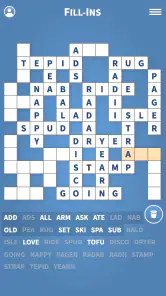
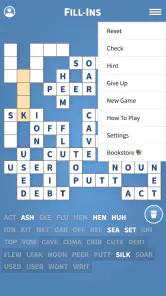
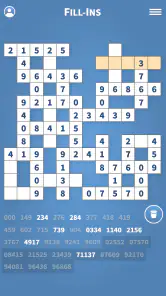
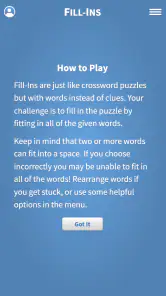
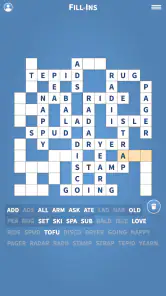
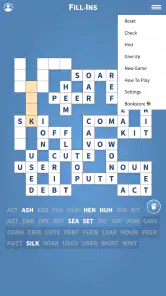
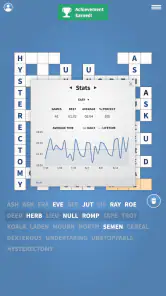
I first picked up Fill-Ins because it looked like the kind of word game that could work in the small gaps of an ordinary day: a few minutes while waiting, a quiet break, or a shared session on a tablet at home. It is a fill-in crossword game from Razzle Puzzles, and its central idea is simple: place the supplied words into a crossword-shaped grid so that every entry fits correctly. That sounds familiar, but the appeal comes from the way each puzzle turns vocabulary and deduction into one compact problem.
After spending time with it, I see it less as a traditional crossword and more as a logic exercise that happens to use words. You are not mainly searching for clues or recalling trivia. Instead, you compare word lengths, inspect crossing letters, and decide which placement gives you the strongest evidence for the next move. That makes it approachable for people who enjoy word puzzles but do not necessarily want a quiz full of obscure facts.
How it works in a shared household
A realistic use case is a shared phone or tablet in a household. One person can open a puzzle during a coffee break, then leave the device nearby for someone else to continue later. Because the action is turn-based in the broadest sense, there is no need for everyone to be present at the same moment. A parent might place a long word, a child might notice where a shorter word belongs, and another family member might finish the last difficult corner.
This style of shared play is more comfortable than a fast arcade game because nobody has to react instantly. It also avoids the pressure of competing for a high score in front of others. The group can simply discuss possibilities: “That word has to go across,” or “Try it here and see which crossing letters appear.” For a household that enjoys quiet puzzles, this creates a natural cooperative activity even though the game itself is designed around solving the grid rather than formally assigning team roles.
There is one important practical boundary. The game is best treated as a pass-the-device experience, not as a synchronized multiplayer title. If several people want to solve together, they need to agree on whose turn it is and avoid moving pieces while another person is thinking. That small rule prevents the most common source of frustration on a shared screen: one player making a change before another has finished checking the pattern.
I also found that the puzzle format suits different attention spans better than a standard crossword can. Someone who has only a few minutes can place one or two obvious words and stop. Someone with more time can work through the tighter intersections. The grid remains understandable when you return to it, so the household does not need a long explanation every time the device changes hands.
What makes the word-fit format different
In a conventional crossword, the clue is usually the gatekeeper. If you do not know the answer, the crossing letters may not be enough. Here, the word bank changes the nature of the task. The challenge is recognizing relationships between available words and open spaces. A long entry may be easy to place because only one slot has the right length, while a short entry may be surprisingly troublesome because it can fit in several locations.
That creates a useful rhythm for mixed-skill groups. A confident word-game player may quickly identify likely placements, while a younger or less experienced player can contribute by counting spaces and checking intersections. The game does not require everyone to have the same vocabulary level to be involved, although a person who dislikes trial-and-error deduction may find the process less satisfying than a clue-based crossword.
My most effective approach was to start with the longest words and the slots with the most crossing points. Those placements provide more information than dropping a short word into an open area. I then used the newly created letters to narrow down the remaining choices. This is a better workflow than placing words wherever they seem to fit, because early guesses can make the board look busy without actually making the solution clearer.
Setup boundaries on a shared device
The game is free, and it is rated Everyone, which makes it easy to consider for a household device used by people of different ages. It runs on Android from version 6.0 onward, so it can be a practical option for an older compatible phone or tablet rather than something that demands the newest hardware. The current version is 1.49, and the game has been available since September 27, 2016.
Those details matter when deciding whether to install it on a shared device. Before handing it to a child, I would check the device’s general app and account settings separately, especially if the phone belongs to several people. The age rating is reassuring for the puzzle content itself, but it should not be confused with a complete household-management system. A shared device still needs its own sensible boundaries around accounts, downloads, and who is allowed to change settings.
I would also agree on a simple storage routine. If several people use one device, keep the game in a predictable place and decide whether the current puzzle belongs to one solver or to the whole household. This is not a feature of the game; it is a useful habit that prevents accidental interference. A family member who wants uninterrupted progress may prefer to use the game on a personal device, while a group that enjoys collaboration can deliberately leave the puzzle open in a common area.
The lack of a formal household structure is not automatically a weakness, but it changes expectations. I would not install it assuming that each person will receive a separate profile or a carefully separated progress area. Instead, I would view it as a shared puzzle board unless the device itself provides account separation. That distinction is especially important when children and adults use the same hardware.
Coordination without turning it into a chore
For shared solving, the best coordination method is verbal planning. One player can read out the available word, another can count the spaces, and a third can check whether the crossing letters make sense. This works particularly well with the longer entries, where a misplaced word can affect several parts of the grid. I recommend saying the intended position aloud before touching the screen, especially when more than one person is watching.
A useful household rule is to separate “testing” from “committing.” First, discuss where a word might fit. Then place it only after checking its length and crossings. This reduces random moves and gives younger players a repeatable solving method. It also turns the game into a small lesson in reasoning: a choice is good not because it looks plausible, but because it explains several parts of the board at once.
Another practical tip is to let the person who spots a possibility explain it, even if someone else is holding the device. That keeps the activity cooperative instead of making the device owner the only active player. On a tablet, this can feel almost like a paper puzzle passed around the table, while on a phone the smaller screen may make a single solver more comfortable than a group leaning in together.
There is a trade-off here. Shared discussion can make an easy puzzle more enjoyable, but it can also remove the quiet concentration that makes word games relaxing. If one person constantly announces every move, others may feel they are watching rather than solving. I would alternate between collaborative puzzles and solo sessions instead of forcing every board to become a family activity.
Age, trust, and the kind of attention it rewards
The Everyone rating reflects the gentle nature of the word-puzzle format. There is no need for action-game reflexes, and the basic activity is suitable for a broad age range. Still, suitability is not the same as equal enjoyment. A younger player may need help understanding that the goal is not merely to find a word that fits one line, but to find the placement that also works with the intersecting entries.
That makes the game a good opportunity for guided play. Rather than solving a difficult section for a child, I would ask questions such as which slot has the same length as the word, which position creates the most crossing letters, or what options remain after one letter is fixed. These prompts preserve the reasoning challenge and make the shared session more rewarding than simply handing over the answer.
Adults who prefer trivia, clues, or a steady stream of new information may not connect with it as quickly. The game asks for patience and visual comparison more than general knowledge. It is also not ideal for someone who wants a rich narrative, character progression, or a competitive online environment. Its strength is concentration in a small space, not variety across many game genres.
Trust also matters when the device is shared. Since the puzzle depends on the integrity of the current board, players should be comfortable with one another not to make unexplained changes. If a child is using the game independently, I would explain that experimenting is fine, but that they should tell the next person what they changed. That simple expectation is more useful than pretending a shared puzzle can remain perfectly private on a communal device.
Where it fits among familiar alternatives
Compared with a standard crossword, this game is friendlier when you want to avoid obscure clues. The word list gives you material to work with, so progress depends more on placement logic than on remembering a particular fact or phrase. On the other hand, crossword fans who love clever clue writing may find the experience less expressive and less surprising.
Compared with a word-search game, the challenge is more structured. You are not scanning a block of letters for hidden terms; you are building a complete network in which every word has to cooperate with the others. That usually creates more satisfying moments of deduction, but it also means that a single uncertain placement can slow the entire board.
Compared with an anagram game, Fill-Ins is less about generating words from loose letters and more about managing constraints. If you enjoy rearranging letters quickly, an anagram title may feel livelier. If you prefer seeing a puzzle gradually lock into place, this format has the advantage. The choice depends on whether you want speed and vocabulary production or measured spatial reasoning.
It also differs from a paper puzzle in convenience. A digital board is easier to carry and can be picked up for a short session, while paper gives you more freedom to annotate, circle possibilities, and leave several hypotheses visible. For me, the digital format wins when I want a clean, focused board, but paper remains better for people who like physically marking every stage of their reasoning.
Small strategies that improve the experience
My first non-obvious tip is to prioritize information, not certainty. A word that fits one slot perfectly may teach you very little if it has few crossings. A slightly less obvious placement with several intersections can reveal the structure of the whole puzzle. I would choose the move that reduces the most uncertainty, even when it is not the easiest word to recognize.
Second, keep an eye on duplicate-looking possibilities. Short words can appear to fit several spaces, and placing one too early may create a false sense of progress. I usually wait until a crossing letter distinguishes the options. This is where the game becomes more than simple word matching: the correct answer is often identified by how it interacts with the rest of the grid.
Third, use a pause in progress as a signal to change perspective. If I am staring at one stubborn area, I stop trying to force that section and inspect the unused words instead. Sometimes a different entry elsewhere supplies the letter needed to solve the difficult corner. This approach is especially helpful in a household session, because another player may notice a connection that the person focused on the blocked area has overlooked.
Finally, I would avoid treating every wrong-looking move as a failure. A tentative placement can show which crossing assumptions are incorrect, provided the player is willing to step back and reconsider. The game rewards a calm process more than frantic guessing. That is one reason it works well as a short evening activity: the mental effort is real, but the pace remains under the player’s control.
Performance, audience, and expectations
The game has reached over a million installs, with a 4.7 average from around sixteen thousand ratings and roughly four thousand four hundred written reviews. That level of adoption matches my impression that it serves a clear audience: people who want a straightforward word puzzle they can understand quickly and revisit often. It does not need a complicated presentation to explain its appeal.
Its simplicity is also its main limitation. Players looking for extensive customization, social competition, elaborate progression, or a strong sense of discovery may find the format narrow. The core pleasure comes from solving one grid after another, so your enjoyment will depend heavily on whether that loop remains satisfying over time. I would not choose it as the only game on a device for someone who needs constant novelty.
I would recommend it more confidently to adults who like logic puzzles, families who enjoy taking turns, and casual players who want something calmer than a reflex-based game. It is also a sensible choice for a person returning to word games after a long break, because the basic objective is easy to understand even when the deductions become more demanding.
I would skip it if your priority is clue-rich crossword culture, multiplayer matchmaking, story content, or a separate experience for every member of a household. Those needs point toward a different kind of word game. The free price removes the financial barrier to trying it, but it does not remove the central question: do you enjoy patiently fitting possibilities together?
My household verdict
For a shared household device, I see Fill-Ins as a quiet communal puzzle rather than a fully managed family game. It works best when everyone agrees on how to take turns, respects the current board, and treats the screen as a common workspace. The Everyone rating and broad Android compatibility make it easy to consider for mixed-age use, while the lack of a formal household structure means the surrounding device habits still matter.
My favorite part is the way a simple word list becomes a chain of deductions. The longest entries give the board shape, crossing letters settle the uncertain choices, and a previously blocked section can suddenly become obvious after one careful placement. That process gives the game more depth than its minimal premise suggests.
Razzle Puzzles has made something focused and easy to share. I would keep it on a communal tablet for relaxed sessions, but I would not present it as a replacement for every other word-game style. If you enjoy calm, clue-free deduction and want a puzzle that can move between solo play and household collaboration, Fill-Ins is an easy free game to recommend. Just set expectations correctly: it is a clean word-fit challenge, not a social platform, a trivia contest, or a personalized multi-user system.
Pros
- Offline play makes it convenient for travel or low-connectivity situations.
- Simple controls make the game accessible to casual puzzle players.
- Short levels fit well into quick breaks throughout the day.
- Clean visuals keep the focus on solving each word grid.
- Gradual difficulty provides a comfortable learning curve for newcomers.
Cons
- Some puzzles may feel repetitive after extended play sessions.
- Hints can reduce the challenge for players seeking a pure test.
- Small grid spaces may be uncomfortable on compact phone screens.
- Progression may feel slow if you prefer faster rewards or unlocks.
- Ads can interrupt the experience
- depending on the version installed.

- Category
- Word
- Version
- 1.49