Cube Land Puzzle Game
- 1.28K
- 4.5
- Installs
- 1.00M
- Price
- Free

Screenshots

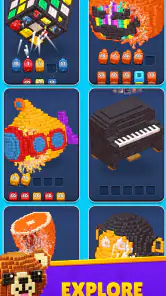
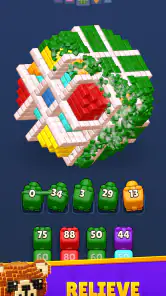

Analysis by Reviewed
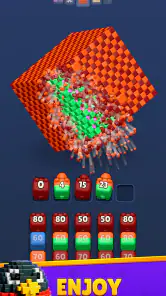
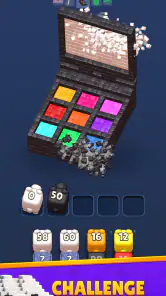
When I have a few spare minutes, I’m more likely to open a puzzle with one clear action than a game that asks me to remember a long objective. Cube Land gives me a compact space of colored three-dimensional blocks to match and clear. The first move is easy to understand; the more interesting part is deciding what a clear will do to the arrangement and whether it will make the next choice simpler. That makes it a better fit for short, focused breaks than for anyone seeking a story-led adventure.
From a simple move to a satisfying clear
Getting oriented without a long warm-up
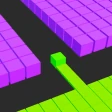
As a free puzzle game from Rotatelab Yazilim ve Bilisim A.S., Cube Land puts its colored cube blocks at the center of the experience. I don’t need to learn a cast of characters or follow a narrative before I can start thinking about a puzzle. The premise is direct: match colors and clear blocks in a three-dimensional arrangement. That makes it approachable when I only have a minute to spare, though the spatial presentation asks for a little more attention than a flat grid match.
The useful first question is not just “Which color can I match?” but “What will this clear leave behind?” Thinking one move ahead helps keep a board from feeling like a sequence of random taps. I’d recommend looking for the most obvious color group, then checking whether clearing it makes another area easier to read. That small habit gives the action a purpose: each move should either remove a problem or improve the next choice.
Articles Related to Cube Land Puzzle Game
The cubes give color matching a tactile, spatial feel. That is the game’s main distinction from familiar tile-swapping puzzles, where pieces sit on a flat board and the next match is often visible at a glance. Here, the 3D blocks make the puzzle feel more like arranging and clearing a little object. The trade-off is that spatial layouts can take longer to inspect, particularly if you prefer games where every possible move is immediately apparent.
Why the feedback rhythm matters
A good block puzzle needs a dependable rhythm: choose a color, make a clear, see the board respond, and decide whether to continue or start fresh. Cube Land’s central loop is built around that sequence. The reward is not a plot twist; it is the visible relief of removing matching blocks and having a cleaner puzzle to consider. For me, that modest payoff works best when I’m in the mood to focus on one small problem rather than multitask through a complicated game.
There is also a useful mental reset in watching a crowded arrangement become simpler. When I’m waiting for a call or taking a breather between tasks, I can concentrate on a single decision without needing to remember a long chain of objectives. I would still avoid starting a round when I know I’ll be interrupted immediately: even a compact puzzle can be less satisfying if I keep losing track of which colors or areas I meant to handle next.
To make the feedback more useful, I’d treat a clear as information, not just a reward. After each match, take a moment to inspect what the remaining blocks make easier or harder. That pause can prevent the familiar mistake of making the largest-looking match automatically and then discovering that the next choices are awkward. The game’s color-based premise encourages quick decisions, but the 3D layout rewards a more deliberate glance.
You May Like

How Microsoft OneDrive Became a Mobile Productivity Giant

How Google Translate Breaks Language Barriers Effortlessly

Why Google Sheets Is the Ultimate Mobile Productivity Tool

Unveiling the Dynamic World of My Talking Tom Friends

Free Fire MAX: Dominating the Battle Royale Arena

Free Fire: Winterlands – The Ultimate Winter Gaming Adventure
The payoff is a cleaner puzzle, not a sprawling campaign
Cube Land is best judged as a focused puzzle rather than as a substitute for a large adventure. Its satisfaction comes from the small cycle of spotting a match, clearing blocks, and seeing what the puzzle asks of me next. If you enjoy tidy, repeatable challenges, that focus is a strength. If you need unlockable characters, a deep story, or a broad range of activities to stay interested, this may feel too narrow; the core pleasure is in the puzzle itself.
That distinction also helps set expectations against other familiar options. A classic match-three game often emphasizes quick pattern recognition on a flat board, while a number-merging puzzle tends to reward planning around values and empty space. Cube Land instead asks me to read colored cubes as a three-dimensional arrangement. Pick it if that spatial twist sounds appealing; choose a more conventional grid game if you want the clearest possible board or prefer planning around numbers rather than colors.
The game has an average rating of 4.5 from around 54,000 ratings, with about 1,300 written reviews and over a million installs. Those figures suggest that plenty of players have tried it, but they don’t tell me whether its particular style will suit you. The more relevant test is whether you enjoy making small, visual decisions repeatedly. I’d expect a color-and-block puzzle fan to settle in more readily than someone who only likes puzzles with a final answer or a strong sense of progression.
How I’d fit a round into an ordinary day
One realistic use is a short pause while tea is steeping or while I’m waiting for a friend to arrive. I can open the game, focus on a compact color problem, and stop when the interruption comes. Another is a brief wind-down after work, when I want something active enough to hold my attention but not a competitive match that demands a constant response. In both situations, the appeal is that the task is understandable without a lengthy setup.
There is a trade-off with playing in very short bursts: if I leave in the middle of thinking through a layout, I may return without remembering my intended sequence. My practical tip is to finish the decision I’m currently considering before putting the phone away, rather than tapping quickly just to make progress. That keeps the puzzle’s logic intact and makes the next session feel like a fresh choice instead of a continuation I’ve forgotten.
Because the blocks are distinguished by color, the experience also depends on how comfortably you can distinguish the colors on your screen. If color matching is difficult for you, I’d be cautious about choosing this as a main puzzle game unless the presentation is clear to your eyes. I wouldn’t assume that a 3D look automatically makes colors easier to read; lighting, display size, and personal vision all affect how quickly a board can be scanned.
Who will enjoy the pace—and who may not
I’d put this in front of someone who likes to make a handful of deliberate visual choices without turning a break into a project. It may also suit a player who enjoys spatial puzzles but finds a full board of symbols or numbers tiring to parse. The cubes give the task a physical quality in my mind: I’m considering a little arrangement, not just hunting for a pattern on a flat surface. That difference is subtle, but it can make the game feel more engaging to the right person.
On the other hand, I wouldn’t choose it for a commute where I need to keep checking my surroundings, or for a moment when I can only glance at the phone every few seconds. The puzzle asks me to inspect relationships among colored blocks, so repeated interruptions can break the chain of thought. If I want something that rewards isolated, near-instant taps, a simpler casual game is likely a better match. If I want a challenge based on words, logic clues, or arithmetic, this color-and-space focus is not a substitute for those interests.
Free to start, with a purchase choice to keep in mind
The game is free to download and is rated for Everyone. It includes in-app purchases, with individual items ranging from about a dollar to around a hundred dollars. That range makes it sensible to keep purchase controls in mind if a child will be playing, and to check any purchase prompt carefully rather than treating the free download as a guarantee that every optional item costs nothing. I’d be comfortable trying the basic puzzle first and deciding later whether any paid option is worth considering.
For a puzzle game, the purchase range is worth knowing before you settle in, even if you only intend to play casually. I would not spend money simply because I had hit a frustrating moment; first I’d ask whether I’m enjoying the underlying loop enough to keep returning. If the answer is no, paying is unlikely to change the fact that the central activity is matching and clearing colored cubes. If the answer is yes, you can make a more deliberate choice instead of reacting to a prompt mid-session.
The current version is 0.5.6, and the game requires iOS 7.1 or later. Those details are useful when checking whether an older Apple device can run it. I’d still think about the actual screen I plan to use: a puzzle built around small 3D blocks is easier to judge when I can comfortably see the layout, so a tiny display may be less pleasant than a larger one even when the device meets the requirement.
A small habit that makes each move more useful
When I’m unsure which color to clear first, I try not to make the most visually obvious match just because it stands out. I scan the neighboring areas and ask which removal would leave the board easiest to understand. This is a practical way to avoid spending attention on a clear that looks satisfying but does little to help with the next decision. It doesn’t require memorizing a route; it simply turns each move into a quick check of cause and effect.
This approach also helps me tell whether I’m enjoying the actual puzzle or just tapping for the sake of movement. If I can explain to myself why a particular clear is useful, I’m engaged with the spatial challenge. If I’m choosing without looking and feeling no interest in the changed layout, it may be time to stop rather than force another round. That’s a useful distinction for a repeatable game, because its appeal comes from attention to the board, not from a separate activity layered over it.
What makes me begin another session
The reset is part of the appeal. Once I’ve made a clear and seen the arrangement change, I want to know what the next puzzle will let me do. That is a lighter reason to return than a dramatic cliffhanger, but it can be enough when I’m looking for a quick, repeatable challenge. The loop starts again because the visual problem is immediately legible and the next move offers another small decision—not because I need to follow a complicated chain of tasks.
That same repetition is also the main limitation. If you enjoy discovering new mechanics, substantially different modes, or a sense of a larger journey, the basic color-matching loop may become familiar. I’d skip Cube Land if what you want most is a lengthy campaign, a competitive opponent, or a puzzle that changes its rules from round to round. It is a better fit for someone who likes returning to a clear central idea and improving their judgment within it.
My verdict on the loop
I find Cube Land appealing when I want a small, visual puzzle with a direct action-and-feedback cycle. Its three-dimensional colored blocks give it a distinct angle on the usual match-and-clear formula, and the best way to enjoy it is to pause after each clear and study how the remaining arrangement has changed. That simple habit makes the decisions feel more considered and gives each new move a reason.
I’d recommend it to casual puzzle players who enjoy color matching, can comfortably read a 3D layout, and want an activity that can fit between everyday tasks. I’d point a fan of number puzzles or flat match-three boards toward those alternatives if spatial blocks are not their thing. Cube Land is at its strongest when its modest loop is exactly what you’re after: make a thoughtful move, enjoy the clear, reset your attention, and see whether the next arrangement can be solved a little more cleverly.
Cube Land Puzzle Game Frequently Asked Questions
What is Cube Land Puzzle Game?
Cube Land Puzzle Game is a casual puzzle game built around arranging or moving cubes to solve spatial challenges. Its simple visual style makes it approachable, while later puzzles may call for more planning and careful observation. The exact objectives and available modes can vary by version, so check the game’s store listing and screenshots to confirm what is included before downloading.
How do you play Cube Land Puzzle Game?
Gameplay centers on interacting with cubes to complete each level’s puzzle objective. You may need to think about positioning, paths, or the order of moves rather than simply tapping quickly. Spend a moment studying the board before acting, especially when a level has limited space or a move limit. Controls and mechanics can differ between releases, so the in-game tutorial is the best guide.
Is Cube Land Puzzle Game free to download, and does it include ads or in-app purchases?
The price, advertising, and in-app purchase options depend on the version offered in your region and the platform you use. A game may be free to install but still display ads or offer optional purchases, such as hints or other extras. Review the Google Play or Apple App Store listing for current pricing and payment details before installing, and check purchase settings if children will play.
Can I play Cube Land Puzzle Game offline?
Offline availability is not guaranteed and may depend on how the current version handles features such as ads, level downloads, or progress synchronization. Some puzzle games let players continue with previously loaded levels without an internet connection, while other functions may require connectivity. Check the developer’s description and test the game’s offline behavior before relying on it during travel or in places with limited internet access.
Is Cube Land Puzzle Game suitable for children, and what should I check before downloading?
The cube-based puzzle format may appeal to players who enjoy logic and spatial challenges, but suitability depends on the game’s content, difficulty, and monetization. Before downloading, check the age rating, privacy information, and store reviews, and look for details about ads, data collection, and in-app purchases. If a child will play, consider enabling purchase authentication and supervising any online or advertising features.
Pros
- Simple rules make it easy to pick up and play.
- Short puzzles suit quick sessions on the go.
- Spatial challenges encourage careful planning.
- Cube-based visuals make the board easy to read.
- Progressive puzzles offer a steady challenge.
Cons
- Later puzzles may feel difficult without much guidance.
- Repeated cube mechanics can become predictable.
- Small board details may be harder to see on phones.
- Puzzle progress may require frequent retries.
- Ads or optional purchases may interrupt play.

- Category
- Puzzle
- Version
- 0.5.6