Crossword Daily
- 717.00
- 4.7
- Installs
- 100.00K
- Price
- Free

Screenshots
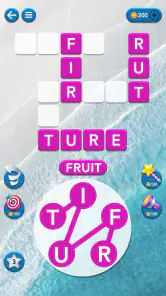
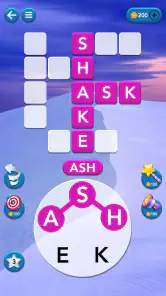
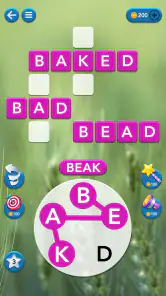
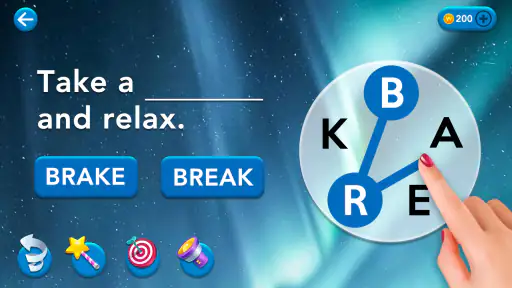
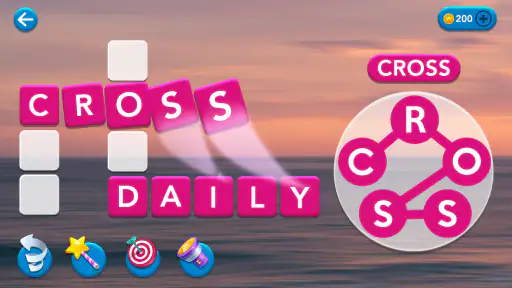
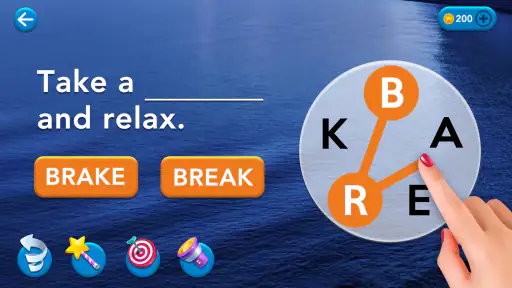
Analysis by Reviewed
I approached Crossword Daily as a small daily habit rather than a game I would play for hours. That turned out to be the right way to judge it. Developed by HiPlay Games, this free word game focuses on crossword solving, with a simple promise: give your brain a regular workout without demanding a large time commitment. After spending time with it, I think its strongest quality is consistency. It is easy to open, understand, and return to, although its long-term appeal depends heavily on how much you enjoy the familiar rhythm of solving clues.
The first impression is friendly and accessible. Crossword Daily is listed for Everyone, and its minimum operating requirement is Android 7.0, so it is aimed at a broad range of phone users rather than only people with newer devices. The free entry point also makes trying it uncomplicated. There is no need to decide whether a subscription is worthwhile before seeing if the format fits your routine. Optional in-app purchases range from $0.99 to $49.99 per item, so I would still approach the purchase side carefully and treat the free experience as the main test.
How Crossword Daily Holds Up Beyond the First Week
The first-week appeal comes from a low-friction routine
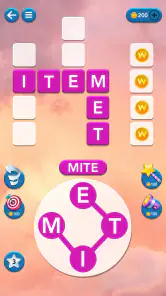
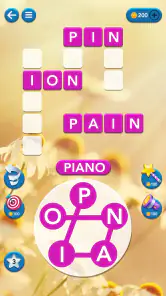
What makes this kind of crossword game attractive during the first week is not complexity; it is the ease of starting. I can pick up my phone, read a clue, enter an answer, and move on without learning a complicated control scheme. That matters when the intended moment is a breakfast break, a commute, or the few minutes before bed. A word puzzle that requires setup or a long uninterrupted session loses much of its practical value, while this format naturally fits into short gaps.
I also like that crossword solving gives a clearer sense of progress than many casual games. Even when I do not finish quickly, each answer narrows the possibilities around it. A familiar word can unlock a neighboring clue, and the grid gradually changes from a collection of separate questions into one connected problem. That interdependence is more satisfying than simply tapping through isolated vocabulary prompts.
For a new player, my advice is to avoid treating every difficult clue as a test of intelligence. I start with the answers I recognize immediately, then use crossing letters to revisit the uncertain ones. This is more efficient than staring at one stubborn clue and repeatedly guessing. It also makes the game feel less frustrating because the grid itself becomes a source of help.
The daily format is particularly suitable for people who want a repeatable mental exercise. Someone trying to replace a few minutes of aimless scrolling may find the structure useful: open the game, work through clues, stop when attention drops, and return later if the puzzle still has room to solve. It is not a dramatic transformation of one’s thinking, but it is a more active use of spare time than many passive phone habits.
Who will enjoy the basic crossword rhythm
Crossword Daily is a good match for beginners, casual puzzle fans, and experienced solvers who want something lightweight on a phone. It can also suit people who enjoy vocabulary, spelling, and the small satisfaction of recognizing a word from a carefully phrased clue. The Everyone rating reinforces that broad positioning, though younger players may still need help with unfamiliar references or words outside their everyday vocabulary.
I would be less enthusiastic about recommending it to someone who wants a story, character development, competitive multiplayer, or a constantly changing action loop. This is a focused word game, not a general-purpose entertainment package. Players who need strong visual variety or a sense of escalating adventure may feel that the central activity becomes repetitive quite quickly.
It is also not the best choice for someone who dislikes hints or assistance in puzzle games. Crossword solving often reaches a point where one obscure answer blocks several others. If the satisfaction for you comes only from completing everything unaided, a mobile crossword can become more tiring than relaxing. On the other hand, if you see occasional help as part of the process, the format is easier to keep enjoyable.
Comparing it with paper puzzles and other word games
Compared with a newspaper crossword, the phone-based approach is more convenient. I do not need a pen, an eraser, or a flat surface, and a short session is always available. The trade-off is that paper puzzles can feel more deliberate and memorable. Writing an answer by hand gives the activity a physical quality that a touchscreen does not reproduce, and some traditional crossword fans prefer that slower pace.
Compared with word searches, this game asks for more interpretation. A word search is often about visual scanning and pattern recognition, while a crossword makes me think about definitions, grammar, and the relationship between answers. That makes Crossword Daily more mentally engaging for me, but it also means the experience is less relaxing when I am tired or when the clue vocabulary does not match my own.
Compared with anagram or spelling games, the grid creates a useful second layer of reasoning. I am not merely trying to form a word from letters; I am checking whether the answer fits both the clue and the crossing spaces. That is the feature that gives a crossword its staying power. The limitation is that this same structure can make a single difficult entry hold up the entire session.
Why the first month can feel different from the first week
Novelty carries a lot of casual games through their opening days. During the first week, even the basic act of opening a crossword app feels fresh. By the second or third week, the question changes: does the routine remain rewarding when the novelty has disappeared? In my view, Crossword Daily has a reasonable chance of becoming a steady habit for people who already like word puzzles, but it is not likely to convert every player into a daily solver.
The recurring value comes from the activity itself rather than from spectacle. Each puzzle asks me to retrieve language, test interpretations, and use partial information. That is enough to support a modest mental routine, especially when I keep sessions short. I would not use it as a replacement for reading, studying, or a more demanding learning tool, but it works well as a compact exercise in attention and vocabulary.
A useful way to keep the experience fresh is to vary the time and purpose of each session. On one day, I might aim to solve as much as possible without rushing. On another, I might focus on understanding why a clue led to an answer I missed. This turns completion into only one measure of success. The second approach is especially helpful for players who become discouraged when a puzzle takes longer than expected.
I also recommend resisting the urge to use help immediately. I first fill in the answers I know, then examine the crossing letters, and only afterward consider assistance. That order preserves the central reasoning challenge while preventing one difficult clue from consuming the entire break. It is a small workflow change, but it makes the game feel more like a puzzle and less like a sequence of guesses.
Where the month-to-month value is strongest
The strongest long-term use case is a predictable daily pause. If I want a game that can sit quietly on my phone and offer a compact challenge whenever I need one, this fits. It does not ask me to remember a complex inventory, maintain a team, or keep up with a large fictional world. That low commitment is precisely why it can remain useful after the initial excitement fades.
There is also value in using it as a transition activity. A crossword can mark the end of a work session, provide a screen break between tasks, or create a calmer alternative to competitive games. Because the mental effort is focused but not physically demanding, it can help me change gears. The important distinction is that I use it intentionally, rather than opening it automatically whenever I feel bored.
Still, the long-term value is personal. Someone who already has several crossword sources may find little reason to add another. A dedicated newspaper app, a printed puzzle book, or a more specialized crossword service may offer a style that better matches a serious solver’s preferences. Crossword Daily makes more sense when convenience and simplicity matter more than building a large archive or pursuing advanced puzzle culture.
The maintenance burden is pleasantly small, but not invisible
One reason I can imagine keeping this game installed is that it does not require much maintenance from the player. There is no elaborate routine to learn, no long campaign to remember, and no collection system that needs constant attention. I can leave it alone for a while and return without feeling that I have fallen behind. That is a meaningful advantage over games built around daily rewards or persistent progression.
At the same time, a low maintenance burden can make a game easier to forget. If an app does not create a strong reason to return, it may disappear among other icons. The daily crossword format provides a basic reminder through habit, but the habit has to come from me. I would not install it expecting the game alone to organize my schedule or motivate regular practice.
The purchase structure is another part of maintenance. The game is free to start, but optional items can cost from $0.99 to $49.99. I would decide in advance whether I am comfortable spending anything and avoid treating a stuck puzzle as a reason to buy something impulsively. For a casual word game, a clear personal spending limit is sensible, particularly when the free access already lets me judge whether the core activity is enjoyable.
From a device perspective, support for Android 7.0 or later makes it approachable for people using older phones. The current version is 1.13.245, which shows that the app has an established version history rather than being presented as a brand-new experiment. I would still keep the app updated through the normal store process, since word games can benefit from routine fixes and compatibility work even when the visible gameplay remains familiar.
What can cause fatigue after the novelty fades
The main source of fatigue is repetition. The central loop remains clue, answer, crossing letter, and completion. That loop is satisfying when I am in the mood for it, but it does not offer the range of activities found in a broader game. After several sessions, I may want something more surprising, more social, or more visually expressive. That is not a flaw in the crossword format, but it is a real limit on how much time I want to spend with it.
Difficulty can create a second kind of fatigue. A puzzle that is too easy becomes routine, while one that contains too many unfamiliar clues can feel inaccessible. The ideal balance depends on my vocabulary and background, so the same puzzle may feel pleasantly challenging to one player and needlessly obscure to another. When I encounter that mismatch, I prefer to pause rather than force a completion. Returning later with a fresh mind usually preserves more enjoyment than grinding through frustration.
There is also a psychological trade-off between speed and understanding. Finishing quickly can feel rewarding, but rushing encourages shallow guesses. Taking time to inspect the wording helps me learn from mistakes, yet it can make a short session feel longer. I think the app works best when I choose one goal before starting: quick relaxation, careful solving, or vocabulary practice. Mixing all three can make the experience feel less focused.
Players who want a strong sense of social accountability may find the routine too private. A crossword can be a shared activity on paper, but a simple phone session is often solitary. If your motivation depends on leaderboards, direct competition, or discussing solutions with friends, another word-game format may serve you better. I would choose this one for quiet concentration, not for a community-driven experience.
Practical ways to make each session last longer
I get more from the game when I treat incorrect guesses as information rather than failure. A wrong answer can reveal that I misunderstood the tense, assumed the wrong meaning, or overlooked how a crossing word changes the possibilities. Reviewing that reasoning is more useful than immediately clearing the puzzle and moving on. It turns a quick pastime into a small exercise in reading precision.
Another helpful habit is to stop before frustration peaks. Crossword Daily is easy to reopen, so there is little benefit in spending an entire break fighting one clue. I mark the mental state of the grid by remembering which area is uncertain, then return later. This preserves the feeling that the puzzle is waiting for me rather than defeating me.
I would also use it selectively throughout the week instead of forcing a session every day. The word “daily” suggests regularity, but a habit becomes a burden when it feels compulsory. Skipping a day can protect the activity from becoming another obligation. For me, recurring value comes from wanting to solve, not from turning every opening into a performance test.
If you are introducing the game to someone who is new to crosswords, start by explaining the crossing-letter method rather than simply handing over the phone. New players often assume they must know every answer immediately. Showing them how a few certain entries can unlock harder clues makes the puzzle feel teachable and reduces the early intimidation that crossword games sometimes create.
Who should install it, and who should skip it
I would recommend Crossword Daily to a reader who wants a free, approachable word game for short sessions and who enjoys solving more than collecting rewards. Its 4.7 average from around 4.2 thousand ratings and more than 100 thousand installs suggest that the format has found a receptive audience, though those figures should not replace personal testing. The most convincing reason to try it is simply that the basic crossword loop matches the kind of break you want to take.
I would skip it if you are looking for a rich narrative, fast action, multiplayer competition, or a constantly expanding set of mechanics. I would also hesitate if you already know that crossword clues make you anxious or that you dislike being blocked by vocabulary you do not recognize. A word-search game may offer a gentler experience, while a dedicated crossword platform may be better for someone who wants deeper specialization.
For families, the Everyone rating makes the game broadly approachable, but shared play will still depend on reading ability and vocabulary. I would treat it as a conversation starter rather than assume every player will find the same clues equally comfortable. Adults can make it more welcoming by solving alongside younger players and explaining the reasoning behind answers instead of taking over the grid.
My long-term verdict after looking past the novelty
Crossword Daily earns lasting space when used as a small, intentional habit rather than an all-purpose game. I like its uncomplicated entry point, its suitability for short breaks, and the way crossing answers create genuine reasoning instead of simple tapping. The free price makes experimentation easy, while the broad device support and Everyone rating keep the barrier to entry low.
Its weaknesses are just as clear. The core activity can become repetitive, difficult clues may interrupt relaxation, and the optional purchase range deserves a measured approach. It does not offer the variety or social energy that some players need to stay engaged for months. I would not keep it installed merely because it is popular or because a daily label creates pressure.
For me, the deciding question is whether I still want a quiet crossword after the first-week freshness has gone. If the answer is yes, this game can remain a dependable pocket routine: open it during a spare moment, solve at my own pace, and leave without a large commitment. If I want deeper puzzle specialization or more varied entertainment, I would choose a different option. As a focused word game from HiPlay Games, Crossword Daily succeeds not by doing everything, but by making one familiar activity easy to return to.
Pros
- Fresh crossword puzzle available every day
- Helpful hints make difficult clues more manageable
- Simple interface is easy to navigate
- Suitable for short
- relaxing play sessions
- Can help improve vocabulary and spelling skills
Cons
- Daily puzzle selection may feel limited for frequent players
- Some clues can be subjective or difficult to interpret
- Hints may reduce the challenge for experienced solvers
- Requires regular updates for the newest puzzles
- Small screen size can make long words harder to enter
- Category
- Word
- Version
- 1.13.245