Spider Solitaire
- 1.85K
- 4.6
- Installs
- 1.00M
- Price
- Free

Screenshots




Analysis by Reviewed
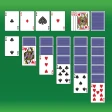
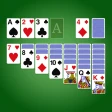
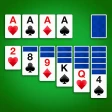
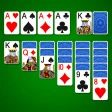
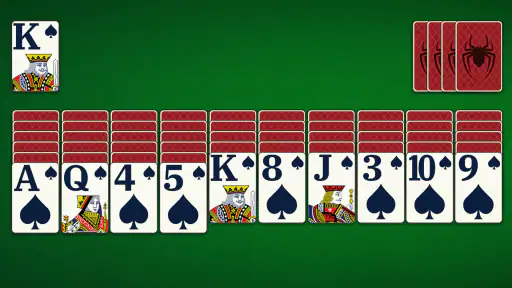
I like Spider Solitaire best when I want a small, self-contained puzzle rather than a game that demands a long session. Gimica GmbH’s Spider Solitaire keeps the familiar card-table idea at the center: arrange cards into descending sequences, uncover useful cards, and make room to build complete suits. Its straightforward focus makes it easy to pick up, but the choices about when to move a card still give each deal a little tension.
That focused design also makes it easy to fit into different routines. I can play a single deal during a quiet coffee break, or return later when I have more time to work through a stubborn layout. It is best approached as a solo thinking game, not as a quick burst of spectacle: the pleasure comes from spotting a better sequence of moves and seeing the board open up.
How a typical game flows
The basic rhythm is simple: scan the columns, move cards where they can help, and expose face-down cards whenever possible. When a useful move is not obvious, I find it helpful to pause and ask which action is likely to reveal the most information, rather than making the first legal move I see. That habit matters because an apparently tidy column can be less valuable than uncovering a card that opens several new options.
Spider Solitaire and Spiderette are both part of the game’s appeal, giving fans of classic solitaire more than one familiar format to settle into. The distinction is useful when choosing the kind of session you want: Spider-style play is a good fit when you want room to plan across columns, while Spiderette offers a different take for players who prefer a more compact variation. I would choose based on the puzzle mood, not assume one mode is automatically easier.
A practical routine is to look for face-down cards first, then consider whether moving a sequence will leave a column free or create a useful run. I try not to scatter cards merely because a move is available. Keeping descending sequences together can preserve flexibility, while breaking them apart may be necessary when it exposes a hidden card or makes a key suit easier to assemble. The useful question is not just “Can I move this?” but “What choice will this leave me afterward?”
That makes the game a natural fit for short breaks. I can start a deal while waiting for a kettle or taking a pause between tasks, then stop after a clear decision point rather than feeling pulled into a lengthy campaign. It is also a nice option for someone who wants a familiar card puzzle without learning a complicated control scheme. If you already know solitaire, most of the challenge is in planning, not figuring out what the cards mean.
A realistic way to use it is to set a small boundary before opening a deal: play while the kettle boils, or finish one round before returning to a task. If the layout is still unresolved when the break ends, I can leave it and come back when I have another pause. That works better for me than turning every session into a test of how quickly I can finish, because speed can encourage moves that make the board harder to manage.
You May Like

Clash of Clans Is Won Between the Battles

Android Auto Makes the Case for Quieter Car Software

MobiOffice: Transforming Mobile Productivity with Seamless Integration

EA SPORTS FC™ Mobile Soccer: Redefining Mobile Sports Gaming

How Microsoft OneDrive Became a Mobile Productivity Giant

How Google Translate Breaks Language Barriers Effortlessly
Small habits that make decisions clearer
One habit I recommend is to inspect every column before dealing or making a move that changes the layout. A quick scan helps spot matching ranks and sequences that might otherwise be overlooked. I also try to notice which columns are close to being cleared, since an open space can be valuable for rearranging cards. If clearing a column would require breaking a strong sequence, though, I weigh that cost rather than treating an empty space as an automatic win.
Another useful practice is to avoid committing to one suit too early. A partial run can look promising, but building it in a way that blocks access to cards elsewhere may create a dead end. When two legal moves seem equally good, I prefer the one that keeps more columns playable or reveals more of the board. This is not a guaranteed route to victory; it is simply a way to make each move more informative.
When I return to a game after a pause, I do a fresh scan instead of relying on my memory of the whole layout. I look for the immediate objective—perhaps exposing a hidden card or protecting a sequence—and then check whether the board has changed enough to make that plan less useful. This small reset avoids the common trap of continuing a strategy simply because I started it earlier, even when a better opening has appeared.
Check the extras before settling into a routine
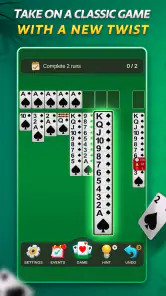
The game adds daily challenges, badges, and events alongside its classic card play. These give players a reason to return with a specific goal instead of starting another ordinary deal by habit. I would treat them as optional structure: useful if a challenge helps you focus, easy to ignore if you would rather play at your own pace. Their presence does not change the basic appeal of arranging cards, but it can make a quick session feel more directed.
Before building a regular routine, I would take a moment to explore the available settings and controls on your own device. Check how the game presents card movements and whether any options make the board easier for you to read. I do not assume that a particular shortcut or display setting exists; the sensible approach is to use what the game actually offers rather than relying on instructions for another solitaire app. A comfortable layout matters especially when you play on a smaller screen.
For quicker play, repeatable habits help more than rushing. Scan for face-down cards, compare the likely outcomes of candidate moves, and keep track of which sequences you have deliberately broken. If you pause midway, a brief mental note—such as which column you are trying to open—makes it easier to return without restarting your reasoning. Experienced players often benefit from this kind of consistency: it reduces careless moves while keeping the game relaxed.
Daily challenges can also work as a short practice prompt. Rather than trying to finish as fast as possible, I would use a challenge to test one decision-making habit, such as prioritizing hidden-card reveals or preserving a useful sequence. Badges and events may add another reason to play, but they are not a substitute for a layout that suits your mood. If an event feels like an obligation, there is no need to let it dictate how you enjoy a classic card game.
One trade-off worth noticing is that goals can make a familiar game feel fresh, but they can also distract from the quiet pace that makes solitaire appealing. I would check a challenge when I want a specific objective, then return to an ordinary deal if the extra structure starts to feel like homework. The cards remain the main event; the extras are most useful when they support the way I already want to play.
What it does well—and where the fit changes
Compared with a bare-bones solitaire app, this version has extra reasons to return through its challenges, badges, and events. Compared with a broader card-game collection, its appeal is more focused: the experience centers on Spider Solitaire and Spiderette rather than offering a large menu of unrelated games. I see that focus as a plus if Spider is the game you want, but a limitation if you often switch between poker, matching games, and other card formats.
Compared with other familiar solitaire choices, Spider asks me to think more about how sequences interact across columns. That is rewarding when I want a planning puzzle, but it is not always the right match for a spare minute when I would rather make quick, low-stakes moves. Someone who prefers variety may get more mileage from a collection of card games; someone who wants to work on one recognizable format may appreciate this narrower focus.
The game is free to start, with optional in-app purchases priced from 99 cents to $3.49 per item. I would approach those purchases as optional extras rather than a requirement for enjoying a standard session. If you prefer a completely purchase-free environment, check the prompts as you play and decide whether the extras matter to you; the presence of in-app purchases may be a reason to favor a simpler alternative if you want no shopping elements at all.
Some uncertainty is part of Spider Solitaire itself. A deal can become awkward when useful cards are buried, and careful play cannot turn every layout into a comfortable win. That is the main limitation for anyone who wants a guaranteed sense of progress. I find the better mindset is to treat a difficult board as a planning puzzle, not as evidence that every move should have worked. If you want a game driven by a story, action, or constant novelty, this quiet card format will probably feel too repetitive.
There is also a difference between learning the rules and learning to read a board efficiently. New players may initially move cards whenever they can, only to discover that they have split a sequence or used a flexible space too soon. Slowing down helps. For regular players, the challenge becomes balancing immediate progress against future options, especially when an exposed card seems useful but the move needed to reach it weakens another column.
That distinction is a good way to decide whether the game suits you. If you enjoy tracing consequences and adjusting a plan when the board changes, the slower decisions are part of the appeal. If you mainly want a game that rewards quick taps or guarantees a neat finish every time, the same pauses and awkward layouts may feel like friction rather than depth.
Who should download it
Spider Solitaire is a good choice for people who already enjoy patience-based card games, want a familiar puzzle for short breaks, or like having optional daily goals around a classic format. It is rated for Everyone, and its uncomplicated premise makes it approachable for a wide range of players. The game has a 4.6 average from around 58,000 ratings, with over a million installs, which suggests broad interest without telling you whether its particular style will suit your habits.
The release date is April 4, 2025, and version 1.6.0 is listed for devices running Android 7.0 or later. That makes the Android requirements straightforward to check before downloading. The game is also available as a card-game option for people who want the familiar Spider format rather than a new ruleset to learn. I would still choose another app if your priority is a wide variety of card games, or if you want a social or competitive experience rather than solo board-solving.
If you are new to Spider, I would start by focusing on one decision at a time instead of trying to plan the entire deal. Ask what a move reveals, what it breaks, and whether it leaves the next turn flexible. There is no need to chase a badge or event immediately; a few relaxed rounds are a better way to learn whether the format itself clicks for you. More experienced players can use the same approach to spot habits that are costing them options, rather than assuming every lost deal comes down to luck.
The game is from Gimica GmbH, and its mix of a familiar card puzzle with optional goals makes it suitable for people who want a little structure without a competitive commitment. It is less suited to anyone seeking multiplayer interaction, a story-led experience, or a rotating selection of unrelated games. Those preferences are not flaws in the game; they simply point toward a different kind of app.
My verdict is that Gimica GmbH’s version works best when you let it remain what it is: a focused Spider puzzle with optional challenges around the edges. The strongest way to enjoy it is to play deliberately, preserve useful sequences, and use challenges as prompts rather than pressure. It may not satisfy someone looking for constant variety, and a stubborn deal can test your patience, but for a calm card session with room to improve your decisions, it is an easy recommendation.
Spider Solitaire Frequently Asked Questions
What is Spider Solitaire, and how is it played?
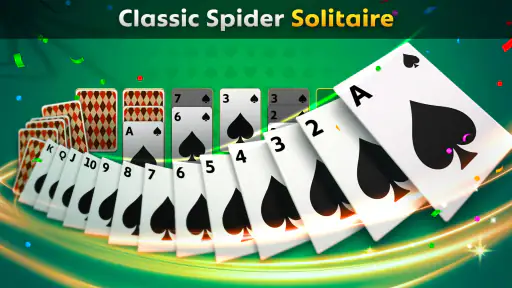
Spider Solitaire is a single-player card game in which you arrange cards into descending sequences of the same suit, from King down to Ace. Completed sequences are removed from the tableau. The objective is to clear all cards from the playing area. Most digital versions let you choose one, two, or four suits, with more suits generally making the game more challenging.
Is Spider Solitaire free to download and play?
Many Spider Solitaire apps can be downloaded and played for free, but the exact offer depends on the version and platform. A free app may include advertisements, optional in-app purchases, or paid upgrades to remove ads or unlock extra features. Check the store listing and purchase details before downloading, especially if you want to know whether all game modes are available without paying.
Can I play Spider Solitaire offline?
Spider Solitaire is commonly designed for offline play, so you can often start a game without an internet connection. However, features such as advertisements, cloud saves, leaderboards, daily challenges, or account-based progress may require connectivity and may not be available offline. Because capabilities vary between apps, review the specific listing and test the features you care about before relying on offline access.
Is Spider Solitaire suitable for beginners?
Yes. Beginners can start with the one-suit mode, which is generally more forgiving and helps you learn how to build descending sequences and uncover face-down cards. Two- and four-suit modes introduce more strategic decisions because cards of different suits cannot always be moved together as a completed sequence. Hints, undo buttons, and difficulty options may also help, depending on the app.
What should I check before choosing a Spider Solitaire app?
Before downloading, check whether the app supports your device, which suit modes it offers, and whether it includes features such as undo, hints, customizable cards, statistics, or daily puzzles. Also review its ads, in-app purchases, privacy information, and recent user feedback. Spider Solitaire rules are familiar across many versions, but the interface and extra features can differ considerably from one app to another.
Pros
- Familiar rules make it easy to start playing.
- Multiple difficulty levels suit both beginners and experts.
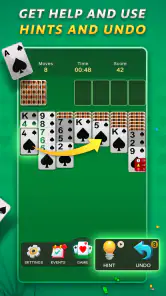
- Undo helps recover from an accidental move.
- Hints can help when you’re unsure what to do next.
- A relaxing
- turn-based pace makes it easy to play in short sessions.
Cons
- The game can feel repetitive over longer sessions.
- Higher difficulties may leave you with few playable moves.
- Hints can reduce the challenge if used too often.
- Some versions include ads that interrupt play.
- Features and controls can vary between Spider Solitaire apps.

- Category
- Card
- Version
- 1.6.0