Colorwood Words - Cryptogram
- 390.00
- 4.5
- Installs
- 500.00K
- Price
- Free
Screenshots

Analysis by Reviewed
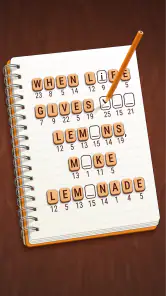
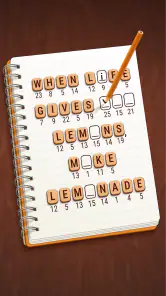
I judge a word game by a simple test: can I understand what it wants from me quickly, enjoy a short session, and still feel there’s something to think about? Colorwood Words - Cryptogram is aimed at players who like decoding rather than racing. It is a free word game from Burny Games, and its central appeal is working through hidden words with letters and numbers. If you enjoy taking a guess, checking the pattern, and revising your thinking, that basic loop is a good reason to try it.
Choose the puzzle style that suits you
Not every word game scratches the same itch. A crossword asks you to use clues and crossing answers; a word-search game rewards scanning a grid; a fast word-building game can make speed part of the challenge. This one is better suited to someone who likes a code-breaking feel and would rather pause over a puzzle than race a timer. I’d choose it for a quiet break, not as a test of quick reflexes.
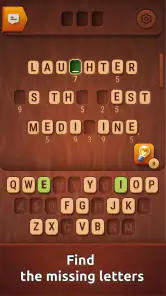
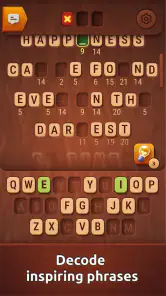
A useful way to approach a cryptogram is to look for patterns before committing to a guess. Repeated symbols can suggest repeated letters, while a short word may help narrow down the possibilities. I find that making one careful deduction is more satisfying than tapping at random. If you get stuck, a hint can help you resume, but using one too quickly can take away the pleasure of solving the pattern yourself.
When the decoding loop works best
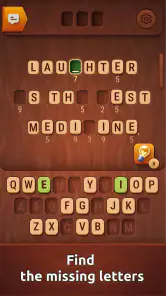
The combination of letters and numbers gives this game a different feel from the familiar task of swiping across a word-search grid. Rather than scanning for a word you already know, you’re trying to infer what a hidden word could be from its encoded pattern. That shift suits players who like testing a theory and changing it when the next clue doesn’t fit. It’s a small but meaningful distinction: someone who enjoys word games mainly for quick visual recognition may find the cryptogram method slower than expected.
I’d also treat each puzzle as a little logic exercise, not a vocabulary exam. A word that seems obvious at first can be a poor fit once you compare its letters with the rest of the pattern. My practical tip is to pause after a promising guess and check whether it explains more than one symbol. That habit makes the solving process feel deliberate and can stop a single hunch from sending you down an unhelpful path.
Engage Your Brain with Vibrant Wordplay
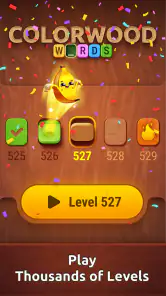
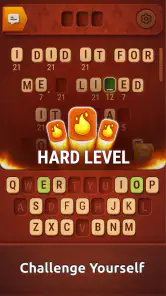
First off, Colorwood Words Puzzle Game isn’t just about putting letters together to form words. It’s a clever blend of color and language that challenges your cognitive abilities in the most delightful way. The game’s interface is bright and inviting, almost like a digital forest full of colorful tiles waiting to be explored. Each level presents a new challenge, asking you to form words from a jumble of letters, all while surrounded by a serene, woodsy aesthetic.
Gameplay That Keeps You Hooked
One of the things I love most about this game is how it balances difficulty with fun. The levels start off easy enough, giving you the confidence to think you’re a word master. But don’t let that fool you! As you progress, the challenges ramp up in complexity, requiring more strategy and a larger vocabulary. It’s a game that grows with you, keeping things interesting without becoming frustrating.
More From Our News Desk

Clash of Clans Is Won Between the Battles

Android Auto Makes the Case for Quieter Car Software

MobiOffice: Transforming Mobile Productivity with Seamless Integration

EA SPORTS FC™ Mobile Soccer: Redefining Mobile Sports Gaming

How Microsoft OneDrive Became a Mobile Productivity Giant

How Google Translate Breaks Language Barriers Effortlessly
The developers have also done a fantastic job with the game’s pacing. There are no time limits, so you can take a moment to think about your next move without the pressure of a ticking clock. This makes it perfect for playing during a commute or while relaxing at home. Plus, the satisfaction of finding that perfect word is a reward in itself.
Fitting a puzzle into ordinary downtime
A realistic use for this kind of game is a wait that’s long enough to feel tedious but too short to start a demanding task: sitting in a waiting room, taking a break between chores, or having a few quiet minutes at home. I’d open it when I can give a puzzle some attention, solve what I can, and stop without needing to arrange a longer session. That makes the untimed format a practical fit for fragmented downtime, especially for someone who prefers a small mental challenge to scrolling through a feed.
For a commute, I’d be selective about when I play. If I’m standing in a crowded place or need to keep an eye on what’s happening around me, a puzzle that asks me to compare symbols and letters is a poor distraction. Seated travel is a better match. The same applies at home: it works well as a deliberate pause, but it won’t necessarily suit someone who wants a game to run in the background while they split attention between several things.
It can also be a gentle way to practise noticing spelling patterns, though I wouldn’t approach it as a structured language lesson. The enjoyment comes from solving the code, not from a promise of formal instruction. If a player is learning a new language and needs definitions, pronunciation, or guided vocabulary practice, a dedicated learning app would be a more direct choice. Here, the useful habit is slower observation: compare repeated symbols, consider likely letter combinations, and resist entering a guess simply because it forms a familiar word.
Features That Stand Out
Beyond the basic gameplay, Colorwood Words Puzzle Game offers a few features that make it stand out from the crowd. For instance, the daily challenges are a great way to keep the game fresh. Each day, you’re presented with a new puzzle that tests your skills and offers rewards for completion. It’s a nice touch that encourages daily play and gives you something to look forward to.
Another feature worth mentioning is the hint system. While it might sound like a crutch, the hints are actually well-designed to nudge you in the right direction without giving too much away. It’s perfect for those moments when you’re stuck and just need a little push to get back on track.
Use hints without losing the puzzle
I’d make hints a last step in a short routine rather than the first response to difficulty. Start by marking mentally which symbols repeat, then test one likely letter or short word against the pattern. If that opens up a clearer route, keep going unaided. If several possibilities still seem equally plausible, a hint can break the deadlock and return the puzzle to being enjoyable. This approach preserves the satisfaction of deduction while avoiding a long stretch of guessing.
There’s a trade-off, though: help can make a stalled session feel smoother, but leaning on it too often may leave less of the code-breaking for you to do. I’d use it when I’m genuinely stuck, not just because I want to finish quickly. Players who prefer every puzzle to move at a brisk pace may find that deliberate method less appealing; a fast word-search or anagram game is likely to suit them better.
How it fits into a daily routine
I’d use this as a small, self-contained mental break: open a puzzle while waiting for an appointment, work through a few deductions, then put it down when I’m ready. The untimed pace makes that sort of stop-and-start play comfortable. For a commute, it’s most practical when you’re seated and can focus; I wouldn’t recommend staring at a puzzle while walking or when you need to watch your surroundings.
It may also suit someone who wants a gentle vocabulary exercise without turning every session into a competition. On the other hand, if you mainly enjoy head-to-head play, elaborate story campaigns, or rapid-fire rounds, I’d look at a different kind of word game. The appeal here is the puzzle itself, and that can feel too quiet if you want lots of variety in how you play.
Who should look elsewhere
I wouldn’t make this my first recommendation for a player who wants social competition, a narrative to follow, or a changing set of mechanics from one session to the next. Its core pleasure is a particular kind of decoding, so the format’s consistency is either a comfort or a limitation depending on what you want. If you like the focused challenge but prefer clues that directly explain what an answer means, crosswords may be a more natural fit. If you want to search visually for familiar words, word searches are easier to pick up without settling into a deduction process.
It may also be a weak match for anyone who finds uncertainty frustrating. Cryptograms ask you to tolerate a few plausible interpretations before one becomes convincing. When that ambiguity feels like a puzzle, the game has room to be satisfying; when it feels like being stuck, the same design can become tiring. I’d try it with a short session rather than expecting every word-game preference to transfer automatically.
What to expect before installing
The game is free to download, with optional in-app purchases priced from $2.99 to $11.99 per item. I’d start without spending and see whether the puzzle rhythm holds your attention; paying only makes sense if an offered purchase solves a specific frustration for you. It is rated for Everyone, and the current version is 1.12.18642, with Android 6.0 as the minimum operating system requirement. The game has a 4.5 average from around 27,000 ratings and has passed 500,000 installs, which suggests it has found a sizable audience without telling me whether it will match your taste.
Because it is free to download, trying the basic experience is a straightforward way to decide whether the format suits you. I wouldn’t treat optional purchases as necessary just because a puzzle takes time; a pause can be part of the intended pleasure of decoding. Before buying anything, I’d ask whether the specific option addresses a real obstacle in my own play, rather than paying simply to get through a moment of uncertainty. That keeps the decision tied to your habits instead of to the impulse to finish one stubborn puzzle.
The game is suitable for Everyone, which makes its general audience broad, but that doesn’t mean every age or experience level will find the same challenge. A player who already enjoys word patterns may settle into the logic quickly, while someone who expects a simple spelling game may need time to understand why guessing isn’t always the best move. I’d introduce it as a calm decoding game, not promise that it is effortless or that every puzzle will be immediately obvious.
One practical trade-off is that cryptograms reward patience more than broad general knowledge. If a clue or word pattern doesn’t click for you, progress can slow, and a hint may feel tempting. I’d give myself a moment to test a couple of plausible letter patterns first, then use help when I’m no longer learning from the pause. That keeps hints useful rather than turning them into the default way through a puzzle.
How it compares with other word games
Compared with crosswords, this puts more weight on decoding symbol patterns and less on interpreting written clues. Compared with word searches, it asks for inference rather than scanning. And compared with timed word-building games, it gives you room to think instead of making speed the main test. Those differences matter more than a broad label like “word game”: I’d pick this when I want to concentrate on one code, and choose another format when I want varied clues, quick visual wins, or a competitive pace.
Switching from another word game should be easy if you’re comfortable learning a new puzzle rhythm, but the habits don’t transfer perfectly. A crossword solver may be used to relying on crossing answers, while a word-search player may expect to spot the target directly. Here, the useful adjustment is to treat each encoded pattern as evidence and avoid locking into a guess too early. Give it a few puzzles to see whether that change feels satisfying; if it feels like friction rather than discovery, another word format may be a better use of your break.
Final Thoughts
In the world of mobile games, finding one that’s both entertaining and mentally stimulating can be a challenge. Colorwood Words Puzzle Game hits the mark perfectly. Its combination of beautiful design, engaging puzzles, and thoughtful features make it a must-try for anyone who loves word games or just needs a fun distraction. Whether you’re a seasoned wordsmith or just starting out, this game is sure to provide countless hours of enjoyment. So why not give it a try and see how many words you can uncover?
My recommendation is to try it if decoding patterns sounds more appealing than filling a grid from clues or racing to make words. Its unhurried format is the strongest fit for a short, focused break, while players who need constant novelty or competitive pressure may be happier elsewhere. If the cryptogram approach clicks, the gentle pacing and optional hints make it easy to return to; if it doesn’t, there’s little reason to force it just because you like word games in general.
The call I’d make
For me, the deciding question is whether the coded-letter format sounds satisfying when a solution takes a little thought. If yes, this is a sensible free game to try for quiet, untimed sessions, and its hint option gives you a way past a genuine stall. If no, being a fan of crosswords or word searches alone isn’t enough reason to expect the same pleasure here. I’d install it for focused pattern-solving, skip it for multiplayer energy or a story-led campaign, and judge it by whether the deductions themselves make a spare few minutes feel well spent.
Colorwood Words - Cryptogram Frequently Asked Questions
Can I play Colorwood Words - Cryptogram in short sessions?
Colorwood Words - Cryptogram is a word game focused on decoding hidden words with letters and numbers, so it suits players who want to dip into a puzzle and think through its clues at their own pace. The cryptogram format makes deduction central to play. If you enjoy language puzzles, it can be a fitting choice for a brief break or a longer spell of focused solving.
What kind of thinking does Colorwood Words - Cryptogram encourage?
The game asks you to use letters and numbers to decode hidden words, putting pattern recognition and word-solving at the heart of the experience. It may appeal if you like looking for relationships between symbols and language rather than simply searching a letter grid. Players who enjoy careful deduction can approach each puzzle as a small challenge in interpreting clues and narrowing down possible words.
Who developed Colorwood Words - Cryptogram?
Colorwood Words - Cryptogram is developed by Burny Games. If you are comparing word games before choosing one, the developer name can help you identify the title and distinguish it from similarly named puzzle apps. The game is listed in the Word category and has an average rating of 4.5 from around 27,000 ratings, offering a quick sense of its store presence.
What does Colorwood Words - Cryptogram involve?
Colorwood Words - Cryptogram is a word game built around decoding hidden words using letters and numbers. Rather than simply forming words from a grid, players use the cryptogram format to work out the message. It may appeal to people who enjoy language puzzles and deduction, especially those looking for a focused way to exercise their word-solving skills.
Is Colorwood Words - Cryptogram free to download?
Yes. Colorwood Words - Cryptogram is free to download, so you can try its word puzzles without paying an upfront purchase price. The game also offers optional in-app purchases, with items priced from $2.99 to $11.99. Consider those purchases separately from the free download, particularly if you prefer to avoid spending money inside games.
Pros
- Engaging brain exercise
- Beautiful wood-themed graphics
- Easy to learn gameplay
- Multiple difficulty levels
- Offline play available
Cons
- Ads interrupt gameplay
- Limited free hints
- No multiplayer mode
- Occasional glitches
- In-app purchases needed
- Category
- Word
- Version
- 1.12.18642