Associations - Colorwood Game
- 1.92K
- 4.6
- Installs
- 1.00M
- Price
- Free

Screenshots
Analysis by Reviewed
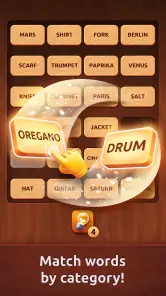
I approach word puzzles with a simple test: do they give me something interesting to think about without turning a quiet break into a chore? Associations - Colorwood Game aims for that middle ground. It is a free word game from Burny Games, built around sorting words into categories, and its colorful presentation makes the idea feel inviting rather than like a vocabulary test. I found it best when I wanted a small mental reset, not a demanding puzzle session.
A gentle first impression
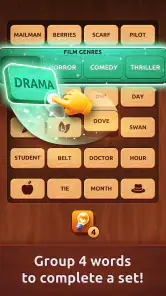
The game’s appeal is easy to understand: look at a set of words, notice what belongs together, and work out the intended connection. That sounds familiar if you have tried word-association puzzles, but the category-based approach gives each round a clear question to solve. The challenge is less about knowing obscure facts and more about spotting a shared idea among items that may fit more than one theme.
That ambiguity is part of the fun, but it can also be the point where patience matters. If two words seem to belong in the same group, I try looking for a more specific link rather than tapping at random. It is a useful habit here: the best answer is often the category that explains the whole set, not just the first pair that looks plausible.
Who will enjoy this kind of pause
I would recommend this most readily to people who enjoy noticing how ordinary words connect, but prefer a relaxed puzzle to a timed quiz. It works particularly well when I have enough attention to compare a few possibilities, yet do not want to settle in for a long story or learn a complicated control scheme. Families or friends can also take turns proposing a category, turning a quiet solo puzzle into a small conversation without needing a separate competitive mode.
There is a useful distinction between “easy to pick up” and “always easy to solve.” The basic idea is straightforward, but some boards invite competing interpretations. If you are playing with someone else, agree to explain why a group fits before making a move; that keeps the discussion about the words rather than who guessed first. For younger players, it can also be a natural way to talk about how one word may belong to several themes, though the game is not a substitute for a structured lesson.
A colorful world built around connections
When I first opened Associations - Colorwood Game, I was immediately struck by its vibrant graphics. The game has this whimsical, almost fairy-tale-like quality that makes it visually appealing. It's like walking into a world where everything is painted with the most soothing colors, and trust me, it’s a feast for the eyes.
The premise of the game is simple yet engaging. You're tasked with connecting various color blocks based on associations, and it's up to you to figure out the logical connections. Sounds easy? Well, it starts that way, but as you progress, the puzzles get trickier, requiring more strategic thinking. It's a nice balance that keeps you hooked without overwhelming you.
More From Our News Desk

Clash of Clans Is Won Between the Battles

Android Auto Makes the Case for Quieter Car Software

MobiOffice: Transforming Mobile Productivity with Seamless Integration

EA SPORTS FC™ Mobile Soccer: Redefining Mobile Sports Gaming

How Microsoft OneDrive Became a Mobile Productivity Giant

How Google Translate Breaks Language Barriers Effortlessly
Gameplay Mechanics That Just Click
Now, let's talk about the gameplay itself. The controls are super intuitive. You tap and drag to connect the colors, and if you make a mistake, a quick tap will undo your last move. It’s smooth and responsive, which is a huge plus for any puzzle game. I found myself getting lost in the process, just focusing on solving each puzzle.
One aspect I really enjoyed is how the game introduces new elements gradually. Just when you think you've got the hang of it, they throw in a new challenge or a unique twist to keep things fresh. It’s like they know exactly when to spice things up to keep you on your toes.
A useful way to approach uncertain boards
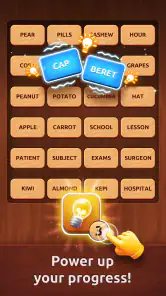
When I am stuck between two plausible categories, I find it more productive to scan every word before trying to resolve the first tempting pair. A word that appears to confirm one idea may also be the clue that points toward a different, more complete grouping. This is a small change in approach, but it makes the puzzle feel like careful interpretation rather than trial and error.
I also treat the undo control as a way to test a hypothesis, not as permission to make a string of guesses. I can try a connection, notice whether it fits the rest of the board, and back out if my reading was too narrow. That keeps the interaction calm and lets me focus on the reasoning. If I am tired or distracted, I stop after a board rather than pushing through with random taps; the game is more satisfying when I can give the words a little attention.
How it fits into a real day
I can see this working well in the few minutes before a bus arrives or while waiting for a kettle to boil. The short-round feel makes it easy to try a puzzle without committing to a long session, though the urge to keep going can stretch that break. My practical tip is to decide in advance whether I have time for one round or several; the relaxed presentation can make time pass quietly.
It also suits people who enjoy language but do not want a spelling contest or a timed quiz. The task rewards flexible thinking and noticing relationships, so it can be a pleasant shared game if you take turns suggesting categories. On the other hand, anyone looking for a deep narrative, competitive multiplayer, or a high-pressure score chase should choose a different kind of game. This one puts the solving and mood first.
Perfect for a Quick Break or a Long Session
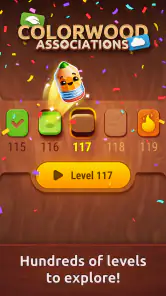
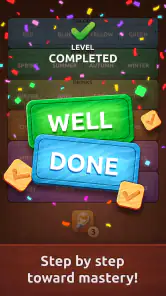
Whether you have a few minutes during a coffee break or a longer stretch of time to unwind, Associations - Colorwood Game fits perfectly. The levels are short enough that you can play one or two in a pinch, but they’re also addictive enough that you might just find yourself saying, "Just one more level!" until you realize an hour has passed.
What’s great is that you can pick up right where you left off, and the game’s design makes it easy to dive back in without missing a beat. It’s this flexibility that makes it such a great companion for any occasion.
Soundtrack and Aesthetics
No game is complete without a good soundtrack, and Associations - Colorwood Game doesn’t disappoint. The background music is calming and complements the visual style perfectly. It’s the kind of soundtrack that helps you focus, which is exactly what you need when tackling some of the more challenging puzzles.
The sound effects are subtle yet satisfying. Each connection you make is accompanied by a gentle sound, enhancing the overall experience without being distracting. It’s these little details that show how much thought went into creating this game.
Where it stands among word puzzles
Compared with crosswords, this asks less of your spelling and more of your ability to group ideas; compared with word searches, it is about interpreting meaning rather than scanning a grid. I find that makes it approachable when I am tired, but it may feel less satisfying if you prefer clues with one sharply defined answer. A good way to avoid frustration is to read the whole board before committing: a category that seems obvious from two words may not account for the rest.
The game is rated for Everyone, and its word-based format makes it easy to recommend across a household. It is free to start, with in-app purchases ranging from $2.99 to $99.99 per item, so I would treat optional spending as a personal choice rather than part of the puzzle itself. If you are trying it casually, there is no need to decide on purchases before you know whether this particular style of association clicks for you.
What to expect from the free start
Because the game is free to download, it is easy to try the central puzzle idea before deciding whether it earns a place in your routine. I would approach any optional purchase only after I know that I enjoy the repeated work of sorting words, rather than assuming that spending is necessary to understand the basic appeal. The listed in-app purchases span a wide range, so it is worth checking the purchase prompt carefully and making a deliberate choice instead of tapping through automatically.
That advice matters most for casual players: if your plan is simply to open a word game during spare moments, set your own spending boundary before you start. A free entry point is convenient, but it does not mean every optional item has the same value for every person. If you prefer games with no in-app purchase decisions at all, a paid word puzzle with a clearly defined one-time cost may suit you better.
Small trade-offs worth knowing
The calm look and sound are a strength, but they also signal the game’s limits: this is not designed to deliver the variety of a collection of unrelated mini-games. Its central pleasure is repeatedly making word groups, so players who tire quickly of one core activity may find the experience familiar. Likewise, when a connection feels unclear, the relaxing pace does not remove the need to think through alternatives; the game is gentle in tone, not effortless in every round.
For a useful little routine, I like the idea of playing a round when I want to step away from scrolling. I can focus on the words, test a possible category, and stop once I have had enough. If I am in the mood for a more demanding language workout, a crossword is a better fit; if I want low-pressure pattern recognition, this game makes more sense.
Choosing it over familiar alternatives
The main trade-off against a crossword is that this asks me to identify relationships rather than work through a chain of clues and crossings. That makes it less dependent on spelling and more about interpreting a set as a whole. A word search is a better pick when I want a simple visual hunt with little semantic judgement; this game is the better choice when I want to ask what several words have in common.
It also occupies a different space from trivia games. Trivia rewards recall of facts, while these puzzles ask me to consider how words can be grouped, including links that are not immediately obvious. That can make the game more comfortable when I do not want to be tested on what I know, but less appealing if I want a clear right-or-wrong question with a single clue. If my mood calls for varied tasks, a puzzle collection will offer more kinds of activity; if I want this specific kind of association, the focused format is a strength rather than a missing feature.
Sound and rhythm in the longer view
The music and soft connection sounds support the same unhurried mood as the art. I would keep sound on when playing somewhere quiet and use the visual cues alone when I need to stay discreet; the puzzle itself remains the main event either way. The pacing is a good match for short pauses, though someone who prefers rapid rounds, countdowns, or a strong sense of urgency may find it too mellow.
That tonal consistency is one of the game’s more considered choices. Rather than pushing the player toward speed, the presentation gives room to inspect the words and change course. My small strategy is to pause when a grouping seems nearly right: checking whether every item fits can be more effective than rushing to confirm the first appealing pattern.
Final Thoughts
If you’re searching for a game that’s both relaxing and mentally stimulating, Associations - Colorwood Game is a solid choice. It wraps engaging puzzles in a beautiful package, complete with soothing music and intuitive controls. It’s perfect for anyone looking to unwind while giving their brain a good workout.
So, whether you’re a seasoned puzzle enthusiast or just looking for something new to try, give this game a shot. It’s available on both Android and iOS, so you can download it right onto your device and start exploring the colorful world of associations. Happy gaming!
Who I would recommend it to
Its audience is clearest in the way the word puzzles meet the visual and audio style: I would suggest it to someone who likes untimed-feeling, low-pressure category challenges and wants a game that is easy to dip into. It has an average rating of 4.6 from around 99,000 ratings, and more than a million installs, which suggests it has found a broad audience without changing what it is at heart: a focused association game.
I would skip it if I wanted a story-led adventure, elaborate strategic systems, or a steady stream of different puzzle formats. For players who do enjoy this kind of word grouping, though, the format is clear enough to pick up quickly and thoughtful enough to invite a second look at each board. The current version is 1.12.17471, and it requires Android 7.0 or later. Overall, I see it as a pleasant, carefully styled choice for a small daily pause, provided its unhurried category-solving is the kind of challenge you actually enjoy.
Associations - Colorwood Game Frequently Asked Questions
Can I play Associations - Colorwood Game at my own pace?
The game’s store summary describes relaxing association puzzles, making it a fit for players looking for a word-based activity rather than a fast-paced action game. You can approach each puzzle by considering how the words connect and grouping those that share a category. If you enjoy taking time to spot patterns and think through language challenges, its central format may suit you.
What language skills does Associations - Colorwood Game use?
Associations - Colorwood Game is a word game built around grouping words by category. Playing involves recognizing meanings, themes, and relationships between words, so it may appeal to people who enjoy vocabulary and language-based puzzles. The core challenge is to work out which words belong together; it is not described as a game focused on spelling tests, grammar lessons, or language instruction.
When was Associations - Colorwood Game released, and what is its current version?
Associations - Colorwood Game was released on August 22, 2025, and its current version is 1.12.17471. These details can help you identify the game and understand which version you are considering before downloading. Version information may change as the game is updated, so check the app store on your device for the latest release available to you.
Who developed Associations - Colorwood Game, and what kind of game is it?
Associations - Colorwood Game is a word game developed by Burny Games. Its central idea is to group words by category, then solve puzzles by spotting the connections between them. If you enjoy language-based challenges that ask you to notice patterns and think about how words relate, this is the kind of casual puzzle game to consider.
What is the main objective of Associations - Colorwood Game?
In Associations - Colorwood Game, the primary objective is to connect different elements based on their relationships and associations. Players must use logic and creativity to solve puzzles by identifying how colors, shapes, and objects are interconnected. This encourages strategic thinking as players progress through increasingly challenging levels.
Pros
- Engaging puzzles that stimulate creativity.
- Visually appealing with vibrant wood textures.
- Simple controls suitable for all ages.
- Offline gameplay available for on-the-go fun.
- Regular updates introduce new challenges.
Cons
- Limited free levels; in-app purchases needed.
- Ads can be intrusive between levels.
- No multiplayer mode for shared fun.
- Occasional lag on older devices.
- Requires frequent internet for updates.

- Category
- Word
- Version
- 1.12.17471