Canasta Card Game
- 1.07K
- 4.6
- Installs
- 100.00K
- Price
- Free
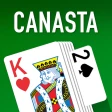
Screenshots
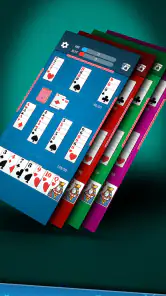
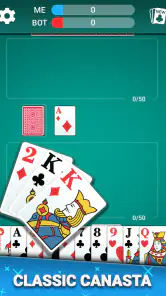
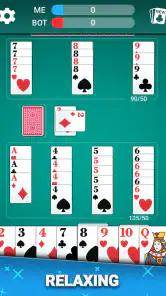
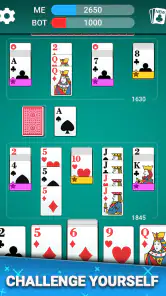
Analysis by Reviewed
I found Canasta Card Game to be a pleasantly focused way to play a familiar card game without turning the experience into a complicated project. It is a free card game from FIOGONIA LIMITED, aimed at Everyone, and its main appeal is easy to understand: you can sit down for a round of Canasta when you have a few quiet minutes, including when you are away from an internet connection. I like that directness. It does not ask me to learn a large collection of unrelated modes before I can enjoy a hand.
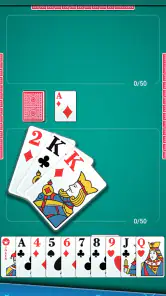
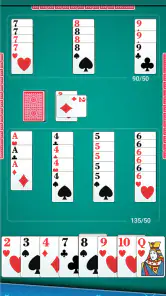
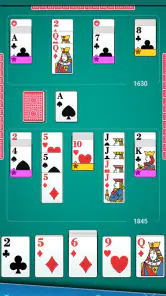
My first impression was that this is best approached as a traditional card-table companion rather than as a broad social gaming platform. The game is built around Canasta, so the pleasure comes from arranging cards, watching the discard pile, deciding when to commit to a meld, and trying to turn a modest hand into a useful sequence of plays. If you already know the basics, you can get moving quickly. If you are new, the first few rounds are more about understanding the rhythm than playing perfectly.
The important expectation is simple: this is a game for deliberate card decisions, not rapid-fire entertainment. A good session can fit into a break, a trip, or an evening when I want something quieter than an action game. The free download makes it easy to try, while optional in-app purchases ranging from $4.99 to $29.99 per item mean I would still check the purchase flow carefully before handing the phone to a child.
What the first game feels like
Canasta can look intimidating when the table begins filling with cards, especially if you have only played simpler matching games. In practice, I found the central idea manageable: build groups of cards, protect useful options, and avoid giving the next player an especially attractive discard. The challenge is not just collecting cards. It is deciding which cards are worth holding and which are getting in the way of a stronger plan.
For a first-time player, I would not try to memorize every scoring detail before starting. I would play the opening hand as a learning exercise. Notice which cards can be combined, pay attention to the discard pile, and watch how the game responds when a meld is created. That approach is less stressful than treating the first round as a test.
The offline focus is one of the most practical parts of the package. I can imagine using it on a journey, in a waiting room, or at home when I want to avoid notifications and online matchmaking. Offline play also changes the mood: there is no pressure to respond to another person immediately, and I can think through a choice instead of rushing because a timer or live opponent is demanding attention.
At the same time, players looking for a lively multiplayer community should set their expectations differently. A dedicated online card platform may be a better match if the main reason you play is chatting, competing against friends, or building a visible social profile. This game makes more sense for someone who values a self-contained round and the comfort of playing at their own pace.
Getting comfortable before chasing a win
My advice is to treat the first hand as a tour of the table. Start by identifying the cards that naturally belong together, then keep an eye on what is being discarded. A common beginner mistake is to grab every possible combination immediately. That can leave a hand full of disconnected cards or reveal too much of your plan too early.
I had better results when I separated three questions in my head. What can I play now? What might become useful after another draw? Which discard would help the opponent more than it helps me? This small mental routine makes the game feel less random, even when the cards are not cooperating.
Another useful habit is to avoid judging a round too early. A weak opening hand can improve, while a promising hand can become awkward if I hold too many cards waiting for one exact match. Canasta rewards flexibility. I would rather keep two realistic paths open than build my entire turn around a single card that may never arrive.
Setting up the game without overthinking it
Installation should be straightforward for compatible Android devices, since the game supports Android 7.0 and later. Once it is installed, I would begin with a short session rather than attempting a long challenge immediately. The current version is 1.3.1, and the cleanest way to understand the experience is simply to enter a round and learn the controls through normal play.
Before starting, I recommend finding a comfortable screen position and making sure the card area is easy to read. Card games depend on quick visual comparisons, and a cramped display can make an otherwise simple decision feel uncertain. I also prefer playing with the phone held steadily instead of tapping while walking, because the difference between one card and another matters more than it might in a casual puzzle.
If you are introducing the game to someone who has never played Canasta, explain the goal in plain language first: collect useful groups and make choices that improve the hand over several turns. Avoid turning the first session into a lecture about every possible rule. The player will understand the structure faster by seeing a few turns and asking why a particular card was kept or discarded.
The age rating of Everyone makes the game suitable for a broad audience, but that does not eliminate the need for sensible supervision around purchases. I would especially avoid letting a young player explore payment screens alone. The game itself is easy to present as a family-friendly card activity, while the optional spending deserves the same basic caution I use with any free-to-start mobile game.
How I reached the first meaningful success
My first satisfying milestone was not a spectacular score. It was completing a useful group while still keeping enough flexibility for the next turn. That is the moment when Canasta stops feeling like a pile of unrelated cards and starts feeling like a series of manageable decisions.
For a new player, I suggest aiming for three small successes in order. First, make one legal group without rushing. Second, take a deliberate look at the discard pile before choosing what to draw or keep. Third, finish a turn with a discard that does not obviously strengthen the other side. Those steps create a repeatable routine and are more valuable than simply hoping to win the opening round.
One trade-off I noticed is that patience can be both a strength and a trap. Holding cards for a better combination may preserve possibilities, but holding too long can clutter the hand and delay progress. I try to set a personal limit: if a card has remained unhelpful through several decisions and does not support a realistic plan, I consider releasing it. That is not a rigid rule, but it prevents wishful thinking from controlling the whole game.
Another practical insight is to read the discard pile as information, not merely as a source of cards. It can show which combinations are becoming less likely and can help me infer what the opposing side may be collecting. Even when I cannot predict the exact next move, I can avoid making the most generous discard available. This is where the game becomes more thoughtful than a basic matching app.
Confusing moments that become clearer with practice
The biggest early confusion is usually the difference between having cards that look related and having a group that is actually useful under the game’s rules. I initially wanted to play combinations as soon as they appeared, but that instinct is not always correct. A group should support the wider hand, not just provide the satisfaction of placing cards on the table.
The discard pile can also create hesitation. Taking it may offer several attractive cards, yet it can force a player into a less flexible position. I now pause before making that choice and ask whether the cards I gain genuinely improve my plan or merely look tempting because they are visible. If the answer is unclear, a smaller, safer move can be better than a dramatic pickup.
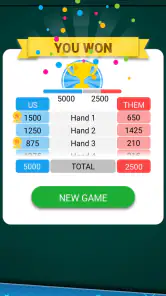
Scoring is another area where beginners may need time. I would not judge the game solely by the result of one hand, because the strategic lesson is often hidden in the decision that caused the final swing. After a round, I like to identify one turning point: an overly generous discard, an unnecessarily delayed meld, or a hand that was kept together for too long. That review makes the next game more purposeful.
There is also a psychological trap in trying to copy the opponent’s apparent plan. Seeing a few similar cards can make me assume I know exactly what the other side wants. That assumption can lead to defensive discards that damage my own hand. I get better results when I use visible information as a warning rather than as certainty. Canasta rewards observation, but it still requires adapting to incomplete information.
Small habits that improve everyday sessions
When I only have a short break, I play with one goal instead of trying to master the entire game. For example, I may focus on making cleaner discards or on recognizing when a promising group is becoming too expensive to maintain. This keeps a brief session useful even if I do not finish with a win.
For longer sessions, I recommend changing the pace rather than repeating the same mistake. If I keep holding too many speculative cards, I deliberately choose a more conservative hand. If I am discarding too quickly, I spend one extra moment checking whether a card could support a second route. This kind of self-adjustment is more effective than blaming luck after every poor draw.
A particularly useful workflow is to decide what information matters before each turn. I check my immediate plays, the visible discard options, and the cards that would leave me with the most flexibility. That sequence reduces random tapping and helps me remember why I made a choice. It is a small technique, but it makes the game feel more intentional on a phone.
I also find that the game works well as a low-distraction alternative to scrolling. Because each turn asks for attention, it gives me something concrete to do without requiring the long commitment of a strategy campaign. The trade-off is that it is not ideal when I want a completely passive activity. Even an offline card game needs enough concentration to be enjoyable.
Who will enjoy it and who may prefer another option
I would recommend this Canasta game to someone who likes classic card rules, gradual improvement, and offline sessions. It is especially suitable for a first-time player who wants to learn at a comfortable pace instead of entering a highly competitive online room. The free price also lowers the barrier to trying it, and the Everyone rating makes it easy to consider for a broad household audience.
It is less suitable for players who need constant novelty. If you want a large selection of card games, elaborate progression systems, or a strong social layer, a broader card-game collection may offer more variety. Likewise, someone who dislikes careful planning may find the slower turns less exciting than a fast solitaire variant or an arcade-style game.
Compared with playing physical Canasta, the mobile version is more convenient and easier to start alone, but it cannot replace the social feel of sitting around a table with friends or relatives. Compared with a general solitaire app, it offers more interaction between decisions and more attention to what another side might do, but it also asks for more patience. Compared with an online competitive service, it is calmer and more private, though less appealing if live opponents and conversation are essential.
The purchase model is worth considering alongside those comparisons. Since the game is free but includes individual in-app purchases between $4.99 and $29.99, I would decide in advance whether I am comfortable with optional spending. A player who wants a completely purchase-free experience may prefer a paid card game with a single upfront cost, while someone who simply wants to try Canasta offline may find the free entry more convenient.
What to do after the first win
Once I had completed a few rounds, I stopped concentrating only on whether a move was legal and started asking whether it improved my position. That is the natural next step for this game. Look for patterns in your own decisions: do you keep too many cards, discard useful information, or wait too long to create a group? Each answer suggests a practical adjustment for the next session.
I also recommend creating a simple personal rule for uncertain turns. Mine is to favor the option that leaves more than one plausible continuation, unless the visible cards strongly support a quicker play. This does not guarantee a win, but it protects against the most common beginner error: sacrificing all flexibility for one attractive possibility.
The game’s reception suggests that many players find this focused approach appealing. It holds an average rating of 4.6 from around 3.5 thousand ratings, and it has passed 100 thousand installs. Those figures do not replace personal experience, but they do fit my impression that the app has found an audience among people who want a straightforward Canasta session rather than an overloaded card platform.
For me, the strongest reason to keep it installed is convenience. I can open it when I want a quiet card challenge, play offline, and leave after a hand without feeling that I have abandoned a larger live event. The main limitation is the same quality that makes it approachable: its focus is narrow. If Canasta is not the kind of game you already enjoy, there is little extra around it to change your mind.
Overall, I see Canasta Card Game as a friendly starting point for learning and practicing a traditional card game on mobile. FIOGONIA LIMITED keeps the idea recognizable, while the offline format makes it useful in ordinary situations where an internet connection or another player is not available. I would install it for relaxed solo play, begin with the goal of understanding one good turn, and only worry about stronger results after the basic rhythm feels natural.
My recommendation is to try it if you want a calm, portable Canasta table rather than a busy online card hub. Give the first few hands room to teach you, watch the discard pile with purpose, and treat optional purchases as a separate decision from enjoying the free game. With that mindset, the path from installation to a meaningful first success feels reassuringly manageable.
Pros
- Clear rules make it easy for beginners to learn.
- Smooth gameplay works well for short or extended sessions.
- Multiple difficulty levels provide a suitable challenge.
- Offline play is useful when no internet connection is available.
- Simple card controls make the game comfortable on mobile screens.
Cons
- Ads may interrupt the experience
- especially between rounds.
- Advanced players may find the computer opponents predictable.
- Some features may require in-app purchases to unlock.
- The interface can feel outdated on certain devices.
- Limited social options reduce interaction with other players.
- Category
- Card
- Version
- 1.3.1