Bubbu School - My Virtual Pets
- 686.00
- 3.8
- Installs
- 50.00M
- Price
- Free
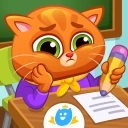
Screenshots


Analysis by Reviewed
When I’m looking for a child-friendly game that can fill a short stretch of waiting time without turning into a lesson on a screen, a virtual school has an appealing premise. Bubbu School - My Virtual Pets puts cute animal characters in a playful learning setting, with drawing and music among the activities. I see it as light entertainment with an educational flavor, rather than a substitute for structured teaching or a demanding learning app.
Small goals make it easy to begin
The school theme gives a child an easy starting point: pick an activity, explore what it asks them to do, and enjoy the animal characters along the way. That matters for younger players who may not want to read instructions or plan a long session. Bubadu’s game is free to start, so families can get a feel for its style before deciding whether it suits their routine. It is rated for Everyone, though I’d still sit with a young child at first and see how they handle the menus and activities.
For a realistic use case, I can picture opening it during a quiet moment at home while dinner is being prepared. I’d let a child choose one activity, then ask them to show me what they drew or played afterward. That turns a solo screen break into a small conversation, without expecting the game itself to teach a full lesson. If the goal is a specific curriculum, reading practice with measurable steps, or a focused instrument tutorial, I’d choose a dedicated educational app instead.
What progress feels like in play
The appeal here is variety and the pleasure of returning to familiar animal characters, not a serious course with formal grades. The store summary points to drawing and music, and those creative activities can be a useful change from purely reactive tapping. I would treat progress as a reason to explore and keep playing, rather than proof that a child has mastered a school subject. An adult can make the activity more meaningful by asking the child to explain a picture or describe a sound, rather than leaving the screen to do all the teaching.
Compared with a typical puzzle or arcade game, this has a softer, more classroom-like frame; compared with a structured learning app, it puts play and character appeal first. That middle ground is its strength for children who are curious but easily put off by drills. It may be less satisfying for a child who wants clear lesson sequences, steadily rising challenge, or a strong sense of achievement after each task. I’d try it alongside, not in place of, books, hands-on drawing, or music-making away from the screen.
Welcome to Bubbu’s World
When you first open Bubbu School - My Virtual Pets, you’re greeted with a colorful and engaging world that’s hard to resist. The graphics are vibrant, and the user-friendly interface makes navigation a breeze. You’ll find yourself in a school setting where your virtual pets are ready to learn, play, and grow. It’s like stepping into a cartoon where you’re the director of fun!
Interactive Learning and Fun
One of the coolest features of this app is its educational component. While it’s all about fun, Bubbu School cleverly integrates learning into its gameplay. Kids can engage in activities that develop their skills in a playful environment. From drawing and music classes to math and language lessons, there’s a variety of subjects to keep young minds entertained and educated. It’s an app where education meets entertainment in the best possible way.
More From Our News Desk

Weather by Xiaomi Review: Clear at a Glance, Less Clear Up Close

X Under Pressure: Can It Recover When Posting Goes Wrong?

Clash of Clans Is Won Between the Battles

Android Auto Makes the Case for Quieter Car Software

MobiOffice: Transforming Mobile Productivity with Seamless Integration

EA SPORTS FC™ Mobile Soccer: Redefining Mobile Sports Gaming
I’d be cautious about treating every activity as a lesson with a clear learning outcome. The most useful way to bring it into a family routine is to make the play visible: invite a child to talk through a choice, make a drawing of their own afterward, or clap along to a rhythm they enjoyed. Those small prompts add context without turning leisure time into a test. If a child becomes frustrated by a task, switching to a different activity is likely a better fit than insisting they complete it.
Customization and Care
What’s a virtual pet without a bit of customization? Bubbu School offers plenty of options to personalize your pets. You can choose different outfits, accessories, and even decorate their living spaces. This level of customization adds a personal touch and makes the experience more immersive. Plus, taking care of your pets by feeding and nurturing them adds another layer of responsibility and fun.
Customization can help a child feel attached to the world, but it can also shift attention from the learning activities toward appearance and collecting. I’d use that as a natural stopping point: choose an outfit or room detail, then close the game rather than encouraging an open-ended hunt for more. The game is free, with in-app purchases priced from $0.99 to $49.99 per item, so I’d check purchase settings on the device and agree on expectations before handing it over. That’s especially sensible if a child can navigate menus independently.
Mini-Games Galore
For those moments when you just want to unwind, Bubbu School has a plethora of mini-games to enjoy. These games range from puzzles to arcade-style challenges, providing endless entertainment. It’s perfect for a quick break or a long session of fun. Every game you play helps you earn rewards that can be used to upgrade your pet’s lifestyle, keeping you motivated to come back for more.
The variety can help a child move on when one activity stops holding their attention, but it may also make the session feel less focused. I’d suggest choosing a simple endpoint before play begins—one activity, or a short visit—rather than relying on the game to signal when it is time to stop. A child who thrives on escalating difficulty and tightly defined goals may prefer a game built around a more explicit challenge curve. Here, the gentler appeal is better suited to relaxed exploration than competition.
Who will enjoy it, and who may want something else
Bubadu’s educational game has been available since October 25, 2020, and its current version is 1.46. It has a 3.8 average from around 142,000 ratings, with over 50 million installs. Those figures suggest it has reached a wide audience, but they can’t tell me whether a particular child will enjoy its pace; trying a brief session is a better test. The game requires Android 5.0 or later, which is useful to check before installing it on an older device.
I’d recommend it most to younger children who like animal characters, creative play, and a low-pressure way to explore a school setting. I’d be more hesitant for families seeking a tightly sequenced teaching tool, or for children who quickly lose interest unless each session has a clear new challenge. It also may not suit a household trying to avoid in-app purchases altogether unless an adult manages the device and sets boundaries. The best fit is a child who enjoys choosing what to do next, with a grown-up nearby to keep the play balanced.
In conclusion, Bubbu School - My Virtual Pets is more than just a game; it’s a vibrant, interactive world where learning and play go hand in hand. With its educational elements, customization features, and a wide range of activities, it offers something for everyone. Whether you’re a kid or just a kid at heart, this app is sure to bring a smile to your face. Give it a try, and let Bubbu and friends take you on an unforgettable virtual adventure!
My take on its staying power
For me, the game’s lasting appeal depends less on a steep difficulty curve and more on whether a child enjoys returning to its characters and choosing another activity. That can be a welcome alternative to games that lean heavily on competition, but it also means the parent may need to provide the stopping point and add real-world context. I’d start with a short, shared visit and see which activities genuinely hold a child’s attention. If they leave wanting to draw, make music, or talk about their choices, it has served its purpose; if they only want to keep browsing for rewards, I’d steer them toward another kind of play.
A calmer alternative to drill-based learning
For a child who resists worksheets or apps that feel like schoolwork, the animal setting can make opening a learning-themed game less of a hard sell. I would use it as a bridge into creative activity, not as a way to cover a lesson plan. A child might spend a few minutes exploring, then carry the idea into paper and crayons or a homemade rhythm game. That transition is useful because it gives screen time a natural endpoint and lets the child continue the activity without needing another unlock or reward.
Its trade-off against more focused educational games is clear: the broader, playful setting may be easier to approach, while a dedicated reading or math app is usually the better pick when you want a specific skill practiced in a deliberate sequence. Against a standard arcade game, Bubadu’s school-and-pet framing gives adults more natural ways to talk with a child about what they are doing. Neither comparison makes it universally better; the right choice depends on whether the moment calls for relaxed exploration or targeted practice.
Making a short session work
One practical approach is to let the child choose between drawing and music, then agree that the session ends after they have shown you one thing they made or enjoyed. This gives them some control without leaving the stopping decision entirely open. If they switch activities repeatedly, I would gently narrow the choice rather than treating every change as a failure to concentrate. The point is to keep the visit light and enjoyable, not to turn the game into another task they must complete.
For a younger child, I’d explore the menus together before handing over the device. That small first look can show whether the controls make sense to them and gives an adult a chance to notice where purchases or customization choices appear. Since the game includes optional purchases, I would also set device-level purchase protections and explain the household rule in plain language. That is more reliable than assuming a child will understand which parts of a colorful game involve spending.
What to expect from its challenge and rewards
The activities and pet-focused extras can give a child reasons to return, but I would not choose this for someone looking for a demanding progression ladder. Its appeal seems better suited to short bursts of discovery than to mastering increasingly difficult stages. That difference matters for children who enjoy clear targets: if they ask what comes next or want a visible measure of improvement, a level-based game or a structured learning tool may hold them longer.
Rewards can be motivating, but they can also become the main reason to keep tapping. I’d pay attention to what the child talks about after playing. If they mention a picture, a sound, or a character they enjoyed, the session has produced something more than reward-seeking. If the conversation centers only on getting another item, I’d end the visit and offer a hands-on alternative. This is not a flaw unique to this game; it is a useful distinction when any child’s app mixes play with incentives.
Who should pass, and my final verdict
I would skip it for a child who needs a carefully paced course, for parents who want a game to enforce a firm stopping point on its own, or for a household that does not want purchase prompts to be part of a child’s experience. I’d also choose something else if the child prefers competition, precise goals, or a challenge that steadily ramps up. Those expectations are better served by games designed around levels and measurable tasks than by an open-ended animal-school setting.
For families who want a gentle, character-led option for occasional creative play, I think it can earn a place in the rotation. The best results will come from treating it as a starting point for drawing, music, and conversation rather than expecting it to deliver a complete educational program. I’d try a short session with the child, see which activity catches their interest, and decide from there. That makes the most of its welcoming style while keeping the limits of its learning value and the need for adult guidance in view.
Bubbu School - My Virtual Pets Frequently Asked Questions
What activities can children try in Bubbu School?
Bubbu School is an educational game built around a virtual school and animal characters. Children can explore drawing and music activities as well as playful mini-games. Its school theme gives these activities a lighthearted setting, so the game may appeal to kids who enjoy creative play and virtual pets. Families can consider whether that style suits the child before downloading.
Who is the developer of Bubbu School?
Bubbu School - My Virtual Pets is developed by Bubadu, the studio behind this animal-school game. The game is intended for children and combines virtual pets with educational, creative activities. Knowing who makes the game can help parents identify it when browsing for a child-friendly option, while its playful theme gives a quick sense of what children will find inside.
Is Bubbu School free to download, and does it include purchases?
Bubbu School - My Virtual Pets is free to download, so families can try its animal-school activities without paying upfront. It also offers optional in-app purchases, with items ranging from $0.99 to $49.99. If a child will be playing, it is sensible to review purchase settings on the device and explain that some extras may cost real money.
What is Bubbu School - My Virtual Pets?
Bubbu School - My Virtual Pets is a fun and engaging educational game designed for children. It allows kids to explore a virtual school environment with their virtual pet characters, helping them learn through interactive activities and mini-games. The app encourages creativity, problem-solving, and social skills development in a safe and friendly setting. Its school-themed play includes drawing and music activities, making it a lighthearted way for children to learn through play.
What age group is Bubbu School suitable for?
Bubbu School - My Virtual Pets is primarily designed for children aged 4 to 10 years old. It offers age-appropriate content and challenges that are specifically tailored to engage young learners in a fun and educational way, making it a great tool for both entertainment and learning. The game is rated Everyone, so parents can consider whether its style and activities are a good fit for their own child.
Pros
- Engaging educational mini-games.
- Colorful and kid-friendly graphics.
- Promotes creativity and imagination.
- Simple and intuitive controls.
- Free to play with optional purchases.
Cons
- Contains in-app advertisements.
- Limited content without purchases.
- Requires internet for some features.
- May not appeal to older kids.
- Frequent prompts for in-app purchases.
- Category
- Educational
- Version
- 1.46