BRIO World - Railway
- 95.00
- 4.3
- Installs
- 100.00K
- Price
- $4.99
Screenshots
Analysis by Reviewed
I find BRIO World - Railway most appealing when I want a child to have room to experiment rather than follow a fixed sequence of tasks. It turns railway building into an open-ended activity: you arrange a little world, then watch what happens when the trains move through it. That makes it feel closer to playing with a toy set than working through a conventional educational game, and it suits short, imaginative sessions particularly well.
A good fit for small pockets of play
The open-ended format makes this easiest to enjoy when there is no need to finish a level before putting the device down. A child can make a short route, run a train, and stop when the story is done; another session can begin with a completely different idea. I find that flexibility useful for a quiet moment at home, but it also means the adult may need to offer a starting prompt if a child is used to games that tell them exactly what to do.
For example, while dinner is being prepared, I might ask a child to make a route from a station to a destination they invent. Once the train reaches it, the next task could be changing the route so the journey takes a different path. That simple invitation gives the activity a shape without taking over the child’s choices. It also makes the game easier to share: a parent can join for a few minutes, then let the child continue independently if they are engaged.
I would not choose it as a quick distraction for every child. Someone who wants explicit goals, frequent rewards, or a clear finish line may lose interest before the freedom becomes enjoyable. In that situation, a guided puzzle game is likely a better match. The railway sandbox works best when making and revising a design is itself the reward.
Getting on Track
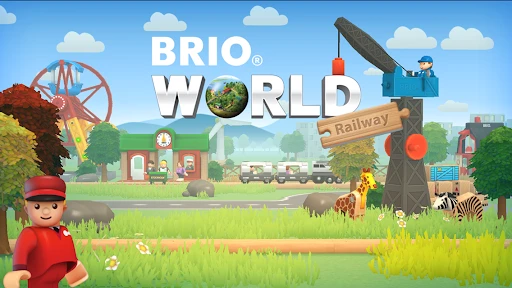
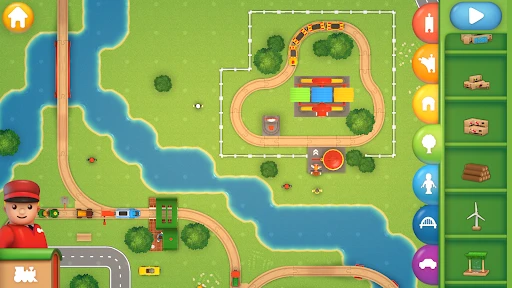
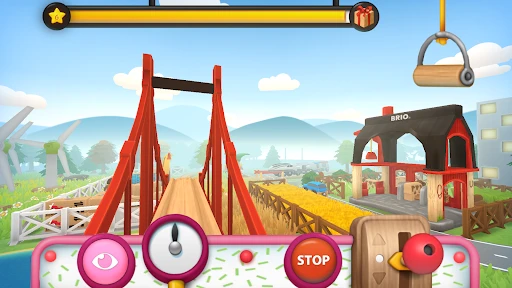
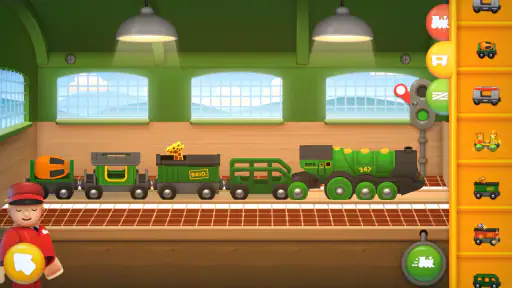
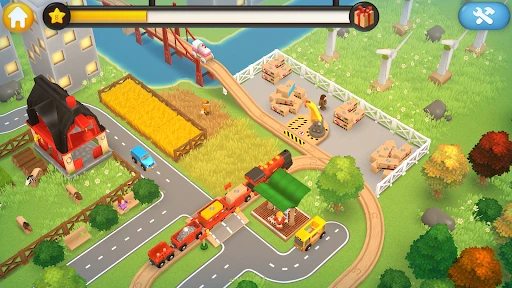
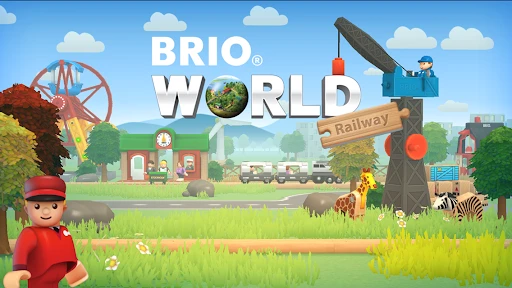
When I first launched BRIO World - Railway, I was immediately drawn into its vibrant and colorful world. The app, available on both Android and iOS, invites you to build your very own railway world with a delightful simplicity that mirrors real-life BRIO toys. It's like having a massive toy train set right in your pocket! The graphics are vivid, and the sound effects make the experience even more immersive. You can practically hear the chugging of the trains as they traverse your custom tracks.
The current version is 5.0.1, and the game comes from Filimundus AB. It launched on February 10, 2016, so this is an established title rather than a brand-new experiment. Its 4.3 average from around 1.5K ratings and more than 100K installs suggest that plenty of players have tried it, though those figures matter less than whether this relaxed, creative format fits your household. The game is rated Everyone and costs $4.99, with in-app purchases listed at $1.99 per item.
Building Your Railway Empire
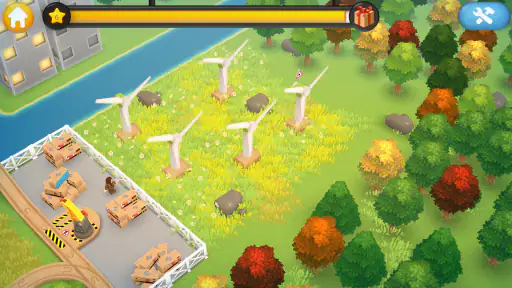
The core of the app is all about creativity. You're given a variety of tracks, trains, and scenery to build your own unique railway system. The intuitive drag-and-drop interface makes it super easy to connect tracks and design intricate layouts. As a fan of puzzles and simulations, I found the process of crafting my railway world both relaxing and engaging.
More From Our News Desk

Clash of Clans Is Won Between the Battles

Android Auto Makes the Case for Quieter Car Software

MobiOffice: Transforming Mobile Productivity with Seamless Integration

EA SPORTS FC™ Mobile Soccer: Redefining Mobile Sports Gaming

How Microsoft OneDrive Became a Mobile Productivity Giant

How Google Translate Breaks Language Barriers Effortlessly
For a younger player, I’d make the first session a small challenge: connect a short route, run a train, then ask what could be changed to make the journey more interesting. That gives the child a purpose without turning play into a lesson. For older children, it can be fun to build a layout first and then revise it when the route doesn’t work as imagined. The useful learning is in that cycle of planning, testing, and adjusting—not in being told there is one correct design.
One practical tip is to start with a simple track arrangement before adding lots of scenery. A busy layout can be visually appealing, but a clear route makes it easier for a child to see how each connection affects the train’s path. I also like treating a build as a story prompt: decide where the train is going, then shape the route around that idea. This can help children who enjoy pretend play stay engaged longer than they might with a purely construction-focused task.
What's more, the app encourages exploration and experimentation. Want to see what happens if you send two trains on a collision course? Go for it! The game is forgiving and offers plenty of opportunities to learn and try new things. Plus, the joy of watching your trains zip around the tracks you created is immensely satisfying.
What the Railway Teaches Through Play
While fun is at the forefront, BRIO World - Railway also packs an educational punch. It subtly introduces concepts of engineering and problem-solving. Kids, in particular, can benefit from this as they figure out how to connect tracks and manage their railway systems efficiently. It's a great way to sneak in some learning while having a blast.
The strongest learning opportunity here is practical rather than instructional. A child can make a guess about whether a route will connect, test it by running a train, and then adjust the design. I would keep the conversation focused on what they notice—where the train turns, which part of the route needs attention, and what they want to try next. That approach respects the playful feel instead of turning the screen into another lesson with a right answer.
It can also be a useful shared activity for children who like explaining their ideas. Rather than building the railway for them, I would ask them to describe the journey they have in mind and let them decide how to represent it. The adult’s role is mainly to help get past a moment of uncertainty, not to optimize the layout. That distinction matters: too much direction can make an open-ended toy feel like a task.
In an everyday setting, I can see it working well during a quiet stretch at home, such as while dinner is being prepared, when a child wants an activity that doesn’t need a long explanation. A parent can join in for a few minutes, suggest a destination, and let the child take over the design. That shared play is a better fit than handing it over with the expectation that every child will immediately understand what to do. The open-ended format gives freedom, but it also means some players may need a little prompting to get started.
Compared with a typical educational game built around quizzes, levels, or right-or-wrong answers, this one is much more about spatial thinking and imaginative construction. That’s a strength if your child likes arranging toys and inventing scenarios. It’s a weaker choice if you’re looking for structured lessons, clear milestones, or a game that steadily introduces new skills. Likewise, a physical BRIO set may be preferable for children who want to handle pieces, build away from a screen, or play alongside siblings around the same table. The digital version is convenient, but it cannot replace that tactile experience.
Sharing Ideas Without Making It the Point
One of the standout features is the ability to share your creations with a community of fellow train enthusiasts. You can upload your railway designs and download others, which adds a social element to the game. It’s inspiring to see what others have crafted, and it provides plenty of ideas for your next railway masterpiece.
That sharing option can also be useful when a player runs out of ideas: looking at another layout may suggest a new way to arrange a route, rather than simply repeating the same build. I’d treat it as inspiration, not a requirement. Children who prefer to keep their play private can focus on their own railway, while families who value shared creations should decide whether that community element suits their child. It is one part of the experience, not the reason every player will enjoy the game.
For a parent deciding whether to use that feature, I’d make the choice deliberately rather than letting sharing become an assumed part of play. A child may be perfectly happy building privately, and the game’s main appeal does not depend on showing a layout to anyone else. If browsing other people’s designs is welcome, it can give a child a concrete idea to try; if the family prefers not to use community features, the private construction loop remains the more important consideration.
Also, the app frequently updates with new content and challenges, keeping things fresh and exciting. You’ll never run out of tracks to lay or trains to conduct.
For existing players, the move to version 5.0.1 gives a clear current version to look for when checking an installation, but a version number alone does not tell me how a particular update changed the experience. I wouldn’t buy it on the assumption that every return visit brings a major new activity. The most dependable reason to come back is the basic building loop: make a route, see it run, then redesign it. If you already enjoy that, the game’s open-ended play is likely to matter more than a stream of new challenges.
Choosing It for the Right Player
I’d recommend it to children who like trains, construction toys, and making up their own rules, as well as adults who enjoy calm, creative play alongside a child. The price makes it worth thinking about whether that style of play is a good match before purchasing. The game is rated Everyone, but an age rating is not a guarantee that every child will find an open-ended activity engaging without help. A child who prefers explicit goals may be happier with a more guided puzzle game, while a child who loves arranging tracks may settle into this one quickly.
The purchase decision is easier if you think about what usually keeps the child interested. If they already spend time arranging toy vehicles or inventing destinations, the digital railway gives those habits a screen-based outlet. If they mostly enjoy collecting rewards or completing a sequence of increasingly difficult stages, this may not hold their attention in the same way. I would also factor in whether an adult can help introduce the activity at first; a short shared start may be enough for a child to take ownership, but it is not guaranteed to be an instant fit for everyone.
There are a couple of practical trade-offs to keep in mind. A digital railway can be picked up without gathering physical pieces, but the screen-based controls and visuals are the whole experience, so they won’t satisfy a child who wants to build with their hands. Also, a creative sandbox can feel repetitive if a player expects a steady sequence of unlocks or a clear finish line. I’d choose it for relaxed experimentation, not as a substitute for a structured curriculum or a competitive game.
Price, Versions, and What to Watch
Because the game costs $4.99 and lists in-app purchases at $1.99 per item, I would decide what I’m comfortable spending before handing the device over. A child’s enjoyment of the central railway-building idea is the key question; extra purchases should not be treated as necessary to make that basic style of play worthwhile. If you are comparing it with a free game, weigh the upfront cost against the kind of experience you actually want: here, the appeal is a focused creative toy, not a long progression built around constant goals.
BRIO World - Railway has been around since 2016, and its current version is 5.0.1. That history gives the game an established place in the educational play category, but I’d separate that confirmed release and version information from any expectation about future changes. If you are deciding whether to return or buy it now, focus on what is already appealing: building routes, watching trains travel, and using the layout as a prompt for imaginative play. I’d keep an eye on future updates for details about what actually changes rather than assuming a particular feature is on the way.
For someone who already owns it, I’d judge whether it still earns a place on the device by watching how the child uses it: do they return to revise layouts and invent journeys, or do they open it only when prompted? That is more informative than expecting a new version number to transform the game. For someone considering a purchase, the same test can be tried in conversation first: ask whether the child wants to design a railway and make up what happens along the way. Their reaction may be a better guide than the educational label alone.
In conclusion, BRIO World - Railway is a charming and engaging app that brings the joy of train sets into the digital realm. Whether you’re a kid or just a kid at heart, there’s something magical about creating your own little train world. So, why not hop on board and see where the tracks take you? Trust me, it’s a ride worth taking!
BRIO World - Railway Frequently Asked Questions
How much does BRIO World - Railway cost, and what should I know before purchasing it?
BRIO World - Railway is a paid game, so it’s worth checking the purchase price and any in-app purchase options before downloading. The game is listed at $4.99, with optional in-app purchases priced at $1.99 per item. If a child will be playing, parents may want to review purchase settings on the device so any optional spending is managed appropriately.
What is BRIO World - Railway and what can I do in the game?
BRIO World - Railway is a digital simulation of the classic BRIO wooden train sets. It allows players to build their own train tracks, operate trains, and explore different environments. Players can engage in creative play by designing intricate rail systems, completing various train missions, and interacting with fun characters and elements within the game world. It's an engaging game suitable for both children and adults who enjoy creative and educational play.
Is BRIO World - Railway suitable for children?
Yes, BRIO World - Railway is designed to be child-friendly and is rated Everyone. The game features intuitive controls, colorful graphics, and engaging gameplay that encourages creativity and problem-solving. It’s a digital extension of the popular BRIO wooden toys, making it both educational and entertaining for young players. Parents can feel confident letting their children explore this safe and interactive environment.
Are there in-app purchases in BRIO World - Railway?
BRIO World - Railway does offer in-app purchases, which allow players to unlock additional content, such as new trains, environments, and building elements. While the base game provides a substantial amount of content, these purchases enhance the experience by offering more options for creativity and exploration. Parents should be aware and may want to set restrictions to manage in-app spending.
What platforms is BRIO World - Railway available on?
BRIO World - Railway is available on both Android and iOS platforms, making it accessible to a wide range of mobile device users. It can be downloaded from the Google Play Store for Android devices and the Apple App Store for iOS devices. This cross-platform availability ensures that players can enjoy the game regardless of their smartphone or tablet brand.
Pros
- Intuitive interface for easy navigation.
- Rich and colorful graphics appeal to kids.
- Encourages creativity and problem-solving.
- Offline play available
- ideal for travel.
- Regular updates with new features.
Cons
- Limited free content
- in-app purchases needed.
- Can be repetitive after extended play.
- Requires substantial device storage space.
- Some features need internet connection.
- Lacks multiplayer or social features.
- Category
- Educational
- Version
- 5.0.1