Bricks Ball Journey
- 1.35K
- 4.5
- Installs
- 10.00M
- Price
- Free
Screenshots


Analysis by Reviewed
I’d choose a brick-breaking game for a particular kind of break: a few minutes when I want something active but don’t feel like learning a complicated set of rules. Bricks Ball Journey fits that niche with numbered bricks, bouncing balls, and shots that reward a little thought. The appeal is easy to understand, but the useful question is whether you enjoy refining an angle and seeing how the ball’s path plays out.
Start with the kind of play you want
Before downloading, I’d ask myself whether I want quick, repeatable rounds or a game built around a larger goal. This is a casual game from PoseidonJoy, and its central pleasure is making a shot, watching the rebounds, and adjusting my approach. It isn’t my pick for a story, a deep progression system, or a session that requires sustained concentration.
That compact loop can work well in the ordinary gaps of a day: waiting for a takeaway order, sitting on the bus, or taking a short break between chores. I can focus on one board without needing to remember a plot or a long chain of instructions. If I only have a minute, though, I’d avoid starting when I’m likely to be interrupted; a shot may be quick, but I still enjoy having enough attention to watch where the balls go.
It’s free to download and rated for Everyone, so it’s approachable as a casual pick. The game has a 4.5 average from around 52,000 ratings and over 10 million installs. Those figures suggest broad appeal, though they don’t tell me whether its particular rhythm will suit you. I’d treat it as an easy game to sample, not a guaranteed match for every player.
Gameplay Mechanics
The premise of Bricks Ball Journey is refreshingly simple. You launch balls to break bricks, and each brick has a number on it indicating how many times it needs to be hit before it shatters. Sounds simple, right? But don’t be fooled! As you advance, the levels become more challenging, requiring a good strategy to clear the board.
What I absolutely love about this game is its intuitive controls. You just swipe your finger to aim and release to shoot. The physics engine ensures that the balls bounce around realistically, which adds a layer of unpredictability that keeps you on your toes. And let’s not forget the power-ups! These can turn a seemingly impossible level into a breeze, giving you that ‘aha!’ moment of satisfaction.
My practical tip is to look beyond the nearest brick when choosing an angle. A shot that gets behind a cluster can keep the balls moving through several targets, while a direct hit may do less useful work. I also wouldn’t rush to use a power-up as soon as a level feels awkward; saving it for a genuinely cramped board can be a better trade. That choice—play patiently or spend help now—is part of the small tactical appeal.
More From Our News Desk

Weather by Xiaomi Review: Clear at a Glance, Less Clear Up Close

X Under Pressure: Can It Recover When Posting Goes Wrong?

Clash of Clans Is Won Between the Battles

Android Auto Makes the Case for Quieter Car Software

MobiOffice: Transforming Mobile Productivity with Seamless Integration

EA SPORTS FC™ Mobile Soccer: Redefining Mobile Sports Gaming
One useful habit is to watch the return path as carefully as the opening angle. The first contact may look promising, but a ball that exits the crowded area quickly can leave more work for the next turn. I try to aim for routes that give the volley room to travel through the board, rather than judging a shot only by its first collision. It won’t make every outcome predictable, but it gives each attempt a purpose.
This also makes the game a better fit for people who enjoy light spatial reasoning than for those who want a pure reflex test. I don’t need to tap rapidly; I need to make a reasonable choice and accept that rebounds can complicate it. If I’m playing while distracted, I’m more likely to choose an obvious angle and miss the satisfaction of setting up a more productive one.
Presentation that keeps the board in focus
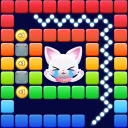
Visually, the game is a treat. The colors are vibrant and the animations are smooth, making it a pleasure to play. The developers have done a great job of keeping the visuals simple yet appealing, which is perfect for a game of this nature. The sound effects are subtle but effective, adding to the overall experience without being intrusive. It’s one of those games where you can just zone out and relax.
That uncluttered presentation also helps when I’m playing in a waiting room or taking a quick break: the board is the focus, so I can follow a shot without needing to track a complicated interface. On the other hand, players who want rich visual variety or a strong sense of place may find the clean brick-and-ball look too plain. I see that simplicity as useful for short sessions, not as a reason to expect a fuller visual adventure.
There’s a practical trade-off here. A clear board makes it easier to judge the action at a glance, which is welcome on a small phone screen, but the visual simplicity won’t provide much of the changing scenery that some casual games use to keep a long session feeling fresh. I’d think of the presentation as functional and pleasant rather than a major reason to keep playing on its own.
How the challenge fits into a day
One word: addictive. This game has that ‘just one more level’ factor that can keep you playing for hours. The levels are short enough to play during a quick break, but engaging enough to keep you coming back for more. Plus, the sense of accomplishment you get after clearing a tough level is genuinely rewarding.
Another aspect that I appreciate is the game’s difficulty curve. It starts off easy to get you hooked but gradually increases in difficulty, which keeps you challenged and engaged. There’s also a daily challenge mode that offers new levels every day, ensuring that there’s always something new to look forward to.
For a realistic routine, I’d use the daily challenge as a quick mental reset during lunch, then leave longer attempts at a tricky board for a time when I’m not rushing. That helps keep the game relaxing instead of turning a short break into a frustrating retry session. If you prefer a puzzle with deliberate, turn-by-turn planning, a dedicated logic game may be a better fit; this one asks you to judge angles and accept the bounce rather than map out every move.
The daily challenge gives a returning player a convenient reason to open the game, but I wouldn’t treat that routine as an obligation. If I miss a day, I can simply come back when I want a quick round; the attraction is the small puzzle in front of me, not keeping a perfect schedule. That makes it easier to enjoy casually, especially if I’m trying to avoid turning every mobile game into another task to manage.
It’s also worth deciding in advance what counts as a satisfying session. I might play one challenge while I’m waiting for a friend, but I’d save repeated attempts at a stubborn stage for home or another unhurried moment. That little boundary matters because the short-round format lowers the barrier to starting, while the desire to improve a shot can make stopping less immediate.
Choosing it over other casual games
The game is free, with optional in-app purchases ranging from $0.99 to $99.99 per item. I’d start without paying and see whether the basic aiming-and-bouncing loop holds my interest; purchases are not a reason to commit before you know you enjoy it. If you dislike optional spending prompts in free games, that may be a point of friction, while a paid casual game with a one-time price may feel more comfortable.
Bricks Ball Journey is on version 1.0.74 and requires Android 5.0 or later. Its casual format makes it an easy candidate for spare moments, but it’s not the right substitute for every kind of mobile game. Compared with match-style casual games, it puts more emphasis on angle and rebound planning than matching patterns. Compared with physics puzzlers, it’s more about repeating quick shots than solving a single intricate setup. I’d choose based on which kind of small decision I enjoy making.
If I’m choosing between this and a word, number, or logic puzzle, I’d go with the alternative when I want deliberate thinking without the uncertainty of bouncing trajectories. If I want a quick arcade-like action with a little planning, this is a stronger match. A match-style game may be more appealing when I enjoy spotting combinations; here, the satisfying decision is where to send the volley and what it might hit on the way through.
It won’t replace a full puzzle game for someone who wants layered rules or a carefully constructed solution, and it isn’t ideal for someone who needs every attempt to feel fully under control. The physics bring some uncertainty, so even a sensible plan can have a less useful result. I see that as part of the arcade character, but players who find unpredictable outcomes irritating may prefer a turn-based puzzle with more exact control.
There’s little switching cost if you try it and decide it isn’t for you: the controls are simple to pick up, and the basic objective is clear from the start. The bigger trade-off is attention. Its “one more round” pull can make a short break stretch longer than intended, so I’d set a stopping point before opening it when I have somewhere to be. PoseidonJoy’s game has been available since September 8, 2023, and has around 1,300 written reviews alongside its much larger rating count.
For anyone cautious about spending, I’d treat the free download as a chance to judge the core loop before considering any purchase. The optional items mean the game isn’t the same proposition as a paid title with a single upfront cost. If spending prompts would spoil the experience for you, choosing a different casual game with a payment model you prefer is a sensible decision rather than a missed opportunity.
For a phone that meets the Android requirement, the basic decision is straightforward: try it if you’re curious about brick-breaking and can enjoy short rounds, then keep it only if the aiming remains satisfying after the novelty wears off. The version number and minimum system requirement are useful checks before installing, but the more important compatibility question is personal: do you have the patience to let a volley play out and learn from its route?
Who I’d recommend it to
In conclusion, Bricks Ball Journey is a fantastic game for anyone looking to unwind with something simple yet challenging. It’s perfect for those moments when you need a quick gaming fix without diving into anything too intense. So go ahead, give it a shot, and see how many bricks you can break!
My recommendation is to try it if you like short arcade-style sessions, gradual challenge, and the satisfaction of finding a better angle. I’d skip it if you need a substantial narrative, dislike repeated attempts, or would rather avoid games with optional purchases altogether. For everyone else, it’s a straightforward casual game worth sampling—especially when you want a small, focused task rather than another demanding commitment.
I’d be particularly comfortable recommending it to someone who already enjoys simple physics-based games and wants something they can pick up without a long learning period. It can also suit a casual player who wants a small daily activity but doesn’t need every session to add up to a larger achievement. By contrast, if you’re looking for an absorbing world, a strong competitive dimension, or a puzzle that rewards exact solutions, I’d point you toward another kind of game.
My honest deciding test is simple: after a few rounds, do I find myself thinking about a better route for the next shot, or am I only repeating the action? If the angle choices keep me curious, the game has found its audience. If the rebounds feel like noise rather than part of the fun, there are plenty of other casual formats that may fit better. Either way, I’d try it with a clear stopping point and no assumption that a popular game has to become a regular habit.
Bricks Ball Journey Frequently Asked Questions
How much storage should I have free before downloading Bricks Ball Journey?
It is sensible to leave some free space on your Android device before installing Bricks Ball Journey, both for the initial download and for the game to run comfortably. The game supports Android 5.0 and later, but available storage can vary by device and over time. Check the space shown on your device before you begin, and consider removing files or apps you no longer use if storage is tight.
Can children play Bricks Ball Journey, and should a parent check anything first?
Bricks Ball Journey has an Everyone content rating, and its basic brick-breaking gameplay is straightforward for a broad audience. Parents may still want to review the game’s purchase settings, especially when a child uses a shared device, because optional in-app purchases are available. Setting appropriate purchase controls can help prevent unexpected spending while allowing children to try the game.
Does Bricks Ball Journey work on older Android devices?
Bricks Ball Journey is a casual game that supports Android 5.0 and later, so it can run on a range of older and newer Android devices. Before downloading, check your device’s operating system version and make sure you have enough available storage for the installation. The game is free to download, making it easy to try if your device meets the requirement.
Who developed Bricks Ball Journey, and is it popular?
Bricks Ball Journey is developed by PoseidonJoy and has attracted a substantial player community. It has over 10 million installs, with an average rating of 4.5 from around 52,000 ratings and about 1,300 written reviews. Those figures suggest that many players have tried it, though your own enjoyment will depend on whether you like aiming-based brick-breaking puzzles.
What is Bricks Ball Journey and how does it work?
Bricks Ball Journey is a captivating puzzle game where players aim to break bricks by launching balls at them. The game involves strategic aiming and shooting to clear levels filled with various brick formations. Each level presents unique challenges, requiring players to use their skills and strategic thinking to progress through hundreds of engaging stages.
Pros
- Engaging and addictive gameplay
- Variety of challenging levels
- Colorful and vibrant graphics
- Smooth and responsive controls
- Regular updates with new content
Cons
- Ads can be intrusive
- In-app purchases can be expensive
- Some levels are overly difficult
- Occasional bugs and crashes
- Requires internet connection for some features
- Category
- Casual
- Version
- 1.0.74