Bubble Shooter
- 29.53K
- 4.5
- Installs
- 100.00M
- Price
- Free

Screenshots


Analysis by Reviewed
In my first few sessions, the appeal was immediate: I could understand the point without studying rules, and each shot gave me a small, clear result. That makes Bubble Shooter easy to reach for when I have a short break, but a familiar loop also raises a fair question: does it still deserve a place on my phone once the novelty wears off? My answer depends on what I want from a casual game. I enjoy it most when I treat it as a brief, focused diversion rather than something that needs to become a daily commitment.
Why the first few sessions click
The basic pleasure is easy to grasp. I aim at groups of matching bubbles, try to make a useful connection, and watch a section clear when I get it right. There is no long setup before the game makes sense, which is a real advantage when I am waiting for a kettle, sitting through a quiet commute, or taking a few minutes away from a task. The quick feedback makes even a modest session feel complete: I can stop after a round without needing to remember a complicated story or manage a long chain of objectives.
That simplicity is also why I would hand it to someone who does not usually play games. The controls and goal are familiar enough to pick up by trying, and the casual format suits mixed-age households better than a game built around fast reactions or complicated instructions. It can work as a low-pressure shared pastime, though I would not mistake that for a deep family mode: the appeal is taking turns or comparing progress, not a rich cooperative experience.
There is a useful difference between relaxing and playing carelessly. When I slow down, look at the color arrangement, and think about where a shot will land, the game feels more satisfying than when I tap quickly just to see bubbles pop. Aiming for a cluster can clear more than the immediate target if the connected bubbles above it lose their support. That makes it worth checking the whole formation before spending a shot. The small pause turns a reflexive activity into a light spatial puzzle without making it demanding.
The Classic Appeal of Bubble Pop
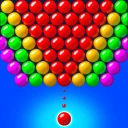
Remember the joy of popping bubble wrap? Now, imagine that satisfaction amplified in a colorful digital format. That’s what Bubble Shooter delivers. The premise is as straightforward as it gets: you aim, shoot, and pop bubbles. Align three or more bubbles of the same color to make them disappear. It sounds easy, but as you advance, the challenge ramps up, keeping things exciting and your brain engaged.
Simple Mechanics, Endless Fun
The beauty of Bubble Shooter lies in its simplicity. You don’t need a tutorial to get started, which is fantastic because who wants to spend time learning controls when you could be popping bubbles? Just tap where you want the bubble to go, and watch it fly! The intuitive controls make it accessible for players of all ages, from kids to grandparents. It’s the perfect game for a family showdown or a solo relaxation session.
And let’s not forget the vibrant colors and cheerful sounds that accompany each pop. They add a layer of joy to the whole experience, making it a perfect remedy for a dull day. The game is designed to be stress-free, so even if you miss a shot, it’s all part of the fun.
More From Our News Desk

Weather by Xiaomi Review: Clear at a Glance, Less Clear Up Close

X Under Pressure: Can It Recover When Posting Goes Wrong?

Clash of Clans Is Won Between the Battles

Android Auto Makes the Case for Quieter Car Software

MobiOffice: Transforming Mobile Productivity with Seamless Integration

EA SPORTS FC™ Mobile Soccer: Redefining Mobile Sports Gaming
Making each shot count
For a more deliberate run, I try not to aim only at the nearest match. If a clear path to a cluster is blocked, I look for a bank shot off a side wall; the angle can reach bubbles that seem awkwardly placed from the center. That is a practical option when a direct shot would add more clutter instead of opening space. It takes a little patience, and not every setup offers a clean route, but thinking about the bounce gives the simple controls more depth than they first suggest.
I also avoid treating every turn as equally urgent. When a shot is uncertain, I consider whether it can at least attach to a useful color or keep a future route open. A weak placement may not clear anything now, but it can leave a better setup for the next shot. This is the kind of small decision that makes the game more engaging over repeated visits: the challenge is not only matching colors, but choosing which imperfect move does the least harm.
That approach is especially helpful in short sessions. If I have only a few minutes, I can focus on one immediate problem—opening a lane, reaching a high group, or avoiding an awkward patch—rather than chasing a perfect run. It also makes stopping easier. I do not need to turn a quick break into a lengthy attempt to recover from one poor shot; I can enjoy the puzzle in front of me and put the phone down when the moment is over.
A Few Surprises Along the Way
Just when you think you’ve got it all figured out, Bubble Shooter throws in some curveballs—literally. With each level, new challenges and obstacles appear, like bubbles that need more than one pop to disappear or those pesky ones that multiply. It keeps you on your toes and ensures that no two games are ever the same. Plus, there are power-ups and boosters to help you clear those particularly stubborn bubbles.
For those who love a bit of competition, the game offers leaderboards to see how you stack up against friends or other players globally. It adds an extra layer of motivation to up your bubble-popping game.
What holds up after the novelty
The familiar matching loop is the main source of lasting value, and it can remain pleasant because each board asks for small adjustments rather than demanding a new set of skills. The obstacles and helpful boosts add variation, but I would not expect them to transform the experience into a different kind of game. If you enjoy improving your aim and spotting better clearing opportunities, there is a modest reason to return. If you need a substantial campaign, a developing cast of characters, or a steady stream of new mechanics to stay interested, this is unlikely to satisfy that appetite.
That distinction matters when comparing it with other casual games. A word puzzle offers language-based challenges, while a match-three game often emphasizes swapping pieces and building combinations across a grid. Here, the central pleasure is aiming a projectile into a crowded arrangement and planning around where it will stick. I prefer this when I want a little spatial reasoning and a calmer pace; I would choose a word game for a more mentally varied challenge, or a faster arcade title when I want sharper action.
It also sits apart from games that rely on long sessions or a persistent world. I can open it for a quick round without first checking a complicated inventory or recalling a storyline. The trade-off is that the core activity remains recognizable. Players who like a dependable routine may see that as a strength; anyone who quickly tires of repeating a central mechanic may find the same consistency limiting.
A realistic place in the day
One everyday use that suits it is a short pause between errands. If I am early for an appointment, I can play a little, focus on the next shot, and stop when I am called. It does not require me to follow audio or read a dense block of text, so the basic interaction is easy to understand in a quiet waiting room. I would still keep the sound considerate in shared spaces, and I would not start a run when I need to watch for a train stop or pay attention to a conversation. A game can be simple and still claim more attention than I have available.
For a family setting, it is better as an easy game to pass around than as a guaranteed contest of equal skill. Younger or less experienced players can understand the goal quickly, while someone more practiced may naturally plan shots more carefully. I would make the fun about trying a clever angle or clearing a tricky section, not about keeping score in a way that turns a relaxed activity into pressure.
Keeping it installed without making it a chore
For ongoing use, I think of this as a game to open when I genuinely want its particular kind of puzzle, not a habit that needs a daily streak. That keeps the recurring value honest: the simple format is convenient, but it does not need to occupy every spare moment. If I notice I am tapping through shots without looking, I take that as a sign to stop rather than force another session. The game works best when I am willing to pay attention to the board, even if only briefly.
The maintenance burden is low in the ordinary sense that the controls are straightforward and there is little to relearn between sessions. The current version is 146.0, and the game is from Happy Dragon Inc. It is free to play, which makes trying it an easy decision, but I would still approach any optional in-game prompts with the same care I use in other free games. A free download does not automatically mean every part of the experience will suit every player, so I would decide based on whether the core play is enjoyable rather than on an expectation of a particular progression pace.
It has an Everyone age rating, and its broad, uncomplicated premise can make it approachable across generations. Parents may still want to check how a child uses any game on a shared device, especially around play time and any purchase controls. That is sensible general device care, not a reason to treat the game itself as a demanding or mature experience.
Where frustration can creep in
The same repetition that makes the game easy to return to can also create fatigue. If the board becomes crowded and my available shot does not match the color I want, a careful plan may have to change. That uncertainty can be part of the puzzle, but it can also make a run feel less satisfying when several turns do not produce a useful clear. I try to judge the experience by the decisions I can make, rather than assuming every attempt should go smoothly.
Power-ups and boosters can help with difficult spots, but I see them as occasional assistance, not a substitute for thinking through the arrangement. Relying on them whenever a board gets awkward would weaken the part I find rewarding: finding a route through the bubbles. Players who prefer a fully predictable puzzle may dislike that tension, while those who enjoy adapting to a changing board may find it keeps a familiar loop from becoming entirely automatic.
There is also a limit to how much variety a classic bubble-shooting format can provide. Obstacles and level changes help, yet the basic rhythm remains aim, launch, and clear. On a day when I want a strong narrative, social teamwork, or a more involved strategy system, I choose something else. That is not a flaw that can be solved by playing longer; it is a clear difference in what the game is designed to offer.
Who will get the most from it
I would recommend it to someone who likes short, self-contained puzzles, wants controls that make sense quickly, or enjoys slowly improving at a specific kind of aiming challenge. It is also a reasonable choice for a casual player who wants a simple game to keep on hand for occasional breaks. With over a hundred million installs and an average rating of 4.5 from around 1.1 million ratings, it has clearly reached a large audience, though popularity by itself cannot tell me whether its repetitive style will fit an individual player.
I would be less likely to recommend it to someone who needs constant novelty, dislikes planning shots around a crowded board, or wants a game that rewards a long uninterrupted session with a substantial story. It may also be a poor fit if even a small element of chance frustrates you. In those cases, a more structured logic puzzle or a narrative casual game could be a better match than another bubble-shooting title.
Conclusion: A Timeless Classic
In a world of complex, graphics-heavy games, Bubble Shooter stands out as a testament to the enduring appeal of simple, well-executed game design. It’s a game that doesn’t demand too much of you but offers endless enjoyment in return. Whether you’re looking for a quick break or a longer session of bubble-popping bliss, this game has got you covered.
So go ahead, give it a shot. Who knows, you might just find yourself hooked on this timeless classic, just like I did!
My longer-term verdict is more measured than that closing enthusiasm suggests: I enjoy having it available, but I would not promise that everyone will stay hooked. The game’s strength is that it asks for little preparation while still rewarding a thoughtful shot. Its weakness is the matching loop’s familiarity, which can feel samey when I want a stronger change of pace. Released on November 12, 2017, it has had time to establish itself as a durable casual option, and its large audience reflects that reach without making it the right choice for every taste.
For me, it earns space when I use it on its own terms: a colorful, low-pressure aiming puzzle for the occasional spare moment. I would keep it installed if I enjoy that rhythm, and remove it without regret if I find myself playing out of habit rather than because the next board interests me. That is the most useful test for a game like this: not whether it can fill every break, but whether I still enjoy choosing it when a break arrives.
Bubble Shooter Frequently Asked Questions
Can I play Bubble Shooter in short sessions, or does it require a long time commitment?
Bubble Shooter is designed around a simple, relaxed bubble-shooting idea, so it can suit a quick break as well as a longer play session. You can focus on aiming and matching colors without first learning complicated controls. Individual sessions depend on how you choose to play, but its casual puzzle style makes it easy to pick up when you have a little spare time.
Is Bubble Shooter suitable for children and family play?
Bubble Shooter has an Everyone content rating and uses accessible bubble-matching gameplay that can appeal to a broad range of ages. Its simple controls make it approachable, while aiming shots adds a light puzzle challenge. Families looking for an easy casual game can consider it, though parents should review the app experience and device settings themselves to decide what is appropriate for their household.
How much storage space does Bubble Shooter need?
The amount of storage required can vary depending on the device and the installed version. Before downloading, check the available space shown on your device’s app store and make sure your phone or tablet has room for the installation. Keeping some free space available can also help your device manage app updates and other files comfortably.
Does Bubble Shooter need a powerful phone or tablet?
Bubble Shooter is a casual game with straightforward bubble-shooting gameplay, rather than a game centered on complex controls. Android players need a device running Android 5.0 or later. If your device meets that minimum operating-system requirement, you can try its relaxed puzzles; performance may still vary based on the device and its condition.
Can I customize the game’s appearance or controls?
Bubble Shooter centers on aiming and launching colored bubbles, with a simple style intended to be easy to pick up. Players who are considering a download should expect the main experience to revolve around those core mechanics. If customization is important to you, check the current in-game settings after installing, since available options can depend on the version and platform.
Pros
- Highly addictive gameplay
- Simple and intuitive controls
- Bright and colorful graphics
- Suitable for all age groups
- Regular updates with new levels
Cons
- Can become repetitive over time
- Contains in-app purchases
- Ads can be intrusive
- Limited offline play features
- May drain battery quickly
- Category
- Casual
- Version
- 146.0