Blitz Busters
- 1.20K
- 4.6
- Installs
- 1.00M
- Price
- Free

Screenshots
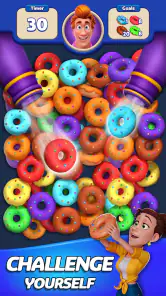
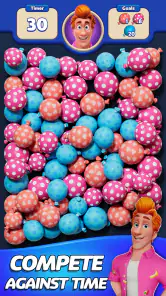
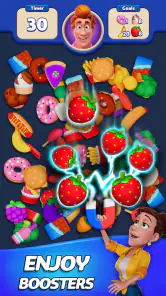

Analysis by Reviewed
I spent time with Blitz Busters as a casual 3D puzzle game, and my first impression was that it aims for quick, visually focused play rather than long, complicated sessions. The basic appeal is easy to understand: you look at a three-dimensional puzzle, work out what belongs together, and keep moving toward the next challenge. It is the sort of game I can imagine opening while waiting for an appointment, taking a short break, or winding down before bed.
That simple entry point is important. Blitz Busters is free to download, rated for Everyone, and belongs to the puzzle category, so it is approachable for a broad audience. Spyke Games has positioned it as a brain-teasing adventure with a large supply of puzzles, but the real question is whether the moment-to-moment experience feels comfortable enough to keep playing. In my experience, its strongest quality is the way it turns a familiar matching-and-organization idea into something more spatial and tactile.
How quickly the game gets you into a puzzle
The opening experience is built around immediate interaction. I do not need to learn a long story, understand a complicated character system, or prepare a team before playing. That makes the game feel fast in the practical sense: the distance between launching it and making a move is short. For a mobile puzzle game, that matters more than flashy presentation because many sessions happen in small gaps during the day.
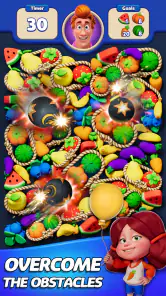
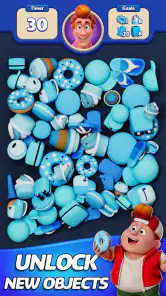
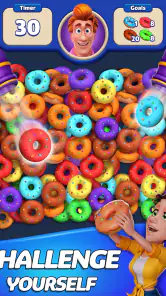
The 3D perspective also gives the puzzles a different rhythm from a traditional flat tile-matching game. Instead of scanning only rows and columns, I have to pay attention to depth, overlapping objects, and what may be hidden behind a visible piece. That extra layer can make a familiar action feel fresh, although it also means the game asks for more visual attention than a basic match-three alternative.
I found the best pace came from treating each puzzle as a compact observation exercise rather than rushing every tap. Looking at the whole arrangement first can prevent unnecessary moves and makes the solution feel more deliberate. The game rewards that pause, especially when several similar-looking objects are grouped close together. A player who taps impulsively may create more confusion than progress.
There is also a useful distinction between perceived speed and actual challenge. A puzzle can begin quickly but still take concentration once the layout becomes busier. Blitz Busters benefits from that contrast because it avoids feeling like an entirely automatic time filler. At the same time, anyone seeking rapid arcade action may find the thinking pauses slower than expected. This is a puzzle game first, not a reflex test.
What happens during longer or heavier sessions
Short sessions are the natural fit. I can play a few puzzles without needing to make the game the center of my attention, which is useful on a phone. Longer sessions are more demanding because the three-dimensional layouts require sustained visual scanning. After several rounds, the challenge is not only solving the puzzle but also maintaining focus while checking small differences between objects and positions.
That is where the game’s design becomes both its attraction and its limitation. The extra spatial element gives the puzzles identity, but it can make a busy board feel mentally crowded. When I was tired, I was more likely to overlook a useful move or repeatedly inspect the same area. The sensible approach is to stop briefly instead of forcing progress. A short reset can be more effective than using a hint or making random taps.
For people who play while travelling, the game can work well as a distraction, provided the screen is comfortable to view and the device is not already struggling with other demanding applications. I would not choose it for a situation where I need to stay highly aware of my surroundings, because the three-dimensional boards invite close inspection. It is better suited to a quiet break than to walking through a crowded station.
One practical habit improved my sessions: I tried to identify the most obvious groups before touching anything. This reduces the chance of losing track of the board’s structure. It also helps separate genuine difficulty from visual overload. If the puzzle still feels unclear after that first scan, I take the game as a signal to slow down rather than assuming the controls are at fault.
Reliability, recovery, and the everyday experience
A mobile puzzle game needs to recover gracefully from interruptions because its audience may open it for only a few minutes. My expectation with Blitz Busters is that it should be treated as a pick-up-and-play title, but I still recommend checking the current state of a puzzle before closing the app. That small habit is useful with any game where progress depends on the exact arrangement on screen.
The game’s current version is 2.4.2, which suggests an actively maintained product rather than an untouched release. It first appeared on October 12, 2023, and has since reached more than one million installs. Those figures do not guarantee a perfect experience on every phone, but they do indicate that the game has found a substantial audience and has continued beyond its initial launch.
Its audience reception is also encouraging: the average rating is 4.6 from roughly nine thousand ratings, with about one thousand two hundred written reviews. I would interpret that as a sign that the central puzzle loop works for many players, not as proof that every session will be flawless. Ratings usually reflect broad enjoyment, while individual experiences can still vary with device age, screen size, connection conditions, and tolerance for optional purchases.
Recovery is especially relevant when a player is interrupted by a call, notification, or a quick switch to another app. I prefer games that let me return without making me reconstruct what I was doing, and Blitz Busters is most appealing when used in that brief, flexible way. Still, I would avoid assuming that every interruption is harmless. Saving habits, app updates, and the phone’s own memory management can affect how smoothly any mobile game resumes.
For a dependable routine, I would launch it with other heavy apps closed, keep the operating system reasonably current, and avoid beginning a difficult puzzle when the phone is nearly out of battery. These are not exciting recommendations, but they reduce the common causes of stutter, reloads, and lost concentration. The game is casual; the best setup should be casual too.
Device limits and what the technical requirements mean
Blitz Busters supports Android 7.0 and later, giving it a broad compatibility range. That is helpful for people who do not own a recent phone, although compatibility on paper is not identical to the same experience across every device. A newer handset may handle 3D visuals more comfortably, while an older model may feel less responsive when the board becomes visually busy or when other applications are active.
The three-dimensional presentation makes screen quality more relevant than it would be in a very plain puzzle game. On a small display, pieces can be harder to distinguish, particularly when several objects share similar colors or shapes. I would favour a phone with a clear screen and enough brightness for comfortable viewing. A larger display can make inspection easier, but it does not automatically make the puzzles easier; it simply gives the board more breathing room.
Resource demands are best judged cautiously because they depend on the phone, operating system, and what else is running. I would not describe the game as a text-only minimalist title, since its 3D boards naturally require more visual rendering than a simple word puzzle. On an older device, lowering general background activity and avoiding simultaneous video or social apps is a sensible way to protect responsiveness.
Battery behaviour is another reason to favour shorter sessions. Any game that keeps the screen active and displays animated three-dimensional content can feel more demanding than reading or listening to audio. I would not install it on a phone with very little free storage or battery if I needed that device for navigation or an urgent call. The game is entertainment, so it should not compromise the phone’s more important tasks.
Players should also remember that the free download includes in-app purchases ranging from ninety-nine cents to one hundred forty-nine dollars and ninety-nine cents per item. That wide range makes it worth paying attention during the purchase flow, especially if a child uses the device. The Everyone age rating describes the game’s audience, but it does not remove the need for sensible purchase controls.
How it compares with familiar puzzle alternatives
Compared with a conventional match-three game, Blitz Busters feels more like a visual sorting and spatial awareness exercise. A match-three title usually trains the eye to search a fixed grid for combinations, while this game asks me to understand objects in depth and consider how the arrangement changes as I interact with it. If you enjoy organising clutter, spotting patterns, and examining a board from more than one angle, that difference is meaningful.
Compared with word puzzles, it is less dependent on language and vocabulary. That makes it a better choice for players who want a visual challenge or who prefer not to solve clues. The trade-off is that word games can be easier to play with a very small amount of screen space, while a 3D board benefits from a display that lets the objects remain distinct.
It also differs from highly competitive puzzle games. Blitz Busters is a better fit when I want a personal challenge without the pressure of competing against another person in real time. On the other hand, players who need leaderboards, direct multiplayer tension, or a strong social layer may find a competitive alternative more motivating. The game’s appeal comes from solving the board itself, not from proving superiority over an opponent.
Against physics-based puzzle games, it offers a more orderly kind of thinking. I am not primarily experimenting with momentum, trajectories, or complicated chains of reactions. The central satisfaction comes from seeing structure in the arrangement and making careful decisions. That makes it easier to recommend to someone who likes calm problem solving but does not want a game that depends on precise timing.
Small strategies that make the puzzles less frustrating
The first useful technique is to scan in layers. I look at the frontmost objects, then check what they may be covering, and only afterward decide which group deserves attention. This prevents me from focusing on a visually attractive match while missing the move that actually opens the board. It is a simple method, but it becomes increasingly valuable when the layout contains several similar items.
The second is to avoid spending every move on the easiest visible option. Clearing an obvious group can feel productive, yet it may not improve access to the rest of the puzzle. I try to ask whether a move exposes new information or merely removes something that was already easy to handle. That trade-off between immediate progress and future visibility is one of the more interesting parts of the 3D format.
The third is to use a pause as a tool rather than treating it as failure. When I stop tapping and inspect the entire board again, I often notice relationships that disappeared during rapid play. This is particularly useful after the layout changes. A player who is stuck should first re-read the board with fresh eyes before spending anything on assistance.
Finally, I would keep purchase decisions separate from puzzle frustration. Because optional items can cost from ninety-nine cents up to one hundred forty-nine dollars and ninety-nine cents, the moment after a failed attempt is not the right time to make a rushed choice. Set purchase protections in advance, especially on a shared device, and decide whether optional spending genuinely improves your enjoyment rather than simply ending an uncomfortable pause.
Who should play it, and who should look elsewhere
I would recommend Blitz Busters to people who like visual puzzles, sorting challenges, and games that can be played in short bursts. It is also a reasonable choice for families looking for an Everyone-rated title, provided adults manage purchases and choose an appropriate device. The broad Android compatibility is useful for households with mixed phone ages, while the free entry point makes trying the basic experience straightforward.
It is less suitable for someone who wants a story-driven adventure, constant action, or a competitive online environment. Players who dislike examining crowded layouts may also lose patience, particularly if they prefer puzzles with a single obvious rule and minimal visual detail. Likewise, anyone trying to conserve battery or use an older phone for essential tasks should approach the 3D presentation with realistic expectations.
I would also skip it if my main goal were a completely passive relaxation game. Although the controls are approachable, the puzzles still ask me to observe, compare, and plan. That mental involvement is a strength when I want to exercise attention, but it is not ideal when I want something that plays almost automatically in the background.
My performance verdict after using it
Blitz Busters succeeds because its 3D puzzle format gives a familiar mobile pastime a more hands-on quality. It starts quickly, works naturally in short sessions, and offers enough visual complexity to keep the act of sorting from feeling completely routine. The game is most enjoyable when I slow down, inspect the board, and treat each move as part of a larger plan.
Its limitations are equally clear. Busy layouts can become tiring, smaller screens may make visual separation harder, and longer sessions are more demanding than the casual presentation suggests. The free download is accessible, but the broad range of in-app purchase prices means families and impulse-prone players should set boundaries before playing.
With an average rating of 4.6, more than one million installs, and a current version of 2.4.2, it has enough evidence of ongoing interest to deserve a look. My recommendation is strongest for anyone who wants a visual brain teaser that sits between simple matching and more involved spatial puzzles. Choose it for thoughtful, bite-sized 3D problem solving, not for competitive action or effortless background entertainment.
Pros
- Fast-paced matches are easy to learn and fit well into short play sessions.
- Bright visuals and lively effects make the gameplay feel energetic.
- A wide range of levels provides plenty of content for casual players.
- Simple controls work smoothly on both phones and tablets.
- Power-ups add variety and help break up repetitive puzzle patterns.
Cons
- Later stages can become difficult without careful planning or upgrades.
- Frequent rewards and prompts may interrupt the flow between levels.
- Progress may feel slow for players who avoid optional purchases.
- Some levels rely heavily on luck rather than purely on strategy.
- The game can consume noticeable battery during longer play sessions.

- Category
- Puzzle
- Version
- 2.4.2