Black Color : Color By Number
- 3.22K
- 4.8
- Installs
- 1.00M
- Price
- Free

Screenshots



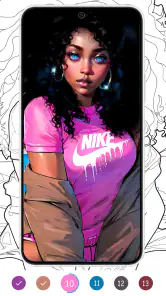

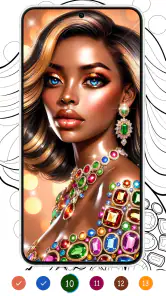


Analysis by Reviewed
Coloring games can look interchangeable until you spend a few quiet minutes with one. I approached Black Color: Color By Number as a simple board-style game for short breaks, but its focus gives it a more distinct identity than a general coloring app. The artwork centers Black and African American subjects, with pages that also move into seasonal themes such as Christmas. That makes the choice less about finding the most complicated coloring tool and more about deciding whether this particular visual collection matches what you want to color.
My first impression was that the number-based format keeps the experience approachable. You do not need drawing ability, a steady hand, or time to learn a complicated interface. You select a color associated with a numbered area and gradually complete the picture. That structure is useful when I want a low-pressure activity rather than a competitive game, although it also means people looking for freehand creativity may find the experience too guided.
How I would decide whether this coloring game fits
I would judge it using four practical questions: do you want representation-specific artwork, do you prefer guided coloring over open-ended drawing, will you use it in short sessions, and are you comfortable with optional purchases in a free game? Those questions matter more here than raw download popularity. The game has passed the one-million-install mark and holds a 4.8 average from roughly fourteen thousand ratings, so it clearly appeals to a large audience, but popularity alone does not tell me whether its format suits your habits.
The app is made by Fun Coloring World and is listed as a free game for Android users running version 7.0 or later. Its content rating is Teen, which is a useful detail for families deciding whether to hand it to a younger player. I would still make my own decision based on the individual player and the way the device is used, rather than treating the label as a complete description of every image or interaction.
The most important decision criterion is the art direction. This is not simply a generic collection of flowers, animals, and abstract patterns. Its main appeal is the emphasis on Black coloring pages and African American representation, with holiday material included as part of the wider selection. If you specifically want portraits and scenes that reflect Black people and culture, that focus gives it an advantage over many broad coloring apps. If you only want geometric patterns or unrestricted digital painting, the same focus may feel limiting.
What the number system changes
Color-by-number games remove much of the blank-page problem. When I open a regular drawing app, I have to decide what to make, which brush to use, and how to recover from a poor line. Here, the numbered spaces provide a route through the image. That makes the game especially comfortable for someone who wants a calming routine after work, while waiting for an appointment, or during a short commute when concentrating on a full creative project is unrealistic.
The trade-off is control. A guided palette can help an image look coherent, but it does not give me the same freedom as choosing every shade myself. I would not choose this as a replacement for a sketchbook app, a painting app, or a serious illustration tool. It works better as a structured coloring pastime: the satisfaction comes from finding and filling the remaining areas, not from designing the picture from scratch.
More From Our News Desk

Weather by Xiaomi Review: Clear at a Glance, Less Clear Up Close

X Under Pressure: Can It Recover When Posting Goes Wrong?

Clash of Clans Is Won Between the Battles

Android Auto Makes the Case for Quieter Car Software

MobiOffice: Transforming Mobile Productivity with Seamless Integration

EA SPORTS FC™ Mobile Soccer: Redefining Mobile Sports Gaming
A useful way to play is to treat each page as a small session rather than trying to finish everything at once. I might complete the larger, obvious areas first, then use the remaining-number cues to locate small sections. This reduces the visual clutter that can appear near the end of a detailed image. It also makes the game easier to put down and resume, which is one of its strongest everyday qualities.
Why its subject matter is a real advantage
The representation is not a minor decoration around a standard coloring engine. It is the reason I would recommend this particular title over a random coloring collection. Finding familiar skin tones, hairstyles, clothing, celebrations, and portrait subjects can make the activity feel more personal than coloring anonymous stock scenes. For a user who wants a relaxing game that also reflects Black identity, the focused library is more meaningful than a larger but less relevant selection.
That focus can also make it suitable for shared downtime. A parent and teenager could choose pages together and talk about colors, clothing, or seasonal themes without turning the activity into a lesson. An adult could use it as a quiet screen activity while listening to music or a podcast. I would not describe it as an educational cultural resource, though. Its purpose is coloring entertainment, and it should be approached as that rather than as a substitute for carefully researched learning material.
The Christmas pages create another practical use. During the holiday season, I could use a themed image as a relaxed way to pass time or create a digital picture for personal enjoyment. I would keep expectations realistic: a coloring game is not the same as a full design editor, so anyone wanting precise printable cards or professional artwork should look elsewhere. The seasonal material is valuable because it gives the collection variety, not because it turns the app into a complete craft tool.
Where a different kind of app may fit better
The usual alternatives fall into three groups. General color-by-number apps usually offer broader subject coverage, which may suit someone who wants landscapes, animals, mandalas, or fantasy scenes in one place. Freehand drawing apps are better for users who want to control brush size, layering, composition, and color mixing. Traditional physical coloring books remain the stronger option for people who want to avoid screens, notifications, and touch controls altogether.
Compared with a general coloring game, this one wins on focus but may lose on breadth. If I were choosing an app for a child who changes interests constantly, a larger mixed library might provide more variety. If I wanted to practice digital art skills, the numbered format would not teach the same hand control or visual planning as drawing from an empty canvas. The right choice depends on whether the goal is representation and relaxation or open-ended experimentation.
There is also a difference between a guided coloring game and a puzzle board game. Although it sits in the board category, I would not install it expecting strategy, turns, opponents, or a competitive campaign. The board-like classification describes the casual, tap-and-complete nature more than a traditional tabletop experience. Anyone searching for chess, checkers, card play, or multiplayer tactics should choose a different category entirely.
Another consideration is patience. Numbered coloring can be soothing when I want repetition, but it can become tedious if I prefer constant novelty or quick reactions. Small areas may require careful tapping, and detailed pages can feel slower near completion. That is not a flaw for the intended audience, but it is a genuine reason for an action-game player to skip it.
Handling the free model and optional spending
The game is free to download, which makes trying the basic experience straightforward. It also includes in-app purchases ranging from $1.99 to $59.99 per item. That wide range is worth noticing before a child uses the device or before you make the game part of a daily routine. I would treat purchases as optional spending to review carefully, not as an automatic part of the price.
My practical advice is to begin without buying anything and see whether the available coloring flow already gives you enough value. If you enjoy completing a few pages but feel pressure to unlock more, pause before paying and decide whether the additional content genuinely changes your experience. A free app can become expensive when small purchases are repeated, so I would use device-level purchase controls for a shared phone or tablet and make sure the account holder knows what can be bought.
This is also where switching costs matter. Moving from a physical coloring book to this game costs nothing upfront, but it changes the feel of the activity: you gain convenience and guided progress while giving up paper, pencils, and the ability to display a physical page. Moving from another digital coloring app is easier because the basic habit is familiar, yet you may need time to decide whether this collection’s Black-focused artwork is more valuable to you than a broader catalog.
If you later decide it is not for you, the cost of switching to a general coloring app is mainly the time spent learning another interface and rebuilding your preferred collection. Switching to a freehand app is a bigger change because you must supply the creative direction yourself. That is why I would not call one option universally better. The best match depends on whether you want completion guidance or artistic control.
Small habits that make the experience better
One useful workflow is to choose pages by mood rather than by trying to finish the newest or most detailed image first. A portrait can feel more absorbing when I have time to concentrate, while a simpler seasonal page works better during a short break. This prevents the app from becoming a chore and makes the focused library feel more varied than it might at first glance.
I also recommend checking the image at the end instead of rushing through the last few numbered spaces. Small uncolored sections can be easy to miss, especially when the remaining shade is similar to nearby colors. A final visual scan lets me enjoy the completed picture rather than immediately opening another one. That small pause is part of the relaxing value and is easy to lose if I treat the game like a checklist.
For shared devices, I would decide in advance who controls purchases and whether the game is being used as quiet entertainment or as a reward. The Teen rating, free entry point, and purchase range make that conversation worthwhile. I would also avoid promising a child that every page or option is available without checking the current in-app experience, because free games often separate the trial experience from optional content.
Version 1.95.164 is the current version, and the app was released on April 14, 2023. Those details help place it as an established title rather than a brand-new experiment, but they do not change the central decision: install it for the focused coloring experience, not because it carries a particular release date or version number.
Who I would recommend it to
I would recommend Black Color: Color By Number to someone who wants a calm, guided coloring game and specifically values Black and African American imagery. It is a good fit for short sessions, low-pressure creative time, and users who enjoy the satisfaction of completing an illustration one numbered section at a time. It can also work well for someone who has little drawing experience and wants a clear starting point instead of an empty canvas.
I would be more cautious if you are looking for competitive board gameplay, advanced digital painting, offline craft without a screen, or a very broad catalog covering every possible subject. In those situations, a strategy board game, a freehand art app, or a physical coloring book will likely serve you better. I would also skip it if the guided format feels restrictive or if you do not want to monitor optional purchases.
Overall, I see this as a focused relaxation game rather than an all-purpose art studio. Its strongest quality is the combination of accessible color-by-number play and representation-specific artwork. Its main limitation is the same focus: users wanting unrestricted creativity or endless subject variety may outgrow it. For the right person, though, that narrow purpose is a strength. I would install it free, try several different page styles, and keep it if the artwork feels personally relevant and the rhythm of filling numbered spaces helps me unwind.
My final recommendation is therefore clear: choose it when the Black-focused collection matters as much as the coloring mechanic. The strong user response, with around 3,200 written reviews alongside its 4.8 average, suggests that many players find the approach rewarding, but I would still let your preferred style decide. If you want a gentle, identity-conscious coloring pastime on a compatible Android device, it is worth trying. If you want to draw, compete, or work without purchase prompts, choose an alternative built for that purpose instead.
Black Color : Color By Number Frequently Asked Questions
Is Black Color: Color By Number a board game or a drawing app?
Black Color: Color By Number is a casual board-category game built around digital coloring rather than a competitive board or strategy format. You complete illustrated pictures by filling numbered sections, so the experience is more about relaxing and making progress on artwork than winning against other players. Its simple format suits short play sessions and people looking for an easy creative activity.
Who is the artwork in Black Color: Color By Number intended to represent?
The game’s focus on African American coloring games and coloring-book artwork gives it a clear visual identity. Its pictures are intended for players who enjoy this kind of representation in their coloring activities, and the collection also includes Christmas coloring pages. If those themes appeal to you, the app offers a more specific focus than a general collection of unrelated coloring images.
What kind of pictures can I color in Black Color: Color By Number?
Black Color: Color By Number focuses on African American coloring games and coloring-book artwork, with themes that include Christmas coloring pages. The numbered format makes these illustrations approachable even if you do not usually draw or color digitally. If you are looking for a casual activity centered on this style of artwork, the app’s theme is an important part of what sets it apart.
What is Black Color: Color By Number?
Black Color: Color By Number is a relaxing coloring app based on the familiar paint-by-number format. It provides outlined illustrations divided into numbered sections, allowing you to select a color and fill the matching areas. The app is designed for casual entertainment and creative relaxation, making it suitable for short sessions when you want a simple activity without complicated controls or artistic experience.
How does the coloring system work in Black Color: Color By Number?
Each picture is separated into small numbered sections, and every number corresponds to a specific color in the palette. You choose a color and tap the matching areas to complete the image. If a section is difficult to locate, assistance tools may help identify it, depending on the version installed. The straightforward system makes the app accessible to beginners and children.
Pros
- Simple color-by-number gameplay suitable for relaxing short sessions.
- Large selection of black-themed coloring pages to explore.
- Intuitive controls make coloring easy for beginners of all ages.
- Helpful hints can assist when locating difficult uncolored sections.
- Finished artwork can be saved and shared with friends or family.
Cons
- Some pictures may feel repetitive after extended play.
- Hints and extra content may be limited without watching ads.
- Small numbered areas can be challenging on smaller phone screens.
- Requires patience when coloring highly detailed illustrations.
- An internet connection may be needed for certain features or images.
- Category
- Board
- Version
- 1.95.164