Baldur's Gate Enhanced Edition
- 2.28K
- 3.1
- Installs
- 100.00K
- Price
- $9.99
Screenshots
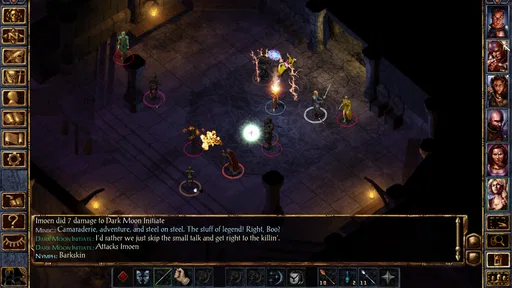
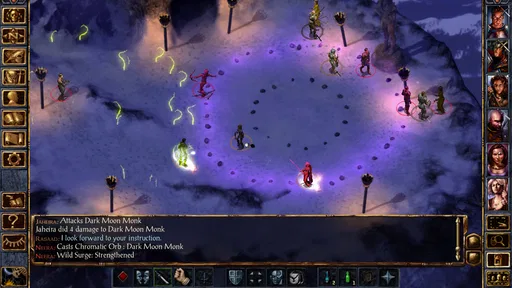
Analysis by Reviewed
I came away from Baldur's Gate Enhanced Edition thinking less about a single battle and more about the mood it creates: a party crossing a painted landscape, weighing its next move, then settling in for another stretch of a long fantasy journey. It is a role-playing game with an older, deliberate sensibility. I enjoy that, but it is not the same thing as a modern RPG made for instant action or constant visual spectacle.
A measured return to the Sword Coast
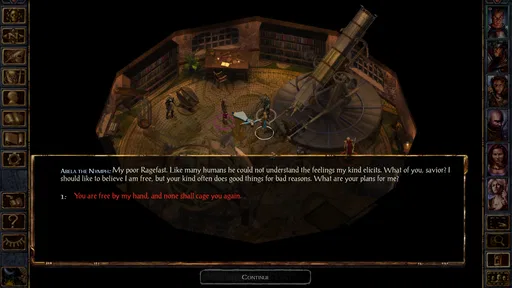
What stands out to me is how strongly the game’s mood depends on its old-school presentation. The portraits, locations, and written descriptions ask you to imagine parts of the world rather than delivering everything through modern cinematic spectacle. That can feel less immediate than a newer role-playing game, but it also leaves room for the player’s imagination. I find the result more like settling into a long fantasy book than watching a film unfold.
That slower approach suits the setting, though it is not a universal pleasure. If you want quick action, constant visual direction, or a story that explains every detail as you go, the opening can feel patient to the point of being demanding. I’d give it time: the appeal comes from learning the region and its people, not from a rapid succession of dramatic set pieces.
Back to the Sword Coast
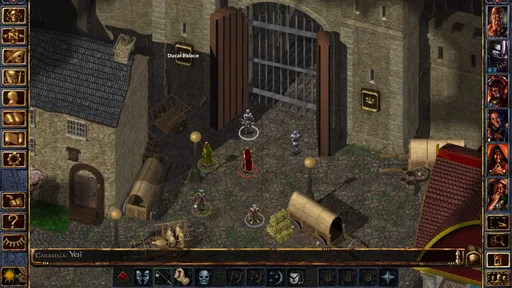
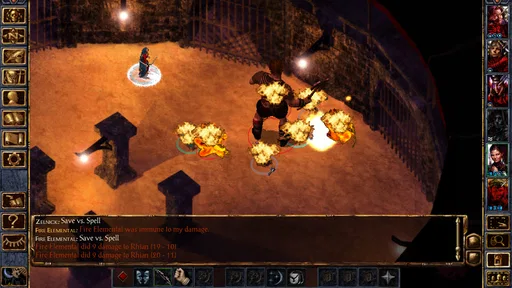
As soon as you fire up Baldur's Gate Enhanced Edition, you're greeted with the familiar yet upgraded sights and sounds of the Sword Coast. The enhanced graphics are the first thing to catch your eye. They’ve polished up the visuals without losing that nostalgic charm. It’s like meeting an old friend who’s just had a makeover. The character models and environments are crisper, making every forest, town, and dungeon feel alive.
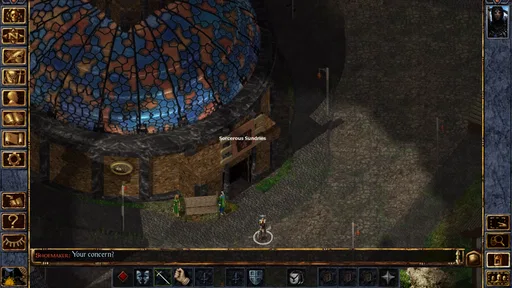
The visual style is still rooted in a classic isometric view, so this is not the sort of enhancement that turns the game into a modern 3D adventure. I think that consistency is a strength: buildings, paths, and groups of enemies remain legible as a tactical scene. It also means the art can look dated beside recent fantasy RPGs. I would choose this for its illustrated atmosphere and broad sense of place, not for cutting-edge graphics.
Let the map tell the story
The map and the way locations are presented encourage me to think about travel as part of the adventure, not just a transition between plot scenes. A stretch of wilderness can feel like a pause in the story, giving the party time to move through the world before the next conversation or danger. That pacing makes the Sword Coast feel larger than a sequence of rooms, although it can also make progress feel less direct if I am playing while distracted.
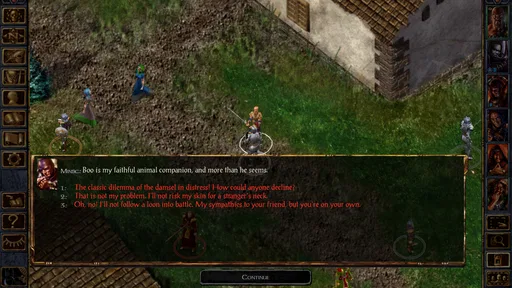
For a practical session, I find it helps to pick one clear intention before setting out: explore the nearby area, follow a lead, or make progress on a particular quest. That gives the journey a shape without turning the game into a checklist. I also try not to assume that every character or place will announce its importance immediately; paying attention to dialogue is part of how the setting reveals itself.
More From Our News Desk

Weather by Xiaomi Review: Clear at a Glance, Less Clear Up Close

X Under Pressure: Can It Recover When Posting Goes Wrong?

Clash of Clans Is Won Between the Battles

Android Auto Makes the Case for Quieter Car Software

MobiOffice: Transforming Mobile Productivity with Seamless Integration

EA SPORTS FC™ Mobile Soccer: Redefining Mobile Sports Gaming
This approach is especially appealing if you enjoy imagining what lies beyond the edges of the screen. The game gives its locations a strong identity through their visual design and the words attached to them, rather than relying on elaborate camera work. If your favorite part of a fantasy RPG is being swept along by cinematic scenes, you may find the storytelling comparatively restrained. I like that restraint, but I would not mistake it for a universally modern presentation.
Gameplay and Mechanics
Now, let's talk mechanics. The game stays true to its roots with its classic Dungeons & Dragons ruleset. If you’re a fan of strategic combat and character customization, you’re in for a treat. The depth of gameplay is staggering, offering a plethora of character classes, races, and abilities to choose from. It’s like being a kid in a candy store, but instead of sweets, you’ve got spells and swords.
One practical tip is to pause and think through encounters instead of treating combat as a reflex test. The party format rewards attention to who is doing what, and a spell or ability used at the wrong moment can make a difficult fight harder. I found it more useful to check the situation, give orders, and then watch how the plan holds up than to rush from one target to the next. That deliberate rhythm is part of the appeal, but it may frustrate anyone who wants hands-off combat.
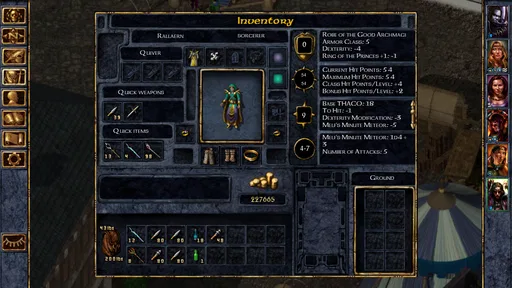
One of the enhancements I truly appreciated was the improved interface. Navigating your inventory and managing your party is smoother than ever. The developers have done a fantastic job of balancing nostalgia with modern convenience. For those new to the game, there are helpful tutorials and tooltips that make the learning curve less steep.
Even with guidance, there is a real adjustment period: character attributes, party roles, and the game’s rules are not as instantly readable as in a streamlined action RPG. I would not expect the interface to make every decision obvious. A useful habit is to pause after a new party member joins and review equipment and abilities before heading into another encounter. That small bit of housekeeping can prevent a weak setup from becoming an avoidable struggle.
Making the rules work for you
I would treat party management as a small routine rather than something to fix only after a fight goes badly. When the group changes, I take a moment to check who is carrying useful equipment and whether each character’s abilities suit the role I expect them to fill. This does not remove the learning curve, but it gives me a clearer idea of why an encounter is going well or poorly. It is a more useful approach than changing several things at once and hoping for a better result.
There is also a trade-off between building a character around personal taste and choosing options that seem easier to understand. If you are unfamiliar with tabletop-style rules, the temptation is to pick whatever sounds strongest. I would instead focus on making a party whose roles make sense to you, then learn what each member can contribute. The game rewards attention, but you do not need to turn every decision into homework to enjoy it.
Compared with many contemporary role-playing games, this one puts more of the work on the player to understand party roles and tactical choices. That can be satisfying if you like planning and experimenting; it is less comfortable if you expect the game to guide every decision or make combat feel effortless. A more action-focused alternative is a better fit for quick sessions built around movement and immediate reactions. I would choose this one when I want a slower, more considered adventure.
Sound, company, and the pace of play
The sound and writing help make travel feel like time spent in a place rather than a checklist of fights. I like that the atmosphere gives quiet stretches room to breathe; the game does not need every moment to be loud to keep the adventure moving. That makes it a good fit for a focused evening when I want to explore and read, but less convenient for a short session in which I expect a quick payoff.
A realistic way to approach it is to play one contained stretch at a time: speak with the people you meet, sort out the party, then set off with a clear objective rather than trying to clear every task in one sitting. This is especially helpful if you are new to party-based RPGs, where conversations and preparation are part of the play rather than interruptions between battles. I would avoid starting when I only have a few distracted minutes, since losing track of names and motives can make the story harder to follow.
The story is where Baldur's Gate Enhanced Edition truly shines. Set in the magical land of Faerûn, you embark on a journey filled with intrigue, betrayal, and heroism. The narrative is as compelling as ever, with a host of memorable characters and epic quests. Whether you're uncovering a sinister plot or battling mythical creatures, the story keeps you hooked from start to finish.
The dialogue is well-written, with plenty of choices that impact the world and your relationships with other characters. This adds a layer of replayability, as your decisions lead to different outcomes and endings. It’s like reading a choose-your-own-adventure book, but with way more explosions.
Finding a rhythm that fits daily life
For me, this works best as a game I return to with a little mental space. A realistic evening might mean talking to a few people, deciding what the party should do next, and completing one stretch of travel or exploration before putting it down. That still feels productive because the pleasure is not only in reaching a dramatic turning point; it is also in learning the area and seeing how the party handles the next challenge.
If I only have a brief break, I would rather choose something that gives a clear result in a few minutes. Here, I may need time to recall who the current characters are, what they can do, and why the next destination matters. The game can be paused while I think through combat, but that does not make every session frictionless: dialogue and context still ask for attention. Keeping a simple mental note of the current objective makes it easier to resume without wandering.
The soundscape contributes to that sense of a journey rather than demanding attention on its own. I find it most effective when paired with the game’s slower visual storytelling: the atmosphere supports exploration, while the writing gives places and encounters meaning. Players who prefer a constant stream of dramatic audio and visual cues may find the mood too subdued. For me, that quietness is part of what makes the adventure coherent.
Who will enjoy this classic, and who may not
Among role-playing games, this is a better choice for someone who enjoys building a party, considering tactical options, and following a substantial fantasy story than for someone seeking a fast, streamlined action game. Many newer RPGs put more emphasis on cinematic presentation or real-time movement; this one asks for patience with a more traditional structure. If you already like tabletop-inspired rules and careful party management, that difference is a reason to try it. If you dislike pausing to make combat decisions or reading dialogue, a more action-led alternative will probably suit you better.
The game is made by Beamdog, and its Android release has a Teen content rating. It costs $9.99, with optional in-app purchases listed from $1.49 to $2.49 per item. I would think of the base price as a commitment to a substantial, old-fashioned RPG rather than a casual free download. The audience response is mixed: an average rating of 3.6 from around 25,000 ratings, alongside roughly 2,200 written reviews. That does not settle whether you will enjoy it, but it fits my impression that its depth and dated presentation are genuine trade-offs.
It has passed 100,000 installs, and the current version is 2.6.6.12; the game originally arrived on April 17, 2014, and supports Android 4.0.3 and later. Those details make it worth checking that your device meets the requirement before buying. For me, the key question is less whether it is new or fashionable and more whether I want to spend time with a rules-heavy, story-led adventure. The game is at its best when I can give it attention, not when I am looking for something to play without thought.
I would particularly recommend it to players who want a substantial fantasy campaign and are happy to learn a party-based system as they go. It is also a sensible choice for someone curious about the roots of computer role-playing games, provided they are prepared for an older style of presentation rather than expecting a current-generation remake. The tutorials and tooltips help, but curiosity and patience matter more than prior expertise.
On the other hand, I would skip it if I mainly wanted a lightweight phone game to dip into between notifications, or if a compact, immediately readable interface is essential to my enjoyment. The combination of dialogue, party decisions, and tactical pauses asks for more sustained attention than a casual action game. That is not a flaw in its identity, but it is an important buying distinction: the right mood and expectations make a bigger difference here than a general fondness for fantasy.
An atmosphere built from patience
What stays with me is how the art, sound, setting, and mechanics reinforce one another. The isometric view makes the world feel like a place to study; the dialogue gives its people room to matter; and tactical combat asks me to stop and consider what the party can do. None of those elements is trying to imitate a fast-paced modern blockbuster. Together, they create a particular kind of adventure that rewards attention more than speed.
That coherence is also the game’s main limitation. A player who finds the interface dated or the rules opaque may not be won over by the atmosphere, especially if they came looking for a streamlined mobile experience. I think the best way to judge it is to ask whether I want to inhabit a slower, text-rich fantasy world and manage a group through careful encounters. If the answer is yes, the old-school texture feels purposeful rather than merely old.
In conclusion, Baldur's Gate Enhanced Edition is more than just a nostalgia trip; it’s a testament to the enduring appeal of classic RPGs. Whether you're a veteran of the original game or a newcomer to the series, this enhanced edition offers something for everyone. With its improved graphics, refined mechanics, and captivating story, it’s a game that deserves a spot in every RPG lover’s collection. So, dust off your virtual sword and get ready for an adventure of a lifetime!
Baldur's Gate Enhanced Edition Frequently Asked Questions
Is Baldur's Gate Enhanced Edition compatible with my phone or tablet?
Baldur's Gate Enhanced Edition is available for Android and iOS phones and tablets. For Android, the listed minimum operating system is version 4.0.3, so check your device settings before downloading. The game is a substantial role-playing experience, and playing on a larger screen may make its menus and detailed interface more comfortable to use.
How much storage space should I have before downloading?
It is sensible to check the available storage on your device before installing Baldur's Gate Enhanced Edition. A classic role-playing adventure can involve extensive content and detailed presentation, so make sure you have room for the app and any files it may need during installation or updates. Your device’s app store provides the current download requirements for your particular phone or tablet.
Who develops Baldur's Gate Enhanced Edition, and what kind of game is it?
Baldur's Gate Enhanced Edition is a role-playing game developed by Beamdog. It brings a classic adventure to mobile devices, with a focus on story, party-based play, and the kind of character development associated with an extensive RPG. The store summary captures its appeal simply: “Gather your party—the classic adventure returns!” The game is listed for Teen audiences.
What does Baldur's Gate Enhanced Edition cost, and is it free to download?
Baldur's Gate Enhanced Edition is a paid role-playing game, priced at $9.99, rather than a free download. The store also lists optional in-app purchases ranging from $1.49 to $2.49 per item. If you prefer to know the cost before installing, check the price shown for your device and region, as that is what you will be charged when purchasing.
What devices can run Baldur's Gate Enhanced Edition?
The game is available for Android and iOS devices, including phones and tablets. On Android, the listed minimum operating system is version 4.0.3, so check your device settings before downloading. The game is a substantial role-playing experience, and playing on a larger screen may make its menus and detailed interface more comfortable to use.
Pros
- Enhanced graphics improve gameplay experience.
- Includes new characters and quests.
- Cross-platform multiplayer support.
- Supports mods for customization.
- Autosave feature prevents progress loss.
Cons
- Some bugs affect game stability.
- UI may feel cluttered on smaller screens.
- High battery usage during gameplay.
- Occasional long loading times.
- In-app purchases for additional content.