BabySitter DayCare Games
- 31.00
- 3.7
- Installs
- 5.00M
- Price
- Free

Screenshots







Analysis by Reviewed
When I first opened BabySitter DayCare Games, its appeal was easy to understand: it turns familiar childcare moments into simple activities for young players. I can see it working best as a short, supervised distraction when a child wants something colorful to explore, rather than as a substitute for shared play or a structured learning lesson. It is a free educational game from Fabulous Fun, rated for Everyone, and its playful daycare setting gives it a clear audience: children who enjoy pretend caregiving and adults looking for an age-appropriate game to try together.
A small playroom for everyday moments
The daycare theme gives the activities a recognizable frame. Feeding a baby or tidying toys makes more sense to a young child than an abstract puzzle, because each task belongs to a pretend routine they can follow. That familiarity is also the game’s main limitation: children who prefer cars, animals, building, or fast-moving challenges may not stay interested for long. I would offer it to a child who already likes dolls or role-play, and let their reaction decide whether it earns a place in the rotation.
For a realistic use case, I can imagine opening it while waiting for an appointment or during a quiet stretch at home, then sitting nearby and asking the child what they want to do next. That turns a solo screen activity into a chance to talk about caring, choices, and pretend routines. I would keep sessions short and treat the game as one option among toys, books, and conversation; its value is strongest as a small activity, not as a way to occupy a whole afternoon.
At a glance, the numbers suggest a widely tried but not universally loved game: it has passed five million installs, with an average rating of 3.7 from around 2.1 thousand ratings. Those figures are useful context, not a guarantee that every child will connect with it. The game first appeared on July 5, 2021, and version 1.1.7 is the current release. It needs Android 5.0 or later, so an older device may be a practical barrier even if the game itself sounds suitable.
How its daycare mood shapes play
Colorful scenes and familiar tasks
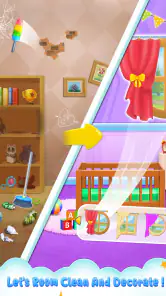
One of the first things that caught my attention with BabySitter DayCare Games is its wide range of activities. The app is packed with mini-games that mimic real-life scenarios in a daycare setting. Kids can enjoy everything from feeding the babies to playing dress-up and organizing toys. The graphics are vibrant and colorful, which instantly grabbed my attention. It's like stepping into a virtual daycare wonderland!
That visual approach supports the make-believe rather than asking children to learn a complicated set of rules before they can start. A useful tip for caregivers is to let a child choose an activity and explain what they think is happening before offering help. This gives you a quick read on whether they can follow the visual cues independently, and it makes the play more interactive without turning it into a quiz. Compared with educational games built around letters, numbers, or timed answers, this one is more about acting out familiar care tasks than practicing a specific school skill.
Sound and the pace of pretend play
The interactive aspect is what truly sets this app apart. The games are designed to be intuitive, allowing children to navigate through them with ease. I found myself getting lost in the world of make-believe, where I could soothe a crying baby or help them take their first steps. The sound effects are realistic, adding an extra layer of immersion to the gameplay.
More From Our News Desk

Clash of Clans Is Won Between the Battles

Android Auto Makes the Case for Quieter Car Software

MobiOffice: Transforming Mobile Productivity with Seamless Integration

EA SPORTS FC™ Mobile Soccer: Redefining Mobile Sports Gaming

How Microsoft OneDrive Became a Mobile Productivity Giant

How Google Translate Breaks Language Barriers Effortlessly
The sounds help give the daycare scenes a sense of presence, while the small activities keep the play focused on one simple action at a time. That gentle rhythm can suit a child who finds busy, competitive games overwhelming. On the other hand, a child looking for a clear sequence of levels, a challenging score to beat, or a fast pace may find this style too mild. I would use it when calm pretend play is the goal, not when I need a game to deliver intense challenge or a precise lesson.
Learning through familiar actions
While fun is a key component, the educational value of BabySitter DayCare Games shouldn’t be underestimated. Through its activities, children can develop fine motor skills, enhance their creativity, and learn basic problem-solving skills. The app subtly integrates learning into play, which is a fantastic way for kids to absorb new concepts without even realizing it!
I see that value as informal practice rather than a teaching plan. A child can make choices, handle simple interactions, and invent a story around the daycare scene, but caregivers should not expect it to replace reading together, hands-on crafts, or a dedicated early-learning app. If your priority is letter recognition or counting practice, a focused educational game is likely a better fit. If the aim is to encourage imaginative play and simple decision-making, these everyday care scenarios are the more relevant draw.
Easy to begin, best with a little guidance
The app boasts a user-friendly interface that makes it easy for both kids and adults to navigate. The controls are straightforward, and the instructions are clear. I appreciated how the app provided gentle guidance without being too intrusive, allowing children the freedom to explore at their own pace.
For a first session, I would show a child how to start an activity, then give them time to try the next steps without taking over. If they get stuck, a brief prompt is more useful than doing the task for them; the point is to keep the interaction theirs. This approach also helps an adult judge whether the controls suit the child’s age and confidence. Even an accessible interface cannot make every activity equally engaging, so it is worth letting the child move on if one scene does not click.
Moreover, the app is regularly updated with new activities, ensuring that the content remains fresh and exciting. It’s evident that the developers have put a lot of thought into creating an app that not only entertains but also educates.
With 31 reviews, the small written-review count offers less detail than the overall rating, so I would judge the game by trying it with the child who will actually use it. It is free to download, which makes that trial straightforward, but free access alone does not settle whether its style is right for your family. The strongest reason to choose it is a child’s interest in pretend daycare; the clearest reason to skip it is a preference for more varied worlds, deeper progression, or a specific academic focus.
Making a short session work
I would treat the game as a prompt for shared play rather than simply handing over a device and walking away. A practical routine is to let the child pick one activity, watch how they interpret the scene, and then ask an open question such as what the baby might need next. The adult does not need to turn every tap into a lesson. A little conversation is enough to connect the on-screen action to the child’s own ideas, and the child remains in charge of the pretend story.
This approach is especially useful during the awkward gaps of a family day: a few minutes before dinner, a quiet wait, or a calm break after more energetic play. I would avoid presenting it as a reward that must be earned or as a tool to settle every difficult moment. Its gentle theme may help some children shift into quieter play, but a screen cannot reliably solve boredom or big feelings. When a child is already restless, moving around, drawing, or talking may be the better choice.
A useful trade-off is that recognizable tasks make the game easy to understand, but they can also narrow the imaginative space. Children who enjoy inventing elaborate stories may create their own narrative around a care activity; others may simply complete the immediate interaction and want something new. If a child loses interest, I would not keep prompting them to continue. Their response tells you more about fit than the game’s educational label does.
Choosing it over other children’s games
Compared with a standard puzzle app, a daycare game offers a looser kind of engagement. Puzzles often give children a defined problem and a clear answer, while this play is more about recognizing a situation and choosing how to respond. Compared with a letter or number practice game, it gives less direct academic structure. That difference is not a flaw if the family wants pretend play, but it matters if a caregiver expects visible progress in a school topic.
It also occupies a different space from open-ended digital building games. Those can invite children to construct settings and make broad choices; here, the daycare premise does more of the framing. That makes it easier to start without explaining a large world, though a child who wants to design everything themselves may prefer a more open sandbox. I would choose this title for a child who likes nurturing scenarios and short, guided interactions, and choose another kind of game when creativity means building, competition, or a clear learning sequence.
For families comparing it with physical dolls or toy-care sets, the screen version is convenient and ready to use, while physical play brings touch, movement, and the possibility of sharing props with someone else. Neither automatically replaces the other. If a child tends to play more imaginatively away from a screen, a doll and a few household objects may hold attention longer. If they are curious about digital play and enjoy tapping through simple scenes, this can be a reasonable alternative for a brief change of pace.
Who is likely to enjoy it
The clearest match is a young player who already gravitates toward dolls, pretend kitchens, or helping characters in stories. A child who likes copying ordinary routines may find the daycare setting immediately understandable, and an adult can join in without needing specialist knowledge or a complicated plan. The Everyone age rating is reassuring as a broad content classification, but I would still make the first session a shared one so I can see how the particular child responds to the controls and pace.
I would be more cautious with a child who wants strong challenges, rapid feedback, or a defined goal to complete. The same goes for a caregiver looking for a structured lesson with measurable practice: the game’s value is in familiar pretend actions, not in replacing a curriculum. Children who tire quickly of a repeated setting may also prefer a collection of different themes. In those cases, another educational game or a non-screen activity could be a better use of their attention.
One small but useful way to decide is to notice what the child does after the first activity. Do they start narrating, ask to try another care task, or make up a reason for what is happening? Those reactions suggest the setting is giving them material for play. If they tap without much interest or ask to switch immediately, I would accept that signal rather than assume they need more time. A good fit should create curiosity, not require an adult to keep selling the idea.
A gentle option, not a replacement for real care
In a world where screen time is often criticized, it's refreshing to find an app like BabySitter DayCare Games that offers constructive and engaging content for children. From its colorful graphics to its educational mini-games, this app is a gem for parents and caregivers alike. While no digital experience can replace the value of real-life interaction, this app comes close by providing a safe and enjoyable virtual environment for kids to explore.
That distinction matters: the game can prompt pretend stories, but it cannot offer the spontaneous give-and-take of caring for a doll with a sibling or helping an adult with a real task. I would choose it for a brief, low-pressure play break, especially for a child already drawn to nurturing role-play. I would choose a book, a physical toy, or a more goal-driven learning game instead when the moment calls for conversation, tactile play, or measurable practice.
So, if you're in search of an app that combines fun with learning, BabySitter DayCare Games might just be the perfect addition to your device. It's more than just an app—it's a playful adventure that promises to keep young minds engaged and entertained.
BabySitter DayCare Games Frequently Asked Questions
What kind of game is BabySitter DayCare Games?
BabySitter DayCare Games is an educational game built around caring for babies in a daycare setting. Its playful premise is summed up as “babysitter madness,” giving children a chance to explore familiar caregiving activities through a game. It is developed by Fabulous Fun and is free to download, so families can try its daycare theme without an upfront purchase.
What age group is BabySitter DayCare Games suitable for?
BabySitter DayCare Games is designed for young children typically aged between 3 to 8 years old. The game features colorful graphics and simple gameplay mechanics that are easy for young users to understand and enjoy. It's an educational app that helps develop cognitive skills and creativity in a fun, interactive environment. Its content rating is Everyone, making it suitable for a broad family audience.
Is BabySitter DayCare Games safe for children to play?
Yes, BabySitter DayCare Games is safe for children. The game is free from harmful content and does not include in-app purchases or advertisements that could lead to unintended expenses. Parents can rest assured knowing the app provides a secure and kid-friendly gaming experience focused on learning and fun.
What are the main features of BabySitter DayCare Games?
BabySitter DayCare Games offers a variety of engaging activities such as feeding, dressing, and playing with virtual babies. The app includes interactive mini-games that teach responsibility and care-giving skills. It also features vibrant animations and sound effects to create an immersive experience for young players.
Does BabySitter DayCare Games require an internet connection to play?
No, BabySitter DayCare Games does not require an internet connection to play. Once the app is downloaded, all the content is available offline, making it a convenient choice for parents looking to entertain their children during travel or in areas with limited connectivity.
Pros
- Engaging educational content for kids
- Interactive activities enhance learning
- Bright
- colorful graphics attract children
- Easy to navigate for young users
- Promotes creativity and imaginative play
Cons
- Too many ads disrupt gameplay
- Limited free content without purchases
- In-app purchases can add up quickly
- Requires internet for full functionality
- Some activities are repetitive

- Category
- Educational
- Version
- 1.1.7