Baby Home Adventure Kids' Game
- 2.01K
- 3.7
- Installs
- 5.00M
- Price
- Free

Screenshots
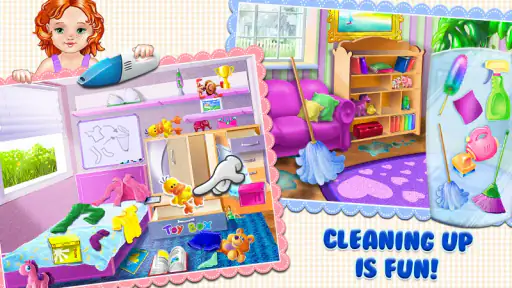
Analysis by Reviewed
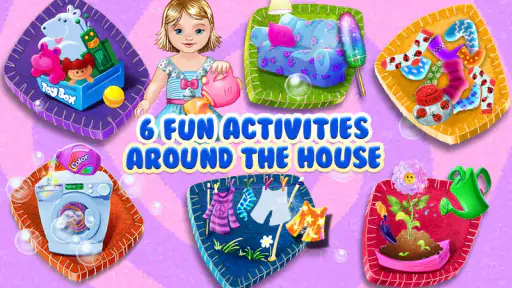
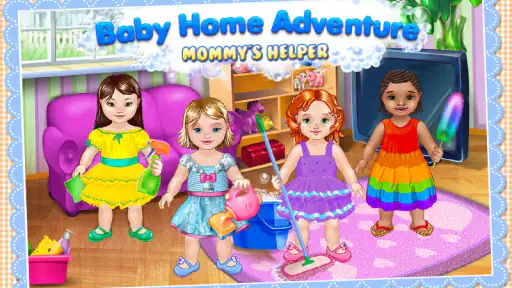
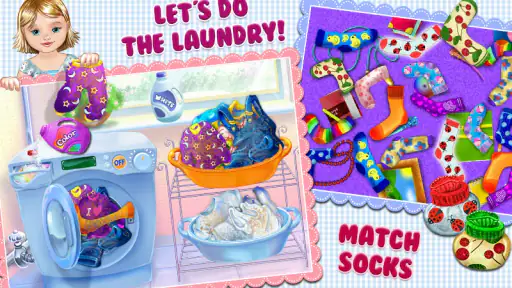
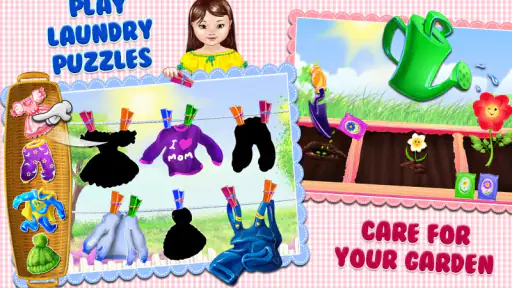
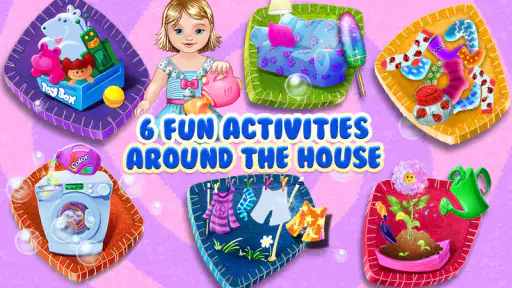
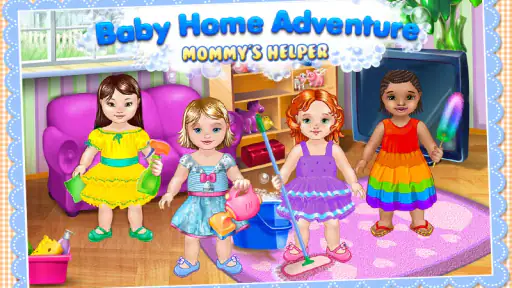
Baby Home Adventure Kids’ Game takes a simple idea and turns it into a small digital household: children help look after a baby and take part in everyday home activities. I found its strongest quality in that familiar setting. Instead of presenting learning as a worksheet or a quiz, it places basic responsibility inside playful routines. That makes the game approachable for young children who may not be ready for more formal educational apps.
Developed by TabTale, this free educational game is aimed at Everyone and works on devices running Android 7.0 or later. It has been available since August 6, 2013, and the current version is 1.1.6. With over 5 million installs, it is clearly an established choice for families looking for a child-friendly activity rather than a competitive game.
My overall impression is positive, but limited in a useful way: this is best understood as a short, guided play experience about helping at home, not as a deep learning platform. Its real value is the way it makes ordinary care and household participation feel rewarding. That focus gives it charm, while also making its audience narrower than the broad “educational game” label might suggest.
Learning through the capability to help at home
Why the household theme matters
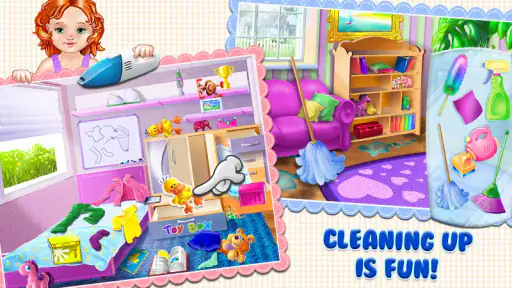
The central capability is easy to understand: the child participates in home-based activities connected with caring for a baby. That theme gives the game a clear purpose from the first interaction. A child is not simply tapping colorful objects without context; the actions are framed as things that happen in a home, where someone needs attention and help.
In my experience, this kind of pretend play works best with younger children because it connects screen activity with situations they already recognize. They may have seen an adult tidy a room, prepare something, or care for a younger sibling. The game gives those familiar actions a playful form that feels manageable and safe.
That does not mean it teaches household responsibility in a complete or realistic way. It is still a game, and the activities are designed to be accessible rather than demanding. The benefit is emotional and practical: children can explore the idea of helping without the frustration of a complicated simulation.
A more useful alternative to another quiz
Many educational games rely on matching, counting, spelling, or repeated questions. Those formats can be useful, but they often feel like exercises. Baby Home Adventure chooses a different route by using role-play. The child’s motivation comes from taking care of a situation, not from producing a correct answer on a test-like screen.
That difference is important for parents choosing an app for a child who resists conventional learning games. A child who quickly loses interest in flash cards may respond better to a pretend home environment. On the other hand, families specifically looking for literacy, arithmetic, memory drills, or structured progression will probably find a dedicated learning app more effective.
I would describe this as an early-childhood role-play game with educational value, rather than a curriculum tool. That distinction helps set the right expectations before downloading it.
The effect of a familiar routine
The home setting also gives adults an easy way to talk with children while they play. Instead of asking only whether the child completed an activity, a parent can ask why the baby needed help or what they would do next at home. The game can therefore become a starting point for conversation about kindness, patience, and taking part in family routines.
That is one of the less obvious strengths. The app does not need to teach a large amount of factual information to be useful. Its value can come from helping a child rehearse a social idea: people and pets need care, and small actions can make a shared space feel better.
How the experience works in everyday use
A simple session is its greatest advantage
The game is designed around quick, understandable interactions rather than a long commitment. I found that its strongest use is a short session when a child wants something active but the parent does not want to introduce a complicated game. The home theme gives the child an immediate role, so there is less need for lengthy explanation.
For a younger player, that simplicity can be more valuable than a large collection of features. The child can focus on the situation in front of them instead of learning a complicated control system. This also makes it easier for an adult to sit nearby and offer occasional guidance without taking over the whole experience.
Parents should still expect to provide some supervision, especially the first time. Young children may understand the general idea but need help with the order of an activity or with deciding what to tap. That is not a serious weakness, but it means the game works better as shared play than as a guaranteed hands-off distraction.
A practical way to introduce it
I recommend starting with a short demonstration. Let the child watch one interaction, then hand control over and ask them to explain what they think the baby or the home needs. This turns passive tapping into a small reasoning exercise without making the game feel like homework.
A second useful approach is to connect the play session with a real task. After using the game, ask the child to help put away a few toys, arrange a safe play area, or assist with another age-appropriate household action. The point is not to copy the game literally. It is to use the pretend scenario as a bridge toward real participation.
This is also where the app differs from a standard cartoon or endless runner. In those games, the screen activity usually ends when the level is complete. Here, the role-play can continue through conversation after the device is put down.
What the age rating tells parents
The Everyone content rating makes the game suitable for a broad family audience, but an age label is not a substitute for observing a particular child. Some children will understand the household theme immediately, while others may find the sequence of activities less obvious and need an adult to explain it.
I would be most comfortable recommending it to preschool and early-primary children who enjoy pretend play and can follow simple visual instructions. Older children may still find it pleasant for a few minutes, but they are more likely to want stronger challenges, clearer goals, or a richer progression system.
Because the game is free to download, it is easy to test without committing money at the beginning. The tradeoff is that the experience includes optional in-app purchases priced from $0.99 to $5.99 per item. I would check the device’s purchase controls before giving it to a child, particularly if the child plays independently.
Device expectations and maintenance
The minimum operating-system requirement is Android 7.0, so the game is accessible on many older Android devices, though actual comfort will depend on the phone or tablet’s condition. A larger screen is preferable for a young child because it makes tapping easier and allows an adult to watch from beside them.
The current version is 1.1.6. I would still treat it as a focused, older-style children’s game rather than expecting the constantly expanding structure of a modern subscription learning platform. That is not automatically negative: some parents prefer a small activity that can be opened and understood quickly.
The best everyday scenario for Baby Home Adventure
A calm transition between activities
The best scenario I found is a short transition period at home. Imagine a child has finished breakfast, a parent is preparing the next activity, and the child wants attention but does not need a long session. This game can fill that gap with a gentle role-play task connected to helping and caring.
It also fits a quiet afternoon when a child is tired of television but is not ready for an energetic game. The household setting feels calmer than an action-focused title, and the activities give the child something concrete to do. I would not use it as a replacement for real play, reading, or helping with actual chores, but it can complement those activities.
Why it works better with a small conversation
The most effective use is not simply handing over the device. A parent can ask questions such as, “What does the baby need now?” or “What could we do to make the room ready?” These prompts encourage the child to think about care and sequence rather than tapping randomly.
This creates a useful three-step routine: play a short part of the game, talk about the choice, and then connect the idea to something outside the screen. That workflow is more valuable than repeated unsupervised sessions because it turns a simple game into a small social-learning moment.
Teachers or childcare workers could also use the theme as a conversation starter about cooperation, although I would not present it as a complete classroom resource. Its strength is immediacy and familiarity, not detailed lesson planning.
When it is not the right choice
I would skip this game if the main goal is measurable academic practice. It is not the first choice for a child who needs phonics, number operations, handwriting support, or a carefully sequenced school-readiness program. A specialist app will usually offer clearer progress indicators and more targeted exercises.
I would also look elsewhere for a child who needs a game that remains challenging over a long period. The home-care premise is appealing, but its simplicity may feel repetitive to children who want collecting systems, difficult puzzles, competition, or extensive exploration.
Finally, it may not suit families who want a completely independent screen activity. The game is easy to approach, but a young child can still benefit from an adult helping interpret the situation and connecting it to real-life behavior.
Tradeoffs that shape the experience
Accessibility versus depth
The same simplicity that makes the game welcoming also limits its depth. A child can begin without studying rules, but there may not be enough complexity to hold the attention of an older or highly experienced player. I see this as a deliberate tradeoff rather than a design failure.
For a first role-play game, accessibility is more important than a large feature list. For a long-term educational routine, depth matters more. Families should decide which side of that balance they need before choosing it.
Free entry versus purchase awareness
Being free makes it easy to try, and that matters for parents who are comparing several children’s games. However, the presence of in-app purchases means adults should establish household rules before the child plays alone. I would explain that some optional items may cost money and keep purchase approval under adult control.
This is a small preparation step, but it prevents the most common kind of friction with free children’s apps. The game is more comfortable when the parent has already handled the purchasing settings and can let the child concentrate on play.
Playful responsibility versus real responsibility
The game presents helping at home as fun, which is a good entry point, but children may not automatically transfer that idea to real life. A virtual activity cannot replace the experience of actually putting something away or assisting a family member.
That is why I would use it as a prompt, not as proof that a child has learned a household skill. The strongest results come when the adult follows the session with one small, realistic action. This is a practical insight that is easy to miss if the game is judged only by its entertainment value.
Short engagement versus repeated use
Its focused design suits brief sessions, but parents looking for a daily program should watch for signs of boredom. If the child starts tapping without paying attention to the situation, the educational value has probably dropped. At that point, switching to a story, a physical activity, or a more challenging learning game may be better than extending the session.
Who gains the most from this game?
Children who enjoy pretend play
The best match is a young child who likes dolls, toy kitchens, family role-play, or helping adults with safe little tasks. That child is likely to understand the game’s emotional logic quickly. The baby-care theme gives their imagination a clear direction without requiring advanced reading or strategic thinking.
It can also suit a child who becomes frustrated by wrong-answer feedback. Because the emphasis is on participating in a home situation, the experience feels less like being tested. That can make it a gentler option for relaxed play.
Parents seeking a conversation tool
Adults gain the most when they want a simple way to talk about cooperation and care. The game gives them a shared subject and a reason to ask questions. It is especially useful when a parent wants to introduce the idea that helping is part of family life without turning the conversation into a lecture.
I would not recommend it solely because it has a large audience. It has an average rating of 3.7 from around 37 thousand ratings, which suggests that it appeals to many families but is not universally loved. The more important question is whether the child enjoys this particular kind of role-play.
Families comparing it with other options
Compared with a cartoon video, this game asks the child to participate rather than only watch. Compared with a puzzle-based educational app, it offers less direct academic practice but more social and imaginative context. Compared with a full household simulation, it is easier to approach and less demanding, though also less deep.
That middle position is its clearest identity. It is not trying to replace a preschool curriculum, a digital storybook, or an advanced simulation. It is a small, accessible activity for children who respond to familiar home situations.
My recommendation
I recommend Baby Home Adventure Kids’ Game to parents who want a free, child-friendly role-play experience that can encourage conversations about helping and caring. I would install it on a suitable Android device, prepare the purchase controls, and introduce it during a short shared session rather than presenting it as an all-purpose babysitter.
TabTale’s game is most successful when its modest scope is treated as a strength. It offers a gentle way for children to explore household participation, and its familiar setting can lead naturally into real-world cooperation. If you need deep lessons, long-term progression, or challenging gameplay, choose a more specialized alternative. If you want a simple digital home where a young child can practice the idea of being helpful, this is a worthwhile free option to try.
Pros
- Simple controls make it easy for young children to play independently.
- Colorful scenes and friendly characters keep the experience engaging.
- Short activities suit brief play sessions and limited attention spans.
- Gentle gameplay avoids stressful competition
- timers
- or difficult challenges.
- Works well as a casual entertainment option for preschool-aged children.
Cons
- Some activities may feel repetitive after several play sessions.
- Limited challenge can make the game less appealing to older children.
- Frequent prompts may require adult help during the first few minutes.
- In-app purchases or ads may be a concern for parents
- depending on the version.
- The game may use noticeable storage and battery during longer sessions.

- Category
- Educational
- Version
- 1.1.6