Astraware Acrostic
- 52.00
- 4.4
- Installs
- 10.00K
- Price
- Free

Screenshots
Analysis by Reviewed
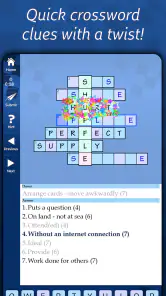
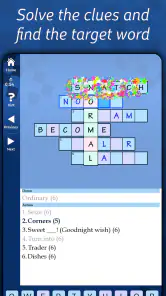
I found Astraware Acrostic appealing because it turns a familiar word puzzle into a compact routine rather than a long, demanding session. The basic idea is easy to understand: clues point toward words, and the answers work together around a target word. That makes each round feel closer to a small crossword exercise than to a conventional anagram game. I can open it when I have a few quiet minutes, make progress without preparing anything, and stop before it becomes a commitment.
Astraware Limited has kept the presentation focused on solving, which suits the game well. There is no need to learn a complicated board or manage a character while playing. The challenge comes from recognizing clue meanings, testing possible spellings, and using the letters already available to narrow down the remaining answers. For anyone who enjoys word games but prefers a guided structure over a completely open-ended puzzle, this is a particularly comfortable fit.
How I play it efficiently from the first clue to the last
The baseline solving routine
My usual approach is not to begin with the clue that looks most interesting. I scan the whole puzzle first and look for entries whose answers are likely to be familiar, specific, or short. Solving one dependable clue gives me letters that can transform several vague clues into much clearer ones. In an acrostic-style layout, that cross-checking effect is more valuable than trying to force an answer from a difficult definition.
I also separate certainty from possibility. If a clue immediately suggests a word and the available letters support it, I treat it as an anchor. If the answer is merely plausible, I keep it mentally provisional instead of building the rest of the puzzle around it. This habit matters because a nearly correct word can make several later clues appear impossible. When the pattern stops making sense, I revisit the least certain answer first rather than randomly changing entries.
A useful everyday scenario is a short break between errands. I can solve the obvious clues, use their letters to open up the middle of the puzzle, and leave one stubborn section for later. The game works well in that situation because progress is naturally divided into small decisions. It does not require me to remember a large story, maintain a long-term strategy, or reach a particular checkpoint before stopping.
The target word gives the round a helpful sense of direction. I am not simply filling isolated answers; I am watching the whole group converge. That makes the final stage satisfying, especially when one missing answer explains several letters at once. It also provides a practical solving tool: when the emerging target looks like a recognizable word, I can use it to test uncertain entries, while still checking that the individual clues genuinely fit.
What the free download means in practice
The game is free to download, so it is easy to try without making an immediate purchase decision. Its content rating is Everyone, which matches the straightforward word-puzzle format and makes it suitable for players who want something calm and broadly accessible. The current version is 2.93.001, and the game requires iOS 9 or later, so people using older Apple hardware should check compatibility before planning to make it a regular puzzle habit.
There are optional in-app purchases ranging from $0.99 to $7.99 per item. I would approach those as convenience spending rather than part of the basic appeal. The core reason to use the game is the solving process itself, not a collection of extra systems. If you enjoy working through clues independently, you can begin with the free experience and decide later whether any available help or additional content is worth paying for.
How it differs from ordinary crossword apps
Compared with a traditional crossword, this format feels more contained and more forgiving in its structure. A crossword usually asks me to manage a larger grid with clues running in several directions, while this game keeps attention on the relationship between clue answers and the central word. That makes it easier to pick up casually, though it may feel less satisfying to someone who specifically wants the broad vocabulary range and expansive grid of a newspaper-style crossword.
It also differs from a pure anagram game. An anagram title often rewards rapid rearrangement and word recognition with little semantic guidance. Here, the clue wording remains central, so vocabulary knowledge and interpretation matter as much as letter manipulation. Players who like word searches may find this more thoughtful but less instantly relaxing, while crossword fans may appreciate the familiar clue-solving mindset in a smaller package.
Settings I would check before settling into a routine
I would spend a moment looking through the available settings before trying to optimize my solving speed. In a word game, small presentation choices can affect concentration more than expected. I prefer a layout that lets me distinguish the clue area from the answer area quickly, especially when I am playing in short sessions. I also check whether the game offers any options related to sound or visual feedback, because quiet surroundings make a difference when I am using it during a commute or in a waiting room.
I would not change every option simply because it exists. The best setup is the one that removes distraction without making the puzzle feel over-assisted. If a visual cue gives away too much of the structure, I would leave it alone and rely on the letters I have earned through solving. Conversely, if the interface makes it difficult to tell which entry is active, an accessibility or display adjustment can be more valuable than any hint.
Another worthwhile check is how the game handles mistakes and corrections. My preferred workflow is to enter a confident answer, inspect the resulting letters, and correct it promptly if the surrounding clues become less coherent. A system that makes editing easy encourages experimentation; one that makes every change cumbersome can cause me to cling to a weak answer. I would learn that interaction early, because it shapes how freely I test possibilities later.
Small habits that make difficult clues manageable
When I reach a clue I cannot solve, I avoid staring at it indefinitely. I move to another entry and look for a letter pattern that might constrain it. Even one known letter can change the clue from a broad question into a narrower one. This is one of the strongest reasons to solve in passes: the puzzle supplies information gradually, and a clue that feels obscure at the beginning may become obvious after two neighboring answers are secure.
I also pay attention to grammar. Whether a clue suggests a noun, verb, adjective, singular answer, or plural answer can eliminate several tempting guesses. This is a simple technique, but it is easy to overlook when I am focused on the target word. If an answer seems to fit the definition but not the grammatical form, I treat that mismatch as a warning rather than bending the clue to suit my guess.
Another practical habit is to read a clue twice before searching for synonyms. The first reading often produces the most obvious association, while the second reveals whether the wording is asking for a different sense. This prevents me from filling the puzzle with words that are related but not precise. Since the game depends on interconnected answers, precision is more useful than producing a fast approximation.
Faster patterns for experienced players
Once I become familiar with the rhythm of the puzzles, I use a three-pass method. On the first pass, I enter only answers that feel highly reliable. On the second, I use the resulting letters to attack clues with partial patterns. On the third, I revisit the remaining entries while checking the target word as a whole. This is faster than moving line by line because it prioritizes information gain: each solved clue should make another clue easier.
I find it helpful to distinguish between a clue that is difficult because I do not know the word and one that is difficult because I have not interpreted the wording correctly. The first may require patience or a hint, while the second often yields when I change grammatical perspective or consider a less common meaning. Recognizing the difference stops me from wasting time on blind letter rearrangement when the real problem is reading the clue too narrowly.
Experienced players can also use the target word as a checksum rather than an answer generator. If the developing pattern suggests a likely word, I compare it against every contributing entry. A target that looks attractive but requires strained clue answers is probably misleading. The strongest solution is the one where the target and the individual clues support each other naturally. This approach preserves the satisfaction of solving instead of turning the final word into a guess.
I would keep a consistent order of attention, too. I start with the clearest clues, then move toward entries with several confirmed letters, and leave broad or ambiguous clues until the end. This repeatable habit reduces mental switching. It is especially useful when I return to a puzzle after a break, because I can immediately identify what is known, what is uncertain, and which answer is most likely to unlock the next step.
Where hints and purchases fit into the experience
If the game offers assistance during play, I would reserve it for a genuine dead end rather than using it on the first uncomfortable clue. A hint is most valuable when one missing answer is preventing me from understanding the rest of the puzzle. Used at that point, it can restore momentum without replacing the entire solving process. I would avoid spending help merely to confirm an answer I already know, because that turns a satisfying deduction into a transaction.
The same principle applies to optional purchases. Someone who wants a completely self-directed word challenge may never feel a need to buy anything. Someone who dislikes being stalled, or who wants a smoother casual experience, may consider occasional assistance worthwhile. The important trade-off is clear: paying can reduce friction, but the game is at its best when I still do most of the interpretation and cross-checking myself.
The limits that become clearer with regular play
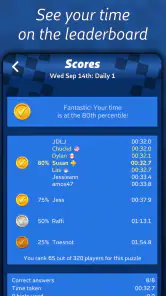
Astraware Acrostic is focused, and that focus is both its strength and its main limitation. It is not the right choice if I want a large social layer, a story campaign, a competitive leaderboard, or a broad collection of unrelated mini-games. Its appeal comes from the individual puzzle, so players who need constant novelty outside word solving may find the experience too narrow.
It can also be less suitable for someone who prefers completely free-form wordplay. The clue-and-target structure gives the puzzle direction, but it also means I am working within the intended answer rather than exploring every word I can build from a letter set. For that reason, a dedicated anagram game is a better alternative when speed, experimentation, and discovering unusual combinations are the main goals.
On the other hand, a full crossword app may be a better choice for players who want a longer session with a dense grid and many crossing answers. This game is more approachable when I want a contained challenge, but its compact design may not provide enough depth for a person who treats crosswords as a daily intellectual workout. The right choice depends less on difficulty alone and more on whether I prefer a guided target or a large network of intersecting clues.
Who will get the most from it
I would recommend it to people who enjoy word definitions, like seeing partial answers confirm one another, and want a puzzle that fits naturally into spare moments. It is also a good match for players returning to word games after a break, because the rules are easy to grasp and the solving process teaches itself through the layout. The Everyone rating makes it a comfortable suggestion for a wide range of players, provided they enjoy vocabulary-based challenges.
I would be more cautious recommending it to someone who becomes frustrated by ambiguous clues or expects every answer to be immediately obvious. The game rewards patience and revision. A player who wants constant rapid rewards may prefer a simpler word search, while someone seeking a highly demanding expert crossword may want a larger and more complex format. This title sits between those extremes: thoughtful enough to require interpretation, but compact enough to remain casual.
My mastery verdict after using repeatable methods
The best way to enjoy this game is to treat it as a process rather than a race. I scan first, lock in reliable clues, use confirmed letters to narrow the uncertain ones, and only then let the target word guide the final checks. That routine makes the game feel more intelligent and less dependent on lucky guesses. It also gives me a clear way to recover when I make a wrong entry: identify the weakest assumption, remove it, and rebuild from the strongest letters.
Its average rating is 4.4 from around 232 ratings, and the game has passed 10K+ installs, which fits my impression of a modest but well-received word title rather than a huge mainstream platform. Those figures appear naturally consistent with its focused design: it is easy to try, easy to understand, and aimed at a specific kind of player. I would not choose it for spectacle or variety, but I would choose it when I want a clean clue-solving session with a clear endpoint.
Overall, Astraware Acrostic succeeds because it respects the pleasure of working something out. The free entry point makes experimentation simple, the compact structure suits everyday breaks, and the connected answers give each solved clue practical value. Its limitations are equally straightforward: the format is specialized, the challenge depends on vocabulary and clue interpretation, and players seeking social competition or expansive crossword grids should look elsewhere.
For me, the deciding question is whether I want a guided word puzzle that rewards careful accumulation of letters. If the answer is yes, this is an enjoyable choice from Astraware Limited. I would start without purchasing help, adjust the presentation settings to keep the board comfortable, and use the three-pass method until the clues begin to reinforce one another. That combination brings out the game’s real strength: a small, repeatable puzzle habit that feels satisfying without demanding an entire evening.
Pros
- Large collection of relaxing word puzzles for regular play.
- Clues and grids are clearly presented on small screens.
- Helpful hints make difficult puzzles less frustrating.
- Works well for short sessions without requiring fast reflexes.
- Clean presentation keeps the focus on solving each puzzle.
Cons
- Some puzzles may feel repetitive after extended play.
- Hints can reduce the challenge if used too frequently.
- Word knowledge and spelling affect the difficulty considerably.
- The interface may seem dated compared with newer puzzle apps.
- Players seeking competitive or multiplayer features may be disappointed.

- Category
- Word
- Version
- 2.93.001