Amy's Animal Hair Salon
- 615.00
- 3.8
- Installs
- 10.00M
- Price
- Free

Screenshots



Analysis by Reviewed
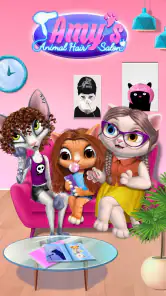
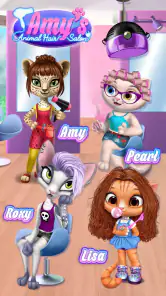
I spent time with Amy's Animal Hair Salon as a light, child-friendly grooming game, and my first impression was clear: it is designed for quick creative play rather than deep strategy or a demanding challenge. You take care of animal characters in a salon setting, giving children a simple way to experiment with appearance, styling, and playful choices. The idea is easy to understand, which matters when a child wants to start playing without reading a long tutorial.
It is an educational game from TutoTOONS, although its learning value is informal rather than classroom-like. I would describe it as a guided creative activity wrapped in a pet salon theme. The app is free to download, suitable for Everyone, and available for devices using Android 6.0 or later. That combination makes it approachable for families looking for something gentle and easy to try, especially when the goal is a short activity rather than a long gaming session.
What the salon experience is really like
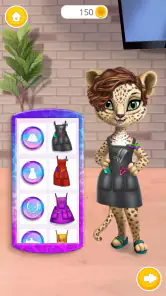
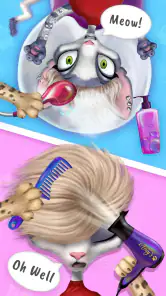
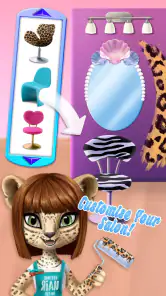
The central appeal is the transformation process. Instead of controlling a character through a complicated world, I focused on grooming and styling animals, then seeing the result of each choice. That structure gives the game an immediate rhythm: choose an animal, work through the salon activity, and enjoy the finished look. It feels more like a digital dress-up and care routine than a conventional adventure game.
That simplicity is one of its strongest qualities for younger players. A child can understand the purpose almost immediately, and the salon theme gives each action a visible reason. Styling is not presented as an abstract puzzle; it is part of looking after a pet character. In my experience, that makes the game easier to share with a parent or sibling because the player can explain what they are doing while they play.
The game also benefits from being forgiving in spirit. A child who is still learning how to use touch controls can explore without needing the precision expected by an action game. I found that especially useful on a smaller phone, where crowded controls can make other games frustrating. Here, the experience is better suited to tapping, choosing, and following a visual sequence at a relaxed pace.
It is worth setting expectations correctly, though. This is not an educational title in the sense of teaching reading, mathematics, science, or a structured course. Its educational quality comes from creative decision-making, sequencing simple tasks, and noticing how different styling choices change the result. Parents should see it as playful learning, not as a replacement for a dedicated learning app.
Why the pet-salon theme works for short sessions
The salon setting gives the game a natural stopping point. A child can complete a grooming activity and feel that something has been finished, rather than being pulled into an endless level. That is helpful during everyday moments such as waiting at a restaurant, sitting in a car before a trip, or taking a short break between activities. I would still supervise screen time, but the format is less demanding than a game built around constant progression.
One practical tip is to let the child describe the plan before touching the screen: which animal they want to style, what kind of look they are imagining, and what they want to change first. That turns a quick play session into a small planning exercise. It also reduces random tapping and gives the creative choices more meaning without making the experience feel like homework.
Another useful approach is to treat the finished animal as a conversation starter. Ask why a particular style was chosen or what the child would do differently next time. The app itself remains simple, but this kind of shared play adds more value than handing over the phone and walking away. In that role, it works well as a starting point for talking about preferences, colors, care, and personal expression.
Cost, purchases, and what “free” means here
The game is free to access, which makes it easy to test before deciding whether it belongs on a child’s device. That free entry is important because the appeal is highly dependent on the child’s interest in animal styling. If the salon theme does not hold attention after a few sessions, there is no need to commit money simply to discover that.
There are in-app purchases ranging from $3.99 to $159.99 per item. Those figures create a very wide gap between a small optional purchase and the most expensive listed item, so I would not leave purchasing entirely to a young player. A family should review the purchase controls on the device and decide in advance whether spending is allowed. The free starting point is useful, but it should not be confused with an entirely purchase-free experience.
From a value perspective, the sensible approach is to use the free version as a trial. Watch how long the child stays engaged, whether the available salon activities feel varied enough, and whether the game is being used creatively or simply tapped through. Only then can a paid item be judged fairly. I would avoid buying anything immediately, because the most important question is not whether the game looks attractive at first, but whether it remains useful in your household after the novelty fades.
The purchase range also changes the way I would recommend it. For a family that wants a no-cost occasional activity, the free access may be enough. For a child who wants a larger collection of styling possibilities, optional spending may become more tempting. That can be acceptable when an adult is making the decision, but it weakens the value proposition for anyone specifically seeking a fully open-ended free game.
What children can gain from playing
The strongest benefit is creative control within a safe, understandable theme. Children can make choices, observe the visual result, and try again with a different idea. That loop is more valuable than simply watching an animation because the player is responsible for the outcome. Even when the activity is very simple, it encourages a basic connection between action and result.
I also see value in the game’s sequence-based structure. A salon routine naturally suggests doing one thing before another, which can help younger players practice following a chain of instructions. This is not a formal lesson and should not be overstated, but it is a useful side effect of a game that asks the player to move through a recognizable care process.
It can also support independent play for children who are comfortable with touchscreens. The visual design and straightforward premise reduce the amount of adult explanation needed at the beginning. Still, “independent” does not have to mean unsupervised. A quick check-in can help a parent discover whether the child is enjoying the creative activity, becoming frustrated, or repeatedly encountering prompts connected with purchases.
For siblings, the game may work best when they take turns designing a look rather than competing for a score. Since the appeal is personal styling, one child can make a choice and the other can suggest a different direction. That makes the app more social without forcing a competitive system onto it. I found that this kind of turn-taking suits the salon concept better than trying to rush through every action.
The tradeoffs I noticed during use
The same simplicity that makes the game accessible can limit its long-term appeal. Players who want complex goals, difficult puzzles, exploration, or a strong story will probably find the salon routine too narrow. There is no reason to choose this over a more substantial game if the child is specifically looking for challenge or progression.
Repetition is another likely limitation. Grooming and styling are enjoyable when the child is in the mood for creative play, but the basic activity can lose its freshness sooner than a game with changing levels or broader mechanics. I would see it as a title to rotate with other activities, not as the only game on a tablet or phone.
The free-to-play structure requires adult attention as well. Even if a child never makes a purchase, the presence of optional items can affect how freely they explore. A parent who wants a completely controlled experience may prefer a paid app with a single upfront cost, provided that app’s own features suit the child. Here, the advantage is the free trial; the tradeoff is the need to manage the purchasing environment.
The age rating of Everyone makes the game broadly suitable from a content standpoint, but that does not automatically mean every child will enjoy it. A preschooler may need help with touch gestures or with understanding the order of activities, while an older child may quickly decide that the choices are too basic. The best fit depends more on attention span and interest in styling than on age alone.
Device compatibility is reasonably broad for older Android hardware because the minimum requirement is Android 6.0. That does not guarantee identical performance on every phone or tablet, so I would still test it on the actual family device. A larger screen is likely more comfortable for small hands, while a phone is convenient for short trips. The practical choice depends on whether portability or ease of tapping matters more in your situation.
How it compares with other choices
Compared with a traditional puzzle game, this title offers less problem-solving pressure but more room for visual self-expression. That makes it a better choice when the child wants to create rather than win. Compared with a standard virtual-pet game, the salon focus feels more concentrated: the attraction is the styling activity, not managing a broad daily-care simulation.
Compared with a fully paid children’s game, the free entry is its clearest advantage. You can see whether the theme works before spending anything. The disadvantage is that families must think about optional purchases and may find that the free experience does not satisfy a child who wants every available choice. A paid alternative may be better for parents who value a fixed cost and a more predictable content structure.
Compared with educational apps built around letters, numbers, or problem-solving lessons, Amy’s Animal Hair Salon is much more relaxed. I would choose it for creative downtime, not for a specific academic objective. If your child asks for practice with spelling or arithmetic, another category of app will serve that purpose more directly. If the goal is a gentle activity that encourages choices and pretend play, this one makes more sense.
Who is most likely to get good value
I think the best audience is a young player who already enjoys animals, makeovers, pretend salons, or choosing outfits and appearances. The game is especially suitable for short, supervised sessions where a child can complete a small activity and move on. It may also suit families that want to test a free game before considering optional content.
A realistic use case would be a parent preparing dinner while a child sits nearby with a tablet. The child can work through a salon activity, then show the result and talk about the choices. That is a better fit than giving the game to a child who expects a long adventure, because the app’s value comes from focused creative play rather than hours of escalating content.
I would skip it if your priority is a completely purchase-free app, a serious learning curriculum, or demanding gameplay. I would also look elsewhere for a child who becomes bored by repeating familiar styling routines. In those cases, a one-time-purchase creative game or a more varied educational title may offer better value, depending on the child’s interests.
Parents should also decide whether the child can handle choice-based play without becoming upset when a preferred option is unavailable. If locked or optional content becomes the main focus, the free version may stop feeling relaxing. In that situation, the right response is not necessarily to buy more; it may simply be to move to another app whose structure better matches the family’s boundaries.
Performance, version, and overall trust signals
The app was released on June 20, 2018, and its current version is 4.0.50129. That gives the title a longer presence than a brand-new release, while the version information helps users identify what they are installing. TutoTOONS is the developer behind it, and the game has passed ten million installs with an average rating of 3.8 from around fifteen thousand ratings. Those figures suggest broad reach, but they do not replace personal testing because children can react very differently to the same simple concept.
The number of written reviews is around six hundred, which is enough to show that people have shared detailed reactions, though I would still read recent comments with a specific question in mind: does the current experience suit your child’s preferred play style? Ratings are useful for spotting general satisfaction, but they cannot tell you whether your child wants salon creativity, educational drills, or a more challenging game.
One thing I appreciate is that the app’s identity is easy to understand. It does not pretend to be a broad academic tool when its main attraction is animal styling. That clarity helps families make a better decision. The title is at its best when used honestly as a playful grooming and makeover experience with some light developmental value around choices and sequencing.
My verdict after weighing the free access and limitations
I would recommend trying Amy’s Animal Hair Salon if you want a free, approachable game for a child who enjoys pets and creative styling. Its strongest point is the low-risk entry: you can explore the core idea without paying first, then judge whether the activity holds attention. The Everyone rating and modest device requirement also make it a practical candidate for many family devices.
My recommendation comes with two conditions. First, treat the educational label realistically: this is playful learning, not a lesson-based study tool. Second, manage in-app purchasing before handing over the device, since optional items range from $3.99 to $159.99 each. The free download is the reason to try it, not a promise that every possible option is included at no cost.
In the end, I see it as a pleasant occasional game rather than an essential long-term app. It gives children a clear creative task, works well in short sessions, and offers a friendly alternative to competitive or fast-paced games. If that is exactly what you need, it is worth testing. If you want deeper gameplay, a fixed all-inclusive price, or measurable academic practice, I would skip the purchase path and choose a different kind of app instead.
For the right child, the small salon routine can be surprisingly engaging: choose a pet, make a plan, try a style, and explain the result. That is enough to make the game worthwhile as a supervised creative break. I would start with the free experience, set firm purchase boundaries, and keep expectations focused on imaginative play. On those terms, Amy's Animal Hair Salon earns a cautious recommendation rather than an unqualified one.
Pros
- Cute
- colorful graphics appeal to younger children.
- Simple touch controls are easy for first-time players.
- Several animals offer variety beyond a single makeover.
- Creative styling encourages imaginative play.
- Short activities suit quick play sessions.
Cons
- Some features may require in-app purchases to unlock.
- Gameplay can become repetitive after completing the main activities.
- Frequent prompts may encourage children to watch advertisements.
- Limited challenge may not hold older players’ attention.
- Requires parental guidance when used by younger children.

- Category
- Educational
- Version
- 4.0.50129