Zen Connect - Word Puzzle
- 42.00
- 4.6
- Installs
- 50.00K
- Price
- Free

Screenshots

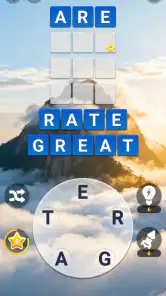
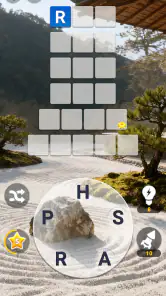

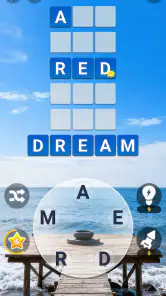
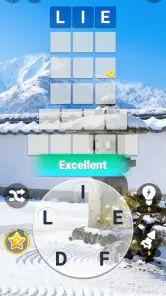


Analysis by Reviewed
I went into Zen Connect - Word Puzzle expecting a small word game for filling a few quiet minutes, and that is exactly where it makes the most sense. It is a free word game from Rally Games Co, built around a calm puzzle mood rather than urgency or spectacle. The store summary describes it as a way to relax with calm word puzzles, but my useful takeaway is more specific: this is the kind of game I would open when I want my attention occupied without feeling pushed.
The first impression is gentle. Nothing about the presentation suggests competition, pressure, or a race against a clock. That restraint matters because word games can easily become tiring when every move is framed as a challenge to beat. Here, the appeal is the slower mental rhythm. I can look at a puzzle, test a connection, reconsider a word, and continue without feeling that I have abandoned the intended pace.
Zen Connect is available at no cost, with optional in-app purchases priced at $5.99 per item. It is rated for Everyone, so its basic presentation is suitable for a broad audience. The game reached players on November 13, 2025, and the current version is 1.1.5. Those details make it a relatively new choice in the word-puzzle space, while its average of 4.6 from around 291 ratings suggests that early players have generally responded well.
How the game builds a quiet first impression
The strongest quality is its sense of intention. The game does not seem to treat calmness as a decorative layer placed over an ordinary puzzle. Instead, the word-play and the relaxed framing appear to support each other. That makes a difference during short sessions: I am not merely solving a puzzle while ignoring the presentation; the presentation helps me settle into the solving process.
That makes it particularly suitable for transitions in the day. I can imagine using it after work, before going to sleep, while waiting for an appointment, or during a break when a social feed would leave me more distracted than refreshed. The important distinction is that it gives my mind a single small task. I am still thinking, but I am not dealing with the constant novelty of scrolling.
The trade-off is that players who want a strong sense of adrenaline may find the opening too restrained. This is not the right first choice if your favorite word games are built around countdowns, streak anxiety, head-to-head competition, or a constant stream of rewards. The same calm design that helps one player unwind can feel subdued to another.
I also would not recommend approaching it as a complete replacement for a large, content-heavy word-game collection. Its value is concentrated in the mood and the compact puzzle experience. If you want a broad set of modes, a social ladder, or a highly elaborate progression system, a more traditional word-game alternative may give you more variety. Zen Connect is easier to appreciate when its limited, focused identity is treated as a feature rather than a missing checklist.
A visual language that supports the puzzle
The setting is communicated through a soft, uncluttered visual attitude. Even without relying on flashy effects, the game creates a sense that the board is meant to be approached patiently. That is important for a connection-based word puzzle, because the player needs to notice relationships between words rather than fight through visual noise.
Good art direction in this category is not necessarily about showing more. It is about protecting the space around the decision. When I am scanning a board, every unnecessary decoration competes with the letters and the possible links between them. Zen Connect benefits from the idea that the puzzle itself should remain the main object on screen.
There is also a useful emotional contrast here. Word puzzles ask for analysis, but the setting softens the analytical demand. I can make a mistake without the whole experience feeling harsh. That changes how I approach difficult moments: instead of tapping randomly to escape a problem, I am more likely to pause and inspect the available possibilities.
One practical tip is to treat the board as a visual map before making the first move. I found that a calm presentation makes it tempting to act immediately because the game feels easygoing. A better approach is to scan for obvious relationships, then look for the word that could belong to more than one group. That second category is often more useful than simply collecting the easiest matches first.
The visual restraint does have a limitation. Players who depend on strong visual feedback to understand progress may want a more expressive interface. A quieter board can make the experience feel elegant, but it can also make individual successes feel less dramatic. I see that as a deliberate trade-off, not a flaw that affects everyone.
Sound, silence, and the rhythm of a session
The audio direction is best understood as part of the game’s pacing rather than as a separate attraction. The overall mood encourages short, steady bursts of concentration. Instead of making every action feel like a major event, the sound environment supports the idea that solving is a small ritual I can repeat at my own speed.
That makes the game comfortable in places where a louder puzzle would become annoying. I would be more willing to use it in a shared room, on public transport, or during a quiet evening because the experience does not seem designed to demand attention from everyone nearby. For me, that is a real advantage over word games that constantly punctuate each move with aggressive effects.
Sound can still be a personal issue. Some players prefer clear audio confirmation for every successful connection, while others want to play entirely in silence. The most sensible way to use a mood-focused game is to choose the audio level based on the setting rather than assuming the intended atmosphere will suit every moment. If I am already listening to a podcast, I would prioritize the puzzle and keep the surrounding sound unobtrusive.
The rhythm also affects how long I want to play. Zen Connect feels better in measured sessions than in a long attempt to exhaust every available challenge. A useful routine is to play a few puzzles, stop when my attention begins to drift, and return later instead of turning relaxation into another task to complete. That is a small but important distinction: the game works best when I let its pace guide me.
Why the word mechanics fit the mood
The central appeal is the connection between language and calm decision-making. A word puzzle asks me to recognize patterns, but the Zen Connect approach makes that recognition feel less like a test and more like sorting thoughts into place. The mechanic and the atmosphere are therefore pulling in the same direction: both reward observation over speed.
That fit is especially useful for players who enjoy word games but dislike being punished for thinking carefully. I can approach a board by looking for broad relationships first, then checking whether a tempting word creates a problem elsewhere. This is more satisfying than tapping through guesses, because the game invites a little planning even when the session remains casual.
My most useful strategy is to avoid locking onto the first apparent group. I look for words with flexible meanings, shared contexts, or several possible partners. These are the pieces most likely to cause trouble later. By identifying them early, I can preserve the simpler connections and reduce the chance of reaching a final arrangement that looks plausible but does not hold together.
Another good habit is to use a two-pass method. On the first pass, I identify only the relationships that feel nearly certain. On the second, I examine the remaining words and ask what kind of connection the puzzle still needs. This prevents one attractive association from controlling the entire board. It also suits the relaxed pacing because it turns difficulty into a process of narrowing possibilities rather than a reason to rush.
The downside is that this style may not satisfy players who want deeper vocabulary training. A calm connection puzzle can improve attention to meaning and association, but it is not the same as a dictionary-heavy challenge, a spelling competition, or a conventional crossword. If your main goal is to learn obscure words, practice definitions, or measure your speed against other people, another category of word game will probably serve you better.
There is also a question of replay value. The game’s strongest loop depends on whether the player enjoys repeatedly making these small connections. That can be wonderfully repeatable for someone who likes meditative routines, but less compelling for someone who needs constant mechanical change. I would choose it for a reliable mood, not because I expect every session to reinvent the genre.
Everyday use and the right kind of player
My clearest use case is a ten-minute reset between demanding tasks. Imagine finishing a difficult call, opening the game before starting the next piece of work, and solving a few boards without entering another stream of notifications. The benefit is not that the game eliminates stress; it gives stress a narrower object to attach to. Once I finish, I can return to the day with my attention less scattered.
It can also work well as a shared, low-pressure activity. Two people can look at the same puzzle and discuss possible word relationships without needing a competitive score to make the moment worthwhile. That is a different social experience from taking turns in a fast multiplayer game. The conversation becomes about interpretation and reasoning, which makes the puzzle accessible even when players have different skill levels.
For younger players, the Everyone rating makes the game broadly approachable, but I would still judge suitability by reading ability and patience rather than age alone. A child who enjoys language and categorization may find it inviting, while a player who needs immediate action may lose interest. Adults who want a quiet screen break are probably the clearest audience.
The game also suits people who are easily overwhelmed by busy interfaces. Its focused word-play gives the session a defined boundary: open the puzzle, examine the relationships, make a choice, and stop. That structure is more useful to me than an endless feed because it has a natural endpoint, even if I decide to continue.
I would skip it if I wanted an expansive adventure setting, a narrative campaign, or a strong sense of character progression. The calm setting is there to frame the word puzzle, not to replace it with a story world. I would also skip it if optional purchases are a major concern in principle. The game is free to start, but the presence of $5.99 items means players should decide in advance whether they want to keep the experience strictly within the free offering.
Where it stands beside familiar alternatives
Compared with a crossword, Zen Connect feels less dependent on clue-writing and more focused on relationships between words. That makes it easier to enter when I do not want to commit to a large grid or remember a long chain of answers. A crossword is usually better for sustained vocabulary practice and a more deliberate solving session; this game is better for a lighter mental reset.
Compared with a fast word scramble, it gives up some urgency in exchange for a calmer pace. Scrambles are satisfying when I want quick recognition and rapid feedback, while Zen Connect is more rewarding when I want to inspect possibilities. If I am tired, the slower approach is kinder. If I am restless and looking for a challenge that keeps my fingers moving, the scramble format may be more effective.
Compared with competitive word games, it is less socially demanding. There is no need to compare my speed with another player in order to enjoy the core activity. That makes it a good choice for private downtime, but it also means competitive players may find the experience lacking in tension. The best alternative depends on whether the desired result is calm concentration or measurable performance.
The most important comparison is with other relaxing puzzle games. Many of them focus on matching shapes, arranging tiles, or clearing patterns. Zen Connect gives that quiet format a language-based identity. I prefer it when I want my break to involve meaning and association rather than purely visual pattern recognition. Someone who finds words tiring after a day of reading may reasonably prefer a visual puzzle instead.
Practical expectations before installing
Rally Games Co presents a focused word experience rather than a sprawling game platform. The current release is version 1.1.5 and requires Android 7.0 or later, so compatibility is worth checking before downloading on an older device. Since the game is free, the initial commitment is low, but I would still approach the optional purchases thoughtfully rather than treating them as part of the basic promise.
The early reception is encouraging: the game has passed 50K installs, alongside the 4.6 average mentioned earlier. I read that as evidence of a healthy initial audience, not as a guarantee that its quiet style will suit me. Ratings are most useful here as a signal that the concept is connecting with people; the actual decision should come from whether I enjoy calm word association more than speed, competition, or large-scale progression.
Before playing seriously, I would set a simple personal rule: do not spend on an item until I know whether the free experience already fits my routine. I would also avoid judging the game after one rushed puzzle. Its strongest qualities emerge when I give the board enough attention to notice the difference between an obvious link and a misleading one.
My atmosphere verdict
Zen Connect works because its art direction, sound, setting, and pacing all protect the same idea: word-solving can be a quiet activity. The mechanics remain important, but they are not forced to compete with spectacle. I come away with the impression of a game designed for small, restorative sessions rather than endless escalation.
That focus will not please everyone. Players looking for speed, rankings, dramatic progression, or a deep narrative should choose a different word or puzzle game. Even players who like relaxing games may prefer something more visually expressive or mechanically varied. Zen Connect asks for a particular kind of patience, and its appeal depends on being comfortable with a modest, repeatable loop.
For me, that modesty is the reason to recommend it. I would suggest it to a friend who wants a free word game for quiet breaks, especially someone who enjoys finding connections more than chasing a score. The best way to use it is as a short attention reset: slow down, inspect the flexible words, make the safest connections first, and stop before the peaceful rhythm turns into another obligation. In that role, it delivers a coherent mood without losing sight of the simple pleasure of solving.
Pros
- Relaxing gameplay suited to short
- casual sessions.
- Smooth word puzzles help improve vocabulary and spelling skills.
- Clean interface makes the game easy to learn quickly.
- Gradually increasing difficulty keeps challenges engaging.
- Works well for players who prefer calm
- unhurried games.
Cons
- Some puzzles may feel repetitive after extended play.
- Hints or extra moves may be limited without in-game resources.
- Word difficulty can vary noticeably between different puzzles.
- Players seeking action or competitive features may find it too quiet.
- Progress may feel slow for users who prefer faster rewards.

- Category
- Word
- Version
- 1.1.5